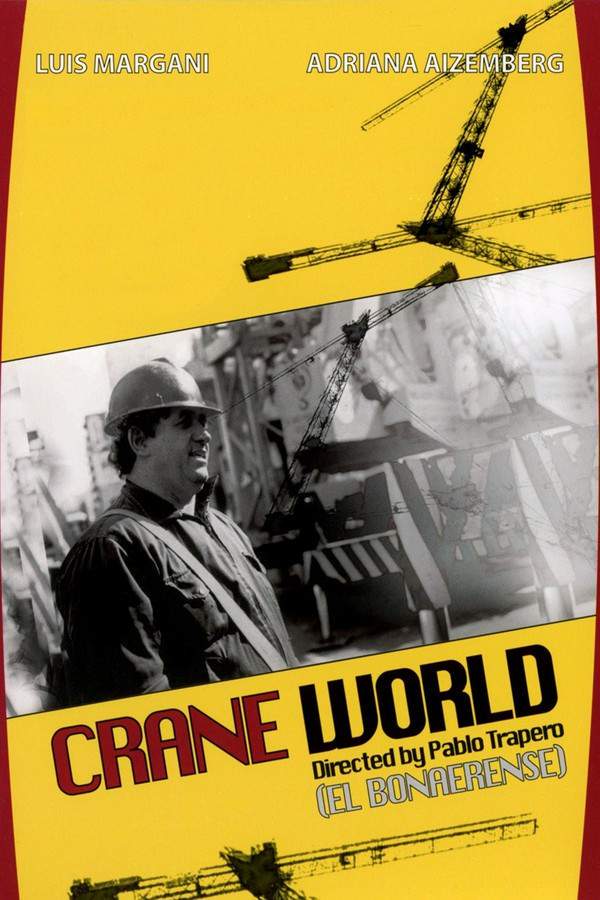
Year: 1999
Runtime: 90 min
Language: Spanish
Director: Pablo Trapero
After fading from the spotlight in the 1970s, Luis Margani finds himself seeking a new direction. He unexpectedly begins a career as a crane operator, a far cry from his former life as a musician. As he learns the ropes of his new profession, he’s forced to reckon with past regrets and search for meaning in this surprising, demanding world, ultimately finding a chance at redemption and a renewed sense of purpose.
Warning: spoilers below!
Haven’t seen Crane World yet? This summary contains major spoilers. Bookmark the page, watch the movie, and come back for the full breakdown. If you're ready, scroll on and relive the story!
Read the complete plot breakdown of Crane World (1999), including all key story events, major twists, and the ending explained in detail. Discover what really happened—and what it all means.
Rulo Federico Esquerro is a middle-aged ex-bass player from the rock band Seventh Regiment who, during Argentina’s harsh Great Depression, scrapes by by taking a crane operator job near his home in Buenos Aires. He quickly grows fond of the quiet, almost meditative calm up high, where the city’s bustle feels distant and the work feels oddly peaceful despite the danger of tall heights. This new blue-collar reality forms a bridge between two halves of his life: the loud, chaotic energy of his former rock-star days and a more restrained, uncertain present that still hums with memory.
As he settles into the routine, Rulo builds unusual social ties that color his days. He befriends his trainer, Torres, and begins a tender romance with Adriana Adriana Aizemberg, a warm-hearted sandwich shop owner who becomes a steady anchor amid shifting circumstances. The connection offers him a glimpse of normalcy and a renewed sense of belonging, even as he keeps thinking back to the glory days shared with his old bandmates and the friends who once filled his life with energy and noise. Throughout the hands-on work and quiet evenings, Rulo channels that history into conversations, cravings, and a stubborn hope that he can still find purpose in this new chapter.
Rulo’s closest personal strain comes from his relationship with his son, Claudio, who is trying to carve out his own path in a rock band of his own. The two clash over lifestyle and discipline. Rulo demonstrates patience—he lends money, allows Claudio to borrow his cherished bass guitar for a show, and even tolerates the late-night arrivals that echo the boy’s nocturnal gigs—but the friction grows as Claudio’s casual approach to responsibility becomes harder to overlook. The tension in their apartment mirrors the larger tension of a country negotiating survival, youth’s impulse, and the weight of lived dreams.
When the moment of professional shift arrives, Rulo faces a cruel setback on what should have been his first day back in the field. A coworker is at the crane, and after a tense discussion with his supervisor, Rulo learns that his dismissal came at the insurance company’s recommendation. The news is twofold: not only does it strike him at a moment of precarious financial footing, but his health and weight complicate the possibility of obtaining coverage if he were to start work officially. This blow reverberates through every part of his life, from his ability to provide for his family to his sense of self-worth.
In the wake of the firing, Rulo tells Claudio that the boy’s lifestyle must change, a truth that lands hard on both of them. His mother steps in to help, taking Claudio in, though she soon tires of the younger man’s unstructured habits. As a counterpoint to Buenos Aires, Torres suggests a new opportunity farther south in Argentina, where Rulo would work as an excavator. Despite his lingering worries about health and stability, he accepts, promising Adriana that he’ll visit and keep in touch every couple of months, little rituals that become lifelines in a period of turbulence.
Rulo’s journey south unfolds by train and hitchhike, and he forms a quick, supportive bond with Sartori, the firm’s new supervisor. The work becomes a test of adaptability: Rulo’s crane-training skills translate well to excavation, and he begins to make real progress on a pipeline project. Yet the company’s financial struggles compound, and the project stalls as bankruptcy looms, leaving everyone uncertain about the future. With heavy news weighing on him, Rulo makes the difficult decision to return to Buenos Aires. He lies to his mother, masking the depth of his setback, while confessing to Claudio that the situation has cratered and that the path ahead remains full of unknowns. Parting ways with Sartori, he boards a truck back toward the city, carrying the anxious hope that better days—or at least a better sense of purpose—lie somewhere ahead.
The film is a quiet, character-driven portrait of a man navigating between past triumphs and present compromises, trying to hold onto dignity, connection, and the possibility of renewal in the face of economic and personal upheaval.
Last Updated: October 14, 2025 at 04:07
Discover curated groups of movies connected by mood, themes, and story style. Browse collections built around emotion, atmosphere, and narrative focus to easily find films that match what you feel like watching right now.
Finding quiet dignity and renewed purpose through manual labor and new beginnings.Explore movies like Crane World where the world of work is central to the character's journey. These similar dramas and comedies follow individuals seeking purpose and identity through blue-collar jobs, offering quiet, contemplative stories about starting over and finding dignity in labor.
Stories in this thread follow characters—often facing a personal or economic crossroads—as they enter a new line of manual or skilled labor. The narrative unfolds through the routines and challenges of the job itself, which becomes a catalyst for introspection, healing, and a redefinition of self-worth away from past failures or fame.
These movies are grouped together because they share a deep focus on the intersection of work and identity. They possess a similar meditative, observational tone, a slow, steady pacing that mirrors the rhythm of labor, and a central theme of finding redemption and purpose not in grand achievements, but in the quiet dignity of everyday effort.
Stories of late-in-life reinvention marked by regret, hope, and uncertain futures.If you liked the bittersweet journey in Crane World, discover more movies about midlife crises and redemption. These similar films feature protagonists grappling with regret and economic hardship, seeking a new path that offers a mix of hope and sobering reality, leading to emotionally resonant and authentic conclusions.
The narrative pattern involves a protagonist, often an artist or someone who has lost their way, forced by circumstance to rebuild their life from the ground up. The journey is linear and straightforward, focusing on personal setbacks and small victories. The ending is typically ambiguous or bittersweet, acknowledging the progress made but also the scars of the past and the uncertainty of the future.
These films share a specific emotional mix: a melancholic tone rooted in regret, balanced by glimmers of hope from new relationships or endeavors. They have medium emotional weight, a straightforward narrative complexity, and a pacing that allows for deep character reflection. The central theme of searching for meaning after a fall from grace creates a cohesive viewing experience.
Don't stop at just watching — explore Crane World in full detail. From the complete plot summary and scene-by-scene timeline to character breakdowns, thematic analysis, and a deep dive into the ending — every page helps you truly understand what Crane World is all about. Plus, discover what's next after the movie.
Track the full timeline of Crane World with every major event arranged chronologically. Perfect for decoding non-linear storytelling, flashbacks, or parallel narratives with a clear scene-by-scene breakdown.
Discover the characters, locations, and core themes that shape Crane World. Get insights into symbolic elements, setting significance, and deeper narrative meaning — ideal for thematic analysis and movie breakdowns.
Get a quick, spoiler-free overview of Crane World that covers the main plot points and key details without revealing any major twists or spoilers. Perfect for those who want to know what to expect before diving in.
Visit What's After the Movie to explore more about Crane World: box office results, cast and crew info, production details, post-credit scenes, and external links — all in one place for movie fans and researchers.
Discover movies like Crane World that share similar genres, themes, and storytelling elements. Whether you’re drawn to the atmosphere, character arcs, or plot structure, these curated recommendations will help you explore more films you’ll love.
Crane World (1999) Scene-by-Scene Movie Timeline
Crane World (1999) Movie Characters, Themes & Settings
Crane World (1999) Spoiler-Free Summary & Key Flow
Movies Like Crane World – Similar Titles You’ll Enjoy
The Tale of King Crab (2022) Plot Summary & Ending Explained
Mondays in the Sun (2003) Full Movie Breakdown
The Man Who Wasn't There (2001) Movie Recap & Themes
Reconstruction (2004) Plot Summary & Ending Explained
Crutch (2004) Spoiler-Packed Plot Recap
Crater (2017) Ending Explained & Film Insights
Crashing (2007) Ending Explained & Film Insights
Soltero (1984) Full Summary & Key Details
Crackers (1984) Full Summary & Key Details
Birds Flying East (2024) Ending Explained & Film Insights
Crates (1970) Full Movie Breakdown
The Cramp (2009) Story Summary & Characters
Killing Crabs (2023) Movie Recap & Themes
The Cranes Are Flying (1957) Full Summary & Key Details
Capricci (1969) Story Summary & Characters