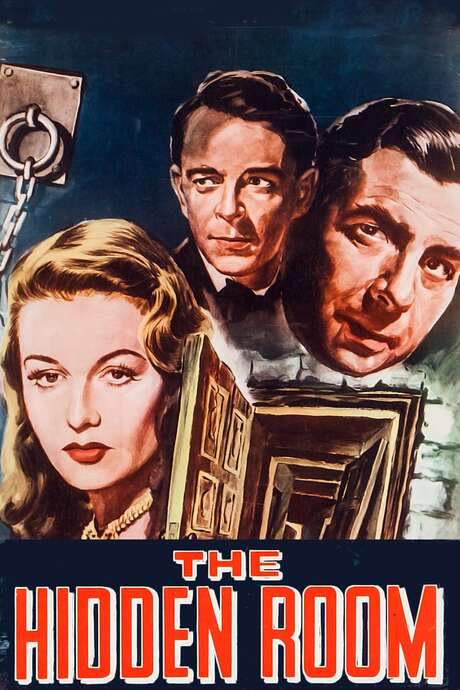
Charles Dobbs, James Mason, a reserved MI6 operative in 1960s London, begins probing the death of Samuel Fennan, a former Communist official whose suicide is treated as fact by the authorities. The case unsettles him from the start: the wake-up call at Fennan’s home is revealed as a lie when Fennan’s widow, Elsa Fennan, Simone Signoret — a survivor of a Nazi extermination camp — hints that something far more tangled lies behind her husband’s death. Dobbs senses that Elsa may hold crucial knowledge, and his curiosity deepens into a web of danger.
As external pressure mounts to drop the inquiry, Dobbs quietly teams up with retired police inspector Mendel, Harry Andrews, and the two begin piecing together a pattern that stretches beyond a single death. They uncover a covert network of East European agents and discover that the shadowy intrigues touch high places, not least through the lingering reach of Cold War tensions. The investigation grows more perilous when an unknown assailant strikes Dobbs, leaving him with a broken hand and a reminder that murky loyalties are at play.
Meanwhile, Dobbs learns that his own life is complicated by his unstable marriage. His promiscuous wife Ann, Harriet Andersson, is planning to depart for Switzerland to reconnect with a former World War II ally, Dieter Frey, Maximilian Schell. The personal and the political collide as Dobbs digs deeper, realizing that Elsa’s past and Dieter’s present ambitions are somehow aligned in a dangerous scheme that could topple their carefully balanced world.
To expose Elsa as a spy and unravel her connections, Dobbs engineers a trap that centers on a rendezvous at the Aldwych theatre during a performance of "Edward II." The tense setup unfolds with Elsa in the audience and Dieter Frey, seated beside her, a moment that chills the juice of the conspiracy to the core. The plan hinges on discovering who truly controls Elsa, and it becomes clear that Dieter is intimately involved in that control. David Warner brings the role of Edward II to life on stage, a backdrop that intensifies the drama of the real-world power struggle playing out in front of the audience.
As the assembly closes around Elsa, Dobbs, his ally Bill Appleby, Kenneth Haigh, and Mendel watch the theatre with bated breath, awaiting the crucial seatmate who will confirm Elsa’s manipulation. The reveal comes when Dieter Frey sits next to her, confirming the pair’s entanglement and Elsa’s role as a conduit for his influence. In the ensuing confrontation, Elsa is killed by Dieter, a loss that devastates the investigators but also clears the fog surrounding the operation. Mendel pursues Dieter to his hideout, and Dobbs is summoned to confront the truth face-to-face.
What follows is a brutal culmination. Dieter shoots Mendel in a moment of chaos, but Dobbs fights back with a ferocity born of months of fear and suspicion. He uses the very cast on his broken hand as a weapon, bludgeoning Dieter to death in a raw act of retribution and justice. The case, however, leaves its mark on all involved, underscoring how easily fear and ambition can blur the lines between duty, loyalty, and survival.
In the quiet aftermath, Dobbs travels to Zurich, where he is met at the airport by Ann, Harriet Andersson. The reunion signals a tentative, unresolved closure to a case that peeled back the veneer of a respectable life to reveal a world of espionage, betrayal, and the cost of seeking truth in a time of global tension. The shadow of Elsa’s past and the reach of Dieter Frey’s influence linger, reminding us that in this tense, character-driven thriller, every ally might also be a threat, and every truth carries a price.