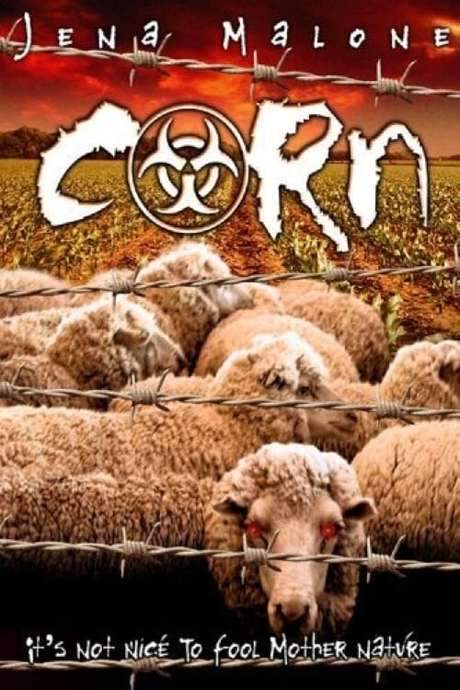
Emily Rasmussen drops out of college after discovering she is pregnant, and reluctantly returns to her Horace Rasmussen stepfather's sheep ranch to get her life back on track. She plans to keep the baby, even though the father—a politician—refuses to help to avoid a scandal. The death of her mother when she was young has left her with a strained relationship with her father, setting a tense emotional stage as she tries to rebuild her life.
From the moment she steps onto the property, she notices the flock behaving oddly, as if the sheep are battling over a weed byproduct of their neighbor's corn. The neighbor began growing corn with a newly generated seed designed to be immune to pesticides and able to thrive with very little water. This engineered corn is pitched as a solution to drought and hunger, capable of reaching barren regions—like parts of Africa—to feed starving people, but its byproducts disturb the natural balance of the ranch and raise serious questions about safety and ethics.
After witnessing a lamb born with two legs, she becomes determined to uncover the truth behind the corn and its weed byproduct. Her investigation reveals that this is part of an ongoing genetic engineering experiment. The concern deepens when she learns a close friend’s newborn baby died after regularly eating lamb, a tragedy she fears is connected to the very food being produced nearby. Realizing the stakes, she resolves to take action to stop the program, even if it means challenging the powerful corporation behind the tests, her employers, and, ultimately, her father.
Her pursuit of answers draws her into a tense confrontation with corporate power and community interests, forcing her to weigh loyalty against the well-being of others. As she digs deeper, she uncovers a web of scientific ambition, economic leverage, and personal risk that tests her courage and resilience. The story follows her through ethical doubts, stubborn resistance, and a relentless push for accountability, all while she protects her unborn child and fights for a safer path forward for the people who rely on the land and the lambs.
In the end, the drama centers on one woman’s choice to stand up for what she believes is right, even at great personal cost, and the way that decision challenges the machinery of power, ownership, and profit that underpins the dangerous experiment. The narrative invites viewers to consider how scientific breakthroughs intersect with human consequences, and how a single determined individual can spark a broader conversation about safety, responsibility, and care for both the environment and the vulnerable.