Plot Explained Spoilers guaranteed!
Plot Explained

Browse by genre

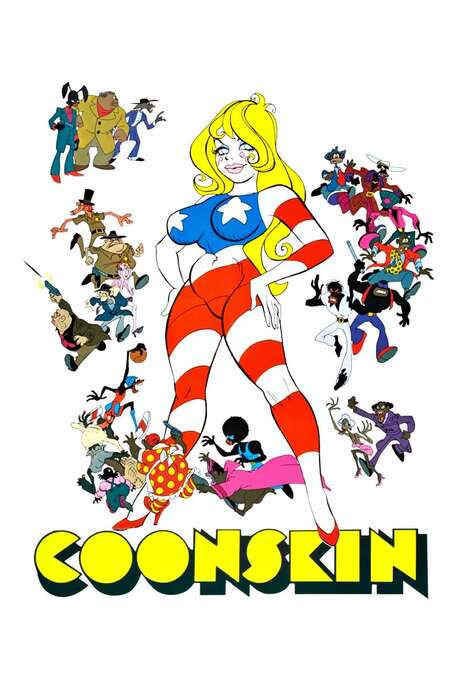
Coonskin (1975) movie poster

Plot Summary

Coonskin (1975) Plot Summary Explained

Release, runtime and language
1975 · 83 mins · English
JustWatch #32,374 4
Starring
Scatman Crothers, Ralph Bakshi, Al Lewis, Charles Gordone, Mihaly 'Michu' Meszaros, Richard Paul

This is it Folks! Brother Rabbit, Brother Bear, and Preacher Fox rise to the top of the crime ranks in Harlem by going up against a con-man, a racist cop, and the Mafia.

On this page (6)
  1. 1 Where to watch
  2. 2 What happens: full plot
  3. 3 Plot questions answered
  4. 4 Movie threads
  5. 5 Categories
  6. 6 Every angle

Where to watch

Where to Watch Coonskin (1975)

Where can you watch Coonskin? Stream, rent or buy it in the US, including on Fandor, Midnight Pulp and Philo: current JustWatch availability with up-to-date prices.

Streaming availability powered by JustWatch

Full plot summary · contains spoilers

What Happens in Coonskin: Full Plot Summary

The whole story of Coonskin (1975) explained, from the opening scene to the final frame: every key event, every twist and what it all adds up to. Read it as a quick recap before the sequel, to check a scene you missed, or to finally understand what really happened.

Sampson and the Preacherman rush to help their friend Randy escape from prison, but a roadblock halts them and a tense shootout with the police erupts, setting a brutal, chaotic tone for the journey ahead. While they await help, Randy at last talks with an escapee named Pappy, who insists he knows a story about three men who resemble him and his companions. [Pappy]’s tale unfolds as a vivid blend of animation layered over photographs and live-action footage, inviting the viewer into a surreal, heightened version of the world they inhabit.

Brother Rabbit, Brother Bear, and Preacher Fox decide to leave the Southern states after a bank forecloses on their home and sells it to a man who intends to turn the place into a brothel. Their move takes them to Harlem, where they discover that the city holds more danger and deception than they expected. A con man named Simple Savior, who proclaims himself the cousin of “Black Jesus,” tries to rally his followers by presenting himself as a revolutionary force capable of “giving the strength to kill whites.” In a stark stage-show within his “church,” Savior enacts brutal scenes that mix imagery of real-world oppression with pop-culture icons like John Wayne, Elvis Presley, and Richard Nixon, and then asks for donations from his audience.

Rabbit sees through the scam and uses calculated, reverse psychology to turn the crowd against Savior’s violent rhetoric. When the crowd turns hostile, Savior’s men try to silence Rabbit, but he and Bear outsmart the threat and end Savior’s control in a deadly confrontation. With Savior gone, Rabbit steps into his criminal role, beginning a rise through Harlem’s underworld. Yet success brings new pressure: Savior’s former lieutenants warn that if Rabbit cannot eliminate his rivals, they will erase him first.

Rabbit’s next adversary is Mannigan, a virulently racist, homophobic police officer who doubles as a Mafia bagman. Sent to locate Rabbit, Mannigan and his crew track him to a nightclub called The Cottontail. There, a black stripper diverts Mannigan’s attention long enough for an LSD cube to be dropped into his drink. Under the drug’s influence, Mannigan is manipulated into a compromising encounter, targeted with blackface and mammy imagery, and then discarded. A frenzy follows: Mannigan fires blindly, a police response erupts, and the officer is killed by the chaotic gunfire.

The pursuit then shifts toward the Godfather and the Mafia, whose subway-dwelling gangsters become Rabbit’s next target. The hit is assigned to Sonny, the Godfather’s eldest son, who stalks Rabbit in minstrel-show garb and with a hidden machine gun in a banjo. Bear protects Rabbit during the violent standoff, taking several bullets in the process. When Sonny tries to flee, Rabbit shoots him multiple times, his car crashes, and Sonny dies in the ensuing explosion. Sonny’s mother erupts in grief only to lash out at her husband, who is promptly slain by one of his own followers.

A weary Bear wrestles with the choice between continuing alongside Rabbit or attempting a crime-free life. He seeks guidance from Fox, and upon arriving at Fox’s newly acquired brothel, Bear is “married” to Pearl—a relationship born from a tense moment the trio shared with Savior’s men. Following Fox’s counsel, Bear becomes a professional boxer for the Mafia. In a calculated trap, Rabbit places a tar-soaked dummy of himself in the arena stands, drawing the Mafiosi into a stuck-tar trap. The mastermind escapes as the tar-covered group is left vulnerable, and Rabbit, Bear, Fox, and the opponent flee moments before a bomb explodes in the boxing ring.

As Pappy’s story concludes, Samson and the Preacher arrive to aid Randy and Pappy in their escape through a hail of police gunfire, bringing a brutal, cathartic close to their immediate flight. Throughout the film, the core narrative is punctuated by animated interludes featuring the image of the white, blonde, voluptuous “Miss America,” a symbol of the United States. In each vignette, she lures a man who stands for the African American populace, only to turn the encounter into something violent or deadly, underscoring the film’s biting social critique in a stark, surreal style.
Last updated: October 09, 2025 at 11:09

Was this helpful?

Plot questions answered

Coonskin Plot Explained: Your Questions Answered

The questions people ask most about Coonskin (1975): what happens in the confusing scenes, why the characters do what they do, the twists, hidden details and what the ending means. Each answer contains spoilers.

Q1

Why do Rabbit, Bear, and Fox leave the South?

They are forced to leave after their home is foreclosed and sold to a man who intends to turn it into a brothel. With no other options, they travel north to Harlem seeking better opportunities, but find the city presents new dangers and deception.

Foreshadowing: The foreclosure is mentioned early, establishing that systemic economic oppression drives characters into Harlem's criminal world.

  • foreclosure
  • harlem
  • migration
  • south
  • bank
Q2

How does Rabbit defeat Simple Savior at his church?

Rabbit recognizes Savior's violent revolutionary speech is a scam to extract money from followers. He uses reverse psychology to turn the crowd against Savior's calls for killing whites, exposing the con. When Savior's men try to silence Rabbit, he and Bear kill Savior and take over his operation.

Foreshadowing: Rabbit's skepticism is established early when he sees through Savior's performance immediately.

  • simple savior
  • reverse psychology
  • church
  • con man
  • rabbit
Q3

Why is Officer Mannigan killed at The Cottontail nightclub?

Mannigan, a racist cop who works as a Mafia bagman, is lured to The Cottontail where a stripper distracts him while LSD is dropped in his drink. Under the drug's influence, he is forced into blackface and mammy attire, then tossed outside. He fires blindly in a frenzy, and police killed him during the chaotic response.

Foreshadowing: Mannigan's introduction establishes his corruption and racism, setting up his vulnerability to manipulation.

  • mannigan
  • lsd
  • nightclub
  • police
  • racist cop
Q4

Why does Bear decide to become a boxer for the Mafia?

After being shot multiple times protecting Rabbit from Sonny, Bear wrestles with whether to continue the criminal life or leave. He seeks Fox's counsel, who tells him to pursue boxing. Bear then marries Pearl (from the tense moment with Savior's men) and becomes a professional boxer for the Mafia, choosing survival over the risks of continuing with Rabbit.

Foreshadowing: Bear's injury and recovery create the opportunity for reflection, while Fox's new role as brothel owner gives him influence over Bear's path.

  • bear
  • boxing
  • mafia
  • fox
  • pearl
Q5

What happens in the tar trap scene at the boxing arena?

Rabbit plants a dummy covered in tar in the arena stands to lure the Mafiosi. When they stab the dummy, they get stuck in the tar. Rabbit then plants a bomb nearby. The group (Rabbit, Bear, Fox, and the opponent) escapes before the bomb explodes, killing the tar-covered criminals.

Foreshadowing: Rabbit's increasing ruthlessness builds throughout the film as he takes over operations.

  • tar trap
  • bomb
  • boxing arena
  • mafia
  • rabbit
Q6

Why does Rabbit kill Sonny at the nightclub?

Sonny, the Godfather's eldest son, is assigned to kill Rabbit. He approaches Rabbit near the nightclub wearing minstrel-show attire with a hidden machine gun in a banjo. Bear takes multiple bullets protecting Rabbit. When Sonny tries to flee, Rabbit shoots him several times, causing his car to crash and explode, killing him.

Foreshadowing: The Mafia's threat to Rabbit if he cannot eliminate rivals establishes the inevitability of this conflict.

  • sonny
  • mafia
  • minstrel
  • gun
  • banjo
Q7

Who is Pappy and what is the purpose of his animated story?

Pappy is a fellow prisoner who escapes with Randy and tells them a fable about three men (resembling Rabbit, Bear, and Fox) who rise through Harlem's underworld. The animated tale, presented over photographs and live-action footage, functions as a surreal allegory that parallels and comments on the main narrative, creating a layered meta-commentary about African American experience.

Foreshadowing: Pappy mentions knowing a story about three men like Randy's companions before his tale unfolds.

  • pappy
  • animation
  • fable
  • parable
  • prison
Q8

What do the Miss America animated vignettes represent?

Throughout the film, animated sequences depict a white, blonde, voluptuous Miss America seducing men who represent African Americans, then turning the encounter violent or deadly. These surreal interludes serve as a stark social critique, symbolizing how American promises of opportunity often lead to harm for Black citizens.

Foreshadowing: The vignettes appear periodically, intercutting the main plot to reinforce the film's thematic critique.

  • miss america
  • animation
  • symbolism
  • critique
  • allegory
Q9

Why is the movie titled Coonskin?

The title Coonskin references the racist imagery the film deliberately employs and subverts. The movie uses provocative minstrelsy, blackface, and racial stereotypes throughout, not to celebrate them, but to critique and destabilize American racial mythology. The title itself is part of the film's confrontational approach to discussing race, power, and exploitation in America.

Foreshadowing: The film's use of minstrel imagery with Sonny and the Miss America vignettes establish this as intentional commentary.

  • coonskin
  • title
  • racism
  • critique
  • satire
Q10

Why does Rabbit take over Simple Savior's criminal operation?

After Rabbit and Bear kill Savior, his former lieutenants warn Rabbit that if he cannot eliminate his rivals, they will kill him first. Rather than retreat, Rabbit seizes control of Savior's operation and begins his ascent through Harlem's underworld, choosing to fight fire with fire in the dangerous criminal landscape.

Foreshadowing: The lieutenants' warning establishes the brutal necessity of Rabbit's rise to power.

  • rabbit
  • power
  • operation
  • savior
  • underworld
Q11

Who are Ruby and Bobby and why are they dead at the nightclub?

Ruby and Bobby are characters who end up dead behind The Cottontail nightclub. Their corpses are present when Mannigan is tossed out after his LSD-induced ordeal. Their deaths appear connected to the criminal underworld activities that dominate Harlem, though the exact circumstances are part of the chaotic violence surrounding Mannigan's downfall.

Foreshadowing: The nightclub setting establishes it as a hub for criminal activity and violence.

  • ruby
  • bobby
  • nightclub
  • dead
  • bodies
Q12

How does the prison escape frame the animated story within the film?

The film opens with Sampson and Preacher attempting to help Randy escape from prison. While waiting, Randy meets Pappy, who tells his animated fable about three men in Harlem. As Pappy's story concludes, Samson and Preacher return to help Randy and Pappy escape through police gunfire. This framing connects the allegory to literal survival and creates a complex narrative layer.

Foreshadowing: Pappy's dialogue about a story concerning men like Randy's companions sets up the nested narrative structure.

  • prison
  • escape
  • pappy
  • frame
  • narrative

Movie threads

More Movies Like Coonskin, by Mood & Story

Curated lists built around what makes Coonskin tick: the same mood, the same kind of story or the same emotional payoff. Each list explains why these movies belong together.

Biting Animated Social Satire like in Coonskin

Animated films that use their medium to deliver sharp, uncomfortable societal critiques. Discover movies like Coonskin that use animation not for whimsy, but for powerful social commentary. This collection features similar satirical animated films that explore themes of corruption, injustice, and exploitation, often blending dark humor with a heavy emotional weight.

  • satirical
  • biting
  • surreal
  • unsettling
  • cynical
  • chaotic
  • Tone: dark, cynical, satirical
  • Pacing: variable, with chaotic energy
Why these movies?

The story pattern: Stories in this thread often use allegorical plots and surreal visual metaphors to expose societal ills. The narrative structure can be complex, weaving together layered critiques through characters who navigate a corrupt or absurd world, leading to ambiguous or bleak conclusions that reflect ongoing struggles.

Why they belong together: Movies are grouped here for their shared use of animation as a tool for serious, often dark satire. They share a high-intensity, heavy emotional weight, a cynical tone, and a commitment to using the animated format to explore disturbing themes in a way live-action cannot.

Surreal Crime Allegories like in Coonskin

Crime stories told through a distorted, allegorical lens to critique power and society. If you liked Coonskin's allegorical take on organized crime, explore more movies that blend crime genre elements with surrealism and satire. These films use chaotic narratives and symbolic characters to critique systemic power, corruption, and social exploitation.

  • surreal
  • brutal
  • chaotic
  • allegorical
  • unsettling
  • anxious
  • Tone: dark, unsettling, chaotic
  • Pacing: variable, punctuated by tension
Why these movies?

The story pattern: Narratives in this thread are often non-linear or fragmented, using the rise and fall of criminal enterprises as a direct allegory for social and political struggles. The journey is marked by brutal violence and chaotic events that feel symbolic rather than purely realistic, leading to ambiguous endings that underscore the cyclical nature of the depicted conflicts.

Why they belong together: These films are united by their use of the crime genre as a vehicle for allegory and surreal social commentary. They share a dark tone, high intensity, complex storytelling, and a core focus on themes like corruption and exploitation, creating a uniquely unsettling and thought-provoking vibe.

Categories

Movie Lists Featuring Coonskin

Coonskin appears in these hand-built movie categories. Each one groups movies by a specific mood, theme or story type, with their plot summaries and endings explained.

View all movie categories

Every angle

Coonskin (1975) Explained: Plot, Timeline & Characters

Everything about Coonskin in one place: what happens in the plot summary, the timeline in chronological order, the characters and meaning and a spoiler-free summary. What's After the Movie adds the cast, box office and post-credit scenes.

Coming soon on iOS and Android

The Plot Explained Movie Summary App

Plot summaries, endings explained and timelines on your phone. Catch up on any movie in minutes, save your favorites and never miss a twist again.

Be the first to know when we launch. Your email stays private, always.

Learn more about the app