Plot Explained Spoilers guaranteed!
Plot Explained

Browse by genre

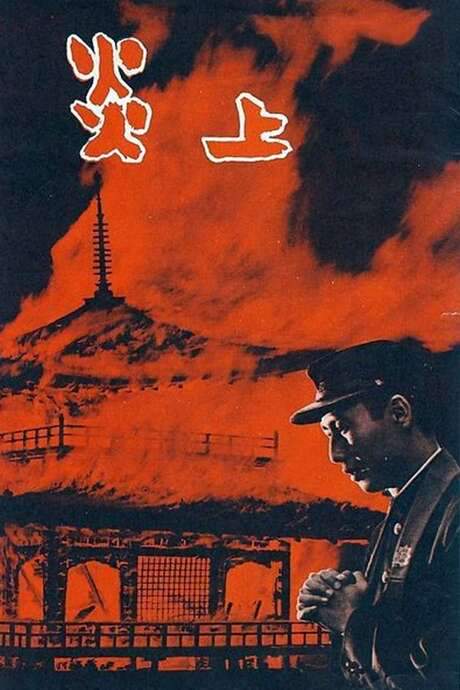
Conflagration (1958) movie poster

Timeline

Conflagration (1958) Timeline Explained – Every Event in Order

Release, runtime and language
1958 · 99 mins · Japanese
Loading streaming availability…
Directed by
Kon Ichikawa
Starring
Tamao Nakamura, Tanie Kitabayashi, Tatsuya Nakadai, Kinzô Shin, Michiyo Aratama, Jun Hamamura

Learning of his family’s collapse, acolyte Goichi, sent to study silently at the Temple of the Golden Pavilion, must endure acute psychological distress.

On this page (7)
  1. 1 Where to watch
  2. 2 Events in order (15)
  3. 3 Timeline questions answered
  4. 4 The book behind the movie
  5. 5 Movie threads
  6. 6 Movies like Conflagration
  7. 7 Every angle
Loading streaming availability…

15 events in order · contains spoilers

Conflagration Timeline: Events in Chronological Order

Every key event of Conflagration (1958) in order, scene by scene, with when and where it takes place. Use it to untangle flashbacks, time jumps and parallel storylines, to refresh your memory before the sequel or to find the exact scene you are thinking of.

  1. Interrogation after pavilion fire

    Goichi is interrogated by detectives in Kyoto about the destruction of the Shukaku Pavilion. He remains silent throughout the questioning, signaling his emotional numbness and possible guilt. The scene sets the modern arc of the story and hints at a deeper motive behind the fire.

    When
    Present
    Where
    Kyoto, interrogation room
  2. Arrival at Soen Temple with father's letter

    In a flashback, Goichi travels to the Soen Temple carrying a letter of introduction from his deceased father, a monk at Kan'ei-ji. The letter frames his entry into the temple world and his connections to powerful patrons. The moment foreshadows the weight of lineage in his life.

    When
    Flashback
    Where
    Soen Temple
  3. Father's belief about Golden Pavilion

    Goichi recalls his father's conviction that the Golden Pavilion is the most beautiful thing in the world. This ideal haunts him as he navigates temple life and the expectations tied to his name. The memory underscores his quest for beauty and meaning in a corrupted world.

    When
    Flashback
  4. Stuttering memory during rice prep

    While helping with daily chores at the temple, Goichi's stutter becomes obvious and he is ridiculed by others. The moment deepens his sense of isolation within the monastic community. It also foreshadows how speech and power shape his status among the monks.

    When
    Flashback
  5. Witnessing mother's adultery

    Goichi remembers seeing his mother commit adultery as a child, an event that stains his sense of trust and loyalty. The memory complicates his relationship with family and shapes his view of moral authority. The scene fuels his later distrust of those in power at the temple.

    When
    Flashback
  6. Mother's wish he becomes head priest

    During a family visit, his mother expresses the hope that he might one day become the temple's head priest. He hesitates, aware of the possibility of war and his own doubts about leadership. The moment adds pressure to his fragile self-image.

    When
    Flashback
  7. Pregnant woman and American soldier at a tourist site

    On a weekend visit to a tourist site, Goichi encounters a pregnant woman and a visiting American soldier attempting to enter the pavilion. His impulsive act leads to tragedy as he pushes her down the stairs, causing her miscarriage. The incident marks a tipping point in his relationship with his community.

    When
    World War II era
    Where
    Shukaku Pavilion, Kyoto
  8. Confession and payoff

    Goichi confesses the deed to Tayama Dosen, who already knows about the incident. Tayama has paid off the woman to keep the truth quiet, showing his willingness to use money to shield others and shape who is allowed to rise within the temple system. The revelation compounds Goichi's sense of guilt and betrayal.

    When
    Flashback
    Where
    Tayama's study
  9. Togari's critique of Goichi

    In another memory, Togari discusses Goichi's academic decline at Kotani University and his lingering love for ancient temples. The exchange highlights how Goichi's talents are at odds with the expectations of modern life and institutional power. It also foreshadows Togari's later role in Goichi's fate.

    When
    Flashback
    Where
    Kotani University (memory)
  10. Monastic path and Ranko's aid

    Togari reappears as he follows Goichi into the monastic path, where Ranko, a geisha, tends to his injured leg. The unlikely bond hints at the blurred lines between spirituality and worldly desires within the temple. The sequence deepens Goichi's sense of being pulled between duty and personal longing.

    When
    Flashback
    Where
    Monastic environment
  11. Spying on Tayama with a companion

    Goichi secretly observes Tayama Dosen during a night when the priest is accompanied by a woman. The act reveals the priest's proximity to secular pleasures and power within the temple's inner circle. Goichi's distance from the inner circle grows wider.

    When
    Flashback
    Where
    Tayama Dosen's quarters
  12. Nanquan koan, pin-up photo, confrontation

    During a scripture reading, the Nanquan and the cat koan is discussed, prompting monks’ petty power struggles. After the reading, Goichi uncovers a pin-up photo of a geisha inside Tayama's study book and confronts the priest. Tayama rebukes him, accusing him of being twisted, and Goichi remarks that his stutter disqualifies him from being a monk.

    When
    Flashback
    Where
    Temple reading hall and Tayama's study
  13. Debt, weapons, and forgiveness

    Goichi buys a knife and sedatives, while Togari lends him ¥3,000. He cannot repay the loan immediately, and Tayama partially covers the debt. The money matters emphasize the commodification of spiritual life and the power of patronage within the temple.

    When
    Flashback
    Where
    Temple environs
  14. Memorial memory: father's funeral

    Goichi remembers his father's funeral and the cremation that followed, a moment of quiet grief that anchors his personal history. The memory underlines the absence of a steady paternal guide in his life. The scene adds emotional weight to his later actions.

    When
    Flashback
  15. Burning the pavilion and its aftermath

    Feeling misunderstood and disillusioned with the monks' secular behavior, Goichi sets fire to the Shukaku Pavilion. The act destroys the temple and triggers the present-day pursuit by the authorities. During the transfer to prison, Goichi throws himself from a moving train, sealing his fate.

    When
    Present
    Where
    Shukaku Pavilion, Kyoto

Last updated: October 09, 2025 at 11:07

Was this helpful?

Timeline questions answered

Conflagration Timeline Explained: Your Questions Answered

When does it happen, and why in that order? The questions people ask about the chronology of Conflagration (1958): time jumps, flashbacks, cause and effect between scenes and the correct order of events, each answered with spoilers.

Q1

Why does Goichi set fire to the Golden Pavilion?

Goichi burns the Shukaku Pavilion because he has become completely disillusioned with the corruption and hypocrisy within the temple. He discovers that Tayama Dosen, the high priest he respected, secretly keeps company with women and hides pin-up photos, yet pretends to uphold strict monastic rules. Goichi feels betrayed not only by Tayama but by the entire system that claims spiritual purity while engaging in worldly deceit. The pavilion, which his father believed was the most beautiful thing in the world, has become a symbol of everything false about religious authority.

Foreshadowing: Earlier scenes show Goichi's growing awareness of the gap between the temple's sacred ideals and its leaders' actual behavior.

  • Goichi Mizoguchi
  • arson
  • Shukaku Pavilion
  • Tayama Dosen
  • temple corruption
  • disillusionment
Q2

Why does Goichi push the pregnant woman at the tourist site?

Goichi pushes the pregnant woman down the stairs in a moment of panic and confusion when he sees her with an American soldier during World War II. He fears being discovered by the soldier and panics, not thinking through the consequences of his actions. This impulsive act causes the woman to miscarry, adding to Goichi's growing burden of guilt and trauma. The incident also highlights his vulnerability and inability to handle situations under pressure.

Foreshadowing: This event occurs during wartime Kyoto when tensions between locals and American occupiers were high, creating an atmosphere of fear.

  • pregnant woman
  • American soldier
  • World War II
  • miscarriage
  • panic
  • Goichi Mizoguchi
Q3

Why does Goichi throw himself from the moving train?

Goichi commits suicide by throwing himself from the moving train because he sees no way forward after his act of arson. Having destroyed the one thing his father revered as most beautiful, and facing imprisonment, he chooses to end his life in a way that mirrors the destruction he caused. The act is both a final escape from accountability and a twisted form of reunion with the pavilion he burned, a final, fatal choice that reflects his psychological state.

Foreshadowing: Earlier, a police officer suspects Goichi of suicidal intent, and his mother chastises him for such thoughts.

  • suicide
  • train
  • death
  • Goichi Mizoguchi
  • prison
  • self-destruction
Q4

Why does Tayama Dosen call Goichi twisted?

Tayama Dosen accuses Goichi of being twisted after Goichi discovers a pin-up photo of a geisha hidden in Tayama's study book and confronts him about it. Instead of addressing his own hypocrisy, Tayama lashes out at Goichi, withdrawing his consideration of Goichi's succession to the priesthood. The accusation wounds Goichi deeply because it questions his moral character and suitability for monastic life, compounding his existing feelings of unworthiness stemming from his stutter.

Foreshadowing: Goichi had previously discovered Tayama with a woman at night, establishing the priest's secret double life.

  • Tayama Dosen
  • accusation
  • twisted
  • pin-up photo
  • geisha
  • confrontation
  • priesthood
Q5

Why does Goichi remain silent during his interrogation?

Goichi stays silent during the interrogation because he is emotionally numb from the weight of his actions and the trauma he has experienced. The silence reflects his profound psychological distress and perhaps a desire to not speak the unspeakable, to keep the truth hidden as he has hidden so much within himself. Additionally, he may feel that words cannot adequately express the complex web of guilt, betrayal, and despair that led him to burn the pavilion.

Foreshadowing: The entire film builds toward this moment of silence as Goichi withdraws deeper into himself.

  • interrogation
  • silence
  • psychological distress
  • guilt
  • Goichi Mizoguchi
  • police
Q6

Why do Goichi's childhood memories torment him throughout the film?

Goichi's childhood memories haunt him because they contain the origins of his psychological damage. He witnessed his mother's adultery as a child, which destroyed his trust in family and moral authority. He was mocked for his stutter, making him feel inadequate and isolated. His father's death left him without guidance, and his father's idealization of the Golden Pavilion created an impossible standard. These early wounds never healed and became the foundation for his later breakdown.

Foreshadowing: The film opens with Goichi's traumatic memories already affecting his present-day actions.

  • childhood
  • memory
  • stutter
  • mother adultery
  • father
  • trauma
  • psychological damage
Q7

What does the pin-up photo in Tayama's book reveal about the temple?

The pin-up photo hidden in Tayama Dosen's study book reveals the deep hypocrisy at the heart of the temple's leadership. Tayama presents himself as a strict, virtuous priest devoted to monastic discipline, yet he keeps images of geishas, women of the pleasure district, concealed in his personal studies. This discovery shatters Goichi's remaining respect for the priest and represents the final confirmation that the spiritual authority he trusted is corrupt and false.

Foreshadowing: Goichi had previously spied on Tayama with a woman at night, but the photo is concrete evidence of his hypocrisy.

  • pin-up photo
  • geisha
  • Tayama Dosen
  • hypocrisy
  • temple corruption
  • evidence
Q8

Why does Tayama Dosen pay off the woman Goichi injured?

Tayama Dosen pays off the pregnant woman Goichi pushed to keep the incident secret and protect the temple's reputation. Rather than allowing the truth to surface, which would tarnish the temple's image and potentially affect Goichi's future, Tayama uses money to bury the matter. This act shows how the temple prioritizes its public image and the careers of its monks over justice and accountability, further revealing the corruption Goichi despises.

Foreshadowing: When Goichi confesses, Tayama reveals he already knew about the incident, suggesting he had been monitoring the situation.

  • Tayama Dosen
  • payment
  • pregnant woman
  • cover-up
  • temple reputation
  • money
Q9

Why does Goichi purchase a knife and sedatives?

Goichi buys a knife and sedatives as he spirals toward despair, though the exact purpose remains ambiguous. The knife suggests possible violence against others or himself, while the sedatives indicate a desire to numb his psychological pain. Combined with his inability to repay the money he borrowed from Togari, these purchases mark a turning point where Goichi moves from internal turmoil to external action, the burning of the pavilion.

Foreshadowing: Togari condemns the corruption Goichi despises, and an ikebana teacher smashes a vase in anger, representing the breaking point of the monastery.

  • knife
  • sedatives
  • suicide
  • weapon
  • Goichi Mizoguchi
  • Togari
  • desperation
Q10

What causes Goichi's decline at Kotani University?

Goichi's academic decline at Kotani University stems from his increasing preoccupation with ancient temples and his growing psychological instability. Rather than focusing on his studies, he becomes consumed by his love for temple architecture and his deteriorating mental state. Togari, his mentor, notes this change and follows Goichi into monastic life, where Ranko, a geisha, tends to Togari's injured leg, creating another example of the blurred lines between spiritual and worldly life that confuses Goichi.

Foreshadowing: Goichi's passion for temples is established early through his father's reverence for the Golden Pavilion.

  • Kotani University
  • academic decline
  • Togari
  • temples
  • Ranko
  • geisha
  • education
Q11

Why does Goichi's mother wish for him to become head priest?

Goichi's mother wishes for him to become head priest because it represents the highest honor and security for their family. Having brought him into the temple through her connections with the high priest, she sees his potential succession as the culmination of their sacrifice and ambition. However, Goichi doubts this path, fearing the 'draft' of war might take him away and questioning whether he is suitable for leadership given his stutter and personal struggles.

Foreshadowing: The pressure from his mother adds to Goichi's burden of expectations he feels unable to meet.

  • mother
  • head priest
  • ambition
  • family expectation
  • Goichi Mizoguchi
  • Tayama Dosen
  • succession
Q12

What is the significance of the Nanquan koan in the film?

The Nanquan koan, when a monk asks about saving both the cat and the bamboo, represents the temple's harsh approach to decision-making and power. Nanquan beheads the cat to force the monks to choose between two things they value, showing that decisive, extreme action resolves conflicts where compromise fails. For Goichi, this koan underscores the temple's willingness to make brutal choices, and it parallels his own extreme decision to destroy the pavilion rather than live with the temple's hypocrisy.

Foreshadowing: After the koan reading, Goichi discovers the pin-up photo, reinforcing the theme of false virtue.

  • Nanquan koan
  • cat
  • temple philosophy
  • decision-making
  • power
  • monastery
  • scripture

Movie threads

More Movies Like Conflagration, by Mood & Story

Curated lists built around what makes Conflagration tick: the same mood, the same kind of story or the same emotional payoff. Each list explains why these movies belong together.

Movies about psychological unraveling like Conflagration

Stories where a quiet mind slowly fractures under intense internal pressure. If you were captivated by the profound psychological distress in Conflagration, explore more movies like it. This collection features slow-paced, heavy dramas focused on a character's internal collapse, offering a similar atmosphere of melancholic intensity and tragic endings.

  • psychological
  • slow burn
  • oppressive
  • melancholic
  • anxious
  • somber
  • Tone: melancholic, bleak, oppressive
  • Pacing: slow, deliberate, character-focused
Why these movies?

The story pattern: Narratives in this thread typically follow a character isolated in an austere or demanding environment, grappling with trauma or disillusionment. The story unfolds through their fragmented perspective, with tension mounting internally until it erupts in a devastating, irreversible act.

Why they belong together: Movies are grouped here because they share a deep focus on a single character's mental state, a slow and deliberate pacing that allows for intense psychological immersion, a melancholic or bleak tone, and an emotionally heavy journey that ends in tragedy.


Stories about beauty and destruction like Conflagration

Tales where a fixation on perfection leads to an act of catastrophic destruction. For viewers who appreciated the theme of aesthetic obsession leading to ruin in Conflagration, this list recommends similar movies. Discover other films where characters are consumed by an ideal of beauty, culminating in acts of destructive creation and melancholic endings.

  • obsessive
  • contemplative
  • disillusioned
  • melancholic
  • austere
  • tragic
  • Tone: melancholic, contemplative, disillusioned
  • Pacing: slow, contemplative
Why these movies?

The story pattern: The narrative pattern involves a protagonist who venerates an object, person, or place as the epitome of beauty. As the real world—with its inherent flaws, corruption, or decay—intrudes upon this ideal, the protagonist's love curdles into a destructive impulse, believing that only through annihilation can its perfect essence be preserved.

Why they belong together: These films are connected by a central theme: the dangerous intersection of pure aesthetic obsession and the impulse to destroy. They share a melancholic tone, complex character psychology, and a narrative arc that moves from reverence to disillusionment and finally to an act of ruin.

If you liked this

Movies Like Conflagration

Similar movies to Conflagration: the same genre, themes or kind of story. Each one comes with its own plot summary, timeline and ending explained.

Browse all movie summaries

Every angle

Conflagration (1958) Explained: Plot, Timeline & Characters

Everything about Conflagration in one place: what happens in the plot summary, the timeline in chronological order, the characters and meaning and a spoiler-free summary. What's After the Movie adds the cast, box office and post-credit scenes.

Coming soon on iOS and Android

The Plot Explained Movie Summary App

Plot summaries, endings explained and timelines on your phone. Catch up on any movie in minutes, save your favorites and never miss a twist again.

Be the first to know when we launch. Your email stays private, always.

Learn more about the app