Plot Explained Spoilers guaranteed!
Plot Explained

Browse by genre

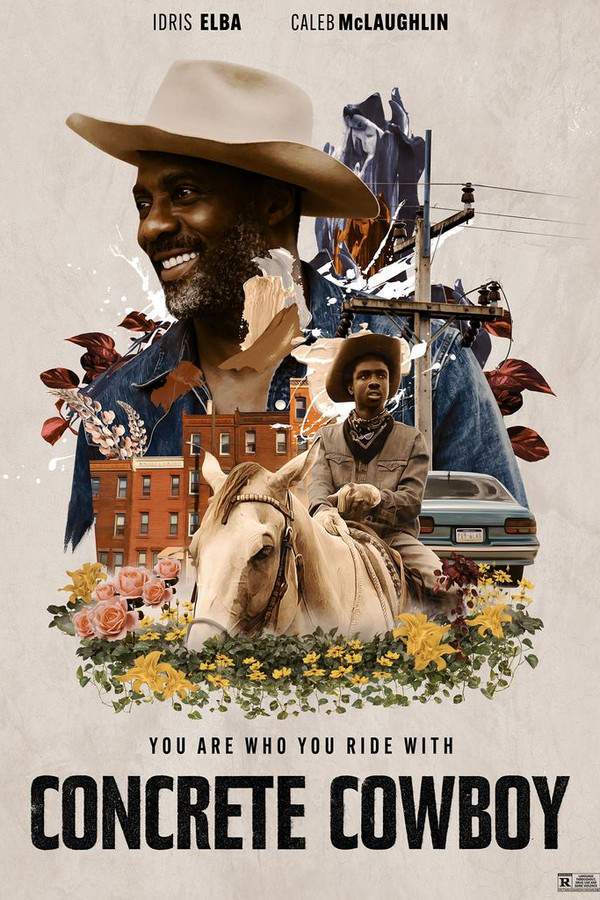
Concrete Cowboy (2021) movie poster

Plot Summary

Concrete Cowboy (2021) Plot Summary & Ending Explained

Release, runtime and language
2021 · 111 min · English
Echo score 73
Loading streaming availability…
Directed by
Ricky Staub
Starring
Idris Elba, Kadrolsha Ona Carole, Lorraine Toussaint, Jharrel Jerome, Byron Bowers, Caleb McLaughlin

In North Philadelphia, a troubled 15-year-old named Cole is sent to live with his estranged father. Seeking refuge from a difficult life, Cole discovers an unexpected community of urban cowboys who ride and care for horses in the city. He finds himself drawn into their world, forging a bond with his father and experiencing a path toward redemption and self-discovery amidst the challenges of their surroundings.

On this page (7)
  1. 1 Where to watch
  2. 2 What happens: full plot
  3. 3 Plot questions answered
  4. 4 How it ends
  5. 5 Movie threads
  6. 6 Movies like Concrete Cowboy
  7. 7 Every angle
Loading streaming availability…

Full plot summary · contains spoilers

What Happens in Concrete Cowboy: Full Plot Summary

The whole story of Concrete Cowboy (2021) explained, from the opening scene to the final frame: every key event, every twist and what it all adds up to. Read it as a quick recap before the sequel, to check a scene you missed, or to finally understand what really happened.

Cole, a 15-year-old boy hailing from Detroit, finds himself constantly in trouble at school. In a bid to straighten him out, his mother decides to drive him to Philadelphia to stay with his estranged father, Harp. After dropping him off on Harp's North Philadelphia block, she quickly departs. Immediately, a neighbor informs Cole that his father is at the stables. As Harp brings him into his home, Cole is taken aback by the sight of a horse standing in the living room, and notices the fridge and cupboards are bare. Unwilling to stay long, he declares he's only planning to remain for one night.

The following day, while attempting to call his mother, Cole is unexpectedly reunited with his older cousin, Smush. Smush kindly offers him a ride and some food but drops him back at Harp's the next morning. However, Harp is reluctant to let Cole in due to his association with Smush, who is wrapped up in drug dealing. As a result, Cole decides to sleep in a stall at the stables.

Eager to learn how to ride horses, Cole approaches the other riders. They inform him that before he can ride, he has to assist with stable chores. His day consists of shoveling manure, and he discovers that the stall he spent the night in was home to a horse named Boo, known for being untameable. Despite his struggles, he continues to spend time at the stables and secretly hangs out with Smush.

One day, Harp surprises Paris, one of the wheelchair users among the riders, by revealing a special saddle that will enable him to ride again. Witnessing this heartfelt moment triggers feelings of resentment in Cole, prompting him to return to Harp's house. When Harp finds him, an argument ensues—Cole feels neglected, believing that Harp doles out love to everyone except him. In a moment of vulnerability, Harp shares his troubled past, admitting to once being a drug dealer who spent time in prison before Cole was born. He explains he named him after John Coltrane, the legendary jazz musician from Philadelphia, hoping to inspire his son to achieve greatness despite his absence.

As more time passes, Cole learns from Smush that he was once a rider too, but turned to drug dealing to save enough money to buy a ranch out West. Their lives take a turn when Boo escapes, leading the riders to find him in a local baseball field. Harp tells Cole that he is the only one who can calm Boo. Summoning his courage, Cole approaches, successfully throwing the reins over Boo and mounting him.

However, chaos ensues when a drug deal set up by Smush goes awry, drawing the attention of a local dealer who attempts to kidnap him. With cops hot on their tail, Cole and Smush narrowly escape. While Smush is optimistic about their plan to move west, Cole, feeling the weight of his choices, decides he wants out of that life. The situation worsens when Animal Control arrives to confiscate the horses, prompting Cole to confront Harp, calling him a coward. In a moment of desperation, he chooses to return to Smush, who leads him into another drug deal. The night takes a tragic turn when Smush is shot, and Cole flees in fear.

After a frantic search, Harp eventually locates Cole hiding in the stables. Sensing the trauma, he gently cleans the blood off Cole's hands and emphasizes the need to honor Smush properly. That night, they break into the municipal stables, liberating the horses. Together, they ride through the neighborhood to pay respects to Smush's grave, where Cole places a pair of cowboy boots on the soil, marking the spot.

In the days that follow, they witness the stables being demolished, yet Harp assures Cole that their love for riding will persist despite losing their home base. The narrative closes with Cole’s mother returning to Philadelphia, and Harp expressing gratitude for allowing Cole to come stay with him.
Last updated: November 15, 2024 at 17:39

Was this helpful?

Plot questions answered

Concrete Cowboy Plot Explained: Your Questions Answered

The questions people ask most about Concrete Cowboy (2021): what happens in the confusing scenes, why the characters do what they do, the twists, hidden details and what the ending means. Each answer contains spoilers.

Q1

Why does Cole's mother send him to Philadelphia?

Cole's mother sends him to Philadelphia because he was constantly getting into trouble at school in Detroit. She hoped that living with his estranged father Harp would help straighten him out and give him a fresh start.

Foreshadowing: The movie opens with Cole's repeated school troubles, establishing the conflict that drives the entire narrative.

  • Cole
  • mother
  • Philadelphia
  • Detroit
  • sent away
Q2

Why does Harp not want Cole around Smush?

Harp is reluctant because Smush is involved in drug dealing. Harp knows the dangerous path Smush has chosen and doesn't want Cole to get pulled into that world, which is why he refuses to let Cole stay with him after reuniting with his cousin.

Foreshadowing: Harp's own past as a former drug dealer makes him especially aware of the risks Smush poses to Cole.

  • Harp
  • Smush
  • drug dealing
  • protection
Q3

Why does Cole feel neglected by Harp?

Cole feels neglected because Harp shows more attention and care to other riders in the community, like Paris (the wheelchair user), than to him. When Harp gives Paris a special saddle so he can ride again, Cole sees this as proof that Harp loves everyone except his own son.

Foreshadowing: This resentment builds after Cole witnesses Harp's heartfelt gesture to Paris, highlighting his emotional isolation.

  • Cole
  • Harp
  • neglect
  • Paris
  • resentment
Q4

Why did Harp name Cole after John Coltrane?

Harp explains that he named Cole after John Coltrane because he wanted his son to achieve greatness. Harp admits he was once a drug dealer who spent time in prison before Cole was born, and he hoped naming his son after the legendary jazz musician from Philadelphia would inspire him to become something more.

Foreshadowing: The name carries symbolic weight, representing Harp's hope that Cole will transcend the troubled path Harp once walked.

  • Harp
  • Cole
  • John Coltrane
  • name
  • jazz
Q5

Why is Cole the only one who can calm Boo the horse?

Despite Boo being known as untameable, Harp tells Cole he is the only one who can calm him. Cole successfully approaches Boo, throws the reins over him, and mounts him, showing a natural bond that develops through Cole's patience and determination despite the horse's reputation.

Foreshadowing: Cole's earlier choice to sleep in Boo's stall at the stables hints at the connection he'll eventually form with the horse.

  • Cole
  • Boo
  • horse
  • tame
  • calm
Q6

Why does Smush deal drugs?

Smush reveals to Cole that he was once a rider too, but turned to drug dealing to save enough money to buy a ranch out West. His dream is to leave Philadelphia and start fresh, but illegal activities are his chosen path to fund that dream.

Foreshadowing: Smush's dream of the West foreshadows his tragic fate and the movie's themes of longing for escape.

  • Smush
  • drug dealing
  • ranch
  • West
  • money
Q7

Why does Cole hide in the stables after Smush is shot?

After Smush is shot during a drug deal, Cole flees in fear and trauma. Harp eventually finds him hiding in the stables. Cole is traumatized by witnessing his cousin's death and having blood on his hands from the incident.

Foreshadowing: This traumatic moment marks a turning point in Cole's character arc, pushing him toward maturity.

  • Cole
  • Smush
  • shot
  • stables
  • trauma
Q8

Why do Cole and Harp break into the municipal stables?

Animal Control arrives to confiscate the horses from their community stables. In a desperate act to save the horses, Cole and Harp break into the municipal stables to free them before they can be taken away.

Foreshadowing: This act of defiance shows how far Cole has come in embracing the cowboy community and protecting what he loves.

  • Cole
  • Harp
  • horses
  • municipal stables
  • Animal Control
Q9

Why does Cole leave cowboy boots at Smush's grave?

Cole leaves a pair of cowboy boots at Smush's grave as a tribute to honor his memory. The boots symbolize the cowboy identity they shared, representing Cole's respect for his cousin and his way of saying goodbye.

Foreshadowing: This gesture completes Cole's healing journey, showing he has found belonging in the cowboy community that Smush once introduced him to.

  • Cole
  • Smush
  • boots
  • grave
  • tribute
Q10

What happens to the stables at the end of the movie?

The stables are demolished after the events of the film. However, Harp reassures Cole that their love for riding will continue despite losing their home base, emphasizing that the community and their passion persist beyond any physical location.

Foreshadowing: The demolition represents the end of an era but not the end of their traditions, aligning with the movie's themes of resilience and continuity.

  • stables
  • demolished
  • riding
  • community
  • Harp

Ending explained

What Happens at the End of Concrete Cowboy?

How Concrete Cowboy (2021) ends, in short: the final scene, the last twist and what it means for the characters. The full ending explained, with every spoiler, lives on its own page.

Read the full ending explained

The ending of Concrete Cowboy emphasizes the resilience and spirit of the Fletcher Street community. After the developers plan to demolish the neighborhood and remove their horses, Harp and the others decide to stand their ground. They steal a horse from a police stable to prevent the horses from being taken away, symbolizing their fight to preserve their cultural heritage. When they return home, they find their houses being demolished by construction machinery, but Harp delivers a stirring speech about identity and belonging: he reminds Cole and everyone else that a place is not just bricks and mortar, but the people and memories that make it their home. His words underscore the idea that while buildings can be destroyed, the community’s spirit and their sense of identity cannot be eradicated.

In the final scenes, Harp and Cole continue to seek a new stable where they can keep their traditions alive, highlighting that even in the face of loss and displacement, the community’s bond and love for their heritage endure. The film closes on a hopeful note, emphasizing that 'home' is ultimately about belonging and family, not just a physical location. It’s a powerful reminder that the essence of a community—its history, culture, and spirit—can survive beyond the physical spaces and can be kept alive through shared stories, love, and perseverance. This ending underscores the importance of holding onto one’s roots, even when everything around them is changing or falling apart.

Concrete Cowboy ending explained in full

Movie threads

More Movies Like Concrete Cowboy, by Mood & Story

Curated lists built around what makes Concrete Cowboy tick: the same mood, the same kind of story or the same emotional payoff. Each list explains why these movies belong together.

Movies about found families in the city like Concrete Cowboy

Stories of unlikely communities offering solace and belonging in harsh city environments. If you liked the way Concrete Cowboy used the urban setting to explore themes of belonging, you'll appreciate these films. Discover other movies like Concrete Cowboy that feature stories of people finding their tribe and a sense of home within the challenging, often isolating environment of a major city.

  • gritty
  • heartfelt
  • urban
  • hopeful
  • redemptive
  • melancholic
  • Tone: hopeful, heartfelt, gritty
  • Pacing: steady, character-driven
Why these movies?

The story pattern: Stories in this thread typically follow an outsider or a troubled individual entering a unique subculture within a city. The central conflict often involves the protagonist grappling with their past while learning the rules and values of their new community, leading to personal growth and the forging of deep, familial bonds that replace or heal broken ones.

Why they belong together: These films are grouped together because they share a specific mood: a blend of gritty urban realism with heartfelt, redemptive character arcs. They balance the melancholic or harsh realities of city life with a hopeful tone centered on connection and community, creating a uniquely bittersweet yet uplifting experience.

Bittersweet redemption stories like Concrete Cowboy

Character arcs where hard-won growth is accompanied by poignant loss. Fans of Concrete Cowboy's emotionally complex ending will find more to love here. Explore movies like Concrete Cowboy where characters achieve redemption and personal growth, but their victories are intertwined with loss, creating a powerful and realistic bittersweet feeling that lingers after the credits roll.

  • bittersweet
  • redemptive
  • melancholic
  • hopeful
  • heartfelt
  • emotional
  • Tone: bittersweet, hopeful, melancholic
  • Pacing: steady, linear
Why these movies?

The story pattern: The narrative pattern involves a character at a low point, often due to their own actions or difficult circumstances. Their journey toward a better self is arduous and is marked by a key loss or sacrifice that gives their growth weight and meaning. The ending acknowledges the pain of the past while affirming the hope of the future, avoiding simplistic resolutions.

Why they belong together: These movies are united by a specific emotional mix: a hopeful core surrounded by melancholy. The pacing is often steady, allowing the emotional weight of the journey to build, and the tone masterfully balances light and dark. The endings feel earned and realistic, rather than purely happy or sad, creating a powerful and memorable impact.

If you liked this

Movies Like Concrete Cowboy

Similar movies to Concrete Cowboy: the same genre, themes or kind of story. Each one comes with its own plot summary, timeline and ending explained.

Browse all movie summaries

Every angle

Concrete Cowboy (2021) Explained: Plot, Ending, Timeline & Characters

Everything about Concrete Cowboy in one place: what happens in the plot summary, the timeline in chronological order, the characters and meaning, the ending explained and a spoiler-free summary. What's After the Movie adds the cast, box office and post-credit scenes.

Coming soon on iOS and Android

The Plot Explained Movie Summary App

Plot summaries, endings explained and timelines on your phone. Catch up on any movie in minutes, save your favorites and never miss a twist again.

Be the first to know when we launch. Your email stays private, always.

Learn more about the app