Plot Explained Spoilers guaranteed!
Plot Explained

Browse by genre

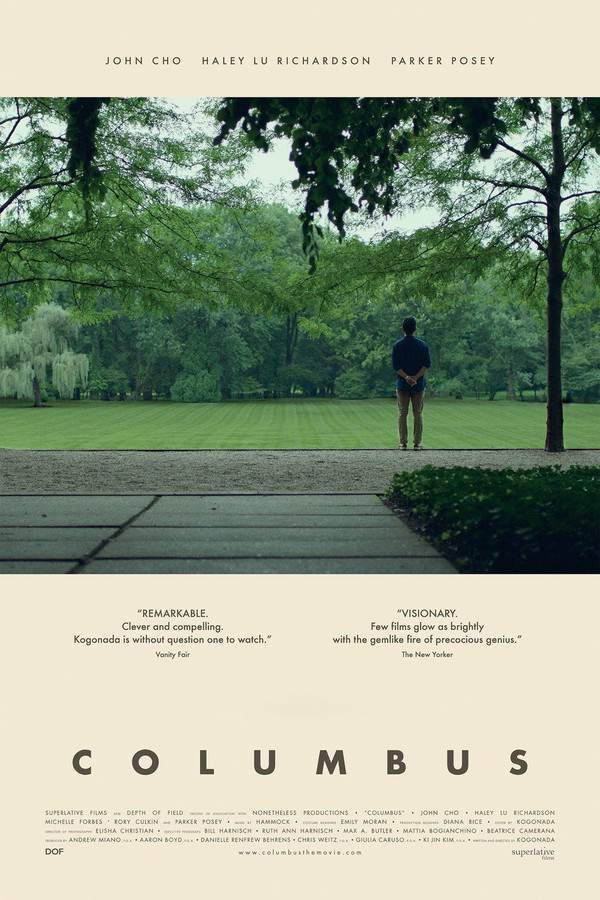
Columbus (2017) movie poster

Plot Summary

Columbus (2017) Plot Summary Explained

Release, runtime and language
2017 · 100 min · English
Echo score 78
Loading streaming availability…
Directed by
Kogonada
Starring
Parker Posey, Alphaeus Green Jr., Caitlin Ewald, Erin Allegretti, Haley Lu Richardson, Jim Dougherty
Budget
$700K

When a renowned architect falls ill, his son Jin unexpectedly finds himself in Columbus, Indiana, a city famed for its modernist architecture. There, he encounters Casey, a local library worker with a deep appreciation for design. As Jin grapples with his father’s condition, an unlikely connection develops between them, exploring themes of family, love, and finding a sense of belonging against the backdrop of the city’s distinctive buildings.

On this page (7)
  1. 1 Where to watch
  2. 2 What happens: full plot
  3. 3 Plot questions answered
  4. 4 Movie threads
  5. 5 Movies like Columbus
  6. 6 Categories
  7. 7 Every angle
Loading streaming availability…

Full plot summary · contains spoilers

What Happens in Columbus: Full Plot Summary

The whole story of Columbus (2017) explained, from the opening scene to the final frame: every key event, every twist and what it all adds up to. Read it as a quick recap before the sequel, to check a scene you missed, or to finally understand what really happened.

In Columbus, Indiana, Jin Lee arrives from South Korea to watch over his estranged father, who, while visiting the town to give a lecture about architecture, has fallen into a coma and is now in a local hospital. One day, Casey, a young woman who works in a library near the hospital, crosses paths with him. Casey lives with and takes care of her mother, a recovering drug addict.

What begins as a chance meeting soon blossoms into a meaningful connection. Jin and Casey form a quiet, growing rapport as she guides him around Columbus for several days, offering him a local’s view of the town and its architectural fingerprints. Through their conversations, they reveal not only their shared fascination with architecture but also deeper parts of themselves. Jin speaks about the bitterness and resentment he feels toward his father, whom he believes prioritized work over family. Casey, meanwhile, opens up about her own dream of working in architecture, paired with the weight of caring for her mother and the fear of choosing her own future over the life she has known.

As they stroll through streets and spaces that blend form with memory, Jin urges Casey to recognize that her life is hers to live, stressing that she should not be shackled by responsibility if it means denying her own ambitions. Casey absorbs this reminder, feeling the pull of a future that could be shaped by her talents rather than by duty alone.

Then comes a late-night disclosure that tests Casey’s resolve. She discovers her mother may have relapsed, leading to a tense moment of doubt. However, the truth gradually emerges: her mother has not relapsed, but has started seeing a new partner. This revelation crystallizes Casey’s decision about where she should tread next. Realizing that her best path lies in pursuing her architectural dreams, she chooses to move on from Columbus.

The farewell between Jin and Casey is tender and poignant. They share a meaningful hug as Casey prepares to leave, seeking a fresh start elsewhere, while Jin remains behind to stay with his ailing father. The film closes on a note of quiet, hopeful possibility, underscored by the idea that personal growth often requires drawing boundaries and choosing paths that align with one’s own calling.

Last updated: February 24, 2026 at 14:21

Was this helpful?

Plot questions answered

Columbus Plot Explained: Your Questions Answered

The questions people ask most about Columbus (2017): what happens in the confusing scenes, why the characters do what they do, the twists, hidden details and what the ending means. Each answer contains spoilers.

Q1

Why does Jin travel to Columbus, Indiana?

Jin comes to Columbus to stay with his estranged father, who has fallen into a coma while giving an architecture lecture in the city. Though Jin harbors resentment toward his father for prioritizing work over family, he feels obligated to be there during this medical crisis.

Foreshadowing: The film opens with Jin arriving in Columbus, establishing both his sense of duty and his complicated feelings toward his father from the very beginning.

  • Jin
  • Columbus Indiana
  • father
  • coma
  • architecture lecture
Q2

Why does Jin resent his father?

Jin resents his father because he believes his father prioritized work and career over family throughout his life. This resentment stems from years of feeling neglected and unimportant compared to his father's professional ambitions.

Foreshadowing: Jin's bitterness is introduced early when he discusses his father's absence during his childhood, setting the emotional foundation for their strained relationship.

  • Jin
  • father
  • resentment
  • family
  • work
  • neglect
Q3

Why does Casey decide to leave Columbus?

After discovering that her mother has started seeing a new partner (not relapsed as Casey feared), Casey realizes she has been using caregiving as an excuse to avoid pursuing her own architectural dreams. Encouraged by Jin's advice to prioritize her life, she decides to leave Columbus to pursue her passion for architecture.

Foreshadowing: Earlier conversations about Casey's dreams and her conflict between duty and ambition foreshadow this decision, making her departure feel like a natural progression.

  • Casey
  • leave Columbus
  • architecture
  • mother
  • dreams
  • departure
Q4

What is Casey's relationship with her mother?

Casey lives with and cares for her mother, who is a recovering drug addict. This responsibility has kept her grounded in Columbus, putting her own architectural dreams on hold despite her talent and passion for design.

Foreshadowing: Casey's living situation and her conversations about feeling tethered to home establish the tension between her duty to her mother and her personal aspirations.

  • Casey
  • mother
  • drug addict
  • caregiver
  • Columbus
Q5

Why does Jin encourage Casey to pursue her dreams?

Jin encourages Casey to pursue her dreams because he deeply regrets not living his own life on his own terms. Seeing his father now helpless in a coma makes him realize that resentment over missed opportunities is painful, and he doesn't want Casey to experience the same regret.

Foreshadowing: Jin's own bitterness about his father's absence and his unspoken regrets about his own choices create the motivation for his advice to Casey.

  • Jin
  • Casey
  • dreams
  • advice
  • regret
  • pursue
Q6

What does Casey discover about her mother?

Casey initially suspects her mother may have relapsed after noticing strange behavior, but she later learns her mother has actually started seeing a new partner. This revelation helps Casey realize she has been using her mother's situation as an excuse to avoid pursuing her own future.

Foreshadowing: The tension around Casey's mother's behavior builds throughout the film, with this revelation serving as a turning point that frees Casey to make her decision.

  • Casey
  • mother
  • relapse
  • new partner
  • revelation
  • truth
Q7

What role does architecture play in the film?

Architecture serves as the thematic backbone of the film, providing the setting and metaphor for the characters' lives. Both Jin and Casey share a deep appreciation for modernist architecture, and their walks through Columbus's famous buildings become a way for them to connect, communicate, and explore ideas about form, function, and what it means to create something meaningful.

Foreshadowing: Their very first meeting at the library involves discussion of architecture, establishing it as the foundation of their connection.

  • architecture
  • Columbus Indiana
  • buildings
  • design
  • modernist
Q8

What happens between Jin and Casey at the end?

Jin and Casey share a tender, bittersweet hug as farewell. Casey leaves Columbus to pursue her architectural dreams elsewhere, while Jin remains behind to care for his comatose father. Their connection, though brief, has profoundly influenced both of their decisions moving forward.

Foreshadowing: Throughout their time together, the film hints that their paths will diverge despite their growing bond, making the farewell feel like a natural conclusion to their story.

  • Jin
  • Casey
  • farewell
  • hug
  • goodbye
  • ending
Q9

Does Jin's father recover from the coma?

The film does not show Jin's father recovering from the coma. Jin remains in Columbus watching over his ailing father as the film ends, with their reconciliation left unresolved but the possibility hinted at through Jin's continued presence.

Foreshadowing: The open-ended nature of the father's condition is established early, with the film focusing more on Jin's internal journey than on his father's recovery.

  • Jin
  • father
  • coma
  • recovery
  • hospital
  • ending
Q10

Why do Jin and Casey form a connection?

Jin and Casey connect through their shared appreciation for architecture and their mutual feelings of being stuck in lives they didn't choose. Jin feels trapped by family obligation and resentment, while Casey feels anchored by her mother's needs. Their conversations about buildings and design become a vehicle for exploring deeper emotions and aspirations.

Foreshadowing: Their initial meeting at the library establishes their shared interest in architecture, which serves as the foundation for their evolving relationship.

  • Jin
  • Casey
  • connection
  • relationship
  • architecture
  • bond

Movie threads

More Movies Like Columbus, by Mood & Story

Curated lists built around what makes Columbus tick: the same mood, the same kind of story or the same emotional payoff. Each list explains why these movies belong together.

Movies about quiet bittersweet connections like Columbus

Stories of quiet connection forged amidst personal stasis and emotional crossroads. Discover more films like Columbus that explore slow-building, emotionally resonant relationships. If you enjoyed the thoughtful dialogue and tender connection between Jin and Casey, you'll find similar character-driven stories about unlikely bonds formed during times of personal uncertainty.

  • conversational
  • melancholic
  • hopeful
  • introspective
  • gentle
  • character-driven
  • Tone: bittersweet, contemplative
  • Pacing: slow, deliberate
Why these movies?

The story pattern: These narratives typically follow two characters who meet at a point of personal crisis or indecision. The plot is minimal, driven by conversations and shared moments that gradually build intimacy. Conflict is internal, stemming from unfulfilled dreams and family obligations, and the arc focuses on emotional growth rather than dramatic resolution.

Why they belong together: Movies in this thread share a gentle, melancholic yet hopeful tone, a slow and deliberate pacing that allows for introspection, and a focus on the quiet chemistry between leads. They explore themes of longing, duty, and the subtle impact one person can have on another's life path.

Movies where setting is a character like Columbus

Films where the setting becomes a silent character, shaping the mood and narrative. Find more movies like Columbus, where the architecture and setting profoundly shape the story. If you were captivated by how the modernist buildings of Columbus, Indiana mirrored the characters' inner lives, these films use their environments to create a unique, atmospheric experience.

  • atmospheric
  • contemplative
  • visual
  • meditative
  • sense-of-place
  • quiet
  • Tone: atmospheric, melancholic, contemplative
  • Pacing: slow, meditative
Why these movies?

The story pattern: In these stories, the narrative unfolds in a symbiotic relationship with its location. The environment reflects the characters' internal states—isolation, aspiration, or nostalgia. The plot often involves characters reconciling with their surroundings, finding meaning or a sense of belonging through their interaction with a place.

Why they belong together: These films are grouped by their shared emphasis on atmosphere and setting. They use cinematography to highlight the beauty or tension of a location, creating a mood that is contemplative, atmospheric, and deeply connected to the physical world. The pacing is often slow, allowing the audience to absorb the environment.

If you liked this

Movies Like Columbus

Similar movies to Columbus: the same genre, themes or kind of story. Each one comes with its own plot summary, timeline and ending explained.

Browse all movie summaries

Categories

Movie Lists Featuring Columbus

Columbus appears in these hand-built movie categories. Each one groups movies by a specific mood, theme or story type, with their plot summaries and endings explained.

View all movie categories

Every angle

Columbus (2017) Explained: Plot, Timeline & Characters

Everything about Columbus in one place: what happens in the plot summary, the timeline in chronological order, the characters and meaning and a spoiler-free summary. What's After the Movie adds the cast, box office and post-credit scenes.

Coming soon on iOS and Android

The Plot Explained Movie Summary App

Plot summaries, endings explained and timelines on your phone. Catch up on any movie in minutes, save your favorites and never miss a twist again.

Be the first to know when we launch. Your email stays private, always.

Learn more about the app