Plot Explained Spoilers guaranteed!
Plot Explained

Browse by genre

Civil War (2010) movie poster

Timeline

Civil War (2010) Timeline Explained – Every Event in Order

Release, runtime and language
2010 · 90 mins · Portuguese
Directed by
Pedro Caldas
Starring
Maria Leite, Pedro M. Ruivo, Francisco Belard, Nuno Romano, Catarina Wall, Leonor Coutinho Cabral

Set on a southern Portuguese beach in the summer of 1982, Rui lives with his distant parents, each trapped in their own isolation. As he faces upcoming school exams, his mind drifts toward music and the imaginary realms he draws. Joana, bright and lively, becomes the only person who can draw him out of his autistic shell, her energy captivating him.

On this page (4)
  1. 1 Events in order (13)
  2. 2 Timeline questions answered
  3. 3 Movie threads
  4. 4 Every angle

13 events in order · contains spoilers

Civil War Timeline: Events in Chronological Order

Every key event of Civil War (2010) in order, scene by scene, with when and where it takes place. Use it to untangle flashbacks, time jumps and parallel storylines, to refresh your memory before the sequel or to find the exact scene you are thinking of.

  1. Future Civil War Begins

    The film opens in a future America devastated by a Second Civil War. Texas and California have seceded to form the Western Forces militia, while Florida establishes its own alliance. President Nick Offerman delivers a triumphant speech after a major victory against Loyalist states, highlighting the ongoing conflict.

    Where
    New York City
  2. Bombing in New York

    From her hotel room in NYC, journalist Lee Smith witnesses a bombing downtown while listening to the President's speech. This event underscores the chaos and danger pervasive across the country during the civil war.

    Where
    New York City, downtown
  3. Protest and Chaos in Downtown

    Lee joins fellow journalist Joel and others in downtown for a protest amidst escalating violence. During the chaos, a woman with an American flag suicide-bombs the crowd, causing chaos and destruction. Lee captures the aftermath with her camera, documenting the violence.

    Where
    Downtown
  4. Hotel Party and Planning Journey

    Lee and her colleagues attend a hotel party to strategize their underground journey through war zones to Washington DC. Sammy, their mentor, insists on joining the dangerous trip to the front lines, despite his age, to report from Charlottesville.

    Where
    Hotel
  5. Departure and Tensions

    The group prepares to leave early the next day, with Jessie eager to join and having idolized Lee. During refueling, they are forced to use Canadian currency, and Lee witnesses Jessie being taken to see hangings of tortured looters, revealing the brutal realities of the war.

    Where
    Refuel stop
  6. Abandoned Mall and Night Watching

    At an abandoned mall, Jessie takes photos of a downed helicopter. As night falls, they sit and watch distant gunfire illuminate the sky, experiencing the permeating violence and danger of their journey.

    Where
    Abandoned mall
  7. Sniper Zone and Combat

    The group navigates through a sniper zone, witnessing men being shot and taking cover. They assist allied militia gunmen in capturing sniper positions, experiencing the peril and chaos of urban warfare firsthand.

    Where
    Sniper zone
  8. Refugee Camp and Bonding

    Arriving at a refugee camp, the group relaxes and bonds while Jessie develops her photos. Lee reflects on her career, notably her iconic photo of an Antifa massacre, emphasizing her experience and dedication to war journalism.

    Where
    Refugee camp
  9. Unexpected Encounter with Journalists

    While in a seemingly peaceful town, the group encounters fellow journalists from Hong Kong, Tony and Bohai. Their arrival marks the escalation of danger, as Loyalist gunmen ambush and execute Tony and Bohai, leading to a tense escape.

    Where
    Peaceful town
  10. Escape and Wartime Journey

    Joel drives the wounded group toward a Western Forces military base in Charlottesville through burning forests. They arrive after Sammy succumbs to his wounds, marking a tragic loss and intensifying their resolve to continue their mission.

    Where
    Charlottesville, military base
  11. Washington D.C. Assault

    The group joins the Western Forces as they storm into Washington, D.C., aiming for the White House amidst heavy fighting. Jessie eagerly prepares for her photo opportunities, while Lee remains in stunned shock from the chaos surrounding her.

    Where
    Washington D.C.
  12. Entry into the White House

    Inside the White House, the journalists are met with armed Secret Service agents. Lee pushes Jessie out of the way to shield her during a shooting, capturing her final moments on camera as the soldiers capture the President.

    Where
    White House
  13. Executions and Final Moments

    In the Oval Office, Joel confronts the President and pleads for a last quote before the President is executed by the soldiers, who are enforcing their brutal control amidst the ongoing civil war. Jessie captures this historic and violent moment with her camera.

    Where
    Oval Office

Last updated: August 05, 2025 at 06:58

Was this helpful?

Timeline questions answered

Civil War Timeline Explained: Your Questions Answered

When does it happen, and why in that order? The questions people ask about the chronology of Civil War (2010): time jumps, flashbacks, cause and effect between scenes and the correct order of events, each answered with spoilers.

Q1

Why does Lee push Jessie aside and take the bullet for her?

Lee protects Jessie because she sees her as the future of journalism and wants to ensure the younger photographer survives to continue documenting the war. Throughout the journey, Lee has taken Jessie under her wing, viewing her as a symbol of hope and continuity in a profession that has cost many lives. By sacrificing herself, Lee ensures Jessie's survival and allows her to capture the historic moment of the President's execution.

  • lee smith
  • jessie cullen
  • protect
  • sacrifice
  • journalism
Q2

Why does Joel ask the President for a final statement before execution?

Joel demands a final statement from the President because he is consumed by grief and rage over the deaths of his colleagues - Sammy, Bohai, Tony, and now Lee. His request is not truly about getting a quote; it's a moment of confrontation where he wants the President to acknowledge the devastation his leadership has caused. The President pleads for his life, and Joel's cold response 'That'll do' reflects his emotional numbness and the futility he feels after everything they've endured.

  • joel
  • president
  • execution
  • final statement
  • grief
Q3

Why are Texas and California allied together against the federal government?

The film presents a speculative future where Texas and California - two states with vastly different political cultures - have both seceded and formed the Western Forces militia. The movie does not deeply explore why these unlikely allies united, focusing instead on the chaos of war rather than political explanations. This alliance appears to be driven primarily by opposition to the federal government rather than shared ideology.

  • texas
  • california
  • western forces
  • secession
  • alliance
Q4

Why are the journalists determined to reach Washington D.C. despite the danger?

The journalists risk their lives to reach Washington D.C. because they believe it's their duty to document history firsthand, even as the government views the press as enemies. Their seasoned mentor Sammy insists on joining the trip to witness the front lines in Charlottesville, believing that witnessing and recording these events is essential even at great personal cost. The journey represents their commitment to truth-telling amid propaganda and chaos.

Foreshadowing: The hotel party scene establishes their mission and Sammy’s insistence on witnessing history firsthand.

  • journalists
  • washington dc
  • journey
  • document
  • war
  • sammy
Q5

Why does Lee ask to photograph the tortured men instead of trying to save them?

Lee's request to photograph the tortured and bound men instead of intervening reflects the moral complexity of war journalism. As a photojournalist, she believes her role is to document atrocities rather than intervene, believing that these images can bear witness to the truth and potentially impact the world. Her calm demeanor in asking to photograph them shows how the war has desensitized her - she recognizes she cannot save them but can ensure their fate is recorded.

  • lee smith
  • photograph
  • torture
  • execution
  • journalist
  • ethics
Q6

What is the significance of the journalists trying to interview the President?

The interview represents the ultimate journalistic scoop in a fractured America where the press is considered the enemy. By reaching the President during active conflict, the journalists hope to capture a historic statement from a leader whose government is on the verge of collapse. The President is depicted as delivering speeches about victories while the country crumbles around him, making any direct access to him immensely valuable and dangerous.

  • president
  • interview
  • washington dc
  • journalists
  • scoop
Q7

Why does Sammy die after they reach the Western Forces base in Charlottesville?

Sammy succumbs to wounds sustained during the ambush where Loyalist gunmen killed Tony and Bohai. He manages to drive the van to safety before finally succumbing to his injuries, dying shortly after they arrive at the Western Forces military base. His death marks a significant loss for the group, as he was their experienced mentor who had insisted on joining the dangerous journey despite his age.

Foreshadowing: Earlier at the refuel stop, Sammy is already wounded during the encounter with Loyalist gunmen.

  • sammy
  • death
  • charlottesville
  • wounds
  • mentor
Q8

Why do the Loyalist gunmen kill Tony and Bohai specifically?

The Loyalist gunmen kill Tony and Bohai after discovering their Hong Kong background. When Joel tries to reason with them and mentions Tony is a journalist, the gunmen's hostility intensifies upon learning Tony is from Hong Kong. They execute both Tony and Bohai, dumping their bodies in shallow graves, demonstrating the brutal and arbitrary violence of the war against anyone perceived as foreign or oppositional.

  • tony
  • bohai
  • hong kong
  • loyalist
  • journalists
  • killed
Q9

Why does Lee appear emotionally numb during the Washington D.C. assault?

Lee becomes emotionally numb as the journey progresses because she has witnessed countless atrocities - bombings, executions, torture, and the deaths of companions. The constant exposure to violence and loss has desensitized her, shifting her from the experienced but engaged journalist seen early in the film to someone in a state of shock. Her numbness reaches its peak in Washington D.C. as the group storms the White House, overwhelmed by the destruction around her.

Foreshadowing: Lee’s calm request to photograph the tortured men earlier demonstrates her growing desensitization.

  • lee smith
  • numb
  • shock
  • desensitized
  • trauma
  • washington
Q10

Why is Jessie so determined to photograph everything during the journey?

Jessie is determined to document the war because she idolizes Lee and wants to become a respected war photographer herself. She sees capturing real war moments as vital and meaningful, despite her fear and inexperience. Her determination to photograph every moment - even in the most dangerous situations - stems from her belief that these images are historically significant and that documenting truth is a noble pursuit.

Foreshadowing: Jessie admires Lee from the start and hopes to capture the ongoing conflict like her idol.

  • jessie cullen
  • photographs
  • document
  • war
  • idol
  • lee smith
Q11

Why does the Western Forces execute the President instead of taking him prisoner?

The Western Forces execute the President in the Oval Office after capturing him, representing the brutal conclusion of the civil war. Rather than a trial or imprisonment, the soldiers kill him as an act of victory and finality. Joel and Jessie witness this execution, with Jessie photographing the President's death - an event that immortalizes the brutal end of the fractured nation. The execution shows the war has no mercy or interest in reconciliation.

Foreshadowing: The assault on the White House was explicitly aimed at capturing or killing the President.

  • president
  • execution
  • western forces
  • oval office
  • killed
  • white house
Q12

Why are the residents in the peaceful town ignoring the war?

The residents in the seemingly unaffected town represent those who choose to ignore the conflict despite it raging around them. This scene highlights that not everyone in America is aware of or affected by the civil war - some communities have managed to remain insulated from the violence. It serves as a stark contrast to the journalists' dangerous journey and underscores how the war's impact varies wildly depending on location.

  • peaceful town
  • residents
  • ignore
  • war
  • unaware
Q13

What happens to Joel after the President's execution?

After witnessing the President's execution, Joel remains in the Oval Office, having just asked the President for a final statement. His cold response 'That'll do' to the President's plea for life shows his emotional state after losing Sammy, Tony, Bohai, and Lee. The film ends with Joel and Jessie together, having captured the historic - though brutal - conclusion to the war, though the future remains bleak and uncertain.

  • joel
  • president
  • execution
  • ending
  • survival

Movie threads

More Movies Like Civil War, by Mood & Story

Curated lists built around what makes Civil War tick: the same mood, the same kind of story or the same emotional payoff. Each list explains why these movies belong together.

Movies about desensitized witnesses like in Civil War

Characters become numb to horror while documenting societal breakdown. If you liked the intense, journalistic perspective of Civil War, explore other movies where characters document crises. These films share a focus on the psychological toll of witnessing atrocities, the loss of innocence, and the grim reality of being a spectator to societal breakdown.

  • harrowing
  • unsettling
  • numb
  • desolate
  • tense
  • grim
  • Tone: tense, grim, bleak
  • Pacing: variable, with slow dread and chaotic action
Why these movies?

The story pattern: Stories typically follow a linear journey into the heart of a major conflict or disaster. The protagonist starts with a sense of purpose or objectivity, but gradually becomes traumatized and desensitized by the relentless violence and moral decay they encounter. The narrative arc is often one of psychological descent rather than physical triumph.

Why they belong together: Movies are grouped here for their shared focus on the observer's perspective in high-intensity scenarios, the theme of becoming numb to violence, and the bleak, heavy emotional weight that comes from documenting human tragedy without the power to stop it.
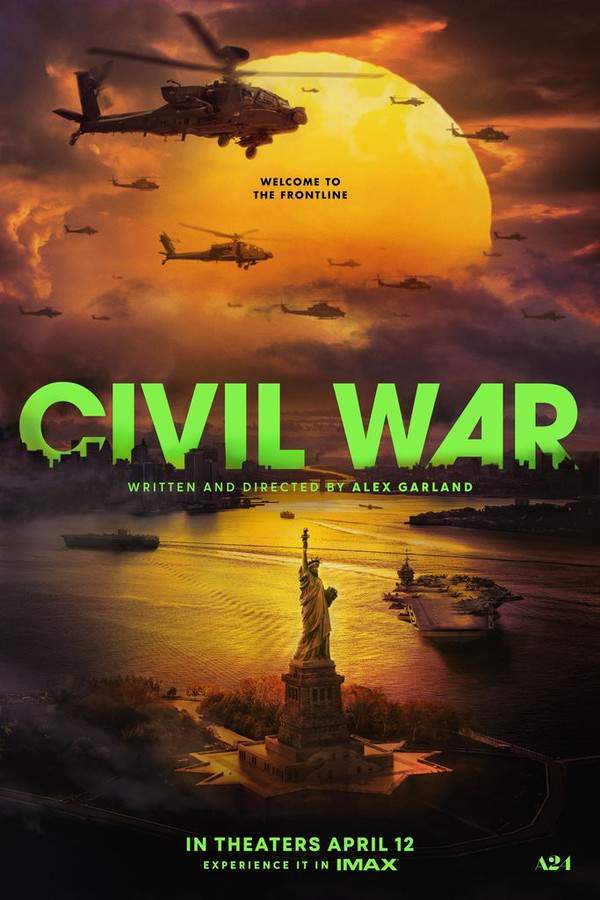
Harrowing journey thrillers like Civil War

A tense, perilous trek across a landscape torn by civil war. For viewers who enjoyed the tense, road-movie structure of Civil War, this collection features other films about perilous journeys through war zones. These stories capture the same feeling of unpredictable danger, atmospheric dread, and the bleak reality of traveling through a fractured society.

  • tense
  • harrowing
  • unsettling
  • desolate
  • anxious
  • chaotic
  • Tone: tense, harrowing, bleak
  • Pacing: variable, atmospheric dread punctuated by action
Why these movies?

The story pattern: The narrative pattern is a linear trek through a hostile environment. The plot is driven by a series of escalating encounters with various factions and dangers, testing the survival skills and morals of the travelers. The journey often results in significant loss, and the destination rarely offers solace, reinforcing the futility and horror of the conflict.

Why they belong together: These movies are connected by their core structure—a journey through a collapsing world—and their ability to maintain high tension and a bleak, harrowing atmosphere. They share a variable pacing that mixes slow-building dread with bursts of intense action and violence.

Every angle

Civil War (2010) Explained: Plot, Timeline & Characters

Everything about Civil War in one place: what happens in the plot summary, the timeline in chronological order, the characters and meaning and a spoiler-free summary. What's After the Movie adds the cast, box office and post-credit scenes.

Coming soon on iOS and Android

The Plot Explained Movie Summary App

Plot summaries, endings explained and timelines on your phone. Catch up on any movie in minutes, save your favorites and never miss a twist again.

Be the first to know when we launch. Your email stays private, always.

Learn more about the app