Plot Explained Spoilers guaranteed!
Plot Explained

Browse by genre

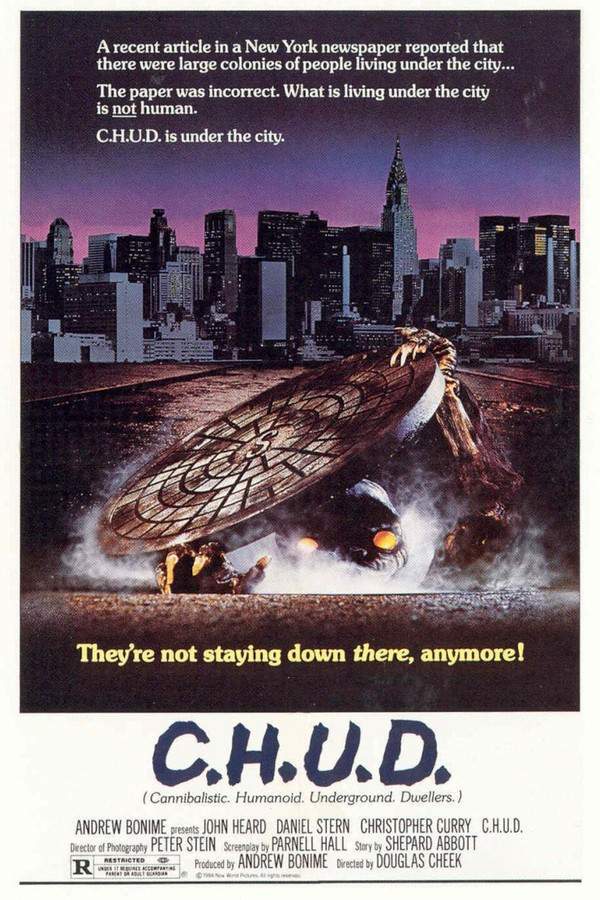
C.H.U.D. (1984) movie poster

Timeline

C.H.U.D. (1984) Timeline Explained – Every Event in Order

Release, runtime and language
1984 · 88 min · English
Loading streaming availability…
Starring
John Heard, Daniel Stern, Kim Greist, Brenda Currin, Christopher Curry, Cordis Heard

Beneath the streets of New York City, a terrifying secret festers in the tunnels. When photographer George Cooper stumbles upon a disturbing discovery, he finds himself embroiled in a cryptic conspiracy involving strange, monstrous creatures. Teaming up with a determined reporter, a resourceful police officer, and a devout priest, George must unravel the truth behind the threat and confront the corrupt forces exploiting the chaos from above, all while battling the horrors lurking in the darkness.

On this page (6)
  1. 1 Where to watch
  2. 2 Events in order (13)
  3. 3 Timeline questions answered
  4. 4 Movie threads
  5. 5 Movies like C.H.U.D.
  6. 6 Every angle
Loading streaming availability…

13 events in order · contains spoilers

C.H.U.D. Timeline: Events in Chronological Order

Every key event of C.H.U.D. (1984) in order, scene by scene, with when and where it takes place. Use it to untangle flashbacks, time jumps and parallel storylines, to refresh your memory before the sequel or to find the exact scene you are thinking of.

  1. Walk on a Shadowy Street

    The film opens with a woman walking her dog down a deserted and shadowy street. The tranquility is abruptly shattered when she stumbles upon a manhole and is quickly attacked by a terrifying creature that drags her and her dog into the depths below.

    Where
    Deserted Street
  2. George's New Life

    George Cooper, once a celebrated fashion photographer, now immerses himself in documenting the lives of New York City’s homeless. Living with his girlfriend Lauren, they navigate the quirky intersections of their pasts, influenced greatly by George's new focus on the underground life.

    Where
    New York City
  3. Missing Persons Investigation

    Captain Bosch is introduced while grappling with an alarming rise in missing persons cases, predominantly involving the homeless. He interviews A.J. 'The Reverend' Shepherd, who believes these disappearances are interconnected with a larger government conspiracy.

    Where
    Police Station
  4. Creature Revelations

    As the investigation unfolds, the dark truth is revealed: mutated beings, once human, now lurk beneath the city as flesh-eating monsters. The homeless population is dwindling as these creatures venture to the surface at night to hunt unsuspecting victims.

    Where
    New York City Sewers
  5. EPA Crew Sent to Cleanse

    In a tense operation, Wilson sends an Environmental Protection Agency crew to cleanse a section of the sewer, with Bosch supervising the mission. However, a troubling footage cut leaves them unaware of the ominous dangers lurking below them.

    Where
    Sewer
  6. Sealing the Sewers

    Bosch confronts Wilson regarding a plan to seal the sewers and release methane gas to deal with the C.H.U.D.s. This reckless strategy raises alarms, as the ramifications could threaten not only the homeless but also the safety of the entire city.

    Where
    Police Headquarters
  7. Lauren's Blood Eruption

    Meanwhile, in their apartment, Lauren experiences a terrifying moment when a clogged drain erupts with blood. A C.H.U.D. emerges from a sewer access point in her building, leading to a fierce encounter where she manages to kill the creature with a sword.

    Where
    Lauren's Apartment
  8. Diner Attack

    The horror escalates when a group of C.H.U.D.s attacks a local diner, resulting in horrific violence that leaves no survivors. This event is heavily covered in the media, prompting Wilson to mobilize a plan to flood the sewers with poison gas.

    Where
    Local Diner
  9. George and A.J. Discover the Truth

    While trapped in the sewers, George and A.J. uncover a chilling reality: crates of nuclear waste contaminate the C.H.U.D. territory. The revelation links the acronym C.H.U.D. to 'Contamination Hazard Urban Disposal,' exposing a conspiracy tied to the Nuclear Regulatory Commission.

    Where
    Sewers
  10. Alerting Bosch

    After discovering the remains of a lost EPA and police team, George and A.J. use a video camera to send an urgent alert to Captain Bosch. Their findings suggest a dire situation that could threaten the lives of many, closing in on the imminent peril.

    Where
    Sewers
  11. Confrontation with Wilson

    Bosch confronts Wilson, who is determined to maintain the cover-up surrounding the C.H.U.D.s and their origins. The situation becomes volatile as Wilson, desperate to silence Bosch, engages in a violent confrontation, aiming to eliminate him.

    Where
    Abandoned Site
  12. The Shootout

    During the chaotic confrontation, just as Wilson is about to crush George and A.J. with a truck, Lauren arrives on the scene. A.J. manages to shoot Wilson, wounding him and creating an explosion when the truck crashes into an open manhole.

    Where
    Manhole
  13. Aftermath and Reunion

    In the aftermath of the explosive chaos, George and Lauren reunite, overwhelmed with relief. Despite the destruction, they are grateful to be alive while A.J. confirms that Bosch has survived the ordeal, setting the stage for recovery.

    Where
    New York City

Last updated: October 28, 2024 at 17:52

Was this helpful?

Timeline questions answered

C.H.U.D. Timeline Explained: Your Questions Answered

When does it happen, and why in that order? The questions people ask about the chronology of C.H.U.D. (1984): time jumps, flashbacks, cause and effect between scenes and the correct order of events, each answered with spoilers.

Q1

What are the C.H.U.D.s in the movie?

The C.H.U.D.s are mutated, flesh-eating monsters that lurk beneath New York City in the sewers. Originally, they were homeless people who were exposed to nuclear waste dumped by the government. The radiation caused them to transform into grotesque creatures that now prey on the city's underground population and occasionally surface dwellers.

Foreshadowing: Earlier scenes show Captain Bosch investigating missing persons among the homeless, hinting at the creatures' existence.

  • c.h.u.d.
  • monsters
  • mutants
  • creatures
  • sewers
  • homeless
Q2

What does C.H.U.D. stand for?

C.H.U.D. stands for 'Contamination Hazard Urban Disposal.' This refers to the government program that secretly dumped nuclear waste in the city's sewer system, which is what caused the homeless population exposed to it to mutate into the monsters.

Foreshadowing: A.J. Shepherd mentions a government conspiracy and shows an NRC radiation detector and contaminated boot early in the film.

  • c.h.u.d.
  • acronym
  • contamination hazard urban disposal
  • nuclear waste
  • government cover-up
Q3

Why did the homeless become monsters?

The Nuclear Regulatory Commission, led by Wilson, was secretly dumping nuclear waste in the sewers beneath New York City. Homeless people living in the tunnels were exposed to this radiation over time, which caused them to mutate into the C.H.U.D.s - mindless, violent creatures that now hunt humans for food.

Foreshadowing: A.J. Shepherd's evidence of radiation contamination and his belief in a government conspiracy foreshadow this reveal.

  • homeless
  • mutation
  • nuclear waste
  • radiation
  • government experiment
Q4

What was Wilson hiding and why?

Wilson, a figure tied to the Nuclear Regulatory Commission, was covering up the illegal dumping of nuclear waste in the city's sewers. This contamination turned homeless people into monsters, and Wilson wanted to keep this secret to avoid accountability for the environmental disaster and human experimentation that resulted from the dumping.

Foreshadowing: Bosch notes that his superiors know more than they disclose, and Wilson is shown directing operations from the beginning.

  • wilson
  • cover-up
  • nrc
  • nuclear regulatory commission
  • conspiracy
Q5

Why did the C.H.U.D.s start coming above ground?

As the homeless population in the tunnels decreased due to the C.H.U.D.s hunting them, the creatures ran out of their primary food source. This forced them to venture to the surface at night to hunt for new prey, leading to attacks on unsuspecting New Yorkers.

Foreshadowing: The opening scene shows a woman and her dog being attacked on a surface street, establishing that the C.H.U.D.s have already started hunting above ground.

  • surface attacks
  • creatures hunting
  • homeless population
  • escalation
Q6

What was Wilson's plan to eliminate the C.H.U.D.s?

Wilson proposed sealing the sewers and releasing methane gas to suffocate the C.H.U.D.s. This plan would have killed the creatures but also risked the safety of the entire city, as the methane could potentially cause massive explosions or spread through the tunnel system.

Foreshadowing: This plan is discussed when Bosch confronts Wilson about how to handle the threat.

  • methane gas
  • poison gas
  • sewers sealed
  • wilson plan
  • elimination
Q7

How did Lauren survive the C.H.U.D. attack in her apartment?

When a C.H.U.D. emerged from a sewer access point in her building, Lauren fought it off with a sword she owned. She managed to kill the creature, though not before it had already killed two policemen who came to investigate strange noises in the building.

Foreshadowing: Earlier, Lauren mentions her background as a model, not combat, making this survival more surprising.

  • lauren
  • apartment attack
  • sword
  • survival
  • policemen killed
Q8

How did George and A.J. discover the truth about the C.H.U.D.s?

While trapped in the sewers together, George and A.J. discovered crates of nuclear waste within the C.H.U.D. territory. This concrete evidence revealed the link between the government dumping program and the creatures' origin. They used a video camera to record this discovery and alert Captain Bosch.

Foreshadowing: A.J. has been investigating the conspiracy throughout the film, and his earlier radiation readings foreshadow this discovery.

  • george cooper
  • a.j. shepherd
  • nuclear waste crates
  • sewer discovery
  • evidence
Q9

What happened to Captain Bosch at the end of the movie?

Captain Bosch was shot by Wilson during the confrontation at the manhole. However, he survived the ordeal. In the aftermath, A.J. confirms that Bosch, though wounded, is alive among the ashes of the burning wreckage from the truck explosion.

Foreshadowing: The intense confrontation between Bosch and Wilson builds to this violent climax.

  • captain bosch
  • wounded
  • survived
  • finale
  • explosion
Q10

Why was the government dumping nuclear waste in the sewers?

The Nuclear Regulatory Commission, through Wilson, was secretly using the city's sewer system to dispose of nuclear waste as part of a program called 'Contamination Hazard Urban Disposal.' This illegal dumping was hidden from the public but resulted in catastrophic consequences for the homeless population living in the tunnels.

Foreshadowing: The acronym reveal and the crates of waste George and A.J. find provide the definitive answer.

  • government dumping
  • nuclear waste
  • sewers
  • nrc
  • illegal disposal
  • conspiracy
Q11

What role does the reporter play in the story?

The reporter (referred to in the movie description) works with George and the police to expose the truth about the C.H.U.D.s and the government cover-up. Her investigation helps connect the various character threads and adds urgency to exposing Wilson's crimes before the poison gas plan is executed.

Foreshadowing: Media coverage of the diner attack is shown escalating Wilson's plans.

  • reporter
  • investigation
  • media
  • expose truth
  • conspiracy
Q12

Why is the diner attack significant to the story?

The diner attack, where a group of C.H.U.D.s kills everyone with no survivors, is a turning point that brings the threat to the surface and forces mainstream attention. This horrific event receives heavy media coverage, which prompts Wilson to accelerate his plan to flood the sewers with poison gas, escalating the stakes for all characters.

Foreshadowing: The gradual increase in attacks from the first woman walking her dog to this mass casualty event shows the escalation.

  • diner attack
  • mass casualties
  • media coverage
  • poison gas
  • escalation

Movie threads

More Movies Like C.H.U.D., by Mood & Story

Curated lists built around what makes C.H.U.D. tick: the same mood, the same kind of story or the same emotional payoff. Each list explains why these movies belong together.

Movies about urban monster secrets like C.H.U.D.

Uncovering the terrifying truth that festers beneath a decaying metropolis. Explore a collection of movies like C.H.U.D. where the gritty underbelly of a city conceals a monstrous threat. These films often feature investigations into government cover-ups, survival horror in urban decay, and a constant feeling of dread as the familiar cityscape becomes a deadly maze.

  • gritty
  • claustrophobic
  • dread-filled
  • paranoid
  • desperate
  • urban decay
  • Tone: dark, gritty, paranoid
  • Pacing: fast, escalating
Why these movies?

The story pattern: The narrative typically follows a group of everyday protagonists—a journalist, a cop, an artist—who piece together clues about strange disappearances or phenomena. Their investigation leads them downward, into the forgotten infrastructure of the city, where they discover a hidden truth that is far more monstrous and systemic than they imagined, culminating in a chaotic confrontation.

Why they belong together: These films are grouped by their shared setting of a decaying urban environment, the theme of a hidden conspiracy, and the blend of creature feature horror with a gritty, realistic tone. They evoke a specific paranoia about what might be lurking just out of sight in our own cities.

Movies with bittersweet survival endings like C.H.U.D.

Stories where stopping the monster leaves the world scarred. If you liked the ending of C.H.U.D., where the heroes survive but the city burns and corruption likely remains, you'll appreciate these movies. They feature hard-won victories that carry a heavy emotional toll, leaving characters and worlds forever changed by the catastrophe they endured.

  • bittersweet
  • heavy
  • desperate
  • catastrophic
  • grim
  • survival
  • Tone: bittersweet, bleak, heavy
  • Pacing: fast, culminating
Why these movies?

The story pattern: The journey involves battling a massive, often systemic threat. The climax results in the destruction of the monster or villain, but also causes widespread collateral damage. Survivors are left to survey the ruins, both literal and emotional, with the narrative acknowledging that while a battle was won, the war—or the rot within the system—is far from over.

Why they belong together: These films are connected by their specific emotional payoff: a mix of relief and profound sadness. They resonate with viewers who find depth in endings that are realistic and morally complex, where survival itself is a form of trauma and the hope offered is fragile and hard-earned.

If you liked this

Movies Like C.H.U.D.

Similar movies to C.H.U.D.: the same genre, themes or kind of story. Each one comes with its own plot summary, timeline and ending explained.

Browse all movie summaries

Every angle

C.H.U.D. (1984) Explained: Plot, Timeline & Characters

Everything about C.H.U.D. in one place: what happens in the plot summary, the timeline in chronological order, the characters and meaning and a spoiler-free summary. What's After the Movie adds the cast, box office and post-credit scenes.

Coming soon on iOS and Android

The Plot Explained Movie Summary App

Plot summaries, endings explained and timelines on your phone. Catch up on any movie in minutes, save your favorites and never miss a twist again.

Be the first to know when we launch. Your email stays private, always.

Learn more about the app