Plot Explained Spoilers guaranteed!
Plot Explained

Browse by genre

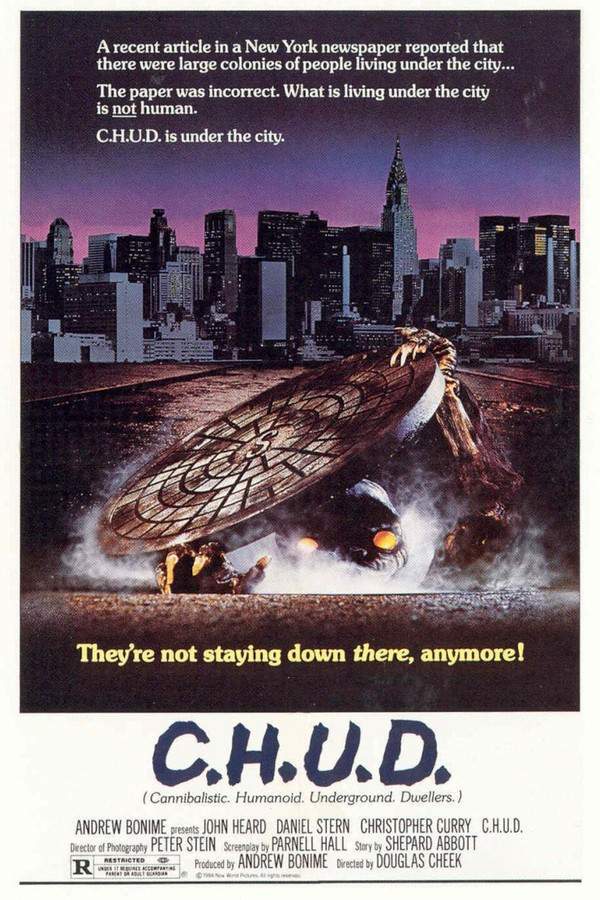
C.H.U.D. (1984) movie poster

Characters & Themes

C.H.U.D. (1984) Characters, Setting & Themes Explained

Release, runtime and language
1984 · 88 min · English
Loading streaming availability…
Starring
John Heard, Daniel Stern, Kim Greist, Brenda Currin, Christopher Curry, Cordis Heard

Beneath the streets of New York City, a terrifying secret festers in the tunnels. When photographer George Cooper stumbles upon a disturbing discovery, he finds himself embroiled in a cryptic conspiracy involving strange, monstrous creatures. Teaming up with a determined reporter, a resourceful police officer, and a devout priest, George must unravel the truth behind the threat and confront the corrupt forces exploiting the chaos from above, all while battling the horrors lurking in the darkness.

On this page (8)
  1. 1 Where to watch
  2. 2 Characters explained (4)
  3. 3 Where & when it takes place
  4. 4 Themes & meaning (3)
  5. 5 Character & meaning questions
  6. 6 Movie threads
  7. 7 Movies like C.H.U.D.
  8. 8 Every angle
Loading streaming availability…

4 main characters · contains spoilers

C.H.U.D. Characters Explained: Who Is Who

The main characters of C.H.U.D. (1984), heroes and villains: what drives them, how they change over the course of the story and what each of them reveals about the film's bigger ideas.

  • George Cooper

    played by John Heard

    George is a former fashion photographer turned documentarian, who now focuses on the struggles of the homeless in New York City. He exhibits a compassionate nature, driven by a desire to shed light on the plight of 'undergrounders,' but is ultimately forced to confront terrifying threats in the sewers.

    • 📸 Photographer
    • 🏚️ Compassionate
    • 🤝 Protector
  • Lauren

    played by Kim Greist

    Lauren is a fashion model and George's girlfriend, representing strength and resilience. As she faces the horror of the C.H.U.D. in their home, her resourcefulness shines through when she fights back against the monster, embodying both vulnerability and bravery.

    • 🌟 Model
    • 🗡️ Brave
    • 💪 Resilient
  • A.J. 'The Reverend' Shepherd

    played by Daniel Stern

    A.J. is a dedicated figure in the homeless community who runs a shelter and believes in the conspiracy behind the missing persons. His commitment to protecting those in need drives him to assist George, showcasing his courage and moral integrity in a chaotic situation.

    • ⛪ Community Leader
    • 🤔 Conspiracy Theorist
    • ⚔️ Brave
  • Captain Bosch

    played by Christopher Curry

    Captain Bosch is an overwhelmed police officer facing rising disappearances among the homeless. His struggle to uncover the truth amidst bureaucratic pressure highlights the challenges faced by law enforcement in addressing societal issues, making him a complex character in the film.

    • 👮‍♂️ Police Officer
    • 🌪️ Overwhelmed
    • 🔍 Investigator

Last updated: October 22, 2024 at 20:31

Was this helpful?

Setting

Where and When Does C.H.U.D. Take Place?

The setting of C.H.U.D. (1984): the year and time period, the places and locations, and how they shape the characters, the mood and the tension of the story.

Time period

The movie does not specify a particular time period but conveys a contemporary setting reflective of urban life in the 1980s. Issues such as homelessness, government cover-ups, and environmental concerns are central, mirroring societal issues prevalent during that era.

Location

New York City, Underground Sewers

The film takes place predominantly in New York City, a bustling metropolis known for its iconic skyline and vibrant culture. Beneath the surface lies a network of sewers and tunnels inhabited by the city's homeless population, which serves as the primary backdrop for the film's horror elements.

  • 🗽 City
  • 🚇 Underground

Last updated: October 22, 2024 at 20:31

Was this helpful?

3 major themes

C.H.U.D. Meaning: Themes & Message Explained

What is C.H.U.D. (1984) really about? The emotional, social and philosophical themes the film keeps returning to, its symbolism and the message beneath the surface.

  • Urban Decay

    C.H.U.D. explores the theme of urban decay, highlighting the neglect faced by the homeless population living beneath the city. The film portrays how societal indifference can lead to dire consequences, as the abandoned underground becomes a breeding ground for horror.

  • Government Conspiracy

    The plot is rife with elements of conspiracy, particularly surrounding the actions of the Nuclear Regulatory Commission. The concealment of hazardous waste disposal and its ramifications on the vulnerable homeless community exemplifies a government prioritizing secrecy over public safety.

  • Survival and Sacrifice

    Survival is a significant theme, illustrated by the characters' desperate attempts to escape the monstrous threat. Sacrifice is evident throughout, particularly in Lauren’s courageous actions to save George, showcasing the lengths individuals will go for love and protection.

Last updated: October 22, 2024 at 20:31

Was this helpful?

Character & theme questions

C.H.U.D. Characters & Meaning: Your Questions Answered

The questions people ask about C.H.U.D. (1984): who the characters really are, their relationships, what the symbols mean, where it takes place and what the movie is really about. Each answer contains spoilers.

Q1

Where is C.H.U.D. set?

C.H.U.D. takes place primarily in New York City, with the horror unfolding in the underground network of sewers and tunnels beneath the city. The contrast between the bustling metropolis above and the dark, dangerous underworld below creates the film's unsettling atmosphere.

Foreshadowing: The opening scenes establish the stark divide between the glamorous city streets and the grim underground where the homeless live.

  • new york city
  • sewers
  • underground
  • setting
  • location
Q2

What role does the underground setting play in the film?

The underground sewers serve as both a literal and metaphorical space in C.H.U.D. They represent the neglected underside of society where homeless people live, while also becoming the breeding ground for the mutated creatures. This setting embodies the film's themes of urban decay and societal neglect.

  • sewers
  • underground
  • setting
  • urban decay
  • homeless
Q3

What time period is C.H.U.D. set in?

The film is set in the 1980s, reflecting contemporary urban life during that decade. The time period is evident through the social issues it addresses, including homelessness, government secrecy, and environmental concerns that were prevalent in that era.

  • 1980s
  • time period
  • 80s
  • contemporary setting
Q4

What does C.H.U.D. stand for?

C.H.U.D. stands for 'Contamination Hazard Urban Disposal,' a government program that secretly dumped toxic radioactive waste in the city's tunnels. This acronym becomes the central revelation connecting the government conspiracy to the creation of the monstrous creatures.

Foreshadowing: Early references to missing homeless persons and suspicious government activity hint at the toxic origin of the threat.

  • contamination hazard urban disposal
  • acronym
  • c.h.u.d.
  • government program
Q5

What are the main themes in C.H.U.D.?

C.H.U.D. explores three primary themes: urban decay, which highlights the neglect of homeless populations living beneath the city; government conspiracy, focusing on the Nuclear Regulatory Commission's cover-up of hazardous waste dumping; and survival and sacrifice, demonstrated through characters' desperate attempts to escape and protect one another.

  • themes
  • urban decay
  • government conspiracy
  • survival
  • sacrifice
  • homeless
Q6

How does C.H.U.D. address urban decay?

The film depicts urban decay through its portrayal of New York City's underground, showing how societal indifference creates dangerous conditions. The abandoned tunnels become a breeding ground for horror, symbolizing how neglect of vulnerable populations can lead to catastrophic consequences.

  • urban decay
  • new york city
  • homeless
  • social neglect
  • society
Q7

What government conspiracy drives the plot?

The Nuclear Regulatory Commission secretly disposed of toxic radioactive waste in the city's tunnels through a program called C.H.U.D. (Contamination Hazard Urban Disposal). When the homeless population was exposed to these chemicals, they mutated into monstrous creatures. The government chose secrecy over public safety, covering up the program rather than addressing the disaster.

  • government conspiracy
  • nuclear regulatory commission
  • cover-up
  • toxic waste
  • radiation
Q8

Who is George Cooper in C.H.U.D.?

George Cooper is a former fashion photographer who becomes a documentarian focused on capturing the lives of homeless New Yorkers, whom he calls 'undergrounders.' His compassionate nature drives him to investigate the disappearances of homeless people, leading him into the dangerous underground tunnels where he confronts the monstrous threat.

  • george cooper
  • photographer
  • documentarian
  • homeless
  • undergrounders
Q9

Who is A.J. 'The Reverend' Shepherd?

A.J. Shepherd, known as 'The Reverend,' runs a homeless shelter and serves as a dedicated figure in the underground community. He believes there is a conspiracy behind the disappearances of homeless people and assists George Cooper in investigating the truth, demonstrating courage and moral integrity throughout the crisis.

  • aj shepherd
  • reverend
  • homeless shelter
  • community leader
  • conspiracy
Q10

Who is Captain Bosch in the film?

Captain Bosch is a police officer struggling with the rising number of disappearances among the homeless population. He works to uncover the truth while facing bureaucratic pressure and institutional obstacles, representing the challenges law enforcement faces when addressing complex societal issues.

  • captain bosch
  • police
  • law enforcement
  • investigation
  • homeless disappearances
Q11

Who is Lauren in C.H.U.D.?

Lauren is a fashion model and George Cooper's girlfriend. Though initially representing vulnerability, she demonstrates remarkable strength and resourcefulness when confronted with the C.H.U.D. creatures in her home. Her willingness to fight back and protect George showcases the film's theme of survival and sacrifice.

  • lauren
  • fashion model
  • girlfriend
  • survival
  • sacrifice
  • bravery
Q12

Why are homeless people targeted in C.H.U.D.?

Homeless people are targeted because they lived in the tunnels where the government secretly dumped toxic radioactive waste. The C.H.U.D. program positioned its disposal sites in the underground spaces where vulnerable homeless populations lived, making them the primary victims of the contamination that transformed them into monsters.

  • homeless
  • targets
  • contamination
  • radiation
  • victims
  • vulnerable population
Q13

What is the tone and atmosphere of C.H.U.D.?

C.H.U.D. features a consistently dark tone driven by themes of human experimentation, environmental pollution, and systemic neglect of the homeless. The intensity remains high throughout, with relentless monstrous attacks and a pervasive government cover-up creating a grim, unsettling atmosphere that reflects the film's 1980s urban horror aesthetic.

  • tone
  • atmosphere
  • dark
  • horror
  • intensity
  • 1980s horror
Q14

How does C.H.U.D. address social issues?

C.H.U.D. uses its horror narrative to comment on 1980s societal issues, particularly the neglect of homeless populations, government secrecy, and environmental hazards. The film suggests that societal indifference toward vulnerable communities can lead to disastrous consequences, blending social commentary with genre horror elements.

  • social issues
  • homelessness
  • government
  • environmental
  • societal neglect
  • commentary

Movie threads

More Movies Like C.H.U.D., by Mood & Story

Curated lists built around what makes C.H.U.D. tick: the same mood, the same kind of story or the same emotional payoff. Each list explains why these movies belong together.

Movies about urban monster secrets like C.H.U.D.

Uncovering the terrifying truth that festers beneath a decaying metropolis. Explore a collection of movies like C.H.U.D. where the gritty underbelly of a city conceals a monstrous threat. These films often feature investigations into government cover-ups, survival horror in urban decay, and a constant feeling of dread as the familiar cityscape becomes a deadly maze.

  • gritty
  • claustrophobic
  • dread-filled
  • paranoid
  • desperate
  • urban decay
  • Tone: dark, gritty, paranoid
  • Pacing: fast, escalating
Why these movies?

The story pattern: The narrative typically follows a group of everyday protagonists—a journalist, a cop, an artist—who piece together clues about strange disappearances or phenomena. Their investigation leads them downward, into the forgotten infrastructure of the city, where they discover a hidden truth that is far more monstrous and systemic than they imagined, culminating in a chaotic confrontation.

Why they belong together: These films are grouped by their shared setting of a decaying urban environment, the theme of a hidden conspiracy, and the blend of creature feature horror with a gritty, realistic tone. They evoke a specific paranoia about what might be lurking just out of sight in our own cities.

Movies with bittersweet survival endings like C.H.U.D.

Stories where stopping the monster leaves the world scarred. If you liked the ending of C.H.U.D., where the heroes survive but the city burns and corruption likely remains, you'll appreciate these movies. They feature hard-won victories that carry a heavy emotional toll, leaving characters and worlds forever changed by the catastrophe they endured.

  • bittersweet
  • heavy
  • desperate
  • catastrophic
  • grim
  • survival
  • Tone: bittersweet, bleak, heavy
  • Pacing: fast, culminating
Why these movies?

The story pattern: The journey involves battling a massive, often systemic threat. The climax results in the destruction of the monster or villain, but also causes widespread collateral damage. Survivors are left to survey the ruins, both literal and emotional, with the narrative acknowledging that while a battle was won, the war—or the rot within the system—is far from over.

Why they belong together: These films are connected by their specific emotional payoff: a mix of relief and profound sadness. They resonate with viewers who find depth in endings that are realistic and morally complex, where survival itself is a form of trauma and the hope offered is fragile and hard-earned.

If you liked this

Movies Like C.H.U.D.

Similar movies to C.H.U.D.: the same genre, themes or kind of story. Each one comes with its own plot summary, timeline and ending explained.

Browse all movie summaries

Every angle

C.H.U.D. (1984) Explained: Plot, Timeline & Characters

Everything about C.H.U.D. in one place: what happens in the plot summary, the timeline in chronological order, the characters and meaning and a spoiler-free summary. What's After the Movie adds the cast, box office and post-credit scenes.

Coming soon on iOS and Android

The Plot Explained Movie Summary App

Plot summaries, endings explained and timelines on your phone. Catch up on any movie in minutes, save your favorites and never miss a twist again.

Be the first to know when we launch. Your email stays private, always.

Learn more about the app