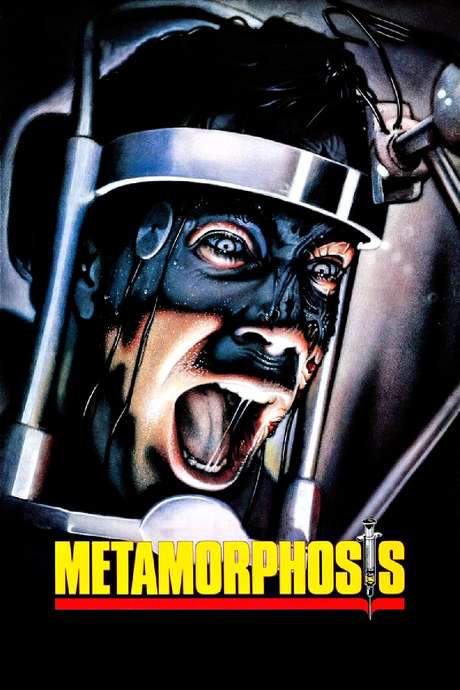
Los Angeles is gripped by a chilling wave of killings in which women are found drained of blood. The police hatch a sting using a female officer, Detective Gwen Taylor [Denise Alessandria Hurd], hoping to draw the killer out. But the plan is eclipsed when the target is captured—not by the authorities, but by a shadowy government faction known as The Delphi Project, whose mission is the capture and study of a live vampire. The prey they pursue is revealed to be Simon Molinar [Jason Carter], a thousand-year-old vampire whose ancient menace is matched by a disturbing hint of humanity.
The attempted operation turns abruptly violent as the vampire claims the life of Dr. Samuel Hirsch [James Kiberd], leaving the team stunned and hungry for answers. A new doctor enters the fold, Dr. Joseph McKay [Garett Maggart], and his arrival shifts the dynamic of the Delphi Project. Unlike his colleagues, McKay treats the vampire not as a specimen but as a person, inviting a moral tension that threads through every experiment they conduct. The tests grow increasingly brutal, and McKay finds himself torn between scientific curiosity and his own ethical compass, asking quietly, who is the real monster here—the centuries-old predator or the people who wield power over him?
Unknown to McKay, his superior, Dr. William Bassett [Jack Donner], uncovers a chilling possibility: McKay is one of the rare individuals with a genetic predisposition that could be turned into a vampire. The revelation accelerates a dangerous turn in the project’s calculus. Bassett proceeds with a risky plan, enabling Molinar to obtain a live victim while quietly discarding the evidence himself, a move that draws the attention of local law enforcement and deepens the moral murk surrounding the Delphi Project.
As plans shift to destroying Molinar after the research is completed, Bassett proposes a more unsettling goal: to create a new vampire—someone who has never killed—to replace the one they aim to terminate. The prospect blurs the line between science and savagery and raises the question of whether the project intends to control the creature or truly sever its legacy.
In a tense confrontation, Bassett locks McKay in a room with Molinar, intending to corner both the researcher and the creature. But Molinar escapes, choosing not to turn McKay into a monster. In the escape, Simon rips the caduceus necklace from McKay’s neck—the symbol he has worn as a sign of healing and the Hippocratic oath. This small emblem, once a personal vow, becomes a poignant token of a growing, improbable bond between hunter and healer. Molinar pockets the necklace as a memento, a delicate reminder of the man who treated him with a measure of humanity even as the project tried to weaponize their relationship.
The film examines the tension between curiosity and culpability, science and conscience, as the Delphi Project’s cold, methodical drive collides with McKay’s lingering sense of duty to life and humanity. It paints a portrait of a hidden world where power dynamics threaten to redefine what it means to be a monster and what it means to be saved. As the narrative unfolds, the viewer is drawn into a labyrinth of ethical questions: when does the pursuit of knowledge cross the line into cruelty, and who truly bears responsibility for the consequences of such choices?
In the end, the story lingers on the fragile thread that connects McKay to Molinar, suggesting that even in a world ruled by fear and control, empathy can sow the seeds of a different fate. The necklace’s disappearance—its symbolism intact but its bearer transformed by circumstance—serves as a quiet reminder that alliances can form in the most unlikely of places, and that the line between protector and prey is often thinner than it appears.