Plot Explained Spoilers guaranteed!
Plot Explained

Browse by genre

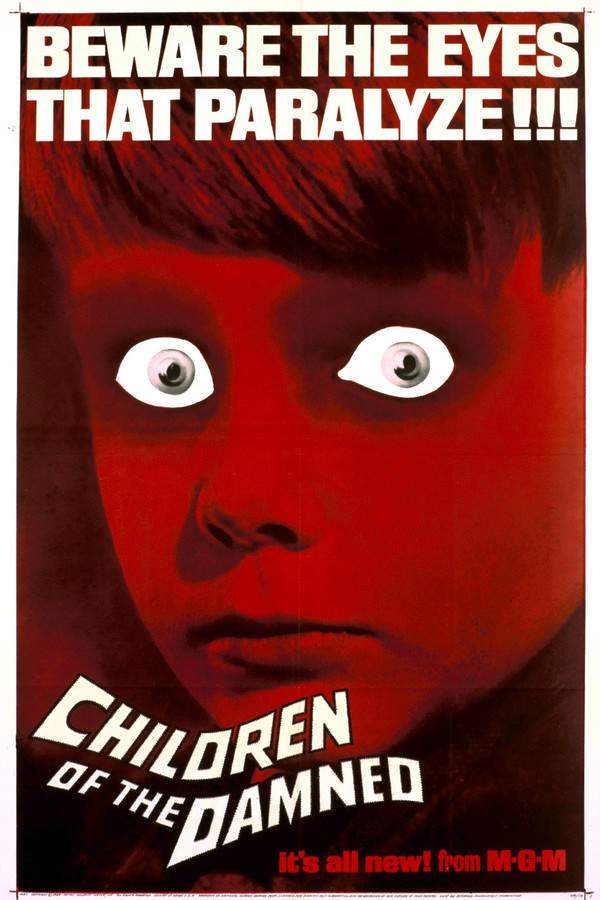
Children of the Damned (1964) movie poster

Timeline

Children of the Damned (1964) Timeline Explained – Every Event in Order

Release, runtime and language
1964 · 89 min · English
Loading streaming availability…
Directed by
Anton Leader
Starring
Ian Hendry, Alan Badel, Patrick Wymark, Patrick White, Alfred Burke, Barbara Ferris

Six children, born without fathers and displaying remarkable intelligence, are gathered at an old London church following a worldwide survey. As their extraordinary abilities develop, a government agency considers eliminating them. Psychologist and Colonel Tom Lewellin believes in their potential and fights to protect the children from those who fear their powers, leading to a tense confrontation between science, fear, and the unknown.

On this page (7)
  1. 1 Where to watch
  2. 2 Events in order (13)
  3. 3 Timeline questions answered
  4. 4 The book behind the movie
  5. 5 Movie threads
  6. 6 Movies like Children of the Damned
  7. 7 Every angle
Loading streaming availability…

13 events in order · contains spoilers

Children of the Damned Timeline: Events in Chronological Order

Every key event of Children of the Damned (1964) in order, scene by scene, with when and where it takes place. Use it to untangle flashbacks, time jumps and parallel storylines, to refresh your memory before the sequel or to find the exact scene you are thinking of.

  1. UNESCO Team's Discovery

    A team of UNESCO researchers uncovers six extraordinary children from different countries, including China, India, Nigeria, the Soviet Union, the United States, and the United Kingdom. These children exhibit remarkable cognitive abilities that challenge conventional understanding, setting the stage for an unprecedented investigation.

  2. Introduction to Paul and Diana

    The investigation is led by British psychologist Tom Lewellyn and geneticist David Neville, focusing on Paul, a boy from London. Paul's mother, Diana, harbors deep resentment towards him, and her claims of never having been touched by a man hint at a more complex background that requires further exploration.

    Where
    London
  3. Uncovering the Connection

    As research progresses, it is discovered that all six gifted children share a common thread—they have each grown up without a father figure. This extraordinary finding leads to further inquiries into their psychic abilities, especially their telepathic communications with one another.

  4. UN Team Gathers the Prodigies

    The United Nations team gathers the six prodigies in London to examine their unique capabilities in a controlled environment. However, the children quickly adapt to their new environment and decide to escape their assigned embassies in search of freedom.

    Where
    London
  5. Sanctuary in Southwark

    The children find refuge in a dilapidated church in Southwark, London, where they tap into Paul's aunt's mental energy to sustain themselves. This hidden sanctuary becomes a haven for the children as they grapple with their extraordinary powers and the outside world.

    Where
    Southwark, London
  6. Military Concerns

    A fierce debate arises within the British Army and Intelligence Services over the potential risks posed by the extraordinary children. Their telekinetic abilities become apparent as they develop a device to harness sonic waves for self-defense, leading to tensions and casualties among government personnel.

    Where
    Britain
  7. Tom's Plea for Safety

    Tom Lewellyn urges the gifted children to return to their embassies for their own safety, emphasizing the importance of compliance in a time of rising tension. The children reluctantly agree but struggle with the implications of their abilities and their connection to humanity.

  8. Counterattack on Authority

    Moments of relative calm turn chaotic as the children retaliate against the embassy and military personnel, showcasing the defensive nature of their powers. Their retreat to the church serves as both a physical and psychological stronghold as the two sides grapple with their differences.

  9. Scientific Revelations

    The research team discovers notable differences in the blood cells between ordinary humans and the extraordinary children, raising alarming speculations about the children's origins. This finding hints at their potential alien nature and poses profound questions regarding humanity's future.

  10. Standoff Escalates

    As authorities maneuver to regain control over the gifted children, the situation escalates into a life-threatening standoff. Tensions peak when one scientist proposes a groundbreaking theory suggesting that the children's blood may signify evolution rather than alien origins.

  11. Children's Realization

    Amidst the escalating chaos, the children come to a startling realization about their existence and its incompatibility with humanity's primitiveness. This moment prompts them to consider lowering their defenses, signaling a poignant shift in the emotional landscape of the narrative.

  12. Commander’s Decision

    The military commander experiences an epiphany and chooses to withdraw the impending assault, recognizing the gravity of the situation. However, this decision creates an unintended consequence as tension remains palpably high among both parties.

  13. Catastrophe Unleashed

    As fate would have it, an ordinary screwdriver inadvertently triggers a catastrophic event that leads to the church's destruction. This tragic turn of events results in the demise of the extraordinary children, marking a sorrowful and impactful conclusion to their story.

    Where
    Southwark, London

Last updated: November 18, 2024 at 20:54

Was this helpful?

Timeline questions answered

Children of the Damned Timeline Explained: Your Questions Answered

When does it happen, and why in that order? The questions people ask about the chronology of Children of the Damned (1964): time jumps, flashbacks, cause and effect between scenes and the correct order of events, each answered with spoilers.

Q1

Why does Diana claim she was never touched by a man?

Diana's claim that she was never touched by a man is meant to be taken literally, suggesting Paul may have been conceived through virgin birth or some unknown process. This connects to the broader mystery of the children's origins, as all six share this characteristic of having no father. The film uses this to hint that these children may not be entirely human, whether alien or the result of some extraordinary evolutionary leap.

Foreshadowing: Earlier scenes establish Diana's strange hostility toward her own son, which gains new meaning when the blood cell revelations emerge.

  • diana
  • paul
  • mother
  • virgin birth
  • fatherless
Q2

Why do all six children share no father?

All six extraordinary children, from China, India, Nigeria, Soviet Union, United States, and United Kingdom, were raised without father figures. This shared characteristic is a key discovery by the UNESCO team. It becomes central to the scientific debate about whether the children represent alien life, evolved humans, or something else entirely. The lack of fathers suggests their conception may share a common unusual origin.

Foreshadowing: The initial discovery phase mentions each child's background, but the fatherless pattern emerges only after detailed investigation.

  • fathers
  • origin
  • conception
  • children
  • mystery
Q3

How were the children able to communicate with each other?

The children possess a rare form of telepathy that allows them to communicate on a subconscious level. This psychic connection enables them to coordinate their actions, share thoughts, and work together despite coming from different countries and backgrounds. Their telepathic abilities also extend to tapping into other minds for energy, as shown when they draw mental energy from Paul's aunt while hiding in the church.

Foreshadowing: Early scenes show the children solving puzzles in unison, hinting at their shared mental link.

  • telepathy
  • communication
  • minds
  • psychic
  • children
Q4

What was the sonic device the children created?

The children used their telekinetic abilities to create an intricate device capable of harnessing sonic waves as a means of self-defense. This weapon was triggered in response to perceived threats from government officials and soldiers. The device proved deadly, causing casualties among military personnel. The film makes clear the children only used their powers defensively, when they felt endangered by authority figures.

Foreshadowing: Early tests of the children's abilities hint at telekinetic potential long before the weapon materializes.

  • sonic weapon
  • telekinesis
  • defense
  • military
  • device
Q5

Why did the British government want to eliminate the children?

The British Army and Intelligence Services viewed the children as a potential threat to national security. Their telekinetic abilities and demonstrated weapon creation convinced officials that these children could pose a grave danger if they turned against humanity. The debate within government reflected deeper human fears about the unknown and uncontrollable. Though Tom Lewellyn argued for their potential benefit to humanity, fear ultimately won out over scientific optimism.

Foreshadowing: The military concerns escalate directly from the children's demonstration of defensive capabilities that resulted in casualties.

  • military
  • government
  • threat
  • security
  • fear
Q6

What did the blood cell differences between the children and normal humans prove?

Researchers discovered striking differences in the blood cells of the extraordinary children compared to ordinary humans. This finding sparked two competing theories: the children might be aliens from another world, or they could represent human DNA that has evolved over approximately one million years. The ambiguity remains unresolved, reflecting the film's thematic interest in evolution, origin, and what it means to be human.

Foreshadowing: The blood analysis occurs after the children have already demonstrated their extraordinary abilities, adding scientific grounding to the mystery.

  • blood cells
  • alien
  • evolution
  • science
  • origin
Q7

Why did the children decide to lower their defenses at the end?

The children arrived at a profound realization: their existence is fundamentally incompatible with humanity's current level of development. Seeing humanity as primitive compared to themselves, they chose to lower their defenses and accept their fate rather than continue fighting. This philosophical moment represents their resignation to die rather than coexist with what they perceive as an inferior species.

Foreshadowing: The children's growing awareness of their isolation and humanity's fear builds throughout the film toward this existential conclusion.

  • defenses
  • fate
  • realization
  • incompatibility
  • acceptance
Q8

How did an ordinary screwdriver cause the church destruction?

During the tense standoff, an ordinary screwdriver accidentally triggered a catastrophic chain of events that led to the church's destruction. The specific mechanism is left somewhat ambiguous, but the tragedy stems from mundane human error rather than the children's powers. This cruel irony underscores the film's pessimistic theme: humanity destroyed its greatest potential future through simple incompetence, not through the children's aggression.

Foreshadowing: The screwdriver appears among military equipment, waiting for the fatal accident that silence and tension make inevitable.

  • screwdriver
  • church
  • accident
  • death
  • destruction
Q9

Why did the military commander decide to withdraw the assault?

The military commander experiences a last-minute epiphany and chooses to withdraw the impending assault against the children. This decision suggests he recognized the moral absurdity of killing children, even extraordinarily powerful ones. However, his decision comes too late to prevent tragedy, the very act of withdrawing while tension remains high creates the circumstances for the accidental catastrophe that follows.

Foreshadowing: The commander's hesitation appears during the standoff, showing internal conflict between duty and conscience.

  • commander
  • military
  • withdraw
  • decision
  • assault
Q10

Why did the children keep returning to the Southwark church?

The children chose the dilapidated church in Southwark as their sanctuary after escaping from their assigned embassies. The church served as both physical refuge and psychological stronghold. Additionally, they discovered they could tap into Paul's aunt's mental energy to sustain themselves while there. The church became their base throughout the escalating conflict with authorities.

Foreshadowing: The children's escape from embassies directly leads them to seek hiding spots, with the church representing a symbolic space of protection.

  • church
  • southwark
  • refuge
  • children
  • embassy

Movie threads

More Movies Like Children of the Damned, by Mood & Story

Curated lists built around what makes Children of the Damned tick: the same mood, the same kind of story or the same emotional payoff. Each list explains why these movies belong together.

Tragic Siege Stories Like Children of the Damned

Narratives where fear and paranoia lead to the unnecessary destruction of the unknown. If you were captivated by the fatal confrontation in Children of the Damned, explore more movies where fear leads to a tragic siege of the misunderstood. These films, often in the sci-fi or thriller genres, share a heavy emotional weight and a bleak commentary on human nature, perfect for viewers who appreciate thought-provoking and somber endings.

  • tragic
  • tense
  • thought-provoking
  • unsettling
  • paranoid
  • bleak
  • Tone: tense, tragic, bleak
  • Pacing: steady, escalating
Why these movies?

The story pattern: Stories in this thread typically begin with the discovery of something extraordinary or alien. Initial curiosity quickly curdles into suspicion and fear from the established order, leading to an inevitable, tense containment and eventual violent confrontation. The climax is not a victory but a devastating loss, underscoring the tragedy of the conflict.

Why they belong together: These movies are grouped by their shared narrative arc of a fatal misunderstanding and their deeply pessimistic tone. They explore similar themes of otherness, fear of the unknown, and the destructive power of paranoia, resulting in an emotionally heavy viewing experience with a consistently tense atmosphere and a sad conclusion.

Ominous Intelligence Thrillers Similar to Children of the Damned

Thrillers where superhuman intellect creates an atmosphere of creeping dread and moral panic. For viewers who enjoyed the chilling premise of superhuman children in Children of the Damned, this section collects similar movies about ominous intelligence. These films share a steady, tense pace, a high-stakes mood, and explore the frightening implications of confronting a mind that is alienly superior, often within a sci-fi or psychological horror framework.

  • ominous
  • tense
  • thought-provoking
  • unsettling
  • claustrophobic
  • paranoid
  • Tone: tense, ominous, unsettling
  • Pacing: steady, methodical
Why these movies?

The story pattern: The narrative follows a investigation or study into a form of intelligence that challenges human superiority. The story unfolds methodically, ratcheting up tension as the full, often frightening, potential of this intelligence is revealed. The central conflict is cerebral, pitting human fear and morality against cold, logical, or alien thought processes.

Why they belong together: These films are united by their core premise: intelligence as an active, unsettling force. They share a specific mood blend of ominous tension, thought-provoking themes, and a sense of the uncanny. The pacing is typically steady, allowing the dread to build, and the tone remains serious and tense throughout.

If you liked this

Movies Like Children of the Damned

Similar movies to Children of the Damned: the same genre, themes or kind of story. Each one comes with its own plot summary, timeline and ending explained.

Browse all movie summaries

Every angle

Children of the Damned (1964) Explained: Plot, Timeline & Characters

Everything about Children of the Damned in one place: what happens in the plot summary, the timeline in chronological order, the characters and meaning and a spoiler-free summary. What's After the Movie adds the cast, box office and post-credit scenes.

Coming soon on iOS and Android

The Plot Explained Movie Summary App

Plot summaries, endings explained and timelines on your phone. Catch up on any movie in minutes, save your favorites and never miss a twist again.

Be the first to know when we launch. Your email stays private, always.

Learn more about the app