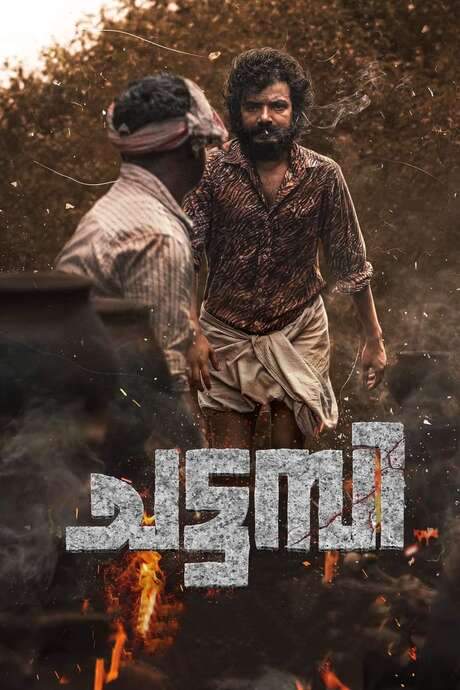
In the Kerala village of Chembattunadu, better known as Chattambinadu, a long-running feud between local families and a web of gang threats define everyday life. The area earns its notorious reputation from the memories of retired goons like Chenkeeri Madhavan and Vadival Vasu, who point to the bitter animosity between the Mallanchira and Kattappilly clans as the root of the trouble. Against this backdrop, the story follows the rise and machinations of Mallayya [Joji Mundakayam], a powerful figure whose past is deeply intertwined with a boy named Veeru, a Kannadiga street urchin who grew up under the care of Unnithan.
The film opens with Mallayya confronting a personal dilemma: the looming sale of Mallanchira Chandramohan’s ancestral mansion to settle crushing debts. Nagendran, the current leader of the Kattappilly faction, resists the sale and uses every tactic to block Mallayya’s plans. The local police inspector informs Chandramohan that Veerendra Mallaya, a wealthy but feared Karnataka-based gangster with a knack for real estate, might be persuaded to take the mansion. Initially, Mallayya dismisses the proposition, but a plea from Dr. Lakshmi, a friend from Chattambinadu, changes his mind and he agrees to buy the property, inviting Nagendran’s fierce opposition.
Arriving in Chattambinadu with his trusted secretary Murukan, Mallayya is confronted by the entrenched loyalties of the village, including Vadival Vasu and his daughters Gowri and Meenakshi. To sow discord, Nagendran’s ally Dashamoolam Damu orchestrates trouble by stealing Mallayya’s truck and crashing it into Vasu’s house, destroying it. Mallayya pledges to repair the damage with his own funds, hoping to prove his goodwill. Murugan, who has developed feelings for Meenakshi, groups with Maakri Gopalan to accompany Mallayya, further complicating ties among the families.
Meanwhile, Dr. Lakshmi learns that Nagendran intends to marry her, a plan without her family’s consent. She is shocked when she witnesses Nagendran violently beating her fiancé, who flees in fear. Mallayya promises to help, and Gowri, having overheard the conversation, grows jealous, misreading their alliance as romantic.
Chandramohan shares a backstory with Mallayya: Veeru—once the servant boy of Chandramohan’s family who had attacked his own father and vanished with a fortune—was the same Veeru Mallayya now seeks to uncover. The revelation is shocking: Veeru’s past includes a brutal incident where Unnithan’s family protected him after a clash with Nagendran’s father, Kuruppu. In a desperate battle to secure money, Kuruppu tries to seize a bag, but Veeru intervenes, defending Unnithan and fleeing when the situation turns deadly. The consequences ripple through the village: Kuruppu spreads the rumor that Veeru killed Unnithan, leading to Veeru’s temporary capture and then his dramatic escape after realizing the frame.
As Mallayya’s past collides with the present, the police become entangled in the deception. The old inspector—now the father of Lakshmi’s future husband—offers a path to truth, only to be killed by Nagendran on the very night he contemplates helping reveal the truth. The villagers, wary of Mallayya’s supposed sins, gather in expectation of his return, ready to mete out street justice. In a tense convergence, Mallayya arrives, and the culmination centers on exposing the real culprits and restoring the rightful order.
The film builds to a dramatic reckoning where Mallayya must prove his innocence to a community that has grown wary of him, while Nagendran’s grip on power begins to crack under public scrutiny. The final act culminates in a public confrontation that strips away the façade of villainy and forces the truth into the open. In a conclusion that blends vengeance, loyalty, and a longing for resolution, Mallayya’s true identity and past are laid bare, and Nagendran is confronted by the very crowd he sought to control.
Throughout the narrative, themes of loyalty, betrayal, and the longstanding feud between rival families drive every decision, every alliance, and every act of resistance. The film blends raw village realism with a layered backstory that slowly reveals how personal history can shape communal destiny, leaving the audience with a somber reflection on power, justice, and the cost of violence in a tightly knit community.