Plot Explained Spoilers guaranteed!
Plot Explained

Browse by genre

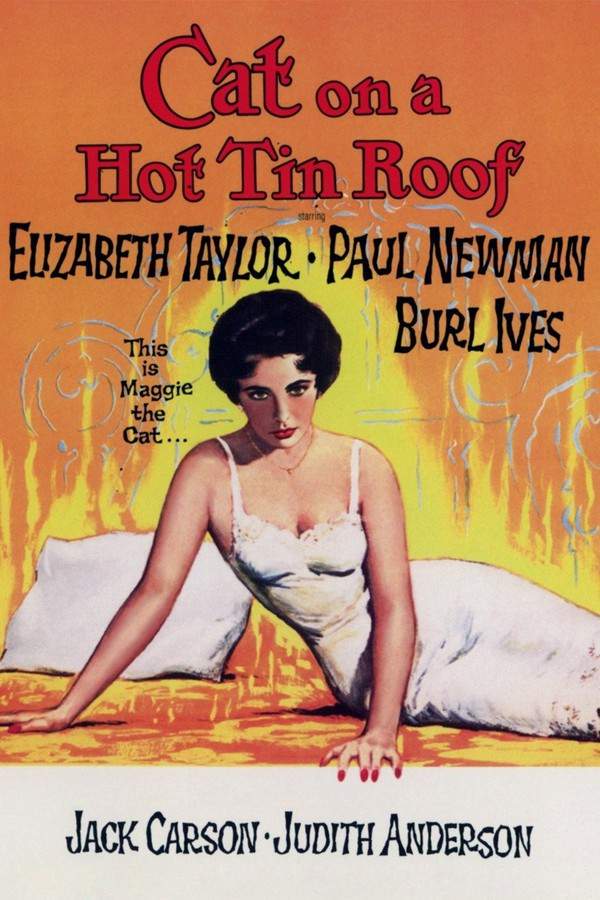
Cat on a Hot Tin Roof (1958) movie poster

Plot Summary

Cat on a Hot Tin Roof (1958) Plot Summary Explained

Release, runtime and language
1958 · 108 min · English
Directed by
Richard Brooks
Starring
Paul Newman, Jack Carson, Burl Ives, Judith Anderson, Larry Gates, Madeleine Sherwood

During a tense birthday celebration for the wealthy Big Daddy in Mississippi, the strained marriage of Brick and Maggie Pollitt is put under immense pressure. Brick, a former football star, struggles with personal demons and a fractured relationship with his father, while Maggie desperately seeks to conceive an heir. As family secrets and resentments rise to the surface, the gathering exposes a web of lies and unspoken desires, threatening to unravel the family’s future and expose painful truths.

On this page (7)
  1. 1 Where to watch
  2. 2 What happens: full plot
  3. 3 Plot questions answered
  4. 4 The book behind the movie
  5. 5 Movie threads
  6. 6 Movies like Cat on a Hot Tin Roof
  7. 7 Every angle

Where to watch

Where to Watch Cat on a Hot Tin Roof (1958)

Where can you watch Cat on a Hot Tin Roof? Stream, rent or buy it in the US, including on Amazon Video, Apple TV Store and Fandango At Home: current JustWatch availability with up-to-date prices.

Streaming availability powered by JustWatch

Full plot summary · contains spoilers

What Happens in Cat on a Hot Tin Roof: Full Plot Summary

The whole story of Cat on a Hot Tin Roof (1958) explained, from the opening scene to the final frame: every key event, every twist and what it all adds up to. Read it as a quick recap before the sequel, to check a scene you missed, or to finally understand what really happened.

In the opening scene, we find Brick Pollitt (Paul Newman), a once-promising high school football star, indulging in a night of reckless abandon as he attempts to relive his glory days by jumping hurdles on an athletic field at Eastern Mississippi High School. However, this drunken escapade ends tragically when he falls and breaks his right ankle.

A few days later, Brick returns to his family's sprawling cotton plantation in eastern Mississippi alongside his older brother, Gooper (Jack Carson), to commemorate their father's 65th birthday on a sweltering August afternoon. Rumors abound that the family patriarch, Big Daddy (Burl Ives), may be suffering from colon cancer, compelling him to finalize his will in favor of either son before his passing. Gooper, a lawyer residing in Memphis, along with his ambitious wife Mae (Madeleine Sherwood), has meticulously positioned themselves as their father's favorites, while they have three children in tow, all of whom are considered by others, including Brick's wife Maggie (Elizabeth Taylor), as "no-neck monsters."

Maggie, who hails from New Orleans and bears a mix of intelligence and bitterness towards Gooper and Mae’s pretentiousness, finds herself at odds with her partner. Brick, who relies on crutches due to his injury, spends the majority of his time holed up in his room, grappling with their strained marriage as he battles his alcoholism. Tensions rise further due to Gooper and Mae's ongoing critiques, especially concerning the couple's lack of children—a constant thorn in Maggie's side.

As the birthday festivities commence, Big Daddy and his wife Ida (Judith Anderson) arrive home from the Oppenheim Clinic, where they learned that he is not, in fact, terminally ill. Ignoring his sycophantic children, Big Daddy chooses to share a ride home with Maggie, who is disheartened by Brick’s refusal to engage with the family. Despite Maggie's attempts to bridge the gap and reveal the positive news about Big Daddy's health, Brick remains consumed by his own demons, declining to join the celebration.

The evening grows tense as emotions boil over; Maggie, desperate to connect with her husband, faces Brick's coldness. When Dr. Baugh (Larry Gates) checks on Brick's ankle, he faces the ethical dilemma of whether to divulge the truth about Big Daddy's fate, which is in fact terminal colon cancer. The doctor decides to shield Big Daddy and Ida from the bitter truth for just a little while longer, preserving a fleeting moment of joy for the family. However, this secret weighs heavily on Brick, who eventually confides in Maggie, darkening the atmosphere with dismay.

As the night progresses and the storm rages outside, the contrast between the birthday party and the family's unsettling dynamics becomes starkly apparent. Big Daddy's confrontations with Brick force both men to reckon with their shared pain and history. Amidst escalating tempers, repressed emotions rise to the surface, particularly the demise of Brick's cherished friend Skipper, whose tragic end hangs in the air.

In a heated exchange, Brick reveals the truth about Dr. Baugh's deception, shattering the illusion of hope surrounding Big Daddy's health. This revelation drives a wedge between Brick and the rest of the family, who continue to scheme about inheritance and possessions. While conversations grow fraught, provoking intense debates fueled by envy and ambition, Brick's subsequent visit to the cellar transforms into a cathartic moment between father and son, as they discover a deeper connection.

Although the evening spirals into chaos, with arguments erupting about Big Daddy's estate, Maggie brings forth a claim that she is pregnant in a bid to bolster family morale, despite it being a fabricated story meant to unite. As tensions mount and accusations fly, Brick strides in to confront the mockery surrounding his condition. Ultimately, the emotional climax occurs in the privacy of their room, where Maggie and Brick reconcile their love, putting aside all lies as they embrace their future together.

Last updated: November 07, 2024 at 23:42

Was this helpful?

Plot questions answered

Cat on a Hot Tin Roof Plot Explained: Your Questions Answered

The questions people ask most about Cat on a Hot Tin Roof (1958): what happens in the confusing scenes, why the characters do what they do, the twists, hidden details and what the ending means. Each answer contains spoilers.

Q1

Why is Brick drinking so heavily throughout the film?

Brick drinks excessively as a way to numb his emotional pain. He is struggling with the loss of his football career, his fractured relationship with his father Big Daddy, and the recent death of his close friend Skipper. His alcoholism is also a barrier he uses to avoid dealing with his failing marriage and the pressures from his family.

Foreshadowing: The opening scene shows Brick drinking alone before his accident, establishing his reliance on alcohol as a coping mechanism.

  • brick pollitt
  • alcoholism
  • skipper
  • emotional pain
  • coping mechanism
Q2

How did Brick break his ankle?

Brick broke his right ankle in the opening scene when he attempted to jump hurdles on the high school athletic field while heavily intoxicated. The accident symbolizes his desperate attempt to relive his glory days as a once-promising football star, but it ends in physical injury and further isolation.

Foreshadowing: This reckless act establishes Brick's pattern of self-destructive behavior and his inability to move forward from his past.

  • brick ankle
  • football injury
  • drunk accident
  • opening scene
Q3

Why does Brick keep the secret about Big Daddy's terminal cancer?

Brick learns the truth about Big Daddy's terminal colon cancer from Dr. Baugh, but he initially keeps it secret. His reasons are complex, he is conflicted between protecting his father from the devastating news and dealing with his own emotional turmoil. The secret eventually comes out when Brick reveals the truth during a heated confrontation, shattering the family's false hope.

Foreshadowing: Dr. Baugh's ethical dilemma early in the film sets up the eventual revelation that Brick is carrying this heavy knowledge.

  • big daddy cancer
  • dr baugh
  • terminal illness
  • secret
  • revelation
Q4

Why does Maggie claim to be pregnant when she is not?

Maggie fabricates her pregnancy as a desperate attempt to secure her position in the family and strengthen her marriage to Brick. With Gooper and Mae constantly criticizing her for being childless and maneuvering for the inheritance, Maggie hopes that claiming to be pregnant will improve her standing, boost family morale, and potentially reconcile with Brick.

Foreshadowing: Earlier tensions about the couple's lack of children foreshadow this desperate lie, as Mae and Gooper repeatedly use this against Maggie.

  • maggie pregnancy lie
  • inheritance
  • family position
  • desperate act
Q5

What happened to Brick's friend Skipper?

Skipper was Brick's cherished friend who died tragically. While the exact details are not fully spelled out in the film, Skipper's death has profoundly affected Brick, contributing to his alcoholism and emotional withdrawal. The loss of this friendship represents another major source of Brick's psychological pain and his inability to cope with loss.

Foreshadowing: Big Daddy's confrontation with Brick directly references Skipper and hints at a complicated relationship between the two friends.

  • skipper death
  • brick friend loss
  • emotional trauma
Q6

What leads to Brick and Maggie's reconciliation at the end?

Brick and Maggie reconcile after a night of intense emotional revelations and confrontation. Maggie's fabricated pregnancy claim forces Brick to confront the family's dysfunction and his own avoidance. In their private moment, both drop their defenses and lies, acknowledging their love for each other despite their marital struggles. The reconciliation represents hope for their future together.
Foreshadowing: The build-up of tensions throughout the evening, combined with Brick's revelations about Big Daddy's health, creates the emotional climax that allows genuine connection.

  • brick maggie reconciliation
  • love
  • marriage
  • honest moment
Q7

Why does Big Daddy confront Brick about their relationship?

Big Daddy initiates a confrontation with Brick because he wants to understand why his son has been so distant and cold. During their emotional exchange in the cellar, both men finally address their shared pain, with Big Daddy acknowledging his own shortcomings as a father and Brick confronting his unresolved issues. This confrontation leads to a fragile reconnection between father and son.

Foreshadowing: Earlier scenes show the tension between them and Big Daddy's frustration with Brick's withdrawal, building toward this crucial confrontation.

  • big daddy brick confrontation
  • father son relationship
  • cellar scene
  • emotional truth
Q8

What is the inheritance conflict between Brick and Gooper?

The inheritance conflict centers on who will inherit Big Daddy's substantial estate, including the cotton plantation. Gooper and his wife Mae have positioned themselves as the favored children, having produced grandchildren and presenting themselves as responsible caretakers. Meanwhile, Brick has shown little interest in the inheritance, and his lack of children makes him appear less desirable in the family's eyes. The will's contents remain unresolved, creating constant tension.

Foreshadowing: Gooper and Mae's maneuvers throughout the film, including their critiques of Brick and Maggie, reveal their opportunistic nature regarding the inheritance.

  • gooper inheritance
  • big daddy estate
  • family will
  • plantation
Q9

Why does Maggie have such tension with Mae?

Maggie despises Mae because she views her as pretentious, manipulative, and opportunistic. Mae, along with Gooper, constantly criticizes Maggie for not having children and actively works to undermine her position in the family. Maggie sees through their schemes to secure the inheritance and views their behavior as arrogant and insincere, referring to their children as "no-neck monsters."

Foreshadowing: The opening scenes establish the animosity between the two women through pointed dialogue and Maggie's bitter observations.

  • maggie mae tension
  • gooper mae
  • family conflict
  • resentment
Q10

Why does Big Daddy choose to ride home with Maggie instead of his other children?

Big Daddy chooses to ride with Maggie because he sees her as the only genuine person in the family. While Gooper and Mae are focused on currying favor for the inheritance, Maggie is genuinely concerned about Big Daddy's wellbeing. This choice highlights Big Daddy's awareness of his children's true motivations and his appreciation for Maggie's honesty and loyalty.

Foreshadowing: Earlier observations about Gooper and Mae's sycophantic behavior set up this moment of recognition for Maggie's authenticity.

  • big daddy maggie
  • ride home
  • authentic relationship
  • family dynamics
Q11

Why does Brick isolate himself in his room throughout the party?

Brick isolates himself in his room as a way to avoid confronting his family's pressures and his own emotional issues. His broken ankle gives him a physical excuse to withdraw, but his real motivation is to escape the tensions around Big Daddy's health, the inheritance battles, and his troubled marriage. His isolation represents his broader pattern of avoiding difficult truths.

Foreshadowing: From his return to the plantation, Brick's preference for solitude is established, setting the tone for his disengagement from family matters.

  • brick isolation
  • emotional withdrawal
  • avoiding family
  • room
Q12

What does the theme of lies mean in the film?

The theme of mendacity, or lies, pervades the entire film. The family maintains numerous deceptions: Big Daddy is not told his true diagnosis, Maggie fabricates her pregnancy, the family pretends to be cohesive despite deep resentments, and Brick hides his emotional truths. These lies ultimately create more pain than they prevent, and the film suggests that honesty, though painful, is necessary for genuine connection, as evidenced by Brick and Maggie's reconciliation after dropping their masks.

Foreshadowing: The accumulation of lies throughout the evening builds toward the climactic revelations that force characters to face uncomfortable truths.

  • mendacity
  • lies
  • deception
  • honesty
  • theme

Movie threads

More Movies Like Cat on a Hot Tin Roof, by Mood & Story

Curated lists built around what makes Cat on a Hot Tin Roof tick: the same mood, the same kind of story or the same emotional payoff. Each list explains why these movies belong together.

Single-setting pressure-cooker dramas like Cat on a Hot Tin Roof

Stories where confined spaces intensify explosive family secrets and emotional confrontations. If the tense, confined drama of Cat on a Hot Tin Roof captivated you, explore more movies like it. This collection features stories where the action unfolds primarily in one location, creating a pressure-cooker atmosphere that fuels explosive emotional confrontations and the unraveling of family secrets.

  • claustrophobic
  • tense
  • melodramatic
  • confrontational
  • emotional
  • raw
  • Tone: tense, melodramatic, confrontational
  • Pacing: steady, dialogue-driven escalation
Why these movies?

The story pattern: Narratives in this thread typically unfold in real-time or over a short period within a single primary location, such as a family home or a secluded estate. The plot is propelled by a series of escalating confrontations as characters are forced to face painful truths about themselves and each other, leading to a cathartic, if messy, resolution.

Why they belong together: These films are grouped by their shared use of a constrained setting to create unbearable tension and focus on deep-seated interpersonal conflict. They offer a similar experience of being a fly on the wall during a pivotal, emotionally devastating family or group meltdown.

Movies with cathartic confrontations like Cat on a Hot Tin Roof

Emotionally heavy journeys where truth-telling leads to a hard-worn, hopeful resolution. For viewers who appreciated the heavy emotional weight and eventual hopeful reconciliation in Cat on a Hot Tin Roof. These similar films follow characters grappling with dark secrets and personal demons, leading to explosive confrontations that pave the way for redemption and healing.

  • cathartic
  • emotional
  • heavy
  • hopeful
  • melancholic
  • oppressive
  • Tone: tense, heavy, ultimately hopeful
  • Pacing: steady, building towards emotional climax
Why these movies?

The story pattern: The narrative pattern follows characters trapped in cycles of denial and dysfunction. A catalyst—often a family gathering or a looming crisis—forces a series of brutal, truth-telling confrontations. The climax is not a physical battle but an emotional breaking point, after which the characters, though scarred, can finally move toward a more honest and hopeful future.

Why they belong together: These movies share a specific emotional arc: from a state of heavy, oppressive tension built on lies, through a painful but necessary confrontation with the truth, to a cathartic and hopeful resolution. They balance a tense, heavy tone with an ultimately uplifting character journey.

If you liked this

Movies Like Cat on a Hot Tin Roof

Similar movies to Cat on a Hot Tin Roof: the same genre, themes or kind of story. Each one comes with its own plot summary, timeline and ending explained.

Browse all movie summaries

Every angle

Cat on a Hot Tin Roof (1958) Explained: Plot, Timeline & Characters

Everything about Cat on a Hot Tin Roof in one place: what happens in the plot summary, the timeline in chronological order, the characters and meaning and a spoiler-free summary. What's After the Movie adds the cast, box office and post-credit scenes.

Coming soon on iOS and Android

The Plot Explained Movie Summary App

Plot summaries, endings explained and timelines on your phone. Catch up on any movie in minutes, save your favorites and never miss a twist again.

Be the first to know when we launch. Your email stays private, always.

Learn more about the app