Plot Explained Spoilers guaranteed!
Plot Explained

Browse by genre

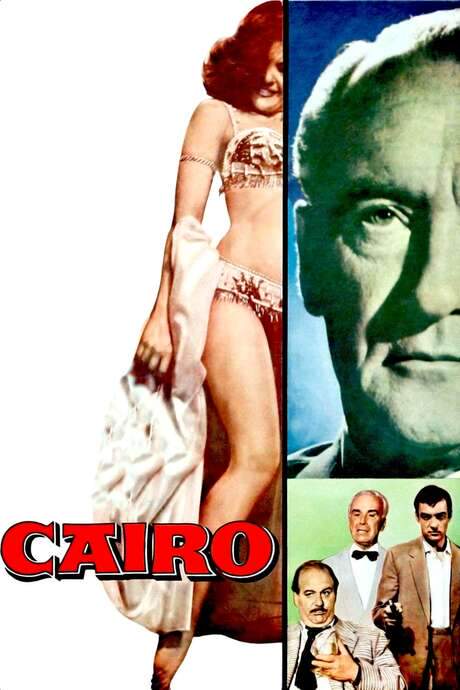
Cairo Station (1958) movie poster

Timeline

Cairo Station (1958) Timeline Explained – Every Event in Order

Release, runtime and language
1958 · 77 mins · Arabic
Starring
Sherine, Дмитрий Сорокин, Hanaa Abdel Fattah, Helen, Youssef Chahine, Essmat Mahmoud

Qinawi, a physically disabled newspaper peddler working in Cairo’s bustling central train station, becomes fixated on Hanuma, an attractive young woman who sells drinks there. Though she teases him about a romance, her heart belongs to Abu Siri, a strong, respected porter determined to unionize his fellow workers and resist their boss’s exploitative, abusive practices.

On this page (5)
  1. 1 Events in order (12)
  2. 2 Timeline questions answered
  3. 3 Movie threads
  4. 4 Movies like Cairo Station
  5. 5 Every angle

12 events in order · contains spoilers

Cairo Station Timeline: Events in Chronological Order

Every key event of Cairo Station (1958) in order, scene by scene, with when and where it takes place. Use it to untangle flashbacks, time jumps and parallel storylines, to refresh your memory before the sequel or to find the exact scene you are thinking of.

  1. Qinawi starts at the newsstand

    A compassionate newsstand owner hires Qinawi to sell newspapers at Cairo's main train station. The job gives him a sense of purpose, but the crowded hub reveals that many women shun him because of his handicap. He learns to navigate social isolation while keeping his duties at the stall.

    When
    Morning
    Where
    Cairo train station newsstand
  2. Qinawi fixates on Hannuma

    Qinawi becomes obsessed with Hannuma, the beautiful but aloof drink vendor. Hannuma is engaged to Abu Siri, a sturdy luggage porter who plans to organize his coworkers. Qinawi's longing grows into an all-consuming fantasy of a home with Hannuma.

    When
    Daytime
    Where
    Cairo train station
  3. A proposal rejected

    Qinawi musters courage and proposes to Hannuma, but she rejects him, brushing aside his dreams. The rejection hardens his obsession and narrows his perception of her. The station's crowds remain indifferent as his fantasy begins to fracture.

    When
    Evening
    Where
    Cairo train station
  4. A knife is bought, the plan forms

    Inspired by a news report of an unsolved murder, Qinawi buys a knife and begins to plot Hannuma's murder. He clings to the idea that violence might finally win him a place in her life. The plotting takes shape in the solitude of his room and the din of the station.

    When
    Night
    Where
    Near the newsstand and his home
  5. The bucket trap is set

    Qinawi hatches a plan to lure Hannuma to a warehouse to retrieve an incriminating drink bucket. Hannuma asks a friend to fetch it instead, foiling his immediate aim. He continues to scheme, chasing a vulnerable thread through the shadows.

    When
    Night
    Where
    Warehouse vicinity
  6. The stabbing in the darkness

    In the darkness, Qinawi does not notice the substitution; he stabs the other woman repeatedly and hides the body in a wooden crate supposedly holding Hannuma's trousseau. He believes he has executed a necessary act to win her. The crate becomes part of a dangerous plan that spirals out of control.

    When
    Night
    Where
    Warehouse
  7. The crate is sent on a train

    Qinawi convinces Abu Siri to place the crate aboard a train bound for Hannuma's impending wedding. The act is meant to stage a discovery, but it also marks a point of no return for Qinawi. The train carries a crime that will soon threaten everyone involved.

    When
    Night
    Where
    Train
  8. Discovery and suspicion

    The would-be victim is found alive and the station is alerted to an attempted murder. The initial blame falls on Abu Siri and his union drive, but Hannuma's ally identifies the real attacker. The truth begins to unravel, pointing to Qinawi's guilt.

    When
    Following morning
    Where
    Cairo train station
  9. Hannuma's bucket pursuit

    Unaware of her near-death, Hannuma goes to retrieve her bucket and flees through the rail yard with Qinawi in pursuit. He presses a knife to her head to keep the crowd at bay as he closes in on her. The clamor of trains and shouting crowds amplifies the danger.

    When
    Night
    Where
    Rail yard
  10. The wedding garment twist

    The newsstand owner tries to console Qinawi by promising he may marry Hannuma, coaxing him into wearing a wedding garment. He discovers, to his horror, that the garment is a straitjacket, not a wedding suit. The moment marks the collapse of his dream and the onset of confinement.

    When
    Evening
    Where
    Station plaza
  11. Taken away

    With the straitjacket binding his movements, Qinawi struggles as authorities arrive to arrest him. The crowd watches as the obsessive pursuer is led away from the station. The final capture underscores the tragedy of desire gone awry.

    When
    Night
    Where
    Cairo train station
  12. Aftermath

    Hannuma remains safe but shaken, and the station bears the imprint of Qinawi's fixation. The community processes the fallout of the attempted murder and the tensions between mercy and menace. The film closes on a tense note about desire, violence, and social loneliness in a crowded hub.

    When
    Post-incident
    Where
    Cairo train station

Last updated: October 07, 2025 at 08:30

Was this helpful?

Timeline questions answered

Cairo Station Timeline Explained: Your Questions Answered

When does it happen, and why in that order? The questions people ask about the chronology of Cairo Station (1958): time jumps, flashbacks, cause and effect between scenes and the correct order of events, each answered with spoilers.

Q1

Why does Qinawi become fixated on Hanuma?

Qinawi, a disabled newspaper peddler who feels invisible in the bustling Cairo station, fixates on Hanuma because she represents everything he's lacking, beauty, confidence, and a purposeful life. Though she merely teases him politely, he interprets her kindness as romantic interest and builds an elaborate fantasy of marriage and children in a village, which hardens into obsession after she rejects his proposal.

Foreshadowing: Earlier scenes show women avoiding Qinawi due to his handicap, establishing his deep-seated feelings of rejection that fuel his distorted fantasies.

  • qinawi
  • hanuma
  • obsession
  • rejection
  • disability
Q2

What triggers Qinawi to plan Hanuma's murder?

After Hanuma rejects his marriage proposal, Qinawi's obsession twists into violence. News reports of an unsolved murder in the city give him a template, he buys a knife and rationalizes that killing Hanuma will remove the obstacle preventing her from loving him. His isolation and delusion convince him that violence is a form of 'justice' against a world that has rejected him.

Foreshadowing: The rejection scene hardens Qinawi's expression and narrows his perception, showing his mental state shifting from longing to dangerous fixation.

  • qinawi
  • murder plan
  • knife
  • murder
  • killing
Q3

How does Qinawi's bucket trap plan work and why does it fail?

Qinawi schemes to lure Hanuma into a warehouse by telling her there's an incriminating drink bucket to retrieve. Hanuma asks a friend to fetch it instead, not realizing the danger. Qinawi doesn't notice the substitution in the darkness and attacks the wrong woman, stabbing her repeatedly before hiding her body in a wooden crate.

Foreshadowing: The plan relies on Hanuma's routine and trust, showing how Qinawi misreads social relationships and underestimates people's choices.

  • bucket trap
  • warehouse
  • lure
  • hanuma
  • fail
Q4

Who does Qinawi actually stab in the darkness?

Qinawi stabs a different woman, the friend Hanuma sent to retrieve the bucket, not Hanuma herself. The would-be victim survives and later identifies Qinawi as her attacker, which leads to his capture. His entire plan collapses because he couldn't distinguish between Hanuma and the woman he attacked in the dark.

Foreshadowing: The substitution happens because Hanuma simply asked a friend to help, a mundane choice that inadvertently saves her life.

  • wrong woman
  • stabbing
  • friend
  • survivor
  • attack
Q5

Why is Abu Siri initially suspected of the attack?

Police suspect Abu Siri because his union organizing threatens the station's power balance. His labor activism makes him a convenient suspect for authorities who want to suppress labor organizing. Additionally, as Hanuma's fiancé, he had motive in the eyes of investigators, though the real attacker was Qinawi.

Foreshadowing: Abu Siri's determination to unionize creates tension with station management and authorities, making him a target for blame.

  • abu siri
  • suspect
  • police
  • union
  • labor
Q6

What is the significance of the wedding garment at the end?

The newsstand owner attempts to calm Qinawi by suggesting he could still marry Hanuma if he wears a wedding garment. Qinawi discovers it's actually a straitjacket, a grim metaphor showing he was already trapped in his own delusion. The 'garment' that symbolizes his dreams instead becomes the tool of his physical confinement, exposing the horror of his distorted mind.

Foreshadowing: Earlier moments show the newsstand owner as a mentor figure, making this final betrayal of trust more devastating.

  • wedding garment
  • straitjacket
  • irony
  • confinement
  • newsstand owner
Q7

How does the union subplot connect to the main story?

Abu Siri's union organizing creates a parallel narrative about workers resisting exploitation at the station. This subplot heightens the tension and suspicion around the attack, when violence occurs, authorities immediately blame the 'troublemaker' unionist rather than the quiet, seemingly harmless Qinawi. The labor tensions also reflect the broader theme of marginalized people struggling for dignity in a harsh social system.

Foreshadowing: Abu Siri's stubborn determination to improve workers' conditions sets him against station authorities throughout the film.

  • union
  • labor
  • abu siri
  • organizing
  • workers
Q8

Why does Qinawi hide the body in the crate meant for Hanuma's trousseau?

Qinawi hides the victim's body in the wooden crate supposedly containing Hanuma's wedding trousseau (dowry items). By placing the body in what should be a symbol of his future with Hanuma, he believes he's orchestrating a dramatic discovery that will somehow win her. The crate is loaded onto a train, turning the wedding preparations into a macabre crime scene and extending the danger to those handling the luggage.

Foreshadowing: The trousseau represents everything Qinawi imagines winning through violence, his fantasy of domestic bliss twisted into something sinister.

  • crate
  • trousseau
  • body
  • train
  • macabre
Q9

What drives Qinawi's descent into violence?

Qinawi's violence stems from a combination of social marginalization due to his disability, chronic loneliness, and delusional thinking. The station's crowded environment makes him feel more invisible, while his fantasies of marriage and family offered an escape. When rejection came, his fragile mental state couldn't handle it, and he rationalized murder as a way to 'possess' what he could never have. The film shows how isolation and unmet longing can curdle into dangerous obsession.

Foreshadowing: Early scenes establish Qinawi's pattern of moving through crowds as if invisible, a man surviving in the margins.

  • psychological breakdown
  • isolation
  • delusion
  • loneliness
  • violence
Q10

How is Qinawi finally captured at the station?

The surviving victim identifies Qinawi as her attacker, and authorities surround him at the station. Rather than escape, he is restrained in a straitjacket and led away as the crowd watches. The final capture underscores the film's tragic message: a single moment of unchecked fantasy derailed not just Qinawi's life but also affected the entire community.

Foreshadowing: The newsstand owner's failed attempt to save Qinawi through the wedding garment ruse marks the point where escape becomes impossible.

  • arrest
  • capture
  • straitjacket
  • station
  • authorities

Movie threads

More Movies Like Cairo Station, by Mood & Story

Curated lists built around what makes Cairo Station tick: the same mood, the same kind of story or the same emotional payoff. Each list explains why these movies belong together.

Movies about obsessive violence like Cairo Station

Films about lonely individuals whose fixations curdle into shocking acts. If you were captivated by the tragic unraveling in Cairo Station, explore more movies like it. This collection features similar character-driven thrillers and dramas where intense loneliness or fixation leads to a violent climax, offering a stark look at psychological breakdown.

  • unsettling
  • desperate
  • lonely
  • tense
  • clinical
  • oppressive
  • Tone: dark, unsettling, tragic
  • Pacing: steady, methodical build
Why these movies?

The story pattern: This thread follows narratives centered on an isolated protagonist whose unhealthy obsession with a person or idea becomes all-consuming. The story builds methodically, often from their point of view, creating a sense of inevitability as their delusions escalate, culminating in a violent act that shatters their world and the community around them.

Why they belong together: Movies are grouped here for their shared focus on a lonely character's psychological disintegration. They share a clinical, often unsentimental tone, a steady pacing that builds dread, and a heavy emotional weight derived from witnessing a tragic, destructive arc that feels both disturbing and inevitable.


Claustrophobic social realism movies like Cairo Station

Gritty dramas where a specific, crowded location mirrors social tensions. For viewers who appreciated the gritty, location-driven realism of Cairo Station, this list curates similar movies. Discover other films where a bustling, confined setting amplifies social tensions and personal dramas, creating a powerful and austere cinematic experience.

  • oppressive
  • claustrophobic
  • austere
  • gritty
  • social tension
  • desperate
  • Tone: dark, austere, clinical
  • Pacing: steady, observational
Why these movies?

The story pattern: The narrative pattern involves intersecting lives within a confined, socially stratified environment. The plot often weaves together a personal story of desire or ambition with a broader commentary on labor, class, or marginalization. The location itself is a character, creating a sense of entrapment as personal and social conflicts collide, usually with a bleak outcome.

Why they belong together: These films share a specific vibe: an austere, observational style that grounds personal tragedy in a tangible social reality. They are united by an oppressive and claustrophobic mood, a steady, deliberate pacing, and a straightforward complexity that lends their stories a powerful, impactful simplicity.

If you liked this

Movies Like Cairo Station

Similar movies to Cairo Station: the same genre, themes or kind of story. Each one comes with its own plot summary, timeline and ending explained.

Browse all movie summaries

Every angle

Cairo Station (1958) Explained: Plot, Timeline & Characters

Everything about Cairo Station in one place: what happens in the plot summary, the timeline in chronological order, the characters and meaning and a spoiler-free summary. What's After the Movie adds the cast, box office and post-credit scenes.

Coming soon on iOS and Android

The Plot Explained Movie Summary App

Plot summaries, endings explained and timelines on your phone. Catch up on any movie in minutes, save your favorites and never miss a twist again.

Be the first to know when we launch. Your email stays private, always.

Learn more about the app