Plot Explained Spoilers guaranteed!
Plot Explained

Browse by genre

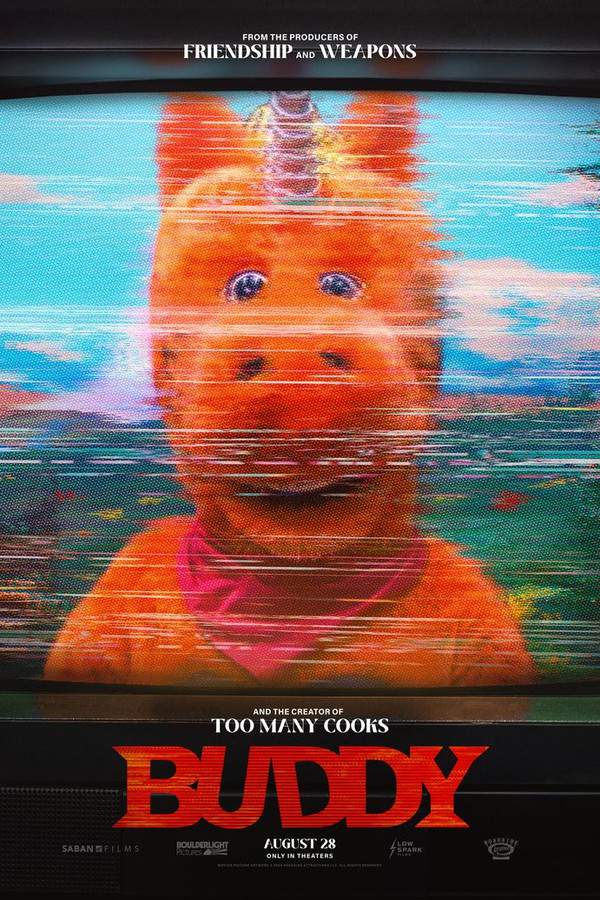
Buddy (2026) movie poster

Characters & Themes

Buddy (2026) Characters, Setting & Themes Explained

Release, runtime and language
2026 · 1 h 35 m · English
Echo score 76
Loading streaming availability…
Directed by
Casper Kelly
Starring
Topher Grace, Michael Shannon, Patton Oswalt, Cristin Milioti, Phuong Kubacki, Eric Bauza

Remember Buddy—the bright orange unicorn who starred in the classic children’s series, sharing joy and life lessons from the living‑room screen. In the vibrant world of “It’s Buddy!” a group of kids spend their days singing, dancing and helping Buddy spread happiness. When one child refuses to join the fun, Buddy’s cheer is threatened, prompting him to address the discord and bring the spirit of play back to the group.

On this page (7)
  1. 1 Where to watch
  2. 2 Characters explained (3)
  3. 3 Where & when it takes place
  4. 4 Themes & meaning (3)
  5. 5 Character & meaning questions
  6. 6 Movie threads
  7. 7 Every angle
Loading streaming availability…

3 main characters · contains spoilers

Buddy Characters Explained: Who Is Who

The main characters of Buddy (2026), heroes and villains: what drives them, how they change over the course of the story and what each of them reveals about the film's bigger ideas.

  • Buddy

    Buddy is an anthropomorphic talking unicorn who initially appears to embody the cheerful spirit of children's television. However, behind his bright facade lies an aggressive and manipulative nature, willing to harm others to maintain control. His transformation into Dark Buddy symbolizes the deeper, darker aspects of childhood fears and the consequences of unchecked power.

    • 🦄 Villain
    • 🎭 Manipulator
    • 🌪️ Antagonist
  • Freddy

    played by Delaney Quinn

    Freddy is a brave and determined child who takes on the role of the leader among her peers. As the narrative unfolds, she grapples with her memories and fights against Buddy's influence, ultimately showcasing her resilience and courage. Her journey reflects the struggle to reclaim agency in a world dominated by fear.

    • 👧 Hero
    • 💪 Resilience
    • 🚀 Courage
  • Grace

    played by Cristin Milioti

    Grace is a mother searching for the truth about her missing child. Her determination leads her to confront the supernatural and reconnect with her family, embodying the themes of loss and sacrifice. Her transition from the real world to an animated realm highlights her struggle between two different realities.

    • 👩‍👧 Mother
    • 🔍 Investigator
    • 💔 Sacrifice

Last updated: September 29, 2026 at 10:38

Was this helpful?

Setting

Where and When Does Buddy Take Place?

The setting of Buddy (2026): the year and time period, the places and locations, and how they shape the characters, the mood and the tension of the story.

Time period

1990s

The movie takes place during the 1990s, a period known for its unique blend of children's television programming and increasing attention to darker themes in children's media. This era saw the rise of iconic animated shows with vibrant characters, although often hiding deeper narratives that resonate with adult audiences. The mix of nostalgia and horror reflects the complexities of childhood during this decade.

Location

Diamond City, It's Buddy! set, Grace's house

Diamond City is depicted as an idealistic yet deceptive place, believed to be a utopia but revealed to be a miniature model. The setting of It's Buddy! is characterized by its colorful and whimsical elements, serving as the backdrop for the children’s adventures and the dark events that unfold. Grace's house represents the real-world anchor, merging the magical and the mundane.

  • 🏙️ City
  • 📺 Television
  • 🏡 Home

Last updated: September 29, 2026 at 10:38

Was this helpful?

3 major themes

Buddy Meaning: Themes & Message Explained

What is Buddy (2026) really about? The emotional, social and philosophical themes the film keeps returning to, its symbolism and the message beneath the surface.

  • Duality of Innocence

    The film explores the juxtaposition of childhood innocence and the looming threat of malice, embodied by Buddy. While children's shows typically represent fun and learning, this narrative twists that perception, revealing the underlying dangers of blind trust and manipulation. The impact of growing up and confronting fear is central to the children's quest.

  • Reality vs. Illusion

    A prominent theme is the conflict between reality and illusion, as the children gradually recognize that their experiences with Buddy are warped by fear and control. The involvement of Grace and her family's attempts to connect with the spirit world mirrors the children's own struggles for truth amidst rising chaos. This theme illustrates the challenges of discerning what's real in a manufactured world.

  • Loss and Sacrifice

    Loss permeates the narrative, with multiple characters facing dire consequences in their battle against Buddy. Grace’s ultimate sacrifice showcases parental love and the lengths one will go to protect their children. The film's grim conclusion emphasizes the emotional toll of loss and the complexity of growing up in a world filled with peril.

Last updated: September 29, 2026 at 10:38

Was this helpful?

Character & theme questions

Buddy Characters & Meaning: Your Questions Answered

The questions people ask about Buddy (2026): who the characters really are, their relationships, what the symbols mean, where it takes place and what the movie is really about. Each answer contains spoilers.

Q1

Where does the story of Buddy take place?

Buddy unfolds across two interconnected environments: Diamond City, a seemingly utopian locale that is later revealed to be a miniature model, and the colorful TV studio set of "It's Buddy!", where the children interact with Buddy himself. Grace's house serves as the real-world anchor, bridging the magical animated dimension with the mundane world.

  • diamond city
  • setting
  • it's buddy set
  • grace's house
  • location
Q2

When is Buddy set?

Buddy is set during the 1990s, an era defined by vibrant children's television programming that often masked darker narratives beneath cheerful surfaces. The decade's mix of nostalgia and emerging horror in kids' media shapes the film's unsettling tone.

  • 1990s
  • time period
  • era
  • nostalgia
  • children's television
Q3

Is Buddy a horror movie or a children's film?

Buddy is classified as horror despite its bright, cartoonish packaging inspired by children's television. The film subverts the wholesome aesthetics of a kids' show by embedding graphic violence, psychological dread, and existential terror within that familiar format, turning cheerful iconography into a source of fear.

  • horror genre
  • children's show
  • subversion
  • tone
  • violence
Q4

What are the main themes explored in Buddy?

Buddy explores three central themes: the duality of innocence, where childhood joy coexists with lurking malice; the tension between reality and illusion, as characters struggle to distinguish truth from a manufactured, fear-soaked fantasy; and loss and sacrifice, highlighted by the devastating cost the characters pay to confront Buddy.

  • themes
  • innocence
  • reality vs illusion
  • loss
  • sacrifice
Q5

What does Dark Buddy represent in the movie?

Dark Buddy is the mutated, violent form Buddy takes as his manipulative nature fully surfaces. He represents the darker undercurrents of childhood fears and the consequences of unchecked power, embodying the idea that what appears cheerful on the surface can harbor genuine menace when its control is challenged.

  • dark buddy
  • transformation
  • fear
  • manipulation
  • power
Q6

Who is Buddy in the movie?

Buddy is an anthropomorphic talking unicorn who serves as the central figure of the children's series "It's Buddy!" He initially embodies the cheerful, instructive spirit of kids' television, but beneath that bright facade lies an aggressive and manipulative personality willing to harm others to preserve his dominance.

  • buddy
  • unicorn
  • children's show
  • antagonist
  • manipulation
Q7

Who is Freddy in Buddy?

Freddy, whose real name is Delaney Quinn, is a brave and determined child who emerges as the leader among her peers in Buddy. She battles against Buddy's influence while wrestling with fragmented memories, and her arc centers on resilience, courage, and reclaiming agency in a world designed to instill fear.

  • freddy
  • delaney quinn
  • child leader
  • courage
  • resilience
Q8

Who is Grace in Buddy?

Grace, played by Cristin Milioti, is a mother searching for the truth about her missing child. Her determination drives her to confront the supernatural and reconnect with her family, and her journey between the real world and the animated realm makes her a bridge between the film's two realities and a symbol of parental sacrifice.

  • grace
  • cristin milioti
  • mother
  • missing child
  • sacrifice
Q9

What does Diamond City represent in Buddy?

Diamond City functions as the movie's deceptive utopia, a place the characters believe is ideal until it is revealed to be a miniature model. It serves as a visual metaphor for manufactured reality, reinforcing the theme that what looks like paradise can be an illusion built on control and concealment.

  • diamond city
  • utopia
  • illusion
  • miniature
  • manufactured reality
Q10

What role does the show "It's Buddy!" play in the movie?

"It's Buddy!" is the in-universe children's television program that frames Buddy as a beloved mascot spreading happiness through song and play. The show functions as the movie's central vehicle for nostalgia and worldbuilding, and its cheerful format becomes the very thing the horror subverts as Buddy's dark nature breaks through the screen.

  • it's buddy
  • children's show
  • television
  • nostalgia
  • subversion
Q11

What does the duality of innocence mean in Buddy?

The duality of innocence in Buddy refers to the coexistence of childhood joy and lurking malice within the same space. The film uses Buddy's cheerful persona to highlight how children's programming can serve as a Trojan horse for fear, suggesting that blind trust in something bright and familiar can expose kids to real danger.

  • duality of innocence
  • childhood
  • trust
  • fear
  • manipulation
Q12

How does Buddy distinguish between the real world and the animated realm?

Buddy splits its world into two layers: the grounded, mundane reality anchored by Grace's house, and the vibrant animated dimension of "It's Buddy!" and Diamond City. Grace's movement between these spaces embodies the theme of reality versus illusion, as characters must learn to discern what is genuine within a world built to deceive them.

  • real world
  • animated realm
  • dual worlds
  • reality
  • illusion

Movie threads

More Movies Like Buddy, by Mood & Story

Curated lists built around what makes Buddy tick: the same mood, the same kind of story or the same emotional payoff. Each list explains why these movies belong together.

Evil Mascot Horror Movies Like Buddy

Beloved childhood characters return as something far more sinister than memory promised. Movies like Buddy tap into evil mascot horror, where once-beloved children's characters become unstoppable killers and corrupted icons of lost innocence. If you liked Buddy's dark reimagining of cheerful television mascots, you'll find similar nostalgia-twisting horror stories here, including survival horror that targets children, body horror transformations, and brutal violence. Discover more disturbing films that turn childhood favorites into nightmarish threats.

  • nostalgic dread
  • disturbing
  • body horror
  • creepy
  • uncanny
  • childhood subversion
  • Tone: dark, unsettling, nostalgic dread
  • Pacing: fast and relentless
Why these movies?

The story pattern: Stories in this thread typically introduce a familiar, friendly figure from a child's world, then systematically dismantle that warmth through escalating violence, revealed malice, or grotesque transformation. The protagonist often begins as a fan or a caretaker of younger victims, making the betrayal of trust central to the horror. By the climax, the mascot is no longer a character but a force of nature, and survival depends on rejecting the comfort the icon once provided.

Why they belong together: They share a foundational trick: taking a piece of shared cultural nostalgia and inverting it into something monstrous. The pacing is fast, the tone is dark, and the violence is intense because the audience is supposed to feel the dissonance between memory and reality. Body horror, child endangerment, and bleak endings are common, since the genre thrives on maximum emotional contrast.
Haunted Pocket Dimension Horror Movies Like Buddy

The screen, the mirror, the room — somewhere the rules stop and the nightmare begins. If you liked Buddy's nightmarish pocket television dimension where children are absorbed into a killing entertainment loop, you'll love these trapped-in-another-world horror films. Expect layered realities, liminal spaces, sentient environments, and stories where the setting itself is the antagonist. Movies like Buddy blend survival horror with complex world-building, claustrophobic dread, and bleak conclusions that leave characters stranded in hostile alternate spaces.

  • claustrophobic
  • paranoid
  • nightmarish
  • liminal
  • dread filled
  • oppressive
  • Tone: dark, claustrophobic, paranoid
  • Pacing: fast once the trap is sprung
Why these movies?

The story pattern: Characters are pulled, glitched, or lured into a place that imitates their own world but twists every rule. Time loops, identity erasure, and shifting geography are common, and the characters must learn the strange logic of the space just to survive another hour. The arc usually moves from confused exploration to desperate confrontation, ending in either escape, absorption, or the bitter realization that the loop has already claimed the next victim.

Why they belong together: They share a fascination with settings that feel like a copy of reality gone slightly wrong, where hallways repeat, friendly faces wear hollow smiles, and the environment behaves like a thinking thing. Pacing tends to be fast once the trap is sprung, the tone is dark and paranoid, and the complexity comes from layering lore across the real world and the twisted mirror version. Emotional weight lands heavily because the victims are often stripped of identity before they even understand what is happening.

Every angle

Buddy (2026) Explained: Plot, Ending, Timeline & Characters

Everything about Buddy in one place: what happens in the plot summary, the timeline in chronological order, the characters and meaning, the ending explained and a spoiler-free summary. What's After the Movie adds the cast, box office and post-credit scenes.

Coming soon on iOS and Android

The Plot Explained Movie Summary App

Plot summaries, endings explained and timelines on your phone. Catch up on any movie in minutes, save your favorites and never miss a twist again.

Be the first to know when we launch. Your email stays private, always.

Learn more about the app