Plot Explained Spoilers guaranteed!
Plot Explained

Browse by genre

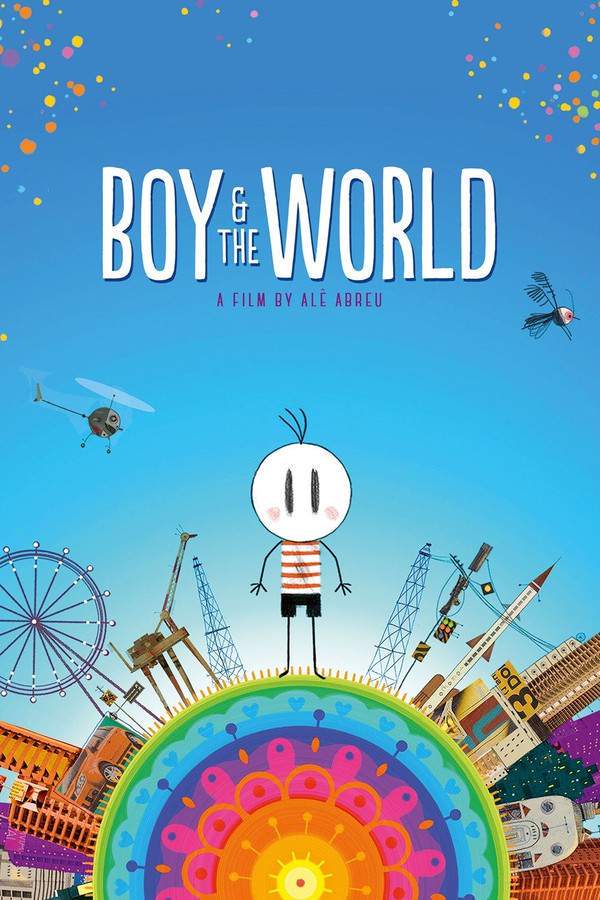
Boy and the World (2015) movie poster

Plot Summary

Boy and the World (2015) Plot Summary Explained

Release, runtime and language
2015 · Portuguese
Loading streaming availability…
Directed by
Alê Abreu
Starring
Lu Horta, Marco Aurélio Campos, Vinicius Garcia

When his father leaves, a young boy sets off on an imaginative journey to find him and reunite his family. His quest takes him from a peaceful countryside setting to a vibrant, bustling city, filled with peculiar creatures and fantastical landscapes. Along the way, he experiences a series of colorful adventures, discovering the power of imagination and the importance of family connection.

On this page (5)
  1. 1 Where to watch
  2. 2 What happens: full plot
  3. 3 Plot questions answered
  4. 4 Movie threads
  5. 5 Every angle
Loading streaming availability…

Full plot summary · contains spoilers

What Happens in Boy and the World: Full Plot Summary

The whole story of Boy and the World (2015) explained, from the opening scene to the final frame: every key event, every twist and what it all adds up to. Read it as a quick recap before the sequel, to check a scene you missed, or to finally understand what really happened.

In the picturesque sanctuary of his childhood, Cuca revels in the unrestrained delight of discovering the enchanting forest around him, where he forms an effortless bond with the creatures of nature, entranced by radiant orbs that emit a melodious symphony. However, this blissful atmosphere is shattered when Cuca's father departs by train in search of work, leaving the young boy to face a profound yearning for the carefree joy of play with both his parents. Overwhelmed by despair, Cuca embarks on a heartfelt journey, grasping a suitcase that holds nothing but a treasured family photograph, as if it embodies the essence of his past and present.

As he waits for the train that will carry him away from wistful memories, a sudden gust of wind envelops Cuca, whisking him into a realm where two luminous moons illuminate an otherworldly expanse. There, an old man, whose name remains unknown, along with his devoted dog, intervenes to rescue Cuca from the uncertainty of this strange land, welcoming him into their daily toil in the cotton fields.

While immersed in the steady rhythm of agricultural labor, Cuca catches the exhilarating tunes played by a lively parade led by a spirited young man dressed in a vibrant rainbow poncho. Meanwhile, the foreman of the cotton fields oversees his workers with sternness, casting aside those whose age or ailments hinder their ability to work. Along with the old man and the dog, Cuca embarks on nightly escapades across the countryside, ultimately finding refuge beneath the broad branches of a magnificent pink-leaved tree.

As dawn breaks, Cuca spots his father sitting atop a truck on a distant road. With a burgeoning feeling of connection, he hands over the suitcase to the old man and embarks on a twisty path, driven by an innate desire to reunite with his father. Stepping off the bus into the gritty cityscape, he plunges into the monotonous world of factory work, where laborers toil like machines. Under the guidance of a young factory worker turned charismatic leader of the vibrant parade, Cuca spends the evening absorbing the pulsating rhythms of urban life.

The following morning, this unlikely duo strolls through the marketplace, where the young musician's melodic flair secures them a modest income. Amidst a kaleidoscope of colors, Cuca stumbles upon an unexpected revelation: a barge that reveals the shocking truth about the fabrics' intricate journey to a futuristic paradise floating above the waves. Mysterious and unseen, these fabrics become prized possessions within the city's shadowy underbelly before being resold on the grimy streets below.

Together with the young musician, Cuca devises a plan to infiltrate the factory, where they bear witness to the manager negotiating a Faustian deal with an enigmatic businessman that seals the workers' fate. The young leader and his friends are soon offloaded, only to be summoned to the cotton fields, where a new reality awaits. As Cuca and his companion navigate the city's bustling streets, they become ensnared in the color-laden parade, a lively spectacle masking a more sinister reality.

In a moment of clarity, Cuca's eyes are drawn to the train that ferried his father to this very city, catalyzing an epiphany that compels him to rush toward the station. Using the young musician's bicycle, he arrives just in time to embrace his father—or so he believes. Instead, he confronts a multitude of indistinguishable fathers, all united by a common cause. The parade is abruptly severed by the city's military forces, depicted as a massive rainbow-hued bird being overwhelmed by a menacing black bird, wreaking havoc and chaos in its wake.

From his new perspective, Cuca witnesses children arming themselves for rebellion amidst the urban decay, while the young musician looks on from a trash mountain, his expression mirroring the futility of their plight. In haste, Cuca returns to his childhood home, only to find a surreal environment where machines have replaced the natural world. The landscape is hauntingly transformed: rusty contraptions shuffle across what was once verdant land, mirroring the environmental devastation and toxic emissions that flash on screen, presenting a stark apocalyptic vision.

As Cuca approaches the now dilapidated pink-leaved tree, a breathtaking realization dawns upon him: the old man, a sagely figure, is none other than an older manifestation of himself, with the tree standing sentinel near his childhood residence. A sentimental flashback transports us to a time long past, where a youthful Cuca bids farewell to his mother, his gaze lingering on a tender sapling that would ultimately grow into the iconic pink-leaved tree.

Now a figure of wisdom in his elder years, Cuca adorns himself in the vibrant rainbow poncho that symbolized his joyful youth. As he surveys the altered landscape, he is struck by the poignant contrast of his long-abandoned childhood home—now surrounded by modern developments and fields cultivated by farmers whose children rejoice in song and play.

The film concludes with a touching final flashback: Cuca, alongside his parents, plants a seed that represents hope, symbolized by the sapling that will flower into the fabled pink-leaved tree. As the screen fades to white, the audience is left to contemplate the cyclical essence of life, where past, present, and future intertwine in an evocative symphony of memory and yearning.
Last updated: November 22, 2024 at 19:05

Was this helpful?

Plot questions answered

Boy and the World Plot Explained: Your Questions Answered

The questions people ask most about Boy and the World (2015): what happens in the confusing scenes, why the characters do what they do, the twists, hidden details and what the ending means. Each answer contains spoilers.

Q1

Why does Cuca leave his home to find his father?

Cuca leaves because his father departed by train to find work, leaving the young boy devastated and longing for the carefree joy of having both parents. Overwhelmed by despair, Cuca takes a suitcase containing a treasured family photograph and sets off on a journey to reunite his family.

Foreshadowing: Earlier scenes show Cuca's happy childhood with both parents, establishing the contrast with his emotional state after his father's departure.

  • cuca
  • father leaves
  • journey
  • family separation
  • abandonment
Q2

What happens when the wind envelops Cuca?

A sudden gust of wind magically transports Cuca into an otherworldly realm illuminated by two luminous moons. This surreal event marks his transition from the real world into a fantastical landscape where his journey truly begins.

Foreshadowing: The wind appears as Cuca waits for the train that will carry him away from his memories, symbolizing his departure from childhood.

  • wind
  • magical realm
  • otherworld
  • transport
  • fantasy
Q3

Who is the old man that rescues Cuca in the cotton fields?

The old man is actually Cuca himself from the future. When Cuca returns to his childhood home at the end of the film, he encounters this older version of himself beneath the pink-leaved tree, revealing that his entire journey was a cyclical exploration of his own life.

Foreshadowing: The old man welcomes Cuca into his routine and gives him the rainbow poncho, hinting at their shared identity through these symbolic exchanges.

  • old man
  • cuca future self
  • identity reveal
  • time cycle
Q4

What does the colorful parade in the city represent?

The parade represents both joyful celebration and hidden political resistance. While it appears as a vibrant spectacle with lively music, it actually masks a revolutionary movement against the oppressive city forces. The military eventually attacks the parade, depicted as a rainbow bird being overwhelmed by a black bird.

Foreshadowing: The parade first appears in the cotton fields as a joyful contrast to the harsh labor, foreshadowing its deeper significance in the city.

  • parade
  • rebellion
  • protest
  • military
  • political resistance
  • city uprising
Q5

What does Cuca discover when he infiltrates the factory?

Cuca and the young musician witness the factory manager making a Faustian deal with a mysterious businessman that seals the workers' fate. This reveals the exploitative system where workers are treated as disposable machines, and their futures are sold for profit.

Foreshadowing: Earlier scenes show the harsh factory conditions where laborers work like machines in a relentless cycle.

  • factory
  • exploitation
  • faustian deal
  • workers
  • labor exploitation
Q6

Why does Cuca encounter multiple indistinguishable fathers at the train station?

Cuca sees many fathers who all look the same, unified by their common struggle against oppressive city forces. This powerful image represents the universality of working-class fathers who leave their families to find employment, all facing the same hardships and exploitation.

Foreshadowing: This moment connects to the earlier departure of Cuca's father, emphasizing that his father's story is one of many similar struggles.

  • fathers
  • train station
  • working class
  • collective struggle
  • industrial oppression
Q7

Why is Cuca's childhood home transformed into an industrial landscape?

When Cuca returns home, he finds machines have replaced the natural world, rusty contraptions shuffle across what was once verdant land. This transformation represents environmental devastation caused by industrialization and progress, showing the irreversible changes and loss of innocence that occur over time.

Foreshadowing: The film's progression from pastoral countryside to gritty city foreshadows this complete transformation of the natural world.

  • industrialization
  • environment
  • apocalypse
  • deforestation
  • machines
  • loss of nature
Q8

What does the pink-leaved tree symbolize in the film?

The pink-leaved tree symbolizes hope, memory, and the cyclical nature of life. It serves as a meeting point in Cuca's journey and later reveals itself as the tree planted by Cuca and his parents in the past. The final flashback shows them planting the seed that grows into this very tree, representing continuity between past, present, and future.

Foreshadowing: Cuca and the old man find refuge beneath this tree throughout their nocturnal adventures, and it stands near Cuca's childhood home as a sentinel of memory.

  • pink tree
  • hope
  • cyclical time
  • memory
  • nature
  • planting seeds
Q9

What is the meaning of the final scene where Cuca plants a seed?

The ending shows Cuca and his parents planting a seed that grows into the pink-leaved tree, symbolizing hope for the future despite the desolation shown in the present. This creates a cyclical narrative where past, present, and future intertwine, Cuca's journey represents both searching for his father and ultimately returning to nurture the hope he once planted.

Foreshadowing: This connects directly to the earlier revelation that the old man is Cuca himself, completing the time loop of his journey.

  • ending
  • seed planting
  • hope
  • cyclical life
  • family
  • future
Q10

What does Cuca discover about the fabrics on the barge?

At the marketplace, Cuca discovers a barge revealing the shocking truth about the fabrics' journey. These materials originate from a futuristic paradise floating above the waves, become prized possessions in the city's shadowy underbelly, and are then resold on the grimy streets below, exposing the city's complex and exploitative economy.

Foreshadowing: The vibrant colors of the fabrics throughout the city contrast with this dark discovery about their origin and distribution.

  • barge
  • fabrics
  • marketplace
  • underground economy
  • city secrets
Q11

Why do military forces attack the parade?

The military attacks the parade because it serves as a cover for revolutionary resistance against the oppressive city government. The parade's joyful exterior masks political uprising, and the forces suppress this rebellion violently, depicted as a rainbow bird being destroyed by a menacing black bird.

Foreshadowing: The parade was introduced earlier as both joyful and secretly significant, foreshadowing its role in political strife.

  • military
  • attack
  • parade
  • rebellion
  • oppression
  • revolution
Q12

Who is the young musician who leads the parade?

The young musician is a factory worker who becomes the charismatic leader of the vibrant parade. He befriends Cuca in the city, guiding him through urban life and joining him on missions to expose the factory's exploitation. His fate remains uncertain after the military attack, though he is seen observing the failed rebellion from a trash mountain.

Foreshadowing: Cuca first sees this musician leading the parade in the cotton fields, establishing their connection before meeting in the city.

  • young musician
  • parade leader
  • factory worker
  • friend
  • guide

Movie threads

More Movies Like Boy and the World, by Mood & Story

Curated lists built around what makes Boy and the World tick: the same mood, the same kind of story or the same emotional payoff. Each list explains why these movies belong together.

Bittersweet journeys through imagination like Boy and the World

Whimsical yet melancholic adventures where wonder is shadowed by poignant loss. Discover movies like Boy and the World that blend childlike wonder with poignant themes. If you enjoyed its mix of whimsical fantasy and melancholic reflection, you'll find similar stories where imaginative quests explore loss, memory, and the bittersweet nature of growing up.

  • whimsical
  • melancholic
  • dreamlike
  • poignant
  • nostalgic
  • imaginative
  • Tone: bittersweet, whimsical, melancholic
  • Pacing: steady, contemplative
Why these movies?

The story pattern: These stories typically follow a protagonist, often a child, on a quest driven by a personal loss or separation. The journey unfolds through a symbolic, fantastical world that mirrors their inner emotional landscape, leading to an ending that is contemplative and bittersweet, acknowledging both the beauty and the pain of their experience.

Why they belong together: Movies are grouped here based on their unique ability to merge a whimsical, imaginative tone with an underlying emotional weight and a bittersweet conclusion. They share a dreamlike pacing and a visual style that serves a deeper, often melancholic, narrative purpose.

Movies with symbolic allegories like Boy and the World

Visually inventive stories that use metaphor to explore industrialization and environmental decay. If you liked how Boy and the World used animation to critique industrialization, explore these similar movies. These films share a complex, allegorical narrative style and use imaginative visuals to powerfully depict themes of environmental decline and societal change.

  • contemplative
  • poignant
  • allegorical
  • thought-provoking
  • surreal
  • critical
  • Tone: contemplative, poignant, critical
  • Pacing: steady, deliberate
Why these movies?

The story pattern: The narrative pattern involves a simple personal story that serves as a framework for a larger societal allegory. The protagonist's journey through a transforming world—often from rural innocence to industrial complexity—symbolizes broader themes like environmental devastation, labor exploitation, and the loss of cultural identity, culminating in a reflective, often critical, perspective.

Why they belong together: These films are connected by their commitment to visual metaphor over explicit explanation, their thematic focus on the costs of progress, and their complex, layered storytelling that invites contemplation. They share a steady, deliberate pace that allows the allegory to unfold powerfully.

Every angle

Boy and the World (2015) Explained: Plot, Timeline & Characters

Everything about Boy and the World in one place: what happens in the plot summary, the timeline in chronological order, the characters and meaning and a spoiler-free summary. What's After the Movie adds the cast, box office and post-credit scenes.

Coming soon on iOS and Android

The Plot Explained Movie Summary App

Plot summaries, endings explained and timelines on your phone. Catch up on any movie in minutes, save your favorites and never miss a twist again.

Be the first to know when we launch. Your email stays private, always.

Learn more about the app