Year: 2002
Runtime: 120 min
Language: English
Director: Michael Moore
Budget: $4M
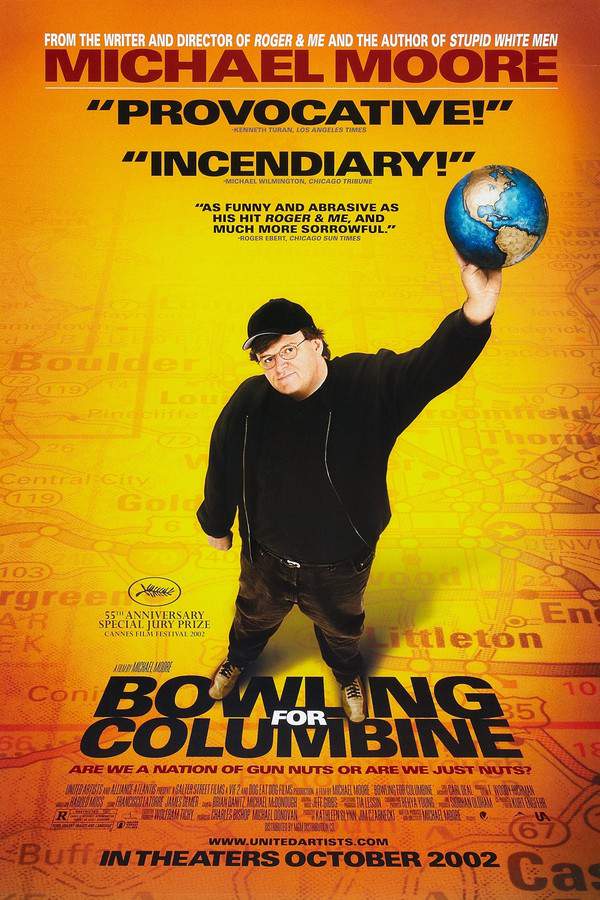
Michael Moore’s insightful documentary explores the Columbine High School tragedy and investigates the complex factors contributing to the massacre. Through his characteristic blend of humor and pointed questioning, Moore examines America's relationship with firearms, confronting Kmart employees about ammunition sales and contrasting gun violence rates with those in Canada. He also engages in a memorable exchange with actor Charlton Heston regarding his support for the NRA, prompting a thought-provoking discussion about gun ownership and responsibility.
Warning: spoilers below!
Haven’t seen Bowling for Columbine yet? This summary contains major spoilers. Bookmark the page, watch the movie, and come back for the full breakdown. If you're ready, scroll on and relive the story!
Read the complete plot breakdown of Bowling for Columbine (2002), including all key story events, major twists, and the ending explained in detail. Discover what really happened—and what it all means.
In Michael Moore’s provocative documentary, he engages in discussions with notable figures such as South Park co-creator Matt Stone, musician Marilyn Manson, and then-president of the NRA Charlton Heston to uncover the underlying reasons behind the Columbine massacre and the alarmingly high rate of violent crimes in the United States, particularly those involving firearms.
The film’s title derives from a chilling detail regarding Eric Harris and Dylan Klebold, the two students behind the tragic Columbine High School shooting on April 20, 1999. It was initially reported that they attended a bowling class early on that fateful day before commencing their attack, but later investigations revealed they were actually absent from school. Nonetheless, Michael Moore cleverly weaves the bowling theme throughout the narrative. For instance, he captures Michigan militia members practicing with bowling pins as targets. When reflecting on former classmates, Moore learns that Harris and Klebold participated in a bowling class instead of traditional physical education classes, and the girls he interviews generally agree that their interest in bowling held little educational value. This opens a critical discussion about whether educational systems address the genuine needs of the youth, or instead, perpetuate an environment of fear.
Furthermore, Moore ventures to Oscoda, Michigan, where he discovers that firearms are alarmingly easy to access in this small town, particularly since Eric Harris spent part of his childhood there while his father was serving in the Air Force. He goes on to compare gun ownership and violence in various countries, ultimately concluding that there is no direct correlation between gun ownership and violence. In his quest to decipher America’s obsession with guns, Moore identifies a pervasive culture of fear instigated by governmental practices and media portrayals. He sarcastically proposes the idea that bowling could potentially bear as much blame for the tragic events as Marilyn Manson, or even Bill Clinton, who was overseeing foreign bombing campaigns at the same time.
One striking encounter unfolds when Moore visits a Michigan bank that offers a free hunting rifle to customers who meet specific deposit criteria. In a humorous yet unsettling moment, he asks, “Do you think it’s a little dangerous handing out guns at the bank?” After successfully acquiring a gun post-background check, his bewilderment underscores the film’s critique of American attitudes toward gun possession.
As the documentary progresses, it includes poignant montages paired with powerful soundtracks. For example, “Happiness Is a Warm Gun” by The Beatles accompanies a chilling sequence depicting various acts of violence and gun ownership in America. Later on, Moore tackles the concept of institutionalized violence through his dialogue with Evan McCollum of Lockheed Martin, effectively linking the local defense industry’s presence to the mentality surrounding the Columbine incident, questioning if children connect missile manufacturing with school shootings.
The film also juxtaposes the fear-based gun culture in the United States with a more peaceful environment in Canada, where gun ownership is similarly prevalent yet incidences of gun violence are remarkably lower. Interspersed with poignant interviews, the documentary serves to illustrate how different cultural contexts shape attitudes toward violence.
Towards the climax, Moore’s conversation with Charlton Heston stands out as he challenges Heston on the NRA’s stance concerning gun violence. Heston’s insistence on the right to bear arms and his defense of the NRA leads to a tense and revealing exchange, culminating in Heston asking the filmmaker and his crew to leave his home.
Through a blend of investigative commentary and societal critique, Moore’s documentary holds a mirror to America’s gun culture, challenging viewers to confront the deep-rooted fears and ideologies that contribute to this ongoing crisis.
Last Updated: November 04, 2024 at 00:58
Discover curated groups of movies connected by mood, themes, and story style. Browse collections built around emotion, atmosphere, and narrative focus to easily find films that match what you feel like watching right now.
Investigative films that use sharp critique and pointed interviews to challenge powerful systems.Movies like Bowling for Columbine that expose social issues through direct confrontation and investigative zeal. If you enjoyed Michael Moore's pointed questioning and critical lens, you'll find similar stories here that challenge the status quo.
The narrative typically follows the filmmaker's investigative journey, building a case against a systemic issue through a combination of data, personal stories, and direct engagement with opposing viewpoints. The structure is often essay-like, weaving together multiple threads of evidence to arrive at a critical conclusion.
These films are grouped by their shared confrontational approach, darkly humorous or sarcastic tone, and their goal of sparking uncomfortable but necessary conversations about power, responsibility, and societal failure.
Stories that dissect the underlying cultural currents of fear and violence in contemporary society.If you liked Bowling for Columbine's analysis of American gun culture and societal fear, explore these movies that similarly investigate the roots of modern anxiety, media sensationalism, and cultural divides.
Narratives in this thread are often analytical, unpacking a complex social phenomenon by connecting disparate elements—media coverage, political rhetoric, historical context, and personal tragedies. The journey is one of revelation, showing how seemingly isolated events are symptoms of a deeper cultural sickness.
These movies are united by their focus on the theme of cultivated fear, their critical look at media and cultural influences, and their heavy, reflective mood that leaves the viewer contemplating unsettling truths about society.
Don't stop at just watching — explore Bowling for Columbine in full detail. From the complete plot summary and scene-by-scene timeline to character breakdowns, thematic analysis, and a deep dive into the ending — every page helps you truly understand what Bowling for Columbine is all about. Plus, discover what's next after the movie.
Track the full timeline of Bowling for Columbine with every major event arranged chronologically. Perfect for decoding non-linear storytelling, flashbacks, or parallel narratives with a clear scene-by-scene breakdown.
Discover the characters, locations, and core themes that shape Bowling for Columbine. Get insights into symbolic elements, setting significance, and deeper narrative meaning — ideal for thematic analysis and movie breakdowns.
Get a quick, spoiler-free overview of Bowling for Columbine that covers the main plot points and key details without revealing any major twists or spoilers. Perfect for those who want to know what to expect before diving in.
Visit What's After the Movie to explore more about Bowling for Columbine: box office results, cast and crew info, production details, post-credit scenes, and external links — all in one place for movie fans and researchers.
Discover movies like Bowling for Columbine that share similar genres, themes, and storytelling elements. Whether you’re drawn to the atmosphere, character arcs, or plot structure, these curated recommendations will help you explore more films you’ll love.
Bowling for Columbine (2002) Scene-by-Scene Movie Timeline
Bowling for Columbine (2002) Movie Characters, Themes & Settings
Bowling for Columbine (2002) Spoiler-Free Summary & Key Flow
Movies Like Bowling for Columbine – Similar Titles You’ll Enjoy
3 1/2 Minutes, 10 Bullets (2015) Ending Explained & Film Insights
Under the Gun (2016) Full Summary & Key Details
American Gun (2006) Story Summary & Characters
Fahrenheit 11/9 (2018) Film Overview & Timeline
Fahrenheit 9/11 (2004) Full Movie Breakdown
Newtown (2016) Film Overview & Timeline
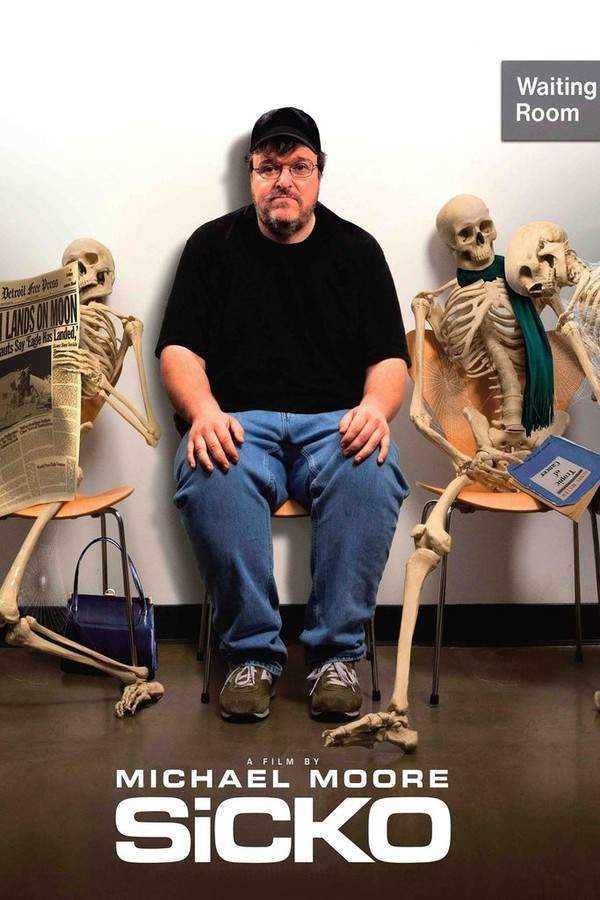
Sicko (2007) Spoiler-Packed Plot Recap
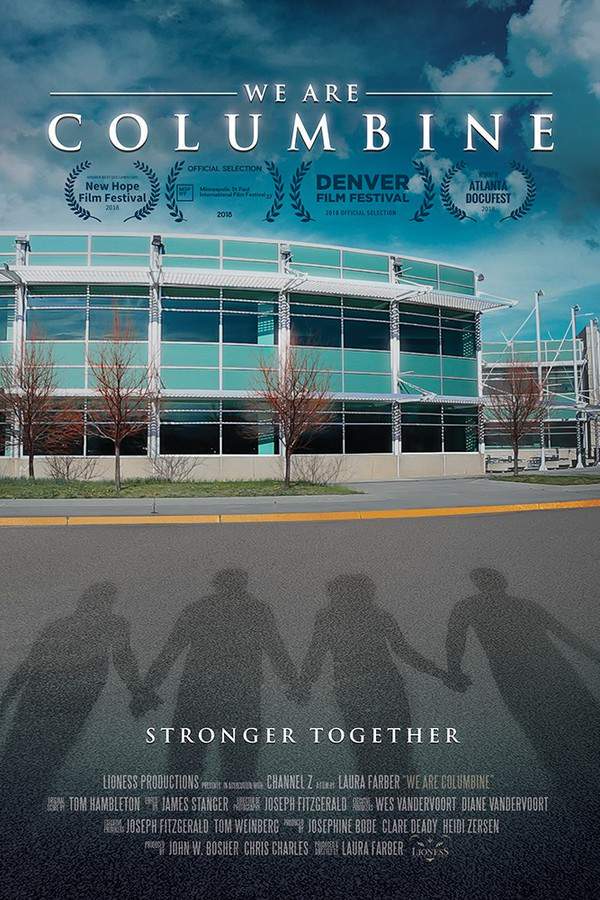
We Are Columbine (2019) Full Movie Breakdown
After Parkland (2019) Full Summary & Key Details
American Tragedy (2019) Spoiler-Packed Plot Recap
Michael & Me (2004) Detailed Story Recap
Generation Columbine (2019) Story Summary & Characters
The Killing of America (1981) Complete Plot Breakdown
Raising a School Shooter (2021) Film Overview & Timeline
Playing Columbine (2008) Full Movie Breakdown