#14,80910 Year: 2017
Runtime: 79 min
Language: English
Director: Chuan Lu
Echo Score: 66Budget: $5M
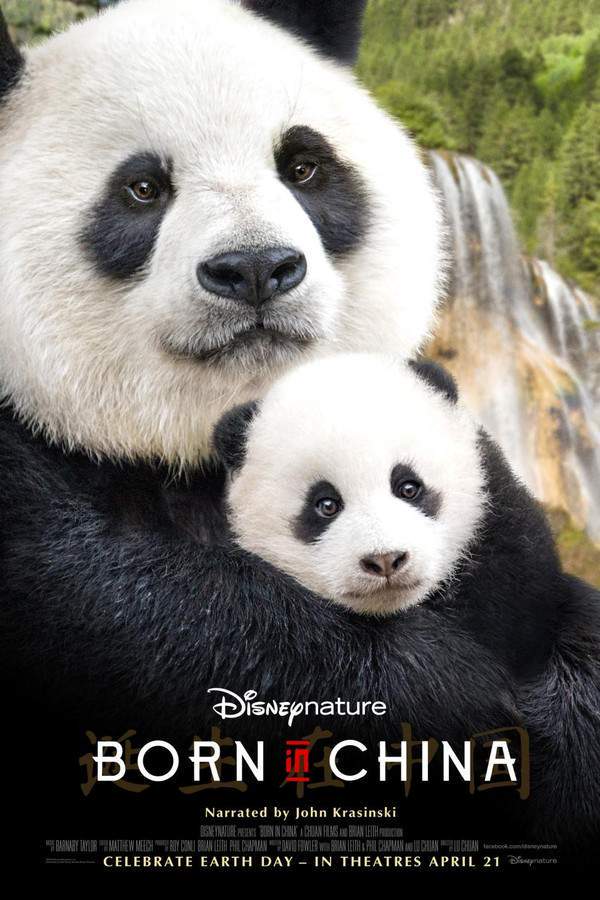
Experience the wonders of China through the eyes of its remarkable wildlife. This documentary follows three extraordinary animal families—a panda family, a troop of golden monkeys, and a snow leopard mother and her cubs—as they navigate the diverse and stunning landscapes of the country. Award-winning filmmaker Lu Chuan brings viewers on an unforgettable journey into the heart of these creatures’ lives, showcasing their challenges and triumphs.
Find where to stream, rent, or buy Born in China (2017) in the US with current JustWatch availability, up-to-date pricing, and platform listings for subscription, rental, and digital purchase options.
Warning: spoilers below!
Haven’t seen Born in China yet? This summary contains major spoilers. Bookmark the page, watch the movie, and come back for the full breakdown. If you're ready, scroll on and relive the story!
Trace every key event in Born in China (2017) with our detailed, chronological timeline. Perfect for unpacking nonlinear stories, spotting hidden connections, and understanding how each scene builds toward the film’s climax. Whether you're revisiting or decoding for the first time, this timeline gives you the full picture.
Last updated: November 08, 2024 at 03:25
Find frequently asked questions about the Born in China (2017) timeline, including chronological order, nonlinear jumps, cause-and-effect links, and scene sequence clarifications. This timeline FAQ helps explain when key events happen, how moments connect, and why the story unfolds in that specific order.
Dawa dies during spring while hunting a domestic yak. After surviving a harsh winter where she sustained serious injuries from hunting sheep, she attempts to take down a yak the following spring but is killed by the animal. Her death leaves her two cubs to fend for themselves in the harsh wilderness of the Qinghai Plateau.
Earlier in winter, Dawa sustained serious injuries during a dangerous hunt for sheep, which weakened her and set the stage for her eventual fate.
After Dawa is killed by a domestic yak, her two cubs are left to survive on their own in the Qinghai Plateau. The film shows them eventually learning to hunt and live independently, with the final scenes depicting them playing in the mountains, demonstrating their resilience despite losing their mother.
Throughout the film, Dawa teaches her cubs essential survival skills, preparing them for the day they must fend for themselves.
TaoTao leaves his family because he feels jealous and neglected after his parents have a new baby sister. Unable to cope with the lack of attention, he seeks acceptance and companionship among The Lost Boys, a group of rebellious monkeys led by an adult male named Rooster.
The film shows TaoTao's emotional struggle from the moment his newborn sister arrives, highlighting his longing for attention and belonging.
TaoTao returns to his family after witnessing a confrontation between Rooster, the leader of The Lost Boys, and his father. This event makes him realize the importance of family bonds. Though initially rejected by his parents, he is eventually welcomed back, particularly after he proves his loyalty by protecting his sister from a Goshawk attack.
When Rooster clashes with TaoTao's father, it becomes clear that The Lost Boys' rebellious lifestyle lacks the genuine family connections TaoTao needs.
YaYa leaves MeiMei because she recognizes that her daughter is now ready for independence. After watching MeiMei successfully climb her first tall tree in spring and demonstrate her growing skills, YaYa understands that MeiMei must explore the world beyond their safe habitat. With a heavy heart but full of pride, YaYa fades into the forest to allow her daughter to grow.
The bamboo forest scenes repeatedly show YaYa's protective nature balanced with moments where she encourages MeiMei's exploration, foreshadowing her eventual decision to let go.
The chiru antelopes struggle to recognize each other after months apart because the females migrate to Zhuonai Lake in spring to give birth and raise their young, leaving the males behind. During this separation, the antelopes undergo physical changes and the strong family bonds fade, making reunion difficult when they come back together for mating season.
The film establishes early on that the separation is prolonged and complete, with females and males living entirely apart for several months.
The rival snow leopard first appears in spring when he tries to intrude on Dawa's territory, but she successfully fights him off. By fall, he returns with his two aggressive sons, overwhelming Dawa and forcing her to retreat. This confrontation marks a turning point where Dawa can no longer safely defend her territory, contributing to her later struggles during winter.
The spring confrontation establishes the rival as a persistent threat, while his return with sons in fall demonstrates the increasing danger Dawa faces.
Dawa gets seriously injured during winter when she desperately hunts for food in the harsh conditions of the Qinghai Plateau. The winter hunt is life-threatening because prey becomes scarce, forcing her to target dangerous livestock like sheep, which leads to her sustaining serious injuries that weaken her significantly.
The film builds tension as winter descends, showing the increasing difficulty Dawa faces finding food for herself and her cubs.
TaoTao rescues his sister from a Goshawk attack after feeling increasingly distant from his family. When the predator threatens his sister, he overcomes his feelings of alienation and intervenes bravely. This act of courage proves his loyalty and commitment to his family, allowing him to be fully accepted back into the family unit.
Earlier scenes show TaoTao watching his family from a distance, suggesting his underlying connection to them despite his emotional distance.
The seasons serve as the film's narrative backbone, providing a natural rhythm to the interwoven animal stories. Spring represents renewal and new beginnings, summer shows growth and family bonds, fall depicts challenges and conflicts, and winter illustrates survival struggles. This cyclical structure emphasizes the documentary's theme of nature's continuous renewal and the eternal dance of birth and rebirth.
The opening scenes establish the seasonal progression immediately, setting expectations for the cyclical nature of life depicted throughout.
The young chiru antelopes face wolf threats in autumn because this is when they make their return journey from Zhuonai Lake after being raised by their mothers. The wolves specifically target these inexperienced young antelopes during the migration, creating a dangerous passage as the calves must cross predator-filled terrain to reunite with the herd.
The film establishes the migration as an annual danger, with wolves waiting along the traditional migration routes.
The red-crowned crane at the end symbolizes the cycle of life, death, and rebirth in Chinese mythology. As the narrator explains, the crane carries souls onward to new beginnings. This ties together the film's themes of birth, death, and renewal, showing that while individual animals die, life continues in an eternal dance, as evidenced by new cubs, baby pandas, and young antelopes thriving.
The entire film builds toward this conclusion, showing both loss and new life throughout the seasons.
Discover curated groups of movies connected by mood, themes, and story style. Browse collections built around emotion, atmosphere, and narrative focus to easily find films that match what you feel like watching right now.
Beautiful documentaries that celebrate life while acknowledging the harsh realities of survival.If you loved the immersive journey of Born in China, explore other movies like it that capture the beauty and tragedy of the animal kingdom. This section features similar nature documentaries that offer a poignant look at animal families, survival, and the rhythm of life in the wild.
These films typically follow the linear, seasonal progression of animal families, often as they raise their young and face the challenges of their environment. The narrative structure is straightforward, using the passage of time to build emotional investment in characters whose journeys are defined by both tender triumphs and inevitable losses.
Movies are grouped here based on their shared focus on the natural world, a bittersweet tone that balances wonder with realism, and their steady, observational pacing that allows viewers to become fully immersed in the lives of their subjects. They connect through themes of motherhood, coming of age, and the constant interplay between life and death.

Stories centered on the universal challenges and deep emotional bonds of raising a family.For viewers who were moved by the parental devotion in Born in China, this section highlights other films with similar emotional depth. Find movies like this one that explore the powerful themes of protecting one's family, the pain of loss, and the hope found in new beginnings.
The narrative follows a parent's quest to protect and nurture their offspring against significant obstacles. The central conflict arises from external threats to the family unit, testing the parent's resilience and deepening the emotional stakes. The journey is often marked by sacrifice and concludes with a feeling of bittersweet resolution.
These movies are connected by their medium emotional weight and their powerful exploration of parental love and sacrifice. They share a contemplative mood and a steady pace that allows the emotional bonds to develop naturally, making the challenges faced by the parent deeply resonant for the audience.
Don't stop at just watching - explore Born in China in full detail. From the complete plot summary and scene-by-scene timeline to character breakdowns, thematic analysis, and a deep dive into the ending - every page helps you truly understand what Born in China is all about. Plus, discover what's next after the movie.
Read a complete plot summary of Born in China, including all key story points, character arcs, and turning points. This in-depth recap is ideal for understanding the narrative structure or reviewing what happened in the movie.
Discover the characters, locations, and core themes that shape Born in China. Get insights into symbolic elements, setting significance, and deeper narrative meaning - ideal for thematic analysis and movie breakdowns.