Year: 2011
Runtime: 165 mins
Language: Urdu
Director: Shoaib Mansoor
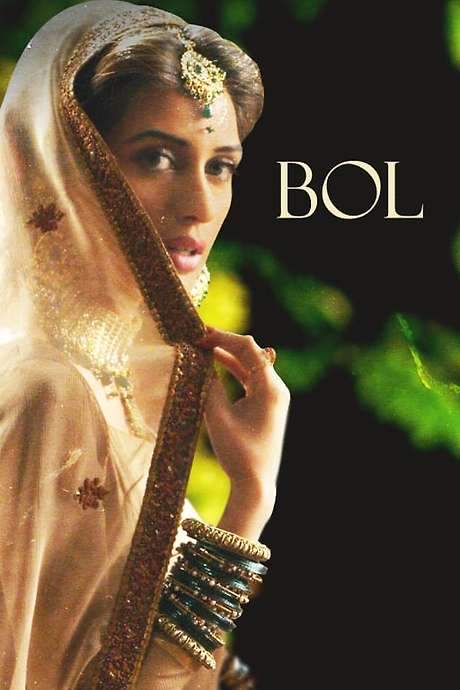
If taking a life is a crime, why is giving a life not a crime? The patriarch of a religious Muslim family refuses to accept his intersex child, tearing his family apart.
Find where to stream, rent, or buy Bol (2011) in the US with current JustWatch availability, up-to-date pricing, and platform listings for subscription, rental, and digital purchase options.
Warning: spoilers below!
Haven’t seen Bol yet? This summary contains major spoilers. Bookmark the page, watch the movie, and come back for the full breakdown. If you're ready, scroll on and relive the story!
Trace every key event in Bol (2011) with our detailed, chronological timeline. Perfect for unpacking nonlinear stories, spotting hidden connections, and understanding how each scene builds toward the film’s climax. Whether you're revisiting or decoding for the first time, this timeline gives you the full picture.
Last updated: October 09, 2025 at 15:33
Find frequently asked questions about the Bol (2011) timeline, including chronological order, nonlinear jumps, cause-and-effect links, and scene sequence clarifications. This timeline FAQ helps explain when key events happen, how moments connect, and why the story unfolds in that specific order.
When Hakim discovers that Saifi was raped, he views it as a disgrace to family honor. Rather than seeking justice for Saifi, he suffocates him with a plastic bag to bury the shame. This act reveals how Hakim's rigid beliefs about gender and honor lead him to see Saifi's existence itself as a threat to the family's reputation, making murder his solution to protect his status rather than compassion for his child.
Earlier scenes show Hakim's deep discomfort with Saifi's existence, refusing to accept the child despite the rest of the family's love for them.
Zainab kills Hakim to protect an innocent baby. When Hakim attempts to kill the infant, believing it would be better dead than grow up in Saqa's exploitative environment, Zainab intervenes and strikes him fatally. She then confesses to the murder to conceal the baby's survival, choosing to sacrifice herself rather than let the child be killed or live under Saqa's control.
The escalating violence in the household and Hakim's increasing desperation foreshadow this violent confrontation.
After Meena gives birth to a girl, Saqa intends to keep the child within his family. When Hakim begs to take the baby to spare her from Saqa's exploitation, Saqa refuses. Later, after Zainab kills Hakim to prevent him from killing the infant, Zainab and Meena hide the baby's fate. The truth remains concealed until the ending, when Meena discovers her daughter alive at Zainab's Cafe.
Saqa's statement that 'the men decide the sex of the baby' hints at his intent to use the child for his purposes.
Zainab receives a death sentence because she confesses to killing her father Hakim. After the confrontation where she strikes him to prevent him from killing the baby, Zainab tells Saqa that Hakim killed the baby and that she killed Hakim. This confession leads to her murder conviction, despite the complex circumstances surrounding the killing.
The film's opening frames Zainab at the gallows, establishing her fate from the beginning.
Saqa Kanjir uses his control over mosque funds to pressure Hakim, who has been using religious money for his own purposes. When the mosque demands repayment, Saqa offers Hakim a solution: marry Meena, Saqa's daughter who is a prostitute, and father a child. Saqa believes 'the men decide the sex of the baby' and wants a male child to continue his lineage. Hakim, desperate and trapped by his financial debt, reluctantly agrees.
The earlier scene where Saqa enters Hakim's circle and the mosque assigns funds in trust establishes Saqa's power over Hakim.
Hakim agrees because he is trapped by his financial debts to Saqa and the mosque. After Saifi's death, the mosque demands repayment of the funds Hakim has been misusing. With no other way to pay, and with Saqa pressuring him, Hakim consents to marry Meena and produce a child. Saqa's motivation is to secure lineage through a child, while Hakim sees this as his only escape from financial ruin.
The escalating financial pressure from the mosque and Saqa's earlier offer create the conditions for this marriage.
Saifi is the deeply loved intersex child of the family whom Hakim refuses to accept. After Saifi is raped at his workplace, Hakim learns of the assault and views it as shameful to the family honor. He suffocates Saifi with a plastic bag to conceal what happened, then bribes a police officer to cover up the crime using mosque funds. Saifi's death is one of the film's most tragic moments, highlighting the consequences of rigid gender prejudice.
Hakim's coldness toward Saifi from childhood and his rigid views on gender roles foreshadow this tragedy.
Zainab intervenes because she cannot allow an innocent child to be murdered. While Hakim believes killing the baby would spare her from a grim future under Saqa's control, Zainab chooses to protect the child rather than commit another killing. In the struggle, she strikes and kills Hakim, then decides to hide the baby's survival by telling Saqa that Hakim killed the infant. This act of protection leads to her own execution.
The earlier tension between protecting family and breaking cycles of violence builds to this moment.
After Zainab's execution, her five sisters open Zainab's Cafe, which becomes a successful restaurant. More importantly, the family raises Meena's daughter there, giving the child a loving home away from Saqa's influence. In the final scene, Meena enters the cafe and finds her daughter among the women, symbolizing renewal, resilience, and hope emerging from tragedy. The cafe represents the family's transformation of grief into collective strength.
Earlier references to the sisters' unity and resilience set up this hopeful ending.
After extensive media coverage of Zainab's execution and her story going public, the president watches the broadcast and is moved by the public discourse surrounding the case. The film's central question, 'jab khila nahi saktey tow paida kiyun karty ho' (why do you give birth when you cannot feed them), resonates in society. The president schedules a meeting to discuss these issues, suggesting that Zainab's testimony and sacrifice may create meaningful social change.
The opening scene establishes media attention on Zainab's case, setting up political consequences.
Hakim holds rigid traditional beliefs about gender roles and cannot accept Saifi's intersex identity. Despite Saifi being deeply loved by the mother and siblings, Hakim views the child's existence as shameful and a violation of his understanding of proper gender. This prejudice drives much of the family's conflict and ultimately leads to Saifi's murder when Hakim prioritizes family honor over his child's life.
The opening family scenes show the contrast between the family's acceptance of Saifi and Hakim's coldness.
Zainab confesses to protect the baby's survival. By telling Saqa that Hakim killed the baby and that she killed Hakim in retaliation, she ensures the child remains hidden and safe from both Saqa and the authorities. She accepts her death sentence to preserve the baby's future, making her sacrifice both a desperate act of protection and a way to break the cycle of violence.
Zainab's protective nature toward family members throughout the film prepares for this ultimate sacrifice.
Discover curated groups of movies connected by mood, themes, and story style. Browse collections built around emotion, atmosphere, and narrative focus to easily find films that match what you feel like watching right now.
Stories where desperate acts arise from rigid beliefs and social injustice.If you were gripped by the moral dilemma and tragic crime in Bol, explore these other powerful films. This list features movies like Bol that examine desperate acts born from rigid belief systems and social injustice, creating heavy, thought-provoking drama.
The narrative typically begins with a character trapped by an oppressive system—often familial or religious. Their attempts to resist or survive lead to a climactic, morally ambiguous crime, followed by a tense aftermath exploring guilt, punishment, and the broader societal failure.
Movies in this thread are united by their focus on crime as a symptom of deeper societal ills. They share a dark tone, high emotional intensity, and a steady, deliberate pacing that allows the moral weight of the situation to fully sink in, leading to bittersweet or tragic conclusions.
Heartbreaking journeys where characters endure immense pain but find a glimmer of hope.For viewers moved by the heartbreaking suffering and resilient spirit in Bol, this collection offers similar emotional journeys. Discover movies like Bol that feature characters enduring immense hardship, showcasing strength and leaving a legacy of hope after tragedy.
These stories follow a character or family through a relentless series of hardships and injustices. The narrative arc is less about triumph and more about survival and the preservation of dignity. The ending often provides a small but significant note of hope, change, or inspiration born from the protagonist's sacrifice or endurance.
They are grouped by their heavy emotional weight and the central theme of resilience amidst darkness. They share a gripping, heartbreaking mood, a steady pace that allows the suffering to feel palpable, and a bittersweet emotional resolution that acknowledges the pain while honoring the strength to endure it.
Don't stop at just watching - explore Bol in full detail. From the complete plot summary and scene-by-scene timeline to character breakdowns, thematic analysis, and a deep dive into the ending - every page helps you truly understand what Bol is all about. Plus, discover what's next after the movie.
Read a complete plot summary of Bol, including all key story points, character arcs, and turning points. This in-depth recap is ideal for understanding the narrative structure or reviewing what happened in the movie.
Discover the characters, locations, and core themes that shape Bol. Get insights into symbolic elements, setting significance, and deeper narrative meaning - ideal for thematic analysis and movie breakdowns.