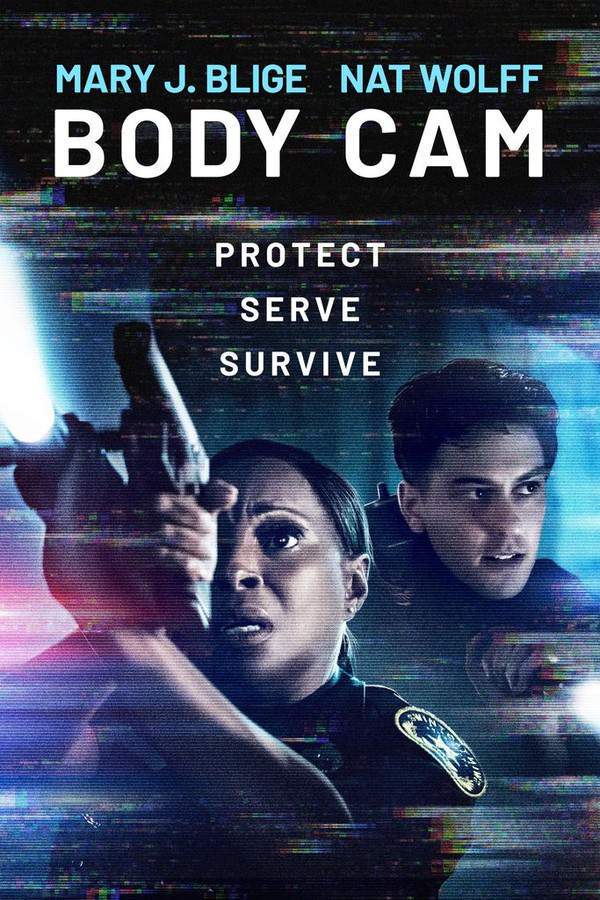
In Swinton, Louisiana, police officer Kevin Ganning [Ian Casselberry] pulls over a green van for lacking a license plate, but before he can act, an unseen force yanks him away. The investigation lands in the hands of Renee Lomito-Smith [Mary J. Blige] and rookie Danny Holledge [Nat Wolff], who comb through Ganning’s last known whereabouts and uncover dash-cam footage showing a brutal encounter with the mysterious entity and Ganning’s subsequent death. Sergeant Kesper [David Zayas] informs them that the footage was destroyed before they could arrive, adding a layer of mystery and potential cover‑up to the case.
Lomito-Smith’s instincts lead her to the driver: Taneesha Branz [Anika Noni Rose], whose hospital-issue pants reveal a clue. Together with Holledge, she tracks down Taneesha’s empty home, where a lone photo of mother and child hints at a life shadowed by danger. A short, unsettling moment comes when Holledge bolts at the sight of roaches and leaves, while Lomito-Smith discovers the house is not as abandoned as it seems—the entity seems to watch from the walls. A later revelation ties Demarco, Taneesha’s son, to a violent gang shootout that claimed his life, deepening the emotional stakes at the heart of the case.
The tension escalates when Taneesha is targeted in a grocery-store harassment incident. Birke [Naima Ramos-Chapman] and Roberts [Philip Fornah] — officers who spot her green van — call for backup, and Lomito-Smith and Holledge hurry to respond. The two attackers, under the entity’s grip, escalate the danger: one man shoots the store clerk and his partner, while the entity lifts the killer into the air and treacherously felled Roberts with a suffocating bag. The supernatural threat becomes personal as the mystery expands beyond human violence.
Back at the scene, Lomito-Smith discovers the security footage is unusable, prompting her to seize a suspect’s phone to search for clues. A crucial thumbprint unlocks the device, and soon she sees a video showing the entity lurking behind Taneesha and the robber—evidence that shifts the case from a standard police-mistake tragedy to something otherworldly and more consequential.
A new lead takes Lomito-Smith to a church, where a pastor fills in the gaps about Demarco’s life—his deafness, his volunteer work, and the tragedy that followed. The photos lining the church walls reveal Demarco’s ties to several officers, including Ganning, Roberts, Holledge, and Penda [David Warshofsky], creating a web of guilt and illicit complicity. Unable to reach Sergeant Kesper, Lomito-Smith arranges to meet Holledge in an hour, but the meeting never goes as planned. Holledge arrives with an apology note and a flash drive containing his own body‑cam footage, showing the officers yelling at a young man to stop, under the mistaken impression he was the suspect; Penda shoots him, and Demarco’s true identity is revealed when Holledge confirms the boy’s missing teeth, a haunting symptom of the case’s horror. The footage exposes how Demarco’s death was not accidental but a deliberate act by those meant to protect the community, escalating the moral crisis.
Confrontation follows at a warehouse where Lomito-Smith confronts Kesper about the officers’ actions toward Demarco. Kesper tries to bury the truth, but Penda arrives, demanding the footage. When Lomito-Smith refuses, Penda shoots into her Kevlar vest. Taneesha steps into the fray and confronts Penda with a chilling accusation: “YOU KILLED MY SON, DEMARCO. YOU REMEMBER HIM? BECAUSE HE REMEMBERS YOU.” The entity—Demarco’s vengeful spirit—emerges, unleashing a brutal force that disarms Kesper, leaving him battered and toothless. Lomito-Smith and Taneesha flee deeper into the warehouse as Penda gives chase, while Demarco’s spirit disembowels Penda and impales him on a heavy pipe.
As the danger peaks, the two mothers face the truth: Demarco will not harm Taneesha, and the path to peace lies in acknowledging what has happened. Emergency crews arrive as Lomito-Smith and Taneesha glimpse a vision of their sons together, a poignant moment that signals forgiveness, closure, and the chance to move forward. In the aftermath, Kesper survives his ordeal but is ultimately sent to prison, leaving the community to reckon with the consequences of the officers’ actions and the enduring power of a child’s memory to haunt the living.