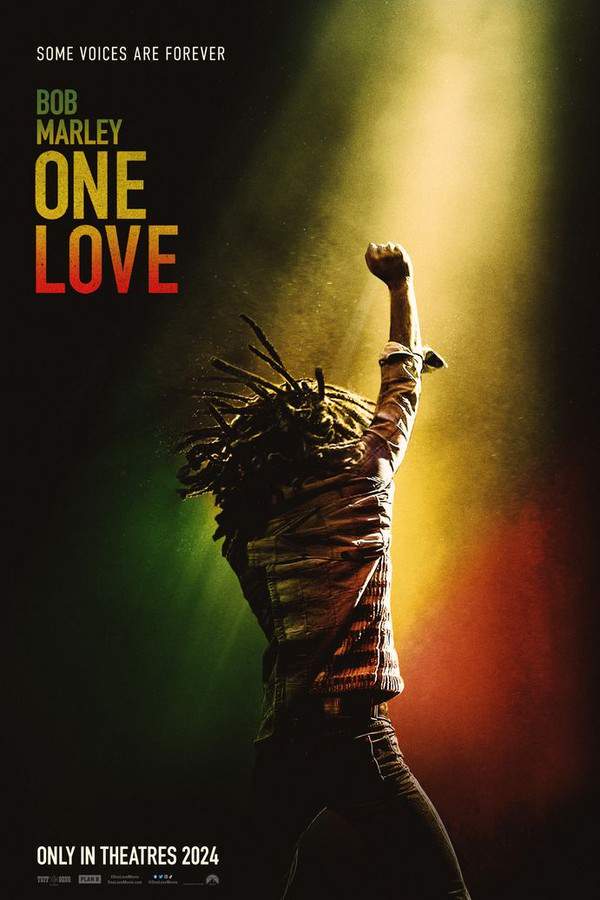
Bob Marley's story in One Love culminates with the historic 1978 One Love Peace Concert in Jamaica, a moment of hope amidst ongoing political violence. Although the event did bring some political leaders on stage to shake hands, symbolizing a desire for peace, it didn't immediately end the violent conflicts—Jamaica remained turbulent, and the violence escalated afterward, leading to more deaths over the following years. Despite this, the concert became a powerful symbol of unity and Marley’s enduring message of peace, even if it couldn't instantaneously resolve deep-rooted issues.
The film concludes with archival footage of the real concert and a note revealing Marley's death in 1981, several years after his diagnosis with melanoma. In the years following the concert, Marley continued touring and producing music, including albums such as Kaya, Survival, and Uprising, but his illness worsened, forcing him to cancel parts of his European and American tours. His health deteriorated as the cancer spread, ultimately leading to his death at the age of 36.
Beyond his musical legacy, One Love explores Marley’s spiritual journey through recurring visions of himself as a child, often seen running from a burning field and encountering the figure of Haile Selassie I, a central figure in Rastafarian faith. These visions symbolize Marley’s inner struggles, his connection to his faith, and his purpose as a Rastafarian prophet. The final vision, where Selassie tells young Marley, "You are my son. It’s time to come home now," signifies his renewed resolve to return to Jamaica and embrace his roots and faith—an act of spiritual reaffirmation that guides his personal decisions to come back.
The film shows Marley’s influence extending beyond music; after his death, his wife Rita Marley continued to nurture his legacy, managing their children and establishing the Tuff Gong record label. She turned their home into a museum and created the Rita Marley Foundation to aid poverty-stricken communities. Marley’s symbols, like the Lion of Judah ring, represent strength, royal lineage, and Rastafarian pride, reflecting his deep spiritual and cultural identity.
In capturing a critical, intense period of Marley’s life, One Love faithfully reproduces key events like his cancer diagnosis, the recording of Exodus, and the political tensions he sought to bridge through music. While some artistic liberties were taken—like shortening the extent of the Smile Jamaica concert and omitting details about band member departures—the film effectively portrays Marley’s spirit, his struggles, and his unyielding commitment to unity and love. His legacy as a musical and spiritual icon remains treasured worldwide, inspiring generations to seek peace through hope and resilience.