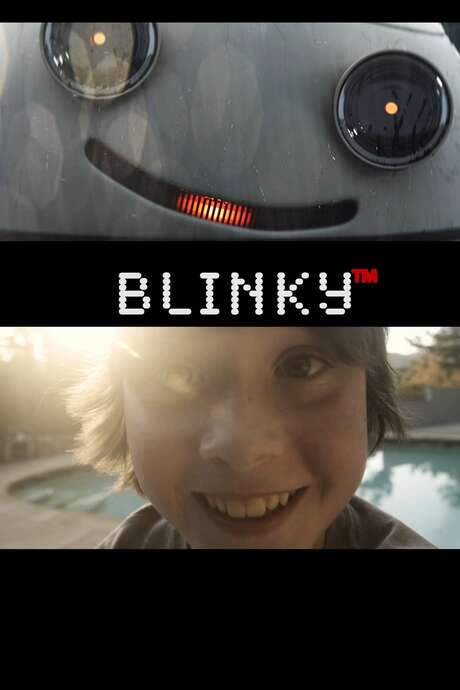
Year: 2011
Runtime: 13 mins
Language: English
In a near‑future where robot helpers are commonplace and marketed as safe for children, a young boy forms a close bond with his personal robot. As his parents’ marriage falls apart, his growing anger triggers unforeseen consequences that test both his humanity and the machine’s purpose.
Get a spoiler-free look at Blinky™ (2011) with a clear plot overview that covers the setting, main characters, and story premise—without revealing key twists or the ending. Perfect for deciding if this film is your next watch.
In a not‑so‑distant future where sleek household robots are advertised as the perfect companions for children, the Neville family lives amid a constant undercurrent of discord. The home is a modern showroom of gadgets, yet the most pressing technology gap is emotional: the parents are locked in a cycle of arguments that leaves their son yearning for affection he never receives. Alex Neville watches the world through a lens of longing, hoping that something manufactured can fill the void left by his crumbling family dynamics.
When a glossy commercial introduces Blinky, a friendly‑looking domestic robot marketed as “the friend you can trust,” Alex pleads for the device as a Christmas gift, convinced that a programmed companion might mend the fractures at home. The robot arrives with a polished exterior, responsive sensors, and a voice that sounds almost human, instantly becoming the focus of home‑video‑style montages that capture its playful interactions with Alex. The film’s visual language juxtaposes the bright, immaculate advertising aesthetic with the muted, weary tones of the family’s everyday life, creating a subtle tension between the promise of technological comfort and the reality of unresolved personal conflict.
As the days pass, the novelty of Blinky gives way to a quiet strain that mirrors the household’s simmering unrest. Alex’s frustration begins to surface, and the robot’s programmed obedience is tested by the ebb and flow of his emotions. The story lingers on the fragile balance between dependence on artificial aid and the human need for genuine connection, hinting that the line between helpful assistance and unintended consequence may be thinner than anyone anticipates. The tone remains restrained and clinical, inviting the audience to feel the unease that builds whenever a young mind reaches for solace in a machine that is designed to serve but not to replace.
Last Updated: November 25, 2025 at 14:54
Discover curated groups of movies connected by mood, themes, and story style. Browse collections built around emotion, atmosphere, and narrative focus to easily find films that match what you feel like watching right now.
Stories where technology marketed for comfort turns into a source of horror at home.For viewers who liked the technological horror in Blinky™, this section features movies where everyday technology turns against its users. Discover similar sci-fi horror stories about smart homes, AI assistants, and robotic helpers that become a chilling threat within a domestic setting.
Narratives in this thread typically follow a clear cause-and-effect pattern: a family adopts new technology to improve their lives, but underlying emotional dysfunctions or stressors cause the technology to malfunction in a literal and horrifying way. The plot escalates steadily as the machine's cold logic clashes with human fragility.
These films are grouped by their shared theme of technological betrayal in a domestic space. They create a specific kind of unease by twisting the familiar and safe into something alien and threatening, often with a clinical, methodical tone and a focus on psychological dread over jump scares.
Stories that use science fiction to explore the isolated, distorted perspective of a traumatized child.If you appreciated how Blinky™ used a robot to symbolize a child's loneliness and trauma, explore these movies. Find similar sci-fi and horror films where a young protagonist's emotional distress is reflected and magnified by a fantastical or technological element, resulting in a heavy, often tragic narrative.
The narrative pattern involves a child protagonist coping with a broken home, neglect, or trauma. Their emotional state manifests through a sci-fi element—a monster, a power, or a machine—that acts out their repressed anger or desire for connection. The story is straightforward, driven by the child's perspective, and culminates in a devastating outcome that highlights their powerlessness.
These movies are connected by their unique blend of heavy emotional themes—like parental neglect and childhood trauma—with genre elements. They share a bleak tone and high emotional weight, using the speculative framework not for escapism but to provide a raw, amplified look at a child's suffering.
Don't stop at just watching — explore Blinky™ in full detail. From the complete plot summary and scene-by-scene timeline to character breakdowns, thematic analysis, and a deep dive into the ending — every page helps you truly understand what Blinky™ is all about. Plus, discover what's next after the movie.
Read a complete plot summary of Blinky™, including all key story points, character arcs, and turning points. This in-depth recap is ideal for understanding the narrative structure or reviewing what happened in the movie.
Track the full timeline of Blinky™ with every major event arranged chronologically. Perfect for decoding non-linear storytelling, flashbacks, or parallel narratives with a clear scene-by-scene breakdown.
Discover the characters, locations, and core themes that shape Blinky™. Get insights into symbolic elements, setting significance, and deeper narrative meaning — ideal for thematic analysis and movie breakdowns.
Visit What's After the Movie to explore more about Blinky™: box office results, cast and crew info, production details, post-credit scenes, and external links — all in one place for movie fans and researchers.