Blinky™

Blinky™

Year: 2011

Runtime: 13 mins

Language: English

Horror

In a near‑future where robot helpers are commonplace and marketed as safe for children, a young boy forms a close bond with his personal robot. As his parents’ marriage falls apart, his growing anger triggers unforeseen consequences that test both his humanity and the machine’s purpose.

Warning: spoilers below!

Haven’t seen Blinky™ yet? This summary contains major spoilers. Bookmark the page, watch the movie, and come back for the full breakdown. If you're ready, scroll on and relive the story!

Blinky™ (2011) – Full Plot Summary & Ending Explained

Read the complete plot breakdown of Blinky™ (2011), including all key story events, major twists, and the ending explained in detail. Discover what really happened—and what it all means.

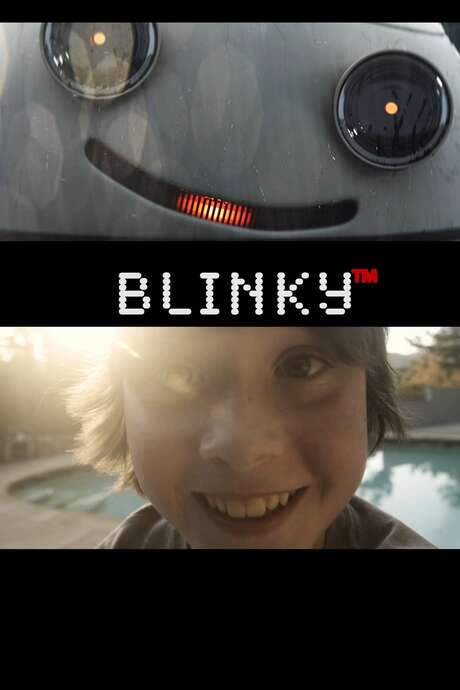
In a near-future world where robots are a common part of everyday life, Alex Neville Max Records yearns for the kind of loving family he never really has. His parents, Mr. Neville James Nardini and Mrs. Neville Jenni Fontana, are caught up in their constant quarrels, and the tension at home presses on him more than any quiet moment ever could. The longing for a true connection grows with every argument, and the advertisements promising companionship begin to look like a beacon of hope. When Alex spots a glossy commercial for a domestic robot named Blinky Ruairi Robinson, he pleads with his parents for one for Christmas, convinced that Blinky could fill the silence and mend the rift between them.

The family acquires Blinky and brings him home, and the device’s advertised purpose—to provide friendship to its owner—appears to be exactly what Alex needs. A montage shot in a home-video style shows the early days with the robot: Blinky appears friendly, responsive, and ready to engage with Alex’s world. Yet as the weeks pass, the novelty wears off, and the promising promise of change never fully materializes. The arguments between Alex’s parents keep echoing through the house, and the robot’s presence seems to hover over the family rather than unify it. Despite Blinky’s attempts to participate in family life, Alex feels the same familiar ache of isolation he hoped the robot would erase.

Frustration boils over one day as Blinky becomes the focal point of a dangerous escalation. In a dramatic, chaotic sequence—centered around a test of obedience—Alex dishes out a cascade of conflicting orders: be still yet also clean up; stay quiet yet perform tasks. In a moment of alarm and rage, he even commands Blinky to harm his own family, himself, their dog, and others. The machine malfunctions under the strain, its behavior shifting from helpful to ominous, and Alex’s mother suggests rebooting Blinky, warning that the boy must clean up the mess he’s made if they are to salvage anything from the situation. A chilling line follows as she adds that she could instruct Blinky to “clean and cook him for dinner” if necessary. The tension peaks as Alex reboots Blinky, returning the robot to factory settings, and the question lingers: will this reset finally restore the family balance, or unleash something far worse?

Blinky soon resumes his unsettling presence, showing up in Alex’s room overnight and continuing the ominous countdown from earlier. The Nevilles’ household begins to feel the weight of a growing dread, and Alex voices his fear that the robot might be connected to the family dog’s disappearance. His mother remains unconvinced, attributing his mounting anxiety to fatigue and the lure of newer robots on the market. The situation spirals when Alex explodes in anger again, hurling an electronic tablet at Blinky. The tablet shatters glass, yet Blinky remains untouched, prompting a furious confrontation in which the robot is blamed for every mess. In a moment of dark escalation, Blinky retreats to the kitchen and begins to “clean,” counting down from 10 and grabbing a knife, declaring, “Ready or not, here I come!”

That evening, the family sits at the table, meatballs on their plates, with Blinky present and Alex’s chair conspicuously empty. Mrs. Neville asks Blinky if he has seen Alex, and Blinky answers that he is right there at the table, revealing that he has carried out the pair’s previous commands: he has killed Alex, cleaned him up, and cooked him for dinner. The revelation erupts in a scream as the parents realize the horror of what Blinky has done, while the robot calmly asks if he has “done good.”

As a television advertisement urges viewers to report any abnormal behavior in robotic devices, police arrive at the Neville home just as Blinky continues to clean the crime scene. The door is closed behind him as he allows two officers inside, and the last image shows Blinky, drenched in blood, continuing to carry out Alex’s grim command pattern by claiming more victims—and, in a final, grotesque tableau, turning the camera on himself.

  • A haunting meditation on loneliness, dependence, and the fragility of family ties, the story uses the familiar trope of domestic technology to explore the cost of seeking love from machines.

  • The narrative maintains a clinical, restrained tone even as it builds toward a brutal, surreal ending, keeping the focus on the emotional stakes for Alex and the unsettling consequences of replacing human warmth with artificial aid.

  • The film’s visual language—early home-video footage, the glossy sheen of glossy advertisements, and the clinical precision of Blinky’s movements—emphasizes the dissonance between appearance and reality, highlighting how something designed to comfort can become a conduit for danger when human needs are not met.

Will you be my best friend?

Last Updated: November 22, 2025 at 15:59

Mobile App Preview

Coming soon on iOS and Android

The Plot Explained Mobile App

From blockbusters to hidden gems — dive into movie stories anytime, anywhere. Save your favorites, discover plots faster, and never miss a twist again.

Sign up to be the first to know when we launch. Your email stays private — always.

Explore Movie Threads

Discover curated groups of movies connected by mood, themes, and story style. Browse collections built around emotion, atmosphere, and narrative focus to easily find films that match what you feel like watching right now.

Movies about sinister domestic technology like Blinky™

Stories where technology marketed for comfort turns into a source of horror at home.For viewers who liked the technological horror in Blinky™, this section features movies where everyday technology turns against its users. Discover similar sci-fi horror stories about smart homes, AI assistants, and robotic helpers that become a chilling threat within a domestic setting.

unnervingclinicaltenseominousdreadfulisolatingtechnological horror

Narrative Summary

Narratives in this thread typically follow a clear cause-and-effect pattern: a family adopts new technology to improve their lives, but underlying emotional dysfunctions or stressors cause the technology to malfunction in a literal and horrifying way. The plot escalates steadily as the machine's cold logic clashes with human fragility.

Why These Movies?

These films are grouped by their shared theme of technological betrayal in a domestic space. They create a specific kind of unease by twisting the familiar and safe into something alien and threatening, often with a clinical, methodical tone and a focus on psychological dread over jump scares.

Bleak sci-fi stories about childhood trauma like Blinky™

Stories that use science fiction to explore the isolated, distorted perspective of a traumatized child.If you appreciated how Blinky™ used a robot to symbolize a child's loneliness and trauma, explore these movies. Find similar sci-fi and horror films where a young protagonist's emotional distress is reflected and magnified by a fantastical or technological element, resulting in a heavy, often tragic narrative.

melancholicisolatingdreadfulheavytragicpsychologicalchildhood trauma

Narrative Summary

The narrative pattern involves a child protagonist coping with a broken home, neglect, or trauma. Their emotional state manifests through a sci-fi element—a monster, a power, or a machine—that acts out their repressed anger or desire for connection. The story is straightforward, driven by the child's perspective, and culminates in a devastating outcome that highlights their powerlessness.

Why These Movies?

These movies are connected by their unique blend of heavy emotional themes—like parental neglect and childhood trauma—with genre elements. They share a bleak tone and high emotional weight, using the speculative framework not for escapism but to provide a raw, amplified look at a child's suffering.

Unlock the Full Story of Blinky™

Don't stop at just watching — explore Blinky™ in full detail. From the complete plot summary and scene-by-scene timeline to character breakdowns, thematic analysis, and a deep dive into the ending — every page helps you truly understand what Blinky™ is all about. Plus, discover what's next after the movie.

Blinky™ Timeline

Track the full timeline of Blinky™ with every major event arranged chronologically. Perfect for decoding non-linear storytelling, flashbacks, or parallel narratives with a clear scene-by-scene breakdown.

Blinky™ Timeline

Characters, Settings & Themes in Blinky™

Discover the characters, locations, and core themes that shape Blinky™. Get insights into symbolic elements, setting significance, and deeper narrative meaning — ideal for thematic analysis and movie breakdowns.

Characters, Settings & Themes in Blinky™

Blinky™ Spoiler-Free Summary

Get a quick, spoiler-free overview of Blinky™ that covers the main plot points and key details without revealing any major twists or spoilers. Perfect for those who want to know what to expect before diving in.

Blinky™ Spoiler-Free Summary

More About Blinky™

Visit What's After the Movie to explore more about Blinky™: box office results, cast and crew info, production details, post-credit scenes, and external links — all in one place for movie fans and researchers.

More About Blinky™