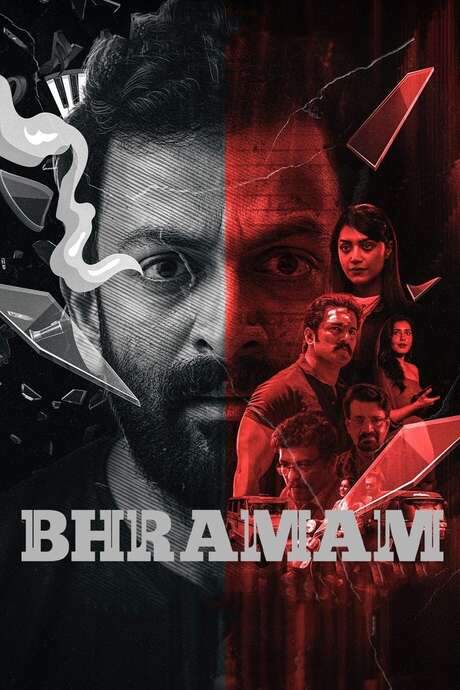
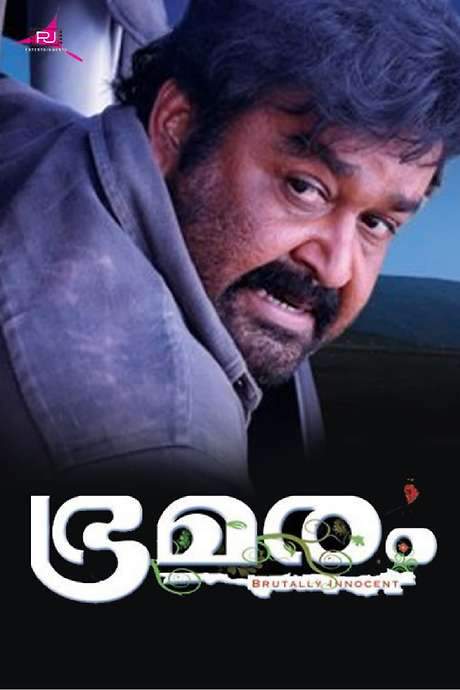
Ray Mathews, Prithviraj Sukumaran, is a gifted pianist who navigates life in Fort Kochi with a masterful presence on the keys, even as he moves through a world that never quite lets him see the way others do. A blind musician by choice in practice, he fills orphanages and churches with soulful melodies that earn him quiet admiration from communities that hear him, not just see him. His artistry becomes a lens through which the film observes loneliness, resilience, and the quiet power of art to connect disparate lives.
Meanwhile, in a quieter corner of the city, Uday Kumar lives with his wife Simi in a more peaceful, if inward, rhythm. The pair share a routine that feels almost pastoral until a business opportunity pulls Uday away to Chennai for a deal worth ₹10 crore, a trip that will rewrite the quiet balance of their home. Across the cityscape, Anna, a young woman running a family diner, crosses paths with Ray when her scooter collides with him. Her first kindness is simple and sincere: she and her father are moved by the music he shares in the diner, and they welcome him with warmth. After Ray is dropped back home, a startling turn reveals that his blindness is a performance—he removes his lenses and watches as Anna rides away, leaving a fissure of mystery in the air.
The bond between Ray and Anna grows as his visits to the diner become a regular feature, with Ray often playing the piano to elate the place. Anna captures a moment on camera that hints at a deeper connection, and Ray’s music continues to weave around Uday Kumar’s world, drawing the veteran actor deeper into a life he doesn’t yet fully grasp. In a sequence that tightens the tension, Ray is invited to perform at Uday’s residence, where the music shifts from a private joy to a perilous stage. There, Ray discovers Uday’s dead body and witnesses Simi and Dinesh Prabhakar, a police officer who is also her lover, attempt to conceal the crime. Pretending to remain blind, Ray makes a perilous escape and tries to alert the authorities, only to learn that Dinesh is the very officer assigned to investigate the case.
As the investigation unfolds, Uday’s death is ruled a suicide, but a neighbor named Irene suspects something foul. Her suspicions push the story toward a darker truth, and Simi eliminates Irene, pushing the boundary between witness and victim. Ray, who has already survived enough deception, endures another deception when Simi drugs him under the guise of offering sweets, a ploy that reveals Ray’s sight to him in a cruel way and leaves him permanently blind. With Ray now truly sightless, Anna breaks off their relationship after learning that Ray had faked his blindness, though she remains unaware of the deeper, hidden motives behind his actions.
Ray becomes a target as Dinesh presses to eliminate him. He slips away from danger only to be captured by organ traffickers, Martha and Lopez, who bargain to spare him in exchange for money. Desperate, Ray turns to Simi, forcing her to confess and demanding ₹15 lakhs as a price for a possible surgery and a chance to escape abroad. The couple’s plan to kill him intensifies, but Simi is abducted by Martha and taken to Dr. Swamy, an unethical surgeon whose presence adds a chilling layer to the moral maze at play.
With Ray and Swamy’s tacit cooperation, Simi’s confession is secured on record, and the plot accelerates toward a brutal confrontation. At a construction site, a tense clash with Dinesh ends in a violent shift of power: Lopez dies, and Ray and Swamy incapacitate Simi. Swamy proposes a controversial remedy: transplanting Simi’s corneas to restore Ray’s sight. The medical and moral dilemma hangs over the narrative as the clock ticks toward a possible, and ethically fraught, transformation.
Two years later, the story circles back to London, where Anna reunites with Ray after a concert. He recounts how Swamy’s scheme to harvest Simi’s eyes was thwarted by Simi herself, who killed Swamy and then attempted to run Ray over. In a final twist of fate, a hunter’s bullet that originally opened the film returns to close the loop: the blast strikes a wild boar that crashes into Simi’s speeding car, causing a fatal accident. In the quiet aftermath, Ray tells Anna that he chose to remain blind, discovering a kind of peace within his music and the life he has built around it. The film closes on a restrained, hopeful note as he walks away, tapping his stick while a soda can rolls into the street—a small, persistent reminder of rhythm and resilience.
- Ray Mathews’s world remains a study in quiet courage, where music becomes both shield and doorway to connection.
- Irene, a neighbor whose instinct for truth runs brave and bold, stands as a counterpoint to the film’s more shadowed corners.
- The moral tension surrounding Simi, Dinesh, Swamy, and the organ-trafficking arc anchors the narrative in ethical murkiness, while Ray’s personal choice—embracing silence as a form of peace—offers a contemplative resolution.
- Across the urban and cross-continental arcs, the story threads a single, enduring question: what does a life sound like when sight is taken away, and what does it mean to keep living with meaning after truth has been blurred by fear and ambition?