Plot Explained Spoilers guaranteed!
Plot Explained

Browse by genre

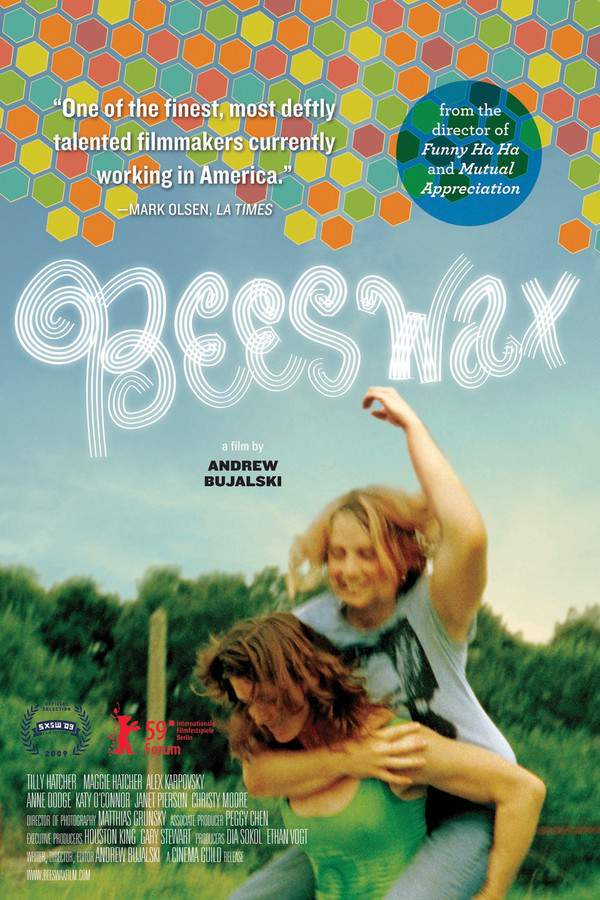
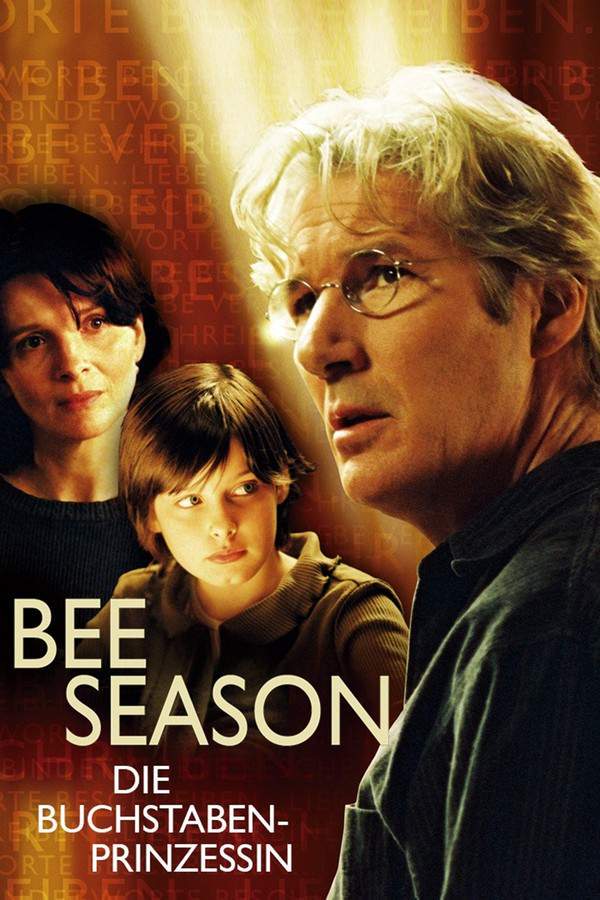
Bee Season (2005) movie poster

Timeline

Bee Season (2005) Timeline Explained – Every Event in Order

Release, runtime and language
2005 · 104 min · English
Loading streaming availability…
Directed by
Scott McGehee
Starring
Juliette Binoche, Richard Gere, Max Minghella, Flora Cross
Budget
$14M

Eleven-year-old Eliza feels overshadowed by her accomplished family, yearning for recognition. When she surprisingly wins a spelling bee, her father’s enthusiastic involvement leads to a surprising journey. This unexpected event unearths hidden family secrets and unresolved tensions, forcing them to confront the dynamics that have shaped their relationships and testing the family’s delicate equilibrium.

On this page (7)
  1. 1 Where to watch
  2. 2 Events in order (15)
  3. 3 Timeline questions answered
  4. 4 The book behind the movie
  5. 5 Movie threads
  6. 6 Movies like Bee Season
  7. 7 Every angle
Loading streaming availability…

15 events in order · contains spoilers

Bee Season Timeline: Events in Chronological Order

Every key event of Bee Season (2005) in order, scene by scene, with when and where it takes place. Use it to untangle flashbacks, time jumps and parallel storylines, to refresh your memory before the sequel or to find the exact scene you are thinking of.

  1. Saul's Religious Background

    Saul Naumann, a dedicated Jewish husband and father, is introduced as a Religious Studies professor at UC Berkeley. His devotion to Judaism is reflected in his scholarly work, specifically his graduate thesis on Kabbalah, which underscores his deep spiritual commitment.

    Where
    UC Berkeley
  2. Miriam's Conversion

    Miriam, Saul's wife, converts to Judaism upon their marriage, showcasing her commitment to Saul's faith. This decision is significant as it shapes their family dynamics and their religious life together.

  3. Eliza's Spelling Bee Success

    When their daughter Eliza wins a class spelling bee, the family starts an intense study of Kabbalah to further Eliza's success. This moment propels the family into a spiritual journey, heavily influenced by Saul's interests.

  4. Miriam's Internal Conflict

    Throughout her marriage, Miriam grapples with a hidden past that affects her present. Flashbacks reveal her childhood trauma from a car accident, leading her to create beautiful light-gathering objects as a means to mend her shattered world.

  5. Aaron's Religious Crisis

    Saul's son, Aaron, begins to question the Judaism imposed upon him and seeks a new path. His encounter with Chali in the park leads him to embrace Hare Krishna, creating tension within the family as Saul struggles to understand his son's choices.

    Where
    Park
  6. Father-Daughter Bonding

    As Eliza prepares for more spelling bees, the bond between her and Saul strengthens. Their shared interest in Kabbalah deepens their connection, with Saul taking on the role of her mentor and guide.

  7. Focus on Eliza

    Saul's obsession with Eliza's spelling prowess intensifies, overshadowing Aaron's needs. The family's dynamic becomes strained as Aaron feels neglected and his spiritual journey diverges further from Saul's expectations.

  8. Eliza's Spiritual Gift

    Eliza starts to experience mystical visions that aid her performance in spelling bees. Her connection to the teachings of Abraham Abulafia empowers her, highlighting her unique gifts and deepening Saul's obsession with her potential.

  9. Miriam's Psychological Struggles

    As the family's focus shifts to Eliza's competition, Miriam's personal struggles escalate. Her secret life and psychological problems come to the forefront, causing further distance between her and Saul.

  10. Final Round Preparation

    The night before the national spelling bee's final round, Eliza utilizes her father’s Kabbalistic notes to establish a profound spiritual connection. This moment symbolizes her attempt to bridge the gap between her family’s spiritual needs and her aspirations.

  11. Eliza's Transformation

    Forcing a mystical experience, Eliza's body convulses as she connects with the divine. This act signifies a critical turning point, as she gains the healing power needed to mend her fractured family dynamics.

  12. The Misspelled Word

    In a powerful act of self-sacrifice, Eliza deliberately misspells 'origami' during the competition. This decision leads her to forgo victory, instead channeling her focus toward healing her family relationships.

    Where
    National Spelling Bee
  13. The Healing Embrace

    Following Eliza's decision, Saul and Aaron share a heartfelt embrace, expressing their love openly for the first time. This reconciliation marks a significant shift in their father-son relationship and reflects the healing journey they have begun.

  14. Miriam's Recovery

    As the family begins to heal, Miriam watches the competition from a sanitarium. Her situation reflects the ongoing recovery process, symbolizing hope for healing within the family as they confront their individual struggles.

    Where
    Sanitarium
  15. A New Beginning

    The film concludes with the Naumann family on the path to recovery and reconciliation. Their individual journeys have intertwined, suggesting a fresh start filled with understanding and spiritual growth.

Last updated: October 02, 2026 at 03:21

Was this helpful?

Timeline questions answered

Bee Season Timeline Explained: Your Questions Answered

When does it happen, and why in that order? The questions people ask about the chronology of Bee Season (2005): time jumps, flashbacks, cause and effect between scenes and the correct order of events, each answered with spoilers.

Q1

Why does Eliza deliberately misspell "origami" at the national spelling bee?

Eliza intentionally misspells "origami" as a deliberate sacrifice rooted in the Kabbalistic concept of tikkun olam, or "repairing the world." Having achieved a profound mystical connection through her father Saul's teachings on Abraham Abulafia, she realizes that winning the competition would only deepen Saul's obsession and further fracture her family. By forfeiting the victory, she channels her spiritual power toward healing her parents' marriage and reconnecting Saul with Aaron. In Bee Season, the misspelled word becomes the moment where mystical theory is transformed into an act of love.

Foreshadowing: Earlier scenes show Saul quoting Abulafia's idea that letters are doorways to the divine, suggesting Eliza internalizes the idea that words carry spiritual weight.

  • eliza
  • origami
  • tikkun olam
  • spelling bee
  • sacrifice
  • bee season
Q2

How does Eliza's sacrifice heal Saul and Aaron's relationship?

By deliberately losing the spelling bee, Eliza removes the object of competition that had driven a wedge between Saul and Aaron. Without a contest to win, Saul's obsession loses its fuel, and he is finally able to see Aaron standing in front of him as a son rather than as a rival to his own spiritual ambitions. Bee Season visualizes their reconciliation in a single physical embrace, the first unguarded emotional contact between father and son in the entire film. Eliza's loss becomes the family's gain, which is precisely the inversion the Kabbalistic framework demands.

Foreshadowing: Saul and Aaron are repeatedly shown sitting in the same room but unable to speak honestly long before the final competition.

  • eliza
  • sacrifice
  • saul
  • aaron
  • reconciliation
  • healing
Q3

What is tikkun olam and why is it central to the story?

Tikkun olam is a Kabbalistic concept meaning "repairing the world" or "reuniting its shattered shards." Miriam has pursued this ideal throughout her marriage, trying to piece together her own fragmented past after a childhood car accident that left deep emotional scars. The concept becomes the emotional engine of Bee Season, framing each character's journey, Miriam's light-gathering objects, Aaron's spiritual search, and Eliza's ultimate sacrifice, as attempts to mend what is broken. The phrase ties the family's private wounds to a much older religious framework.

Foreshadowing: Miriam's secret warehouse of stolen glass objects is shown as her literal attempt at tikkun olam long before the term is ever spoken aloud.

  • tikkun olam
  • kabbalah
  • miriam
  • repairing the world
  • shards
Q4

Why does Saul become obsessed with Eliza and ignore Aaron?

Saul becomes obsessed with Eliza because her spelling bee success appears to validate his lifelong academic work on Abulafia and Kabbalistic mysticism. For the first time, his abstract scholarship seems to produce a living, visible miracle, and he pours his intellectual and emotional energy into coaching her. In doing so, he overlooks Aaron's spiritual crisis and Miriam's deteriorating mental health, treating his family as an audience for his own ambitions. Bee Season frames this neglect as a quiet but devastating form of parental failure.

Foreshadowing: Saul's tendency to lecture rather than listen is established early in his conversations with Aaron about Jewish tradition.

  • saul
  • eliza
  • obsession
  • neglect
  • aaron
  • father
Q5

Why does Miriam steal light-gathering objects?

Miriam steals reflective objects, mirrors, prisms, colored glass, as a compulsive expression of tikkun olam and as a way to cope with unresolved trauma from a childhood car accident that may have killed her parents. Each stolen piece represents a "shard" she is trying to reassemble into a whole, mirroring the kaleidoscope she treasured as a child. The theft reflects how her psychological wounds have escalated into an unhealthy compulsion that Saul, absorbed in Eliza, fails to notice. Bee Season treats the behavior as both beautiful and pathological.

Foreshadowing: The opening flashback to the car crash establishes the trauma before Miriam's stealing behavior is ever shown on screen.

  • miriam
  • theft
  • kaleidoscope
  • trauma
  • glass
  • shards
Q6

What happens during Eliza's mystical experience before the final round?

On the eve of the national spelling bee's final round, Eliza uses her father's Kabbalistic notes to induce a trance-like state in which letters appear as radiant, colored patterns she can perceive beyond ordinary vision. Her body convulses as she channels what Abulafia described as the divine power hidden within language. The experience gives her the spiritual clarity to make her later choice, but it also marks the moment when her gift transforms from a competition advantage into something larger. Bee Season presents this as the film's true climax, even though the spelling bee itself comes afterward.

Foreshadowing: Earlier visions of floating, colored letters during practice sessions foreshadow the intensity of the final mystical experience.

  • eliza
  • mystical experience
  • abulafia
  • letters
  • visions
  • spelling bee
Q7

Why does Aaron turn to Hare Krishna?

Aaron turns to Hare Krishna because he feels the Judaism imposed on him by Saul no longer answers his spiritual questions, and meeting Chali in the park introduces him to a devotional faith that offers the personal warmth his household lacks. His choice is not a rejection of his father so much as a search for meaning that Saul's rigid, scholarly interpretation of Judaism cannot provide. The decision also exposes how Saul's obsession with Eliza has left Aaron emotionally adrift. Bee Season treats Aaron's conversion as the most visible symptom of a family that has stopped communicating.

Foreshadowing: Aaron's quiet discomfort during family prayers and rituals hints at his religious doubts long before Chali ever appears.

  • aaron
  • hare krishna
  • chali
  • saul
  • faith
  • conversion
Q8

How does Eliza's spelling ability connect to Kabbalah?

Saul teaches Eliza about Abraham Abulafia, a medieval Kabbalist who believed that Hebrew letters were doorways to divine connection and could be combined to produce mystical states. Eliza internalizes this idea and begins experiencing visions in which letters appear as luminous, colored shapes she can read intuitively, independent of rote memorization. Her spelling talent becomes a form of spiritual practice rather than academic achievement, which is why Saul becomes so invested, he sees her gift as living proof of his own scholarly convictions. Bee Season uses this fusion to turn a children's competition into a vehicle for religious mysticism.

Foreshadowing: When Eliza first wins the class spelling bee, Saul immediately frames her success in terms of Abulafia's letter mysticism.

  • abulafia
  • kabbalah
  • eliza
  • hebrew letters
  • mysticism
Q9

What was the car accident that traumatized Miriam?

Through nonlinear flashbacks, Bee Season reveals that Miriam survived a severe car accident as a child, an event that may have caused the death of her parents and left her with lasting emotional scars. The trauma fractured her sense of self, symbolized by the broken kaleidoscope she once loved. Her adult compulsion to gather reflective shards, her secret warehouse, and her eventual breakdown are all rooted in this unresolved childhood wound. The film deliberately withholds the full flashback until late in the story, allowing viewers to piece the cause and effect together alongside the family.

Foreshadowing: Miriam's recurring dreams about light, glass, and her childhood home hint at the accident long before the flashback plays in full.

  • miriam
  • car accident
  • childhood
  • trauma
  • parents
  • flashback
Q10

What is the significance of Abraham Abulafia in the story?

Abraham Abulafia was a 13th-century Kabbalist who taught that specific combinations of Hebrew letters could unlock mystical states and connect the practitioner directly with the divine. Saul's academic career is built on Abulafia's work, and when Eliza begins experiencing letter-visions, Saul interprets her gift as living proof of his scholarship. The historical figure anchors the film's spiritual framework, giving a specific philosophical name to what would otherwise be vague mysticism. Bee Season ultimately shows Abulafia's teachings being turned against Saul's intentions, as Eliza uses them to heal rather than to win.

Foreshadowing: Saul's graduate thesis on Abulafia is mentioned in the opening scenes, establishing his intellectual devotion before it becomes personal.

  • abulafia
  • kabbalah
  • saul
  • mysticism
  • hebrew letters
  • thesis
Q11

What does the kaleidoscope symbolize in the film?

The kaleidoscope represents Miriam's fractured inner world and her lifelong attempt to reassemble it. As a child, the instrument showed her how broken pieces of colored glass could form something beautiful when rearranged, which became her model for healing. In adulthood, her stolen light-gathering objects are an attempt to recreate that childhood magic, but without confronting the original trauma, the shards only multiply her pain. Bee Season uses the kaleidoscope as a visual through-line that ties Miriam's flashbacks to her present-day behavior.

Foreshadowing: The first flashback of Miriam as a child shows her holding an intact kaleidoscope moments before the car accident occurs.

  • kaleidoscope
  • miriam
  • symbolism
  • shards
  • childhood
  • glass
Q12

Why is Miriam placed in a sanitarium?

Miriam is placed in a sanitarium after her compulsive behavior and psychological state escalate beyond what the family can manage, especially as Saul's attention becomes entirely consumed by Eliza's competitions. Her secret warehouse of stolen objects and her unresolved childhood trauma finally overwhelm her, and institutional care becomes the only available intervention. Bee Season frames the sanitarium not as a defeat but as a pause in her recovery, allowing her to begin healing while the rest of the family confronts its own fractures. Watching Eliza's final spelling bee from the sanitarium becomes Miriam's own quiet moment of tikkun olam.

Foreshadowing: Miriam's secretive late-night trips to the warehouse and her increasingly erratic behavior with light and glass precede her institutionalization.

  • miriam
  • sanitarium
  • breakdown
  • recovery
  • mental health
  • tikkun olam

Movie threads

More Movies Like Bee Season, by Mood & Story

Curated lists built around what makes Bee Season tick: the same mood, the same kind of story or the same emotional payoff. Each list explains why these movies belong together.

Quiet spiritual family dramas like Bee Season

Contemplative family stories where faith, mysticism, and silence shape every fragile bond. If you loved Bee Season, explore more contemplative family dramas steeped in spirituality and mysticism. These slow paced, introspective stories weave faith, ritual, and inner searching into the heart of family life. Perfect for viewers who want meditative, emotionally layered films with religious or mystical undertones, much like Bee Season.

  • contemplative
  • spiritual
  • somber
  • mystical
  • meditative
  • family focused
  • Tone: bittersweet, melancholic, reverent
  • Pacing: slow burn, contemplative
Why these movies?

The story pattern: A household is unsettled when a parent or child turns toward spiritual practice, study, or mysticism as a way to feel seen or whole. That devotion gradually eclipses ordinary family life, and each member is forced to confront what they have been neglecting in one another. The story unfolds through silences, small symbolic gestures, and interior moments rather than big plot turns, ending in a fragile, bittersweet equilibrium that suggests healing without fully arriving at peace.

Why they belong together: They share a hushed, reverent atmosphere and a willingness to let religious imagery, mysticism, or contemplative philosophy do narrative heavy lifting. Pacing is patient, tone is somber, and emotional weight builds through suggestion and ritual. Characters wrestle with belief, belonging, and the limits of devotion, creating stories that feel less like plots and more like extended meditations on the inner life.

Bittersweet gifted family dramas like Bee Season

Bittersweet portraits of brilliant families where love and damage are impossible to separate. Movies like Bee Season that follow families unraveling around a gifted child and the secrets they keep. These bittersweet dramas explore sibling rivalry, parental favoritism, childhood trauma, and emotional neglect with slow pacing and heavy emotional weight. Ideal for fans of character driven family dysfunction stories in the spirit of Bee Season.

  • family focused
  • psychological
  • bittersweet
  • dysfunctional
  • introspective
  • trauma
  • Tone: bittersweet, heavy, somber
  • Pacing: slow, character driven
Why these movies?

The story pattern: A talented or unexpectedly successful child becomes the axis around which an already fragile family rotates. Parents project their own unfulfilled hopes onto the child, siblings feel eclipsed, and old wounds begin to surface. As the obsession with the child's gift intensifies, the family is forced to confront long buried trauma, compulsive behaviors, and the quiet cost of being overlooked. Resolution, if it comes at all, is partial and bittersweet, earned through painful recognition rather than easy forgiveness.

Why they belong together: They all hinge on a gifted child whose achievements destabilize an already fractured family, with adult characters whose own damage colors how they love. Tone is bittersweet, pacing is deliberate, and the writing prioritizes interior lives, symbolic imagery, and uncomfortable truths over plot mechanics. Endings lean toward uneasy reconciliation or loss, never pure triumph, and the emotional weight comes from recognizing yourself in the dysfunction.

If you liked this

Movies Like Bee Season

Similar movies to Bee Season: the same genre, themes or kind of story. Each one comes with its own plot summary, timeline and ending explained.

Browse all movie summaries

Every angle

Bee Season (2005) Explained: Plot, Timeline & Characters

Everything about Bee Season in one place: what happens in the plot summary, the timeline in chronological order, the characters and meaning and a spoiler-free summary. What's After the Movie adds the cast, box office and post-credit scenes.

Coming soon on iOS and Android

The Plot Explained Movie Summary App

Plot summaries, endings explained and timelines on your phone. Catch up on any movie in minutes, save your favorites and never miss a twist again.

Be the first to know when we launch. Your email stays private, always.

Learn more about the app