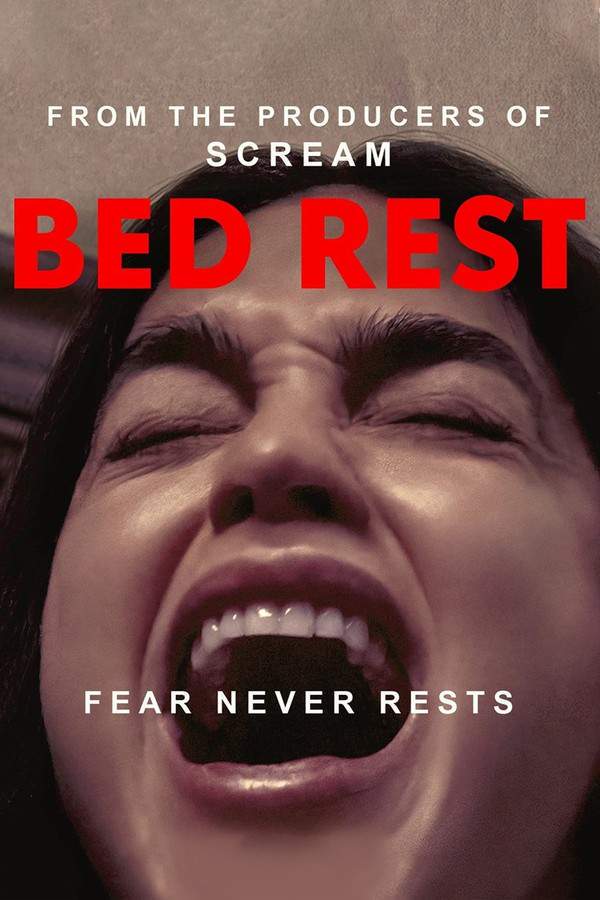
The ending of "Bed Rest" leaves viewers questioning whether what Julie experienced was supernatural or a manifestation of her mind. Throughout the film, she clearly grapples with intense trauma from losing her first child, which she never fully processed. Her hallucinations of the ghostly children, including her stillborn son Andrew, seem to be rooted in her grief and mental health struggles, especially since she stops taking her medication and begins experiencing increasingly surreal events. However, the movie also introduces the possibility that the house's dark history—its previous owner drowning her children and herself—may be haunting Julie through supernatural means. As tension rises, Julie digs into the house’s past and uncovers the tragic story of the previous owner, which overlaps with her own visions. In her final moments, she gives birth inside the house, and her hallucinations become more vivid; she sees the spirits of Delmy and her child and even hands her newborn to Delmy before experiencing what appears to be her death. Yet, when she is rescued, the film suggests that her visions—the spirits and supernatural occurrences—were likely manifestations of her fractured mind, symbolizing her struggle to accept her grief and trauma. The ambiguous ending leaves it open whether the spirits were real or a product of her psyche, emphasizing the film’s exploration of trauma, mental health, and grief, making us wonder if Julie's ghosts are truly there or simply a reflection of her pain.
The ending of "Bed Rest" is intentionally ambiguous, prompting viewers to question whether the supernatural elements are real or manifestations of Julie’s fractured mind. Throughout the film, it becomes clear that Julie’s mental health has been compromised by her unresolved grief over the loss of her first child. Her hallucinations of ghostly children and the mysterious woman are intertwined with her trauma, especially as she stops her medication and begins experiencing increasingly surreal events. The house’s dark history—its previous owner drowning her children and herself—adds a layer of possible supernatural hauntings. As Julie digs into the house’s past, her visions become more intense, blurring the line between reality and hallucination. In her final moments, after giving birth and seemingly encountering the spirits of her lost son and Delmy, she hands her newborn to the ghost of Delmy, symbolizing her desire to let go of her pain. When she is rescued, the film leaves it open whether these spirits were truly present or just hallucinations born from her grief and mental illness. The ambiguous ending encourages us to reflect on the power of trauma and whether her ghosts are real or simply a haunting of her own mind.