Plot Explained Spoilers guaranteed!
Plot Explained

Browse by genre

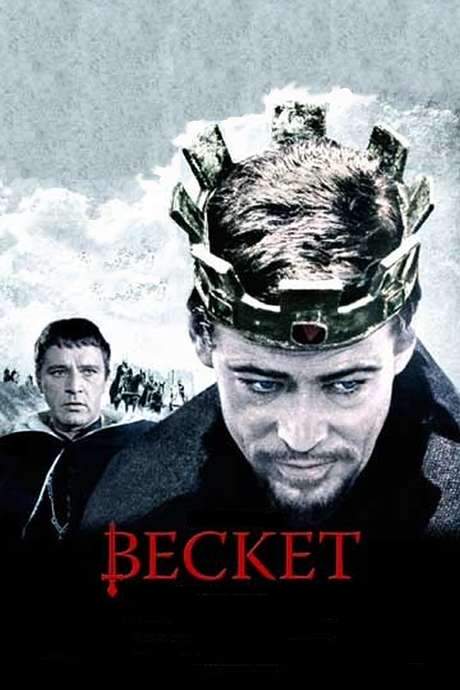
Becket (1964) movie poster

Plot Summary

Becket (1964) Plot Summary Explained

Release, runtime and language
1964 · 148 mins · English
JustWatch #13,167 12
Directed by
Peter Glenville
Starring
John Gielgud, Graham Stark, Victor Spinetti, Martita Hunt, Felix Aylmer, Peter O'Toole

In a turbulent medieval era of passion and excess, Thomas Becket, long‑time confidant of King Henry II, sees his bond with the hedonistic monarch deteriorate after the king forces him into the role of Archbishop of Canterbury, hoping to secure the Church’s loyalty. The film is driven by powerful performances from two of the period’s leading actors.

On this page (7)
  1. 1 Where to watch
  2. 2 What happens: full plot
  3. 3 Plot questions answered
  4. 4 The book behind the movie
  5. 5 Movie threads
  6. 6 Movies like Becket
  7. 7 Every angle

Where to watch

Where to Watch Becket (1964)

Where can you watch Becket? Stream, rent or buy it in the US, including on Amazon Prime Video, Hoopla and Kanopy: current JustWatch availability with up-to-date prices.

Streaming availability powered by JustWatch

Full plot summary · contains spoilers

What Happens in Becket: Full Plot Summary

The whole story of Becket (1964) explained, from the opening scene to the final frame: every key event, every twist and what it all adds up to. Read it as a quick recap before the sequel, to check a scene you missed, or to finally understand what really happened.

Thomas Becket is a steadfast advisor and companion to the exuberant King Henry II, a ruler who wants Becket close enough to bend him to his will while indulging in the pleasures of the realm. Henry elevates Becket to Lord Chancellor, a move meant to keep a trusted Saxon ally within easy reach, but it also sows tension as Becket’s responsibilities draw him deeper into the day-to-day workings of the court. The arrangement sparks unease among Henry’s Norman nobles, and it unsettles Queen Eleanor of Aquitaine and Empress Matilda, who fear Becket’s rising influence could tilt the balance of power away from the crown’s usual channels.

The strain intensifies when the aging Archbishop of Canterbury openly resists Henry’s plan to tax church property in order to fuel campaigns in France. After the archbishop dies during a campaign in coastal France, Henry seizes the moment to name his favored successor, leaving Becket astonished by the royal choice. The turn of events pushes Becket toward a more principled stance that honors the church’s authority, setting the stage for a dramatic clash with the king.

Becket’s evolving allegiance becomes a flashpoint. He travels to France and encounters King Louis VII, who is both wily and sympathetic, offering Becket refuge and a chance to stall Henry’s momentum. Becket then journeys to the Vatican, seeking guidance from the pope and asking to renounce his position if necessary to avoid crossing the line into civil interference in church matters. The Holy See, embodied by Pope Alexander III, urges Becket to return to England and take a stand, framing the struggle as a test of conscience for both church and state. Louis agrees to help arrange a meeting with Henry on the beaches of Normandy, where a fragile understanding seems possible and a truce appears within reach.

Back in England, Becket’s stance wins him a following among the Saxon factions, while Henry’s temper grows more volatile. A royal conspiracy to discredit Becket through scandal and innuendo unfolds, but Becket refuses to yield, standing firm in his ecclesiastical garb and asserting his duty. The king’s advisers—fueled by envy and a sense of betrayal—make plans that culminate in tragedy on Canterbury’s soil. In a brutal moment that shakes the realm, Becket and his Saxon deputy, Brother John, are slain by Henry’s men, an act that leaves the king haunted and publicly chastened.

In the aftermath, Henry undergoes a painful penance, and the murder becomes a rallying point for reverence toward Becket’s memory. The narrative closes with a stark shift in perception: the once controversial cleric is poised to be canonized, as Henry announces Becket’s sainthood in a public act that reconciles parts of the realm but cannot fully erase the bloodshed that marked their quarrel. The story lingers on the profound tension between secular power and ecclesiastical authority, and the enduring question of where loyalty truly belongs.

> Will no one rid me of this meddlesome priest?
Last updated: October 09, 2025 at 12:41

Was this helpful?

Plot questions answered

Becket Plot Explained: Your Questions Answered

The questions people ask most about Becket (1964): what happens in the confusing scenes, why the characters do what they do, the twists, hidden details and what the ending means. Each answer contains spoilers.

Q1

Why did King Henry II appoint Thomas Becket as Archbishop of Canterbury?

Henry named Becket Archbishop to gain control over the Church and ensure its loyalty to the crown. Since Becket was his close confidant and Lord Chancellor, Henry believed he could manipulate the appointment to serve royal interests. However, this backfired spectacularly, when Becket took his ecclesiastical oath, he shifted his loyalty to the Church rather than remaining Henry's pliable instrument.

Foreshadowing: Henry's earlier appointment of Becket as Lord Chancellor already demonstrated his habit of placing trusted allies in powerful positions.

  • henry ii
  • archbishop
  • crown
  • church power
  • appointment
Q2

Why did Thomas Becket switch his allegiance from the king to the Church?

Once consecrated as Archbishop, Becket felt bound by his sacred oath to defend Church authority and independence. He could not in good conscience remain Henry's tool for extending crown power over ecclesiastical matters. The sanctioning of Lord Gilbert for violence against a priest became the flashpoint where Becket publicly defied Henry, choosing religious duty over royal service.

Foreshadowing: Becket's initial resistance to the archbishop appointment hinted at his awareness of the conflict it would create.

  • loyalty
  • church
  • archbishop
  • oath
  • defiance
Q3

Why did King Henry II order the murder of Thomas Becket?

Henry did not issue a direct order, but his infamous outburst 'Will no one rid me of this meddlesome priest?' was interpreted as permission by his barons. Driven by loyalty, envy, and the desire to please the king, they traveled to Canterbury and killed Becket and his deputy Brother John. Henry's combination of rage, drunkenness, and psychological fixation on Becket created the fatal environment for this act.

Foreshadowing: Earlier scenes showing Henry's volatile temperament and his growing obsession with Becket built toward this violent climax.

  • murder
  • cathedral
  • canterbury
  • king henry
  • assassination
Q4

What was King Louis VII's role during Thomas Becket's exile?

Louis VII provided Becket refuge at the Abbey of Saint Martin in France. While cunning and self-interested, Louis offered the exiled Becket sanctuary and used his presence to mock English power. More importantly, Louis arranged the crucial meeting between Becket and Henry on the Normandy coast, facilitating the fragile truce that temporarily eased the conflict.

Foreshadowing: Louis's earlier characterization as 'wily' established his tendency to exploit opportunities for political advantage.

  • louis vii
  • france
  • exile
  • refuge
  • mediation
Q5

Why did Thomas Becket travel to the Vatican?

Becket journeyed to Rome seeking the Pope's permission to resign from his archbishopric, hoping to avoid direct conflict with the crown. However, Pope Alexander III refused to accept his resignation, instead urging Becket to return to England and firmly defend Church independence against civil interference. The Pope framed this as a test of conscience for both Church and state.

Foreshadowing: Becket's earlier request to renounce his position showed his initial desire to avoid the conflict that ultimately consumed him.

  • vatican
  • pope
  • rome
  • church authority
  • counsel
Q6

What happened at the meeting between Becket and Henry on the Normandy coast?

The meeting, arranged through King Louis's mediation, produced a fragile truce. When Henry asked Becket if he had ever loved him, Becket replied that he loved Henry to the best of his ability, a response that momentarily softened tensions. This encounter allowed Becket to return to England with a temporary reconciliation, though the underlying conflict remained unresolved.

Foreshadowing: Louis's earlier offer to arrange a meeting hinted at this pivotal diplomatic moment.

  • normandy
  • truce
  • reconciliation
  • meeting
  • peace
Q7

Why did King Henry II perform penance after Becket's murder?

Haunted by the bloodshed and the political fallout from the murder, Henry submitted to being whipped by Saxon monks as public penance. He also publicly vowed to punish Becket's killers and eventually proclaimed Becket's canonization. These acts were partly genuine remorse but also an attempt to salvage his authority and reconcile with the Church after the scandal.

Foreshadowing: The severity of the murder, conducted in a cathedral, virtually guaranteed a dramatic royal response.

  • penance
  • remorse
  • canonization
  • king henry
  • atonement
Q8

Why was Thomas Becket canonized after his murder?

The murder at Canterbury Cathedral transformed Becket from a controversial figure into a martyr. Public sentiment rallied around him as a saint who died defending Church rights against royal aggression. Henry, seeking to restore his legitimacy, proclaimed Becket's canonization, a decision that validated Becket's sacrifice while also allowing Henry to present himself as reconciled to the Church.

Foreshadowing: Becket's steadfast refusal to yield, even unto death, positioned him as a figure of religious conviction.

  • canonization
  • saint
  • martyr
  • church
  • legacy
Q9

What happened to Brother John during Becket's murder?

Brother John, Becket's Saxon deputy, was killed alongside Becket at Canterbury Cathedral. He accompanied Becket during his final moments and shared his fate when Henry's barons carried out the attack. This detail underscores that the murder was not just targeting Becket but also his immediate followers.

Foreshadowing: The narrative established Brother John as Becket's loyal companion throughout his return to England.

  • brother john
  • saxon
  • deputy
  • murder
  • cathedral
Q10

Why did Queen Eleanor and Empress Matilda resent Thomas Becket?

Both women feared that Becket's growing influence with Henry could shift the balance of power away from the crown's usual channels. As a Saxon rising to power among Norman nobles, Becket represented a threat to the established order. His proximity to the king and his accumulating authority made them suspect that he might advanc Saxon interests at the expense of Norman control.

Foreshadowing: The early resentment among court factions set the political context for Becket's eventual isolation.

  • queen eleanor
  • empress matilda
  • saxon
  • norman
  • politics
Q11

Why did Henry II make Thomas Becket Lord Chancellor?

Henry appointed Becket Lord Chancellor to secure a loyal Saxon ally within his court whom he could trust to run daily affairs and support his hedonistic lifestyle. The position gave Becket significant influence over the king's finances and justice system, but it also drew him into the complexities of Norman governance and created tension with the existing nobility.

Foreshadowing: This early elevation positioned Becket as indispensable, making his later promotion to Archbishop more politically charged.

  • lord chancellor
  • saxon
  • ally
  • henry ii
  • politics
Q12

What was the significance of Henry's phrase 'Will no one rid me of this meddlesome priest?'

This statement, spoken in a drunken rage, became one of history's most infamous utterances. Rather than issuing a direct command, Henry expressed his frustration aloud, though his barons interpreted it as authorization. The phrase illustrates the danger of sovereign words being taken literally by ambitious subordinates seeking to please their king, and it sealed Becket's fate.

Foreshadowing: Henry's earlier volatility and obsessive fixation on Becket made such an outburst predictable.

  • quote
  • infamous
  • drunk
  • authorization
  • famous line

Movie threads

More Movies Like Becket, by Mood & Story

Curated lists built around what makes Becket tick: the same mood, the same kind of story or the same emotional payoff. Each list explains why these movies belong together.

Movies about friendships destroyed by power like Becket

Stories where inseparable bonds are shattered by ideology and ambition. Explore movies like Becket where a deep friendship between influential characters is tragically broken by political, religious, or personal ambition. These films, often historical or dramatic, share a tense, heavy tone and a focus on the personal cost of ideological conflict.

  • tragic
  • weighty
  • solemn
  • devastating
  • tense
  • grandiose
  • Tone: tense, tragic, solemn
  • Pacing: steady, character-driven
Why these movies?

The story pattern: These narratives typically follow two closely allied characters whose relationship is the story's core. An external force—such as a promotion, a new allegiance, or a moral crisis—creates an irreconcilable rift. The plot then chronicles the gradual, often painful, dissolution of their bond, leading to a confrontation with devastating consequences.

Why they belong together: Movies are grouped here because they share a specific emotional core: the tragedy of a friendship destroyed not by malice, but by the divergent paths of principle and power. They deliver a solemn, weighty viewing experience defined by tense dialogue and bittersweet endings.

Solemn historical dramas about principled stands like Becket

Grand-scale dramas where personal conviction clashes with institutional power. If you liked Becket, discover similar historical epics about individuals who make a fateful stand against corrupt systems. These movies share a grandiose scale, a tense and solemn mood, and explore heavy themes of power, corruption, and martyrdom.

  • solemn
  • grandiose
  • weighty
  • tense
  • meditative
  • devastating
  • Tone: solemn, tense, weighty
  • Pacing: steady, deliberate
Why these movies?

The story pattern: The narrative pattern involves an individual, often unexpectedly placed in a position of authority, who finds their conscience at odds with the demands of a powerful establishment. The story escalates as they refuse to compromise, turning them into a symbol of resistance and leading toward an inevitable, fateful confrontation.

Why they belong together: These films are grouped by their shared vibe: a serious, weighty, and tense exploration of a lone figure challenging an immense power structure. They deliver a meditative yet devastating experience, often culminating in a bittersweet ending where principles triumph at a great personal cost.

If you liked this

Movies Like Becket

Similar movies to Becket: the same genre, themes or kind of story. Each one comes with its own plot summary, timeline and ending explained.

Browse all movie summaries

Every angle

Becket (1964) Explained: Plot, Timeline & Characters

Everything about Becket in one place: what happens in the plot summary, the timeline in chronological order, the characters and meaning and a spoiler-free summary. What's After the Movie adds the cast, box office and post-credit scenes.

Coming soon on iOS and Android

The Plot Explained Movie Summary App

Plot summaries, endings explained and timelines on your phone. Catch up on any movie in minutes, save your favorites and never miss a twist again.

Be the first to know when we launch. Your email stays private, always.

Learn more about the app