







Plot Explained Spoilers guaranteed!
Plot Explained

Browse by genre

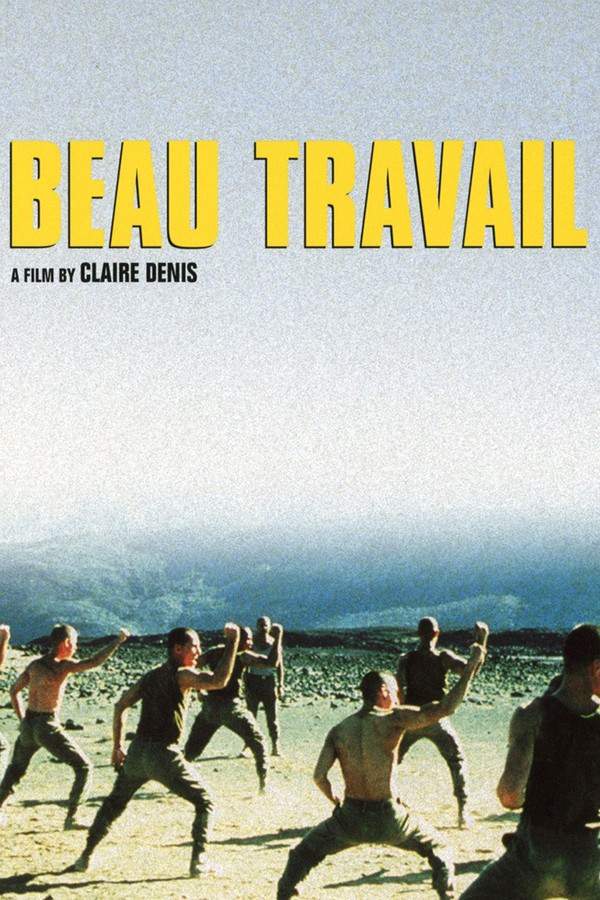
Beau Travail (2000) movie poster

Timeline

Beau Travail (2000) Timeline Explained – Every Event in Order

Release, runtime and language
2000 · 90 min · French
JustWatch #3,018 29
Directed by
Claire Denis
Starring
Denis Lavant, Grégoire Colin, Michel Subor

In the harsh environment of the Foreign Legion’s Gulf of Djibouti base, a seasoned officer's peaceful routine is disrupted by the arrival of a captivating new soldier. As the officer, Galoup, becomes increasingly obsessed with the recruit, his jealousy intensifies, leading him to try and undermine the young man's progress. This destructive fixation ultimately leads to Galoup's own tragic downfall and the unraveling of his carefully constructed world.

On this page (8)
  1. 1 Where to watch
  2. 2 Events in order (11)
  3. 3 Timeline questions answered
  4. 4 The book behind the movie
  5. 5 Movie threads
  6. 6 Movies like Beau Travail
  7. 7 Categories
  8. 8 Every angle

Where to watch

Where to Watch Beau Travail (2000)

Where can you watch Beau Travail? Stream, rent or buy it in the US, including on HBO Max, Amazon Video and Apple TV Store: current JustWatch availability with up-to-date prices.

Streaming availability powered by JustWatch

11 events in order · contains spoilers

Beau Travail Timeline: Events in Chronological Order

Every key event of Beau Travail (2000) in order, scene by scene, with when and where it takes place. Use it to untangle flashbacks, time jumps and parallel storylines, to refresh your memory before the sequel or to find the exact scene you are thinking of.

  1. Galoup in Marseille

    Adjudant-Chef Galoup reflects on his life while back in his home in Marseille. This moment sets the stage for his memories of his time in the French Foreign Legion.

    Where
    Marseille
  2. Life in Djibouti

    Galoup recalls his experiences in Djibouti, where he served under Commandant Bruno Forestier. He admires Forestier's leadership qualities and the bond he shares with the men in their unit.

    Where
    Djibouti
  3. The New Recruit

    A new recruit, Gilles Sentain, joins Galoup's section, immediately changing the dynamic within the group. Galoup feels irrational hostility towards Sentain and vows to undermine him.

    Where
    Djibouti
  4. The Water Incident

    During a punishment drill, Sentain offers water to another soldier being forced to dig a hole. Galoup reacts violently by knocking the water from Sentain's hand, showcasing his aggressive stance.

    Where
    Djibouti
  5. Desert Punishment

    In a severe act of retaliation, Galoup drags Sentain into the desert and orders him to walk back to base alone. Unbeknownst to Sentain, Galoup has tampered with his compass, leaving him to wander aimlessly.

    Where
    Desert
  6. Sentain's Desperation

    Lost and alone in the harsh desert, Sentain struggles against dehydration. His fate becomes uncertain as the unforgiving terrain takes its toll on him.

    Where
    Desert
  7. Rescue by Locals

    Sentain is discovered and rescued by local Djiboutians. However, he never returns to the base, leading to assumptions of his desertion.

    Where
    Djibouti
  8. The Compass Discovery

    The legionnaires stumble upon Sentain's compass during a local sale of salt-encrusted novelties. This find leads them to believe that Sentain has died in the desert.

    Where
    Djibouti
  9. Facing Consequences

    With the assumption that Galoup has harmed Sentain, he faces a court martial and is ordered back to France by Forestier. This marks the end of Galoup's career in the Foreign Legion.

    Where
    Djibouti
  10. Final Reflections

    Back in France, Galoup prepares his sleeping area in a disciplined military manner. With a pistol in hand, he contemplates his actions, reciting the tattooed phrase on his chest that reflects his internal conflict.

    Where
    France
  11. Nightclub Performance

    The film concludes with Galoup at a nightclub in Djibouti, where he engages in an energetic solo dance to 'The Rhythm of the Night.' This moment signifies his escape from the turmoil of his past.

    Where
    Djibouti

Last updated: December 31, 2024 at 18:09

Was this helpful?

Timeline questions answered

Beau Travail Timeline Explained: Your Questions Answered

When does it happen, and why in that order? The questions people ask about the chronology of Beau Travail (2000): time jumps, flashbacks, cause and effect between scenes and the correct order of events, each answered with spoilers.

Q1

Why does Galoup hate Sentain so much?

Galoup experiences an irrational hostility toward Sentain almost immediately upon his arrival. The animosity stems from Galoup's deep admiration for Commandant Forestier and his envious observation of the natural bond Forestier forms with the new recruit. Galoup sees Sentain as a threat to his own position and as a reflection of the leadership qualities he lacks, triggering a destructive jealousy that escalates throughout the film.

  • galoup
  • sentain
  • jealousy
  • forestier
  • obsession
Q2

Why does Galoup tamper with Sentain's compass?

Galoup deliberately sabotages Sentain's compass before sending him into the desert alone as punishment for defying his authority during the water incident. By rendering him unable to navigate, Galoup intends to ensure Sentain becomes hopelessly lost and either dies or suffers severely in the harsh desert environment. This act reveals Galoup's willingness to commit potentially lethal sabotage to eliminate someone he perceives as a rival.

  • compass
  • sabotage
  • desert
  • galoup
  • sentain
  • murder
Q3

What happens to Sentain in the desert?

Sentain becomes lost in the unforgiving desert after Galoup tampered with his compass. He wanders through the barren salt flats and suffers severe dehydration, coming close to death before being discovered and rescued by local Djiboutian villagers. However, he never returns to the Foreign Legion base, leading his comrades to believe he has deserted.

  • sentain
  • desert
  • dehydration
  • rescue
  • villagers
Q4

Why does Commandant Forestier send Galoup back to France?

Forestier decides to send Galoup back to France for a court martial after suspicions arise that Galoup may have deliberately harmed Sentain. The discovery of Sentain's compass at a local market, showing salt-encrusted damage, reinforces the belief that Sentain died in the desert. With the legion believing Galoup responsible for Sentain's fate, Forestier makes the decisive choice to remove Galoup from Djibouti, ending his career in the Foreign Legion.

Foreshadowing: Earlier, Galoup's increasingly erratic behavior and open hostility toward Sentain had already drawn attention from the other soldiers.

  • forestier
  • court martial
  • galoup
  • france
  • consequences
Q5

What is the significance of the wristband Galoup keeps?

Galoup keeps a wristband bearing Commandant Forestier's name as a token of his admiration. This wristband symbolizes Galoup's complex feelings toward Forestier, a mixture of reverence, envy, and unspoken desire to be like him. Forestier's natural leadership and the strong bond he forms with the men represent everything Galoup wishes he could achieve, making the wristband a physical manifestation of his aspirational longing.

  • wristband
  • forestier
  • galoup
  • admiration
  • leadership
Q6

Why does Galoup end up dancing in a nightclub at the end?

The final nightclub scene shows Galoup immersing himself in a vibrant dance performance to "The Rhythm of the Night" in Djibouti. This moment represents his attempt to escape the turmoil of his past and find release from the guilt and regret consuming him. The ecstatic dancing contrasts sharply with the preceding image of him clutching a pistol, suggesting he is trying to outrun his inner demons through physical expression and rhythmic abandon.

  • nightclub
  • dancing
  • rhythm of the night
  • galoup
  • escape
Q7

What does the tattoo "Serve the good cause and die" mean?

The phrase "Sers la bonne cause et meurs" ("Serve the good cause and die") is tattooed on Galoup's chest. He reads it aloud while holding the pistol, reflecting on his choices. The tattoo represents the military ideology he has lived by, the notion of selfless service unto death. In his final moment of reflection, the phrase takes on a bitter irony, as he questions whether his actions in the Foreign Legion, particularly his persecution of Sentain, truly served any noble purpose.

  • tattoo
  • galoup
  • serve the good cause and die
  • military
  • regret
Q8

Why does Sentain never return to the Foreign Legion?

After being rescued by local Djiboutian villagers, Sentain chooses not to return to the Foreign Legion base. While the exact reasons are not explicitly stated, the trauma of his near-death experience in the desert, combined with the realization that Galoup deliberately tried to kill him, likely led him to abandon his military career. His absence is interpreted by the legionnaires as desertion or death.

  • sentain
  • desertion
  • legion
  • not returning
  • trauma
Q9

What triggers the water incident between Galoup and Sentain?

The water incident occurs during a punishment drill when another soldier is being forced to dig a hole in the sweltering sun. Sentain, showing compassion toward his fellow soldier, offers him water from his canteen. Galoup reacts with rage and knocks the water from Sentain's hand. This act of defiance by Sentain, and his display of humanity that contrasts with Galoup's cruelty, further escalates Galoup's obsession with destroying him.

  • water
  • canteen
  • punishment
  • galoup
  • sentain
  • defiance
Q10

What is the relationship between Galoup and Forestier?

Galoup serves under Commandant Forestier in Djibouti and deeply admires him, keeping a wristband with Forestier's name as a token of his regard. However, Galoup's admiration is intertwined with envy, he envies Forestier's natural charisma and the genuine bond he forms with the soldiers. This complicated mix of admiration and resentment drives Galoup's downward spiral, especially when he sees Forestier showing attention to Sentain.

  • galoup
  • forestier
  • command
  • admiration
  • leadership
  • relationship

Movie threads

More Movies Like Beau Travail, by Mood & Story

Curated lists built around what makes Beau Travail tick: the same mood, the same kind of story or the same emotional payoff. Each list explains why these movies belong together.

Movies with repressed obsession like Beau Travail

Stories where buried desire and obsession simmer quietly until self-destruction. If you liked the slow burn of repressed desire and toxic obsession in Beau Travail, you'll find similar movies here. These films explore characters crumbling under the weight of their own unspoken feelings, often set in confined worlds with a melancholic, brooding tone.

  • brooding
  • repressed
  • obsessive
  • melancholic
  • psychological
  • existential
  • Tone: melancholic, brooding, existential
  • Pacing: slow, deliberate, meditative
Why these movies?

The story pattern: Narratives in this thread typically follow a protagonist, often in a regimented or isolating environment, whose fascination or jealousy for another person becomes an all-consuming, destructive force. The conflict is largely internal and psychological, unfolding at a measured pace and culminating in personal unraveling rather than external resolution.

Why they belong together: These films share a specific atmospheric blend: a slow, deliberate pacing that builds psychological tension; a melancholic and introspective tone; and a central theme of internal, self-destructive obsession that carries heavy emotional weight.
Stories of confinement and existential crisis like Beau Travail

Character studies of isolation and identity within rigid, claustrophobic systems. Find movies similar to Beau Travail that explore intense personal crises within tight-knit or oppressive environments. These films often feature a slow pace, heavy themes, and a focus on how rigid structures like the military expose deep-seated loneliness and existential questions.

  • existential
  • claustrophobic
  • isolated
  • brooding
  • contemplative
  • institutional
  • Tone: melancholic, contemplative, bleak
  • Pacing: slow, meditative
Why these movies?

The story pattern: The narrative pattern involves a protagonist embedded in a highly structured, often isolating community (military, monastic, remote outpost). The strict rules and lack of external freedom amplify internal conflicts about identity, purpose, and desire, leading to a crisis that challenges their place within the system and their sense of self.

Why they belong together: Movies are grouped here based on the powerful combination of a claustrophobic or regimented setting, a slow and contemplative pace, and a central theme of existential questioning. They share a heavy, often melancholic mood where the environment is as much a character as the people.

If you liked this

Movies Like Beau Travail

Similar movies to Beau Travail: the same genre, themes or kind of story. Each one comes with its own plot summary, timeline and ending explained.

Browse all movie summaries

Categories

Movie Lists Featuring Beau Travail

Beau Travail appears in these hand-built movie categories. Each one groups movies by a specific mood, theme or story type, with their plot summaries and endings explained.

View all movie categories

Every angle

Beau Travail (2000) Explained: Plot, Timeline & Characters

Everything about Beau Travail in one place: what happens in the plot summary, the timeline in chronological order, the characters and meaning and a spoiler-free summary. What's After the Movie adds the cast, box office and post-credit scenes.

Coming soon on iOS and Android

The Plot Explained Movie Summary App

Plot summaries, endings explained and timelines on your phone. Catch up on any movie in minutes, save your favorites and never miss a twist again.

Be the first to know when we launch. Your email stays private, always.

Learn more about the app