Plot Explained Spoilers guaranteed!
Plot Explained

Browse by genre

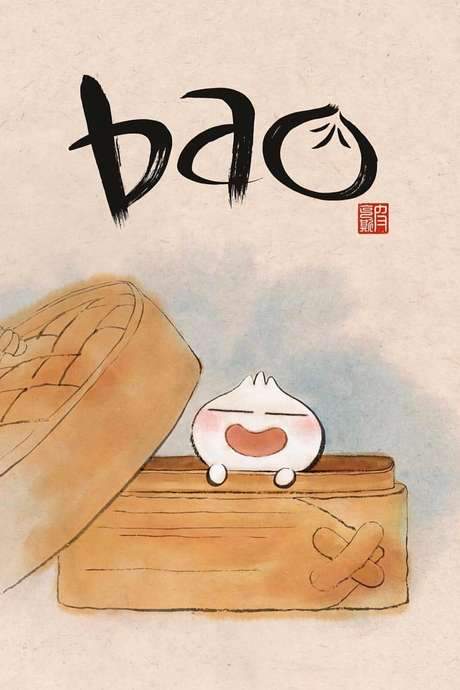
Bao (2018) movie poster

Plot Summary

Bao (2018) Plot Summary Explained

Release, runtime and language
2018 · 8 mins · English
Echo score 81
Loading streaming availability…
Directed by
Domee Shi
Starring
Sharmaine Yeoh, Tim Zhang, Daniel Kailin, Sindy Lau

An aging Chinese mother suffering from empty nest syndrome gets another chance at motherhood when one of her dumplings springs to life as a lively, giggly dumpling boy.

On this page (6)
  1. 1 Where to watch
  2. 2 What happens: full plot
  3. 3 Plot questions answered
  4. 4 Movie threads
  5. 5 Movies like Bao
  6. 6 Every angle
Loading streaming availability…

Full plot summary · contains spoilers

What Happens in Bao: Full Plot Summary

The whole story of Bao (2018) explained, from the opening scene to the final frame: every key event, every twist and what it all adds up to. Read it as a quick recap before the sequel, to check a scene you missed, or to finally understand what really happened.

In Toronto, Ontario, Canada, a Chinese-Canadian woman, Sharmaine Yeoh cooks a meal of baozi for herself and her husband, Tim Zhang. The kitchen fills with steam as one bun seems to stir on its own, a magical moment that startles them both.

She tends to the living bun as if it were a child, feeding it and cherishing the time they share. The bun, the TV Son Daniel Kailin, grows from a playful infant into a child who longs to join other children in play. Yet his overprotective mother Sindy Lau blocks that independence, leading to friction that slowly drives a wedge between them.

As the boy grows, he dreams of a future beyond home; he introduces his fiancée to his mother, defying the boundary she drew around him. The clash culminates in a desperate act: she eats the bun, then weeps for the consequences of her fear. The emotional weight of this choice presses on everyone involved.

Later, the mother lies in bed, and her real son enters the room, revealing that the sequence was an allegorical dream. The father Tim Zhang urges him to talk to his mother, but she rebuffs him. They sit on the edge of the bed, and the son offers her the same treat he once refused on the bus, a quiet, healing moment that hints at reconciliation. In the end, after healing begins to take root, the son and his fiancée join his mother in making buns, while the father looks on with approval.

Last updated: February 18, 2026 at 23:43

Was this helpful?

Plot questions answered

Bao Plot Explained: Your Questions Answered

The questions people ask most about Bao (2018): what happens in the confusing scenes, why the characters do what they do, the twists, hidden details and what the ending means. Each answer contains spoilers.

Q1

Why does the mother eat the bun in the film?

The mother eats the living bun because she cannot accept his desire to leave home and start his own life. Overwhelmed by fear of losing him, she physically consumes him in a desperate attempt to keep him close, representing how her overprotective nature ultimately destroys the very thing she loves. This act is followed by immediate regret and heartbreak, showing the destructive consequence of her inability to let go.

Foreshadowing: Earlier scenes show her restricting his interactions with other children, hinting at her inability to accept his growing independence.

  • mother eats bun
  • overprotective mother
  • desperate act
  • dumpling scene
Q2

What does the dumpling represent in Bao?

The dumpling represents the mother's real son and her struggle with empty nest syndrome. Through magical realism, the film uses the living bun as an allegory for the bond between mother and child, his growth toward independence, and her difficulty accepting that he will eventually leave. The magical premise allows the story to explore these emotional dynamics in a literal, visceral way.

Foreshadowing: The opening scene shows the mother cooking for just herself and her husband, establishing her loneliness and longing for purpose.

  • dumpling metaphor
  • empty nest
  • allegory
  • mother son relationship
Q3

Is the dumpling real or is it a dream?

The entire story of the living dumpling is an allegorical dream that the mother experiences while lying in bed. Her real son enters the bedroom after she wakes, revealing that the magical narrative represented her actual emotions about her son leaving home. The dream uses the dumpling as a symbolic stand-in for her real child.

Foreshadowing: The film blurs reality subtly throughout, with the transition between kitchen and bedroom providing the reveal that the experience was not literal.

  • dream sequence
  • allegory
  • reveal
  • surprise ending
Q4

Why is the mother so overprotective of the dumpling?

The mother becomes overprotective because she suffers from empty nest syndrome after her children grew up and left home. The dumpling gives her a second chance at motherhood, and she is terrified of experiencing that loss again. Her restrictions on his freedom stem from love twisted by fear, not from malice, but this very protectiveness drives him away.

Foreshadowing: The opening scene establishes her loneliness, setting up why the magical dumpling becomes so precious to her.

  • overprotection
  • empty nest syndrome
  • maternal love
  • fear of loss
Q5

What is the significance of the bus memory scene?

The bus memory shows a moment when the mother's real son was young and she offered him a dumpling on a bus, but he refused it. This rejected offering becomes symbolic of their fractured connection. At the film's end, he offers her the same dumpling, completing the emotional circle and showing he now understands her love language. The memory serves as the bridge toward reconciliation.

Foreshadowing: The timeline shows this memory appearing after the mother rebuffs her son, establishing it as the key to healing their rift.

  • bus scene
  • rejected dumpling
  • memory
  • reconciliation symbol
Q6

Who is the real son in Bao?

The real son is the adult child who visits his parents and is implied to have moved out, creating the empty nest situation that affects his mother. He represents the inspiration for the dumpling allegory, embodying the independence and departure that causes his mother's emotional turmoil. His storyline mirrors the bun's journey from childhood to leaving home.

Foreshadowing: The dream narrative follows the dumpling from infancy to adulthood seeking independence, reflecting the real son's own life progression.

  • real son
  • adult child
  • family relationship
Q7

What does the ending of Bao mean?

The ending shows reconciliation through the simple act of making dumplings together. The son offers his mother the same dumpling she once offered him on the bus, and she accepts. This shared meal represents healing, understanding, and the possibility of maintaining their bond even as he lives his own life. The family unit is restored through this small, intimate gesture.

Foreshadowing: Earlier scenes establish that cooking and sharing food is the mother's primary expression of love.

  • ending
  • reconciliation
  • family healing
  • forgiveness
Q8

Why does the mother reject her son after waking from the dream?

After waking from the dream, the mother rebuffs her son because she is still processing the emotional pain represented by the allegory. The dream magnified her fears and hurt, and she is not yet ready to confront those feelings directly. The father's nudge toward conversation and the bus memory eventually help her overcome this resistance.

Foreshadowing: The dream sequence ends with the mother's distress over eating the dumpling, foreshadowing her emotional guardedness upon waking.

  • emotional rejection
  • hurt feelings
  • mother son conflict
Q9

Why is the scene where the mother eats the bun so shocking?

The scene is shocking because it visually depicts a mother's desperate, irrational act to prevent her child from leaving. It subverts typical animated short conventions by showing something so dramatic and unsettling. The surreal nature amplifies the emotional reality: that her fear of loss has become so overwhelming it manifests as something destructive and irreversible.

Foreshadowing: The tension between mother and dumpling builds gradually, with her increasingly restrictive behavior foreshadowing this extreme reaction.

  • shocking scene
  • cannibalism metaphor
  • emotional desperation
Q10

What is the meaning of the final scene where they make buns together?

The final scene where the son, his fiancée, and the mother make buns together represents generational continuity and family bonding. It shows that the mother can accept his independence while still maintaining their connection through shared traditions. The father watching approvingly signals family harmony restored. The act of cooking together becomes a metaphor for nurturing relationships.

Foreshadowing: The opening establishes cooking as the mother's primary way of expressing love and care for her family.

  • family unity
  • tradition
  • cooking together
  • generation

Movie threads

More Movies Like Bao, by Mood & Story

Curated lists built around what makes Bao tick: the same mood, the same kind of story or the same emotional payoff. Each list explains why these movies belong together.

Animated Allegories of the Heart like in Bao

Short films that use magical realism to explore profound family emotions. Movies like Bao that use a magical or fantastical element as a direct allegory for deep emotional themes. If you enjoyed the symbolic storytelling of Bao, you'll appreciate these films that explore family dynamics through inventive animation and metaphor.

  • heartfelt
  • allegorical
  • familial
  • nostalgic
  • tender
  • emotional
  • Tone: bittersweet, heartfelt
  • Pacing: steady, contemplative
Why these movies?

The story pattern: These stories typically unfold through a central magical symbol—like a living dumpling—that represents a deeper emotional truth. The narrative journey follows the characters as they interact with this symbol, learning lessons about love, protection, and letting go, often culminating in a moment of reconciliation.

Why they belong together: They are grouped together because they blend accessible animation with profound emotional depth, using allegory to make complex feelings tangible and relatable. The shared focus on familial bonds explored through a single, powerful metaphor creates a cohesive viewing experience.

Quiet Journeys of Parental Reconciliation like in Bao

Stories exploring the emotional distance and eventual healing between parents and children. Find movies like Bao that delicately explore parent-child separation and the path to reconciliation. If you were moved by the mother's journey from overprotection to understanding, you'll connect with these stories of quiet familial healing.

  • familial
  • emotional
  • heartwarming
  • tender
  • reconciliation
  • nostalgic
  • Tone: bittersweet, tender
  • Pacing: steady, reflective
Why these movies?

The story pattern: The narrative pattern follows a parent, often dealing with loneliness or empty nest syndrome, who must learn to overcome their own fears or overprotectiveness. The story builds through small, emotional moments rather than large conflicts, culminating in a quiet but profound reconciliation that emphasizes love and understanding over words.

Why they belong together: They share a focus on the internal emotional landscape of parenthood, using subtle storytelling and visual metaphor to convey the pain and beauty of letting go. The consistent bittersweet tone and medium emotional weight create a cohesive experience about the universal challenges of familial love.

If you liked this

Movies Like Bao

Similar movies to Bao: the same genre, themes or kind of story. Each one comes with its own plot summary, timeline and ending explained.

Browse all movie summaries

Every angle

Bao (2018) Explained: Plot, Timeline & Characters

Everything about Bao in one place: what happens in the plot summary, the timeline in chronological order, the characters and meaning and a spoiler-free summary. What's After the Movie adds the cast, box office and post-credit scenes.

Coming soon on iOS and Android

The Plot Explained Movie Summary App

Plot summaries, endings explained and timelines on your phone. Catch up on any movie in minutes, save your favorites and never miss a twist again.

Be the first to know when we launch. Your email stays private, always.

Learn more about the app