









Plot Explained Spoilers guaranteed!
Plot Explained

Browse by genre

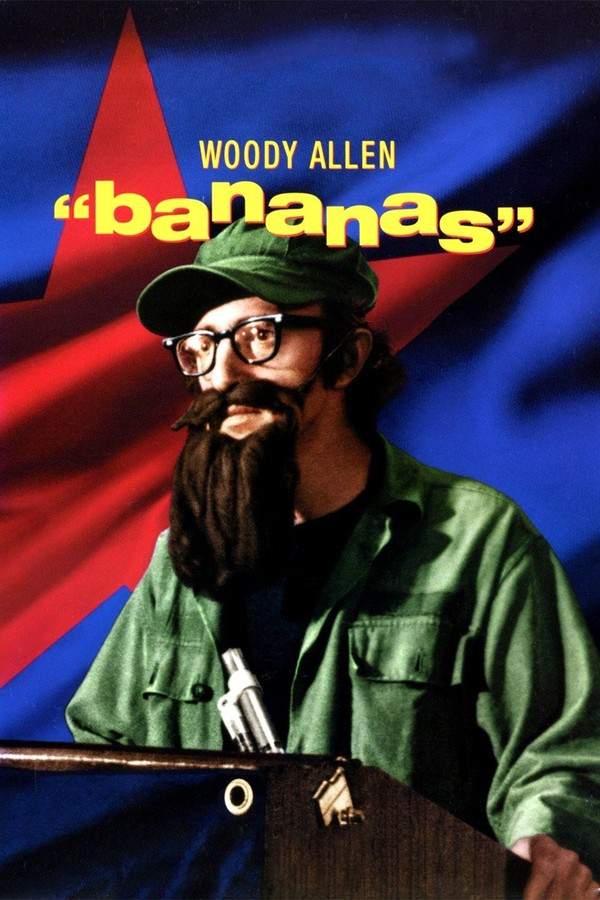
Bananas (1971) movie poster

Characters & Themes

Bananas (1971) Characters, Setting & Themes Explained

Release, runtime and language
1971 · 82 min · English
Starring
Woody Allen, Louise Lasser
Budget
$2M

In this early Woody Allen comedy, hapless product tester Fielding Mellish finds himself embroiled in the bizarre political landscape of San Marcos. While trying to win the affection of Nancy, a captivating social activist, he inadvertently becomes a figurehead in a revolution. Fielding's misadventures lead to unexpected leadership roles and a journey of hilarious self-discovery as he navigates love, cultural clashes, and the chaotic events unfolding around him.

On this page (8)
  1. 1 Where to watch
  2. 2 Characters explained (3)
  3. 3 Where & when it takes place
  4. 4 Themes & meaning (2)
  5. 5 Character & meaning questions
  6. 6 Movie threads
  7. 7 Movies like Bananas
  8. 8 Every angle

Where to watch

Where to Watch Bananas (1971)

Where can you watch Bananas? Stream, rent or buy it in the US, including on Hoopla, Tubi TV and YouTube Free: current JustWatch availability with up-to-date prices.

Streaming availability powered by JustWatch

3 main characters · contains spoilers

Bananas Characters Explained: Who Is Who

The main characters of Bananas (1971), heroes and villains: what drives them, how they change over the course of the story and what each of them reveals about the film's bigger ideas.

  • Fielding Mellish (Woody Allen)

    Fielding Mellish is a disheartened product tester who seeks fulfillment in a world filled with absurdity. His journey from an aimless existence in New York to becoming involved in a revolution reveals his comedic yet complex character arc. Fielding's blend of awkwardness, idealism, and charm illustrates the struggles of finding purpose and connection amidst societal expectations.

    • 🧑‍🔬 Product Tester
    • 🍕 Awkwardness
    • 🌍 Activist
  • Nancy (Louise Lasser)

    Nancy is a passionate college activist who influences Fielding's journey towards self-discovery and political engagement. Her enthusiasm for social causes and personal growth adds depth to her character, illustrating the struggles between personal desires and societal responsibilities. Despite her strong convictions, her relationship with Fielding showcases the challenges of compatibility in the face of changing ideals.

    • 📚 Activist
    • 💪 Strong-willed
    • 💔 Romantic
  • General Emilio M. Vargas (Carlos Montalbán)

    General Vargas represents the oppressive force against which the revolutionaries fight, embodying tyranny and absurdity. His interactions with Fielding are both comical and alarming, underscoring the film's critique of authoritarianism. Vargas's character serves as a foil to Fielding, illustrating the drastic differences between ambitious individuals and those who wield power with finesse.

    • 👮 Dictator
    • 🎭 Antagonist
    • 😠 Ruthless

Last updated: October 22, 2024 at 19:21

Was this helpful?

Setting

Where and When Does Bananas Take Place?

The setting of Bananas (1971): the year and time period, the places and locations, and how they shape the characters, the mood and the tension of the story.

Time period

1970s

The film is set in the 1970s, a tumultuous time marked by political upheaval and social activism across the globe. This era saw a rise in youthful discontent, where college students rallied against oppressive regimes and societal norms, reflecting a growing demand for change. The backdrop of revolution and political engagement feeds into the film's narrative of personal and societal transformation.

Location

San Marcos, New York City

New York City serves as the bustling backdrop for Fielding Mellish's initial misadventures, showcasing the energetic urban life and diverse social issues of the 1970s. In contrast, the island Republic of San Marcos represents a chaotic and impoverished locale under a dictatorship, known for its revolutionary fervor and struggles against corrupt leadership. The stark differences between these two places highlight the film's exploration of political activism and personal growth.

  • 🌆 City
  • 🌍 Island

Last updated: October 22, 2024 at 19:21

Was this helpful?

2 major themes

Bananas Meaning: Themes & Message Explained

What is Bananas (1971) really about? The emotional, social and philosophical themes the film keeps returning to, its symbolism and the message beneath the surface.

  • Revolution

    The theme of revolution permeates the narrative as characters like Fielding Mellish become unwittingly involved in the political struggles of San Marcos. The juxtaposition of personal growth against the backdrop of societal chaos encapsulates the notion that individual actions can inadvertently intersect with larger historical movements. Fielding's journey embodies the absurdity and unpredictability of being thrust into a struggle for freedom.

  • Love & Identity

    Fielding’s romantic endeavors with Nancy serve as a vehicle for exploring themes of love and the quest for identity. His relationships and experiences force him to confront his self-worth and aspirations, highlighting the comedic yet poignant quest for connection in a complex world. The evolution of these personal dynamics against a political backdrop accentuates the intertwined nature of personal and societal identity.

Last updated: October 22, 2024 at 19:21

Was this helpful?

Character & theme questions

Bananas Characters & Meaning: Your Questions Answered

The questions people ask about Bananas (1971): who the characters really are, their relationships, what the symbols mean, where it takes place and what the movie is really about. Each answer contains spoilers.

Q1

Where is the movie set?

Bananas takes place in two main locations: New York City, where the protagonist Fielding Mellish works as a product tester, and the fictional island nation of San Marcos, a dictatorship in turmoil where he becomes embroiled in a revolution. The stark contrast between the urban energy of New York and the chaotic, impoverished conditions of San Marcos underscores the film's exploration of political activism and personal growth.

  • setting
  • locations
  • new york
  • san marcos
  • island nation
Q2

What time period is the film set in?

The film is set in the 1970s, a decade marked by widespread political upheaval and social activism. This era of youthful discontent and anti-establishment sentiment provides the perfect backdrop for Fielding's accidental involvement in a revolutionary movement, reflecting the era's spirit of questioning authority and seeking change.

  • 1970s
  • time period
  • era
  • historical context
  • 1970s politics
Q3

What is San Marcos like in the movie?

San Marcos is portrayed as a fictional Caribbean island nation under a oppressive dictatorship, characterized by poverty, revolutionary fervor, and constant political turmoil. The film uses this setting to satirize Latin American dictatorships and the absurd nature of political revolutions, with General Vargas as the tyrannical leader whom the rebels ultimately overthrow.

  • san marcos
  • dictatorship
  • fictional country
  • caribbean
  • revolution
Q4

What are the main themes?

The two primary themes in Bananas are revolution and love & identity. The film explores how ordinary individuals can become inadvertently caught up in larger political movements, while also examining Fielding's personal journey of self-discovery through his romantic pursuit of activist Nancy. These themes intertwine to show how personal growth and political engagement can happen simultaneously.

  • themes
  • revolution
  • love
  • identity
  • political activism
  • self-discovery
Q5

Is the movie about politics?

Bananas uses political revolution as a satirical framework to explore personal growth and absurdity. While the film depicts Fielding becoming a revolutionary figurehead in San Marcos, the political elements serve primarily as a vehicle for comedy rather than serious political commentary. The revolution is portrayed with farcical absurdity, reflecting Woody Allen's signature neurotic humor and critique of authoritarian regimes.

  • politics
  • revolution
  • satire
  • dictatorship
  • comedy
Q6

Who is the main character?

Fielding Mellish is the protagonist, a hapless and aimless product tester in New York City who becomes accidentally involved in a political revolution. Played by Woody Allen, Fielding embodies awkwardness, idealism, and charm as he transforms from an uninvolved everyman into an unlikely revolutionary leader while trying to win the affection of activist Nancy.

  • fielding mellish
  • main character
  • protagonist
  • woody allen
  • product tester
Q7

Who is Nancy and what is her role?

Nancy is a passionate college activist and Fielding's love interest, played by Louise Lasser. She represents the social activism of the 1970s and serves as the catalyst for Fielding's transformation from an aimless product tester to someone actively engaged in meaningful causes. Her strong convictions and commitment to social change challenge Fielding to examine his own values and purpose.

  • nancy
  • love interest
  • activist
  • character
  • louise lasser
Q8

Who is the antagonist in the film?

General Emilio M. Vargas is the dictator of San Marcos and the film's primary antagonist. He represents tyranny and political oppression, ruling the island with an iron fist. Fielding encounters General Vargas directly when he is mistaken for an important revolutionary, leading to comical yet tense interactions that underscore the film's satire of authoritarian leadership.

  • general vargas
  • antagonist
  • dictator
  • villain
  • san marcos leader
Q9

Why does Fielding get involved in the revolution?

Fielding becomes involved in the San Marcos revolution largely by accident and through his desire to win Nancy's affection. As a product tester seeking meaning in his life, he stumbles into the revolutionary cause almost inadvertently, becoming a figurehead simply by being in the right place at the wrong time. His journey illustrates how ordinary people can be swept up in historical events beyond their control.

  • fielding
  • revolution
  • motivation
  • accidental hero
  • nancy
Q10

What type of film is Bananas?

Bananas is a comedy film and an early example of Woody Allen's signature style combining neurotic humor with farcical storytelling. The film parodies the hero's journey and political revolutions, maintaining a light, playful tone throughout despite its thematic exploration of serious topics like dictatorship and social upheaval. The pacing is fast and the narrative straightforward, prioritizing laughs over complex plotting.

  • comedy
  • genre
  • woody allen
  • film style
  • humor
  • satire
Q11

Why does the film compare New York to San Marcos?

The contrast between New York City and San Marcos serves to highlight the differences between American complacency and the struggles faced by those living under oppressive regimes. New York represents comfortable, apolitical urban life, while San Marcos embodies political chaos and the desperate fight for freedom. This juxtaposition allows the film to comment on political engagement and the responsibility of those in privileged positions to recognize injustice.

  • contrast
  • settings
  • new york
  • san marcos
  • political commentary
  • symbolism

Movie threads

More Movies Like Bananas, by Mood & Story

Curated lists built around what makes Bananas tick: the same mood, the same kind of story or the same emotional payoff. Each list explains why these movies belong together.

Absurdist Political Farces like Bananas

Hilarious stories where bumbling individuals are thrust into chaotic revolutions. Find more hilarious movies like Bananas where the political landscape is a stage for farce. These comedies feature ordinary people stumbling into extraordinary, absurd situations, blending satire with slapstick for a lighthearted take on power, revolution, and activism.

  • satirical
  • farcical
  • slapstick
  • absurd
  • political
  • chaotic
  • Tone: light, satirical
  • Pacing: fast, chaotic
Why these movies?

The story pattern: Narratives typically follow a naive or neurotic protagonist whose personal life—often a romantic pursuit—unexpectedly collides with a political power struggle. Through a series of misunderstandings and mishaps, they gain influence they never sought, all while the real stakes are consistently undercut for comedic effect, leading to a humorous resolution.

Why they belong together: Movies are grouped here for their shared approach to politics as pure farce, a fast-paced and chaotic structure, and a central character who is an unwilling participant in events far bigger than themselves. The tone is consistently light, prioritizing laughs over genuine commentary.

Neurotic Romantic Misadventures like Bananas

Awkward heroes bumbling their way through love and life's chaos. If you liked the quirky romance in Bananas, explore more movies where a lovable neurotic's quest for love triggers a series of hilarious misadventures. These films blend romantic foibles with absurd situations, all driven by a fast-paced, character-centric comedy style.

  • neurotic
  • romantic
  • quirky
  • hilarious
  • character-driven
  • breezy
  • Tone: light, quirky
  • Pacing: fast, breezy
Why these movies?

The story pattern: The narrative pattern follows a highly relatable, often awkward protagonist who is motivated primarily by a romantic interest. This pursuit acts as the engine that propels them into an unexpected and chaotic adventure, forcing them to confront their anxieties in humorous ways and ultimately leading to personal revelation and romantic success.

Why they belong together: These movies share a core focus on a specific type of comedic protagonist: the neurotic everyman. The romantic plot is deeply intertwined with the farcical events, and the pacing is brisk, creating a feeling of a charming, chaotic rollercoaster driven by the hero's insecurities and desires.

If you liked this

Movies Like Bananas

Similar movies to Bananas: the same genre, themes or kind of story. Each one comes with its own plot summary, timeline and ending explained.

Browse all movie summaries

Every angle

Bananas (1971) Explained: Plot, Timeline & Characters

Everything about Bananas in one place: what happens in the plot summary, the timeline in chronological order, the characters and meaning and a spoiler-free summary. What's After the Movie adds the cast, box office and post-credit scenes.

Coming soon on iOS and Android

The Plot Explained Movie Summary App

Plot summaries, endings explained and timelines on your phone. Catch up on any movie in minutes, save your favorites and never miss a twist again.

Be the first to know when we launch. Your email stays private, always.

Learn more about the app