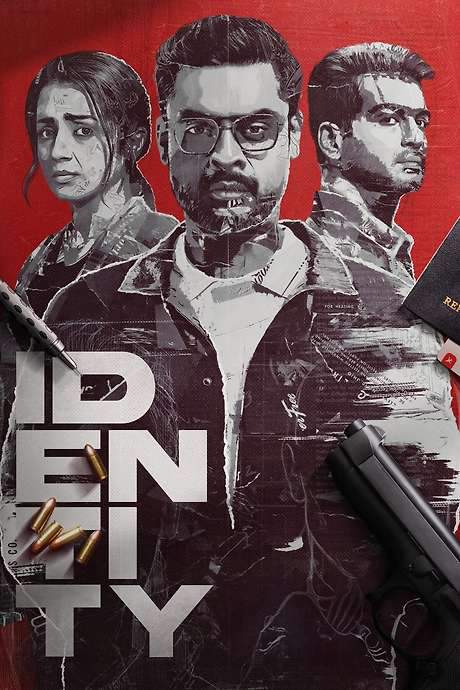
Chanti lands in Hyderabad, steps off a fresh start, and immediately defines a bold agenda. He arrives with a plan that sounds almost cinematic: assemble an unusual team—a mimicry artist, a magician, a software engineer—and pool together a staggering sum of ₹2,526,924,454 (US$30 million). His stated objective is singular and chilling: to target and kill two people, using wit, deceit, and precision. To execute this intricate scheme, he recruits Siva Reddy, Ali, and Srinivasa Reddy for his mission. One night, the trio—along with the rest of his operation—watch Chanti reveal a portion of his secret moves, and their nerves start to fray. The next day, as they’re about to back away, Chanti discloses the deeper truth behind his mission, hinting at a genealogy of ties that bind him to more than just a profit-and-loss equation.
He draws back the curtain on his world: he is intimately connected to his elder brother Raghava Rao, his sister-in-law Seetha, and a younger sister Sirisha. Raghava Rao is portrayed as a Good Samaritan who commands respect in society and works as the general manager of Good Luck Co-operative Bank, a position that gives him access to the financial machinery others would envy. Chanti’s heart also softens toward Swathi, a singer who captures his attention, while his sister is betrothed to Swathi’s brother, weaving a personal stake into the broader web of loyalties. To complicate matters in this high-stakes world, Chanti lands a lucrative job in Germany, suggesting that his outward success mirrors the audacious plans simmering beneath the surface. For a moment, everything seems to align in his favor, and the pieces appear to be falling into place.
But the plot thickens with a brutally real twist. Prakash Rao, the chair of Good Luck Bank, moves billions—hundreds of crores, in fact—through illegal laundering used to fund terrorist activities, and he schemes to cover it all up. When Raghava Rao uncovers the mounting evidence, Prakash Rao and his partners ruthlessly eliminate him, stage what looks like a suicide, and bankrupt his family in the public eye. The reverence that once surrounded Raghava Rao collapses, leaving the family to grapple with a crushing stigma. Witnessing this catastrophe, Chanti returns to the scene, pledging to restore his brother’s honor and recover every rupee deposited by the bank’s customers, including his own expenses. This act of restitution becomes the spark that rekindles a vengeful mission, drawing in the same trio of men who were drawn into the original deception.
The plan pivots toward a calculated vengeance. Chanti first uses Bharat—the idiotic brother—from abroad to his advantage, leveraging Bharat’s blunders to incriminate the gang and seize their passports. He then phones Prakash Rao, delivering a stark warning and revealing a price tag of ₹1.25 as the cost of this dangerous game. In a dramatic turn, Sridhar—who has been acting in the shadows in the Prakash Rao world—recognizes that the real target behind the scheme is linked to Raghava Rao’s family, adding another layer of risk to everything they’ve built. The tension rises as Chanti’s crew contemplates striking at a vulnerable family, but Chanti himself works to shield them from harm.
To complicate matters further, a photograph that could expose their plans becomes a bargaining chip. Chanti swaps Prakash Rao’s photo with that of a petty thief named Sunil, sowing confusion and weakening the bank’s control over the situation. Meanwhile, Jeeva—Prakash Rao’s loyal ally who runs a front-office of an audio company—plays a pivotal role by replacing Swathi’s song with music that suits his girlfriend Champa, a move that shakes Swathi’s career and tightens Jeeva’s grip on the plan. Chanti uses this opening to infiltrate Prakash Rao’s household with the backing of his trusted crew, beginning the process of reclaiming the money and exposing the fraud. The bank’s PA overhears key conversations, and in a calculated moment, he is silenced to prevent a whistle from breaking the fragile balance of power.
As the web tightens, Prakash Rao is seen coordinating a major deal with terrorists, a moment that crystallizes the stakes for everyone involved. Chanti deftly uncovers Prakash Rao’s Swiss bank account, reaping the proceeds of the illicit venture and turning the financial weapon against its creator. The narrative tension peaks as the PA, regaining his composure, reveals the entire ruse to the public, turning the spotlight back onto Prakash Rao’s crimes. In the climactic confrontation, Chanti compels Prakash Rao to confess his sins before the world, rekindling his brother’s dignity and legacy in the eyes of the family and the public. In a final reversal, Prakash Rao and Jeeva are defeated by their own weapons, used by the very people they sought to betray. The film closes with a bold, unambiguous moral: Eating public money is hazardous to life.
This sprawling tale blends ambition, family loyalty, and a relentless pursuit of justice, all while maintaining a grounded, human center. The characters move through a sequence of betrayals, revelations, and carefully staged gambits, each beat driven by a desire to repair a family’s honor and undo the harm wrought by corruption. It’s a story about how far someone will go to safeguard truth when the money and power of the many threaten to drown out the voice of the many, and how one determined individual can mobilize an unlikely crew to expose deception and restore balance to a broken world.