Plot Explained Spoilers guaranteed!
Plot Explained

Browse by genre

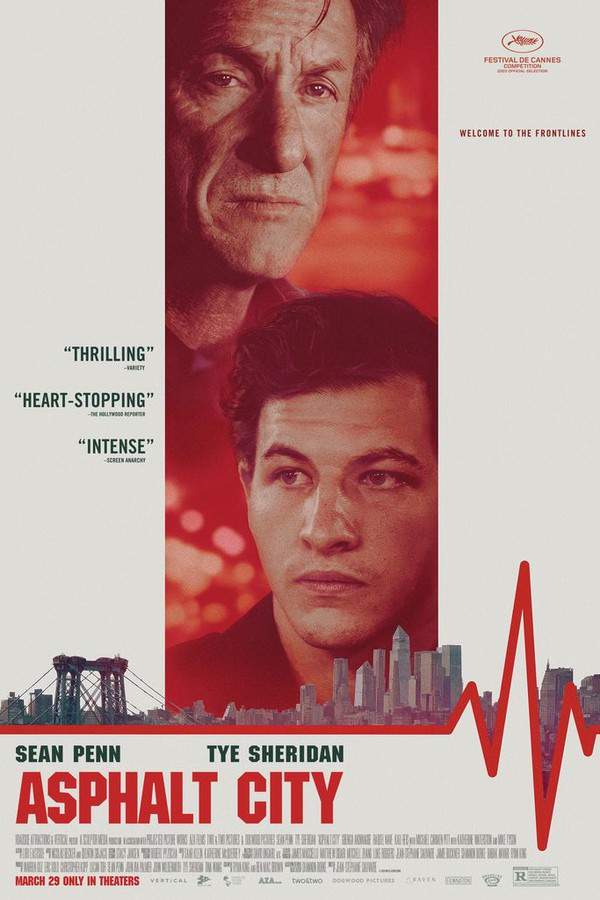
Asphalt City (2024) movie poster

Plot Summary

Asphalt City (2024) Plot Summary & Ending Explained

Release, runtime and language
2024 · 2 h 5 m · English
Echo score 49
JustWatch #2,815 32
Directed by
Jean-Stéphane Sauvaire
Starring
Sean Penn, Gbenga Akinnagbe, Mike Tyson, Katherine Waterston, Michael Pitt, Tye Sheridan

Amidst the challenging environment of Asphalt City, rookie paramedic Ollie Cross is partnered with experienced EMT Rutkovsky. Together, they face dangerous situations and high-pressure scenarios, forcing Ollie to quickly learn the realities of emergency medical work and the weight of making critical decisions that determine life or death.

On this page (8)
  1. 1 Where to watch
  2. 2 What happens: full plot
  3. 3 Plot questions answered
  4. 4 How it ends
  5. 5 The book behind the movie
  6. 6 Movie threads
  7. 7 Movies like Asphalt City
  8. 8 Every angle

Where to watch

Where to Watch Asphalt City (2024)

Where can you watch Asphalt City? Stream, rent or buy it in the US, including on Netflix, Netflix Standard and Amazon Video: current JustWatch availability with up-to-date prices.

Streaming availability powered by JustWatch

Full plot summary · contains spoilers

What Happens in Asphalt City: Full Plot Summary

The whole story of Asphalt City (2024) explained, from the opening scene to the final frame: every key event, every twist and what it all adds up to. Read it as a quick recap before the sequel, to check a scene you missed, or to finally understand what really happened.

As rookie paramedic Ollie Cross finds himself engulfed in the chaotic aftermath of a gang shooting, he enters a whirlwind of high-pressure scenarios that put his first-responder skills to the ultimate test. With the guidance of seasoned medic Gene Rutkovsky, Cross navigates through various medical emergencies, ranging from treating a foot injury to handling a critically injured patient who tragically dies during transport.

The following day sees Cross and Rutkovsky called to a community gym amidst rising tensions over a child’s dog bite. Striving to alleviate the situation, Cross takes charge of the dog involved, yet things spiral out of control when a man brandishes a gun, threatening Cross and executing the dog in a barrage of gunfire.

As the hours pass, Cross faces verbal onslaughts from a drug addict they're rushing to the hospital, and later must collaborate with Rutkovsky to manage a challenging tracheal intubation in the hectic environment of a halal butcher shop. After enduring a demanding shift, Cross confides in Rutkovsky about his personal struggles, revealing the confines of his living situation and his aspirations to retake the Medical College Admission Test (MCAT).

However, the trials of his job weigh heavily on Cross. A chance encounter with Clara sparks a brief romantic interlude, providing him a momentary escape from the rigors of paramedicine. Simultaneously, Rutkovsky grapples with his own burdens, disclosing the strain his profession has placed on his personal life, which includes multiple failed marriages.

As they respond to an escalating series of complex emergencies, Cross and Rutkovsky are confronted by raw realities involving domestic violence and the brutal effects of gang-related activities. One particular call profoundly impacts Cross, as he retrieves a lifeless body from a dilapidated apartment, where the decaying corpse is swarmed by flies.

The mental toll of these harrowing experiences mounts, straining Cross's relationship with Clara and prompting him to reflect on whether the sacrifices within his career are truly justified. Additionally, Rutkovsky steps away to support his young daughter Sylvie while considering an impending move upstate with his ex-wife Nancy. Cross is left to contemplate the essence of sacrifice amidst relentless trauma.

In a shocking turn of events, when Rutkovsky returns, they are met not with a standard childbirth case, but with Nia, a young woman found unresponsive in a shelter from a heroin overdose, necessitating emergency assistance for her stillborn baby. Rutkovsky, stoic, underscores the gravity of the situation as they whisk away the deceased infant, while Cross tends to the now-conscious Nia. In a heart-wrenching revelation, Nia confesses she had stayed sober throughout her pregnancy, but the agony of delivery led her back to drugs, ultimately resulting in her child’s demise. As they prepare to transport Nia, another team arrives, reviving the stillborn, shattering the fleeting glimmer of hope.

Back at the department, Cross faces scrutiny while covering for Rutkovsky during a debriefing, leading to a stiff reprimand, while Rutkovsky faces a suspension.

The ensuing day brings new challenges as Cross, joined by Lafontaine, encounters gang members obstructing their duties, complicating their patient’s treatment. Amidst this chaos, Lafontaine coolly disconnects the man’s oxygen upon discovering illegal drugs, but Cross intervenes, restoring life-giving air. This rising conflict highlights the moral ambiguity that had previously affected Rutkovsky.

As personal tensions unfold, Cross’s relationship with Clara deteriorates, culminating in their breakup due to his emotional detachment. Subsequently, Lafontaine’s pursuit of violence against a young drug dealer leads to sudden retaliation, deepening Cross's internal conflict between the duty to provide care and the harsh lessons of paramedic life. His reflections become tumultuous as he resolves to take the MCAT once more, yet finds focus elusive with haunting memories of that dreadful day.

Conversations with Rutkovsky escalate as their conflicting philosophies clash. Rutkovsky implicates Cross of cowardice for not adhering to their earlier brutal pragmatism, while Cross argues that neglecting treatment embodies a moral atrocity akin to murder.

Cross's world implodes further as challenges compound while partnered with Verdis on a distress call of a young boy grappling with a seizure. Verdis's reminder, “You have to look out for each other,” serves as a stark warning, but it comes too late. When they return to Rutkovsky’s home only to find him unresponsive, Cross's grief is unbearable, and he must be restrained by fellow paramedics as despair overtakes him.

A year later, Cross visits Nia at a rehabilitation facility, yearning for redemption from the hurt he caused. As he confesses to abandoning his core principles in that critical moment, he struggles with his painful realizations. Despite his internal battles, Cross rediscovers purpose as a paramedic. In a defiant act, he breaks protocol to rush into a fire and intubate a young girl, reigniting the passion that once propelled him into his calling.
Last updated: November 17, 2024 at 15:57

Was this helpful?

Plot questions answered

Asphalt City Plot Explained: Your Questions Answered

The questions people ask most about Asphalt City (2024): what happens in the confusing scenes, why the characters do what they do, the twists, hidden details and what the ending means. Each answer contains spoilers.

Q1

Why does Rutkovsky die at the end of Asphalt City?

Rutkovsky dies by suicide, found unresponsive in his home. His death comes after he reveals his personal struggles, including multiple failed marriages and the immense toll his paramedic career has taken on his life. Earlier tensions between him and Cross over moral compromises in their job suggest his emotional state was deteriorating, though the film leaves the exact timing and circumstances of his decision implied rather than explicitly shown.

Foreshadowing: Earlier conversations hint at Rutkovsky's burden, as he confides in Cross about how the job has destroyed his personal relationships and discusses moving upstate with his ex-wife Nancy, indicating he was already contemplating major life changes.

  • rutkovsky death
  • paramedic suicide
  • gene rutkovsky
  • end of movie
Q2

Does the stillborn baby come back to life in Asphalt City?

The stillborn baby is briefly revived when another team arrives at the scene after Cross and Rutkovsky have already whisked away the deceased infant. Nia, the mother who overdosed on heroin, had remained sober throughout her pregnancy but the agony of delivery drove her back to drugs, causing the stillborn. The brief revival offers a glimmer of hope that is quickly extinguished.

Foreshadowing: The devastating call begins as a standard overdose response but escalates into the tragic childbirth situation, showing how unpredictable emergency medical work can be.

  • stillborn baby
  • Nia
  • heroin overdose
  • baby revived
  • childbirth
Q3

Why does Cross break up with Clara in Asphalt City?

Cross breaks up with Clara because his emotional detachment caused by the traumatic experiences as a paramedic strains their relationship. The psychological toll of witnessing death, decaying bodies, and relentless trauma leaves him unable to connect emotionally, leading Clara to end the relationship due to his coldness and unavailability.

Foreshadowing: The film shows Cross struggling with the weight of his job even during their brief romantic encounter, hinting that his emotional walls would ultimately prevent the relationship from surviving.

  • Clara
  • Cross breakup
  • emotional detachment
  • relationship
Q4

Why does Lafontaine disconnect the patient's oxygen in Asphalt City?

Lafontaine disconnects a patient's oxygen supply after discovering illegal drugs on the man, viewing it as punishment for the patient's criminal activity. Cross immediately intervenes and reconnects the oxygen, saving the patient's life. This incident highlights the moral ambiguity that Rutkovsky previously exhibited and creates conflict between Cross and Lafontaine.

Foreshadowing: Earlier in the film, Rutkovsky's own moral compromises set a precedent for this kind of utilitarian thinking, which Lafontaine now adopts.

  • Lafontaine
  • oxygen
  • patient
  • drugs
  • moral compromise
Q5

Why does Cross want to retake the MCAT in Asphalt City?

Cross reveals to Rutkovsky that he originally abandoned his medical career path and became a paramedic instead, though the summary doesn't specify why. His stated goal of retaking the Medical College Admission Test suggests he wants to return to his original aspiration of becoming a doctor, viewing the paramedic position as a stepping stone rather than his final career destination.

Foreshadowing: Cross's confession about his MCAT ambitions early in the film plants the seed for his later decision to pursue medical school, though his traumatic experiences complicate this path.

  • MCAT
  • medical school
  • Cross
  • career
  • paramedic
Q6

Why is Rutkovsky suspended in Asphalt City?

Rutkovsky faces suspension from the department, though the exact reason is not specified in the summary. The suspension occurs during a period when Cross must cover for him during a debriefing and faces scrutiny himself. The timing suggests it may be related to his earlier moral compromises or questionable decisions in the field.

Foreshadowing: This suspension comes after multiple incidents where Rutkovsky's judgment is questioned, including his philosophical clashes with Cross over treatment decisions.

  • Rutkovsky suspension
  • department
  • discipline
Q7

What causes the conflict between Cross and Rutkovsky in Asphalt City?

Cross and Rutkovsky clash over their differing philosophies toward emergency medical care. Rutkovsky believes in brutal pragmatism, sometimes withholding treatment from criminals or those he deems unworthy, while Cross insists that withholding treatment is morally equivalent to murder. Rutkovsky accuses Cross of cowardice for refusing to adopt their earlier brutal approach, creating a fundamental ethical rift between them.

Foreshadowing: The conflict builds gradually through multiple cases where Rutkovsky's utilitarian decisions contrast with Cross's principled insistence on treating every patient.

  • conflict
  • Rutkovsky
  • philosophy
  • moral
  • treatment
Q8

What happens at the end of Asphalt City when Cross rushes into the fire?

At the film's conclusion, Cross breaks protocol to rush into a burning building and intubate a young girl trapped inside. This defiant act represents his rediscovery of purpose and passion for emergency medicine after a year of struggling with grief and moral conflict following Rutkovsky's death. It affirms his commitment to being a caregiver despite the trauma he has endured.

Foreshadowing: This moment completes Cross's character arc, showing he has moved past his paralysis and reclaimed the calling that initially drove him to paramedicine.

  • fire
  • intubation
  • ending
  • Cross
  • courage
  • purpose
Q9

Why did Nia relapse into heroin in Asphalt City?

Nia reveals to Cross and Rutkovsky that she had stayed sober throughout her entire pregnancy, but the extreme agony of childbirth drove her back to using heroin, resulting in her baby's stillbirth. The trauma of losing her child combined with the pain of delivery created a devastating spiral that led to her overdose and the tragic outcome.

Foreshadowing: This case profoundly impacts both paramedics, serving as one of the most emotionally devastating calls they respond to during the film.

  • Nia
  • heroin
  • relapse
  • pregnancy
  • stillborn
  • addiction
Q10

Why does Cross visit Nia at the rehabilitation facility in Asphalt City?

One year after Rutkovsky's death, Cross visits Nia at a rehabilitation facility seeking redemption for the emotional harm he caused during their traumatic encounter. He confesses to abandoning his core principles in that critical moment, struggling with painful realizations about his own moral failures. This visit represents his attempt to confront his past and find personal healing.

Foreshadowing: The encounter with Nia directly connects to Cross's year-long journey of grief and his ultimate decision to return to paramedicine with renewed purpose.

  • Nia
  • rehabilitation
  • redemption
  • visit
  • one year later
Q11

What does Verdis mean when he tells Cross "you have to look out for each other"?

Foreshadowing: This warning proves tragically prophetic when Cross and Verdis return to find Rutkovsky unresponsive, highlighting the dangerous emotional toll the job takes on first responders.

  • Verdis
  • warning
  • look out for each other
  • partner
  • Rutkovsky

Ending explained

What Happens at the End of Asphalt City?

How Asphalt City (2024) ends, in short: the final scene, the last twist and what it means for the characters. The full ending explained, with every spoiler, lives on its own page.

Read the full ending explained

Ollie Cross’s journey in "Asphalt City" is a deeply emotional exploration of the challenges faced by paramedics in a city filled with chaos and suffering. Throughout the film, Ollie is tested by the harsh realities of life-and-death situations, especially after witnessing a man die despite his best efforts. His mentor, Gene Rutkovsky, initially teaches him to detach emotionally to survive in this profession, but Ollie struggles with this advice, haunted by memories of his mother's suicide and his desire to make a difference.

The turning point comes when Rut lies about the newborn’s condition, claiming the baby is stillborn when in reality, Rut has decided not to treat the child because he believes the baby’s life would be full of suffering. Rut’s decision is rooted in his cynicism and despair after personal losses, including his strained relationship with his daughter. Ollie’s trust in Rut blinds him to the truth at first, but when he learns the reality, it crushes him—especially after Rut’s suicide. Rut’s death on the roof symbolizes the culmination of his despair and guilt, leaving Ollie devastated and questioning the meaning of his work and life.

Continue reading the ending (1 more paragraphs)

In the aftermath, Ollie grapples with guilt and grief, slowly realizing that emotional detachment isn’t the answer. The film ends with Ollie’s renewed sense of purpose as he risks himself to save Rosario during a fire, symbolizing his acceptance of his emotional challenges and his commitment to truly saving lives—not just physically, but emotionally. The moment when the mother thanks Ollie marks a turning point for him, showing that despite the darkness he has encountered, there is still hope. His final smile signifies a cautious optimism and a renewed belief that, even in a city riddled with suffering, genuine acts of kindness and heroism can still make a difference. The film concludes with Ollie embracing his role, understanding that his journey is not about becoming emotionless, but about finding the strength to heal both others and himself.

Asphalt City ending explained in full

Movie threads

More Movies Like Asphalt City, by Mood & Story

Curated lists built around what makes Asphalt City tick: the same mood, the same kind of story or the same emotional payoff. Each list explains why these movies belong together.

Movies about professional burnout and moral decay like Asphalt City

Stories where a demanding career pushes a protagonist to their moral and emotional limits. If you liked the intense, gritty portrayal of paramedic work in Asphalt City, explore these movies about high-stakes professions. These films capture similar feelings of exhaustion, moral conflict, and the heavy emotional weight of life-or-death decisions in demanding, often broken systems.

  • gritty
  • anxious
  • exhausting
  • despairing
  • stressful
  • clinically detached
  • Tone: bleak, oppressive
  • Pacing: variable, with intense bursts
Why these movies?

The story pattern: These narratives often follow a newcomer or dedicated professional into a chaotic environment. The plot charts their journey from idealism or naivete to disillusionment, frequently involving a seasoned but cynical mentor. The central conflict is internal: the battle to maintain one's ethics and sanity against a tide of suffering, bureaucracy, and personal failure.

Why they belong together: Movies are grouped here for their shared focus on the corrosive effects of a demanding job. They share a bleak tone, high emotional intensity, and a thematic exploration of trauma, burnout, and the heavy cost of bearing witness to human suffering.

Gritty and bleak urban dramas like Asphalt City

Unflinching portraits of life in the harsh, unforgiving underbelly of a city. For viewers who appreciated the raw, unflinching depiction of city life in Asphalt City, this list features similar movies. These gritty urban stories share a dark, tense atmosphere and explore themes of trauma, survival, and the moral conflicts faced by those operating on society's front lines.

  • gritty
  • oppressive
  • anxious
  • despairing
  • raw
  • unflinching
  • Tone: bleak, tense, melancholic
  • Pacing: variable, immersive
Why these movies?

The story pattern: The narrative pattern is often episodic, reflecting the fragmented, chaotic nature of city life. The plot is driven by encounters with a cross-section of society in crisis. The protagonist's journey is one of hardening or unraveling as they are repeatedly exposed to the city's brutality, with the environment itself serving as the primary antagonist.

Why they belong together: These films are united by their shared vibe of urban bleakness. They possess a similar aesthetic of grime and tension, a focus on dark and disturbing themes, and a pervasive mood of anxiety and despair rooted in a realistic, often hyper-violent, city environment.

If you liked this

Movies Like Asphalt City

Similar movies to Asphalt City: the same genre, themes or kind of story. Each one comes with its own plot summary, timeline and ending explained.

Browse all movie summaries

Every angle

Asphalt City (2024) Explained: Plot, Ending, Timeline & Characters

Everything about Asphalt City in one place: what happens in the plot summary, the timeline in chronological order, the characters and meaning, the ending explained and a spoiler-free summary. What's After the Movie adds the cast, box office and post-credit scenes.

Coming soon on iOS and Android

The Plot Explained Movie Summary App

Plot summaries, endings explained and timelines on your phone. Catch up on any movie in minutes, save your favorites and never miss a twist again.

Be the first to know when we launch. Your email stays private, always.

Learn more about the app