Plot Explained Spoilers guaranteed!
Plot Explained

Browse by genre

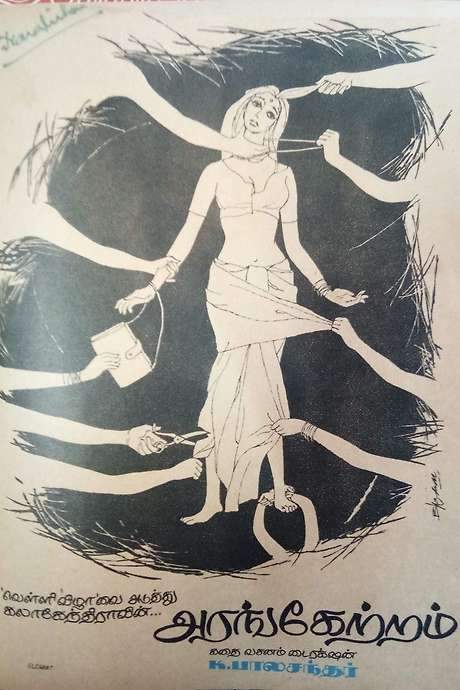
Arangetram (1973) movie poster

Characters & Themes

Arangetram (1973) Characters, Setting & Themes Explained

Release, runtime and language
1973 · 152 mins · Tamil
Loading streaming availability…
Directed by
K. Balachander
Starring
Kamal Haasan, Lakshmi, Jayasudha, Sivakumar, R. Neelakantan, Jayachitra

Lalitha, the eldest daughter of a Brahmin family, supports her eight siblings amid poverty. She takes a job that forces her into prostitution, using the earnings to provide for her brothers and sisters. When her relatives learn of her work they abandon her. Thangavelu, a man she once rejected, marries her, but she ultimately loses her sanity.

On this page (8)
  1. 1 Where to watch
  2. 2 Characters explained (11)
  3. 3 Where & when it takes place
  4. 4 Themes & meaning (4)
  5. 5 Character & meaning questions
  6. 6 Movie threads
  7. 7 Movies like Arangetram
  8. 8 Every angle
Loading streaming availability…

11 main characters · contains spoilers

Arangetram Characters Explained: Who Is Who

The main characters of Arangetram (1973), heroes and villains: what drives them, how they change over the course of the story and what each of them reveals about the film's bigger ideas.

  • Lalitha (Lakshmi)

    The eldest daughter who fights poverty by taking up work, eventually facing exploitation. Her arc spans courage, compromise, and the haunting consequences of her trauma, culminating in a difficult reckoning and a costly rescue by others.

    • 💃 Protagonist
    • 💪 Resilience
    • 🕊️ Sacrifice
  • Thyagu Shastrigal (Kamal Haasan)

    Ramu Shastrigal's aspiring son who dreams of becoming a doctor. His ambitions are tempered by family pressures and the evolving fortunes of the household, shaping his relationships and choices.

    • 🎯 Ambition
    • 👨‍⚕️ Doctor's dream
  • Ramu Shastrigal (S. V. Subbaiah)

    A rigid priest whose strict adherence to tradition creates conflict within the family and contributes to the hardships they face. His authority is challenged as the family navigates poverty and changing social norms.

    • 🧭 Authority
    • 🧱 Conservatism
  • Visalam (M. N. Rajam)

    The mother who endures hardship with quiet strength, seeking to hold the family together while supporting her children's ambitions and sacrifices.

    • 🌼 Maternal
    • 🛡️ Endurance
  • Janaki (M. S. Sundari Bai)

    The spendthrift sister whose arrival compounds poverty and tension within the household, underscoring the fragility of the family's finances.

    • 💳 Materialism
    • 🏃 Impulsivity
  • Devi (Jayasudha)

    The younger sister whose romance and marriage plans intersect with the family's struggles and Lalitha's sacrifices.

    • 💞 Love
    • 👰 Family ties
  • Mangalam (Jayachitra)

    A sister who achieves recognition as a singer, adding to the family’s changing fortunes and the social dynamics at play.

    • 🎤 Artist
    • 🌟 Fame
  • Thangavelu (Sivakumar)

    The neighbor who loves Lalitha, later returns after being thought dead and eventually marries her, symbolizing a potential redemptive arc.

    • 💔 Romance
    • 💡 Persistence
  • Pasupathy (Sasikumar)

    Son of a landlord who becomes Devi's fiancé, his interactions with Lalitha reflect the complexities of transactional relationships.

    • 💑 Relationship
    • 🗝️ Secrets
  • Nadesa Udayar (Senthamarai)

    Father of Thangavelu whose stance of strict hierarchy and social honor shapes the course of the family’s decisions.

    • 👨‍🏫 Patriarchy
    • 👥 Family Honor
  • Bhama (Tehsildar’s daughter)

    A love interest in the story who features in the engagement dynamics, illustrating the social entanglements surrounding Lalitha’s sacrifices.

    • 💍 Engagement
    • 🧭 Social ties

Last updated: October 04, 2025 at 14:55

Was this helpful?

Setting

Where and When Does Arangetram Take Place?

The setting of Arangetram (1973): the year and time period, the places and locations, and how they shape the characters, the mood and the tension of the story.

Time period

1970s

Set in the 1970s, the film portrays a society wrestling with traditional family values and rising economic pressures. It depicts limited social safety nets for vulnerable women, where ambition can collide with exploitation. The era's cultural norms shape the characters' choices, often punishing perceived breaches of propriety while rewarding perseverance.

Location

Madras, Hyderabad

The story unfolds across major urban centers of South India, with Madras (now Chennai) serving as the primary backdrop for Lalitha's work and medical ambitions. Hyderabad appears as another hub where she climbs the professional ladder, highlighting the opportunities and risks faced by women in bustling cities. The contrast between the family's modest home and these urban environments underscores the tension between traditional duties and modern aspirations.

  • 🏙️ City life
  • 🌆 Urban poverty

Last updated: October 04, 2025 at 14:55

Was this helpful?

4 major themes

Arangetram Meaning: Themes & Message Explained

What is Arangetram (1973) really about? The emotional, social and philosophical themes the film keeps returning to, its symbolism and the message beneath the surface.

  • Honor & Shame

    Lalitha's actions and her family's fortunes are judged through a rigid code of honor. The film critiques how women's sexuality becomes a battleground for family reputation. When Lalitha is exploited, the surrounding society blames her and the patriarchal structure fails to protect her. The narrative exposes the double standards that govern gender and social standing.

  • Power & Exploitation

    Lalitha is subjected to predatory demands from employers who confound sex, power, and money. The abuse she endures reveals the vulnerability of women navigating economic necessity in a male-dominated society. The story condemns exploitation and the social systems that allow it. It also shows moments of solidarity and rescue by others who recognize her dignity.

  • Resilience & Sacrifice

    Despite trauma, Lalitha maintains a thread of resilience, seeking to support her family and preserve dignity. The siblings' progress contrasts with her decline, highlighting the cost of sacrifice. The resolution offers a glimmer of redemption through the acts of Udaiyaar and Thangavelu, though the scars remain. The film emphasizes the endurance of the human spirit under social pressure.

  • Duty vs Ambition

    The family structure pits personal dreams against collective responsibility. Lalitha's pursuit of livelihood and Thyagu's medical ambition create tensions that pull the household apart. The narrative questions whether traditional duties should restrain individual progress. Ultimately, the characters navigate these conflicts with a mix of sacrifice and pragmatism.

Last updated: October 04, 2025 at 14:55

Was this helpful?

Character & theme questions

Arangetram Characters & Meaning: Your Questions Answered

The questions people ask about Arangetram (1973): who the characters really are, their relationships, what the symbols mean, where it takes place and what the movie is really about. Each answer contains spoilers.

Q1

Where does the story take place?

The film is set primarily in Madras (now Chennai), which serves as the main backdrop for Lalitha's work and ambitions. Hyderabad appears as another urban center where she progresses professionally. The contrast between the family's modest home and these bustling cities underscores the tension between traditional duties and modern aspirations in 1970s South India.

  • madras
  • chennai
  • hyderabad
  • setting
  • south india
  • urban poverty
Q2

When is the movie set?

Arangetram is set in the 1970s, during a period when Indian society was grappling with traditional family values and rising economic pressures. The era's cultural norms heavily influenced characters' choices, often punishing perceived breaches of propriety while rewarding perseverance and sacrifice.

  • 1970s
  • time period
  • era
  • historical context
  • 1970s india
Q3

What does the Honor & Shame theme explore?

The film critiques how women's sexuality becomes a battleground for family reputation. Lalitha's actions and her family's fortunes are judged through a rigid code of honor. When she is exploited, society blames her rather than the patriarchal structures that fail to protect her, exposing the double standards governing gender and social standing.

  • honor
  • shame
  • patriarchy
  • gender
  • social standing
  • family reputation
Q4

What does the Power & Exploitation theme depict?

Lalitha faces predatory demands from employers who conflate sex, power, and money, revealing the vulnerability of women navigating economic necessity in a male-dominated society. The film condemns both the exploitation she endures and the social systems that enable it, though it also shows moments of solidarity from those who recognize her dignity.

  • exploitation
  • power
  • abuse
  • economic necessity
  • male-dominated
  • vulnerability
Q5

What does the Resilience & Sacrifice theme represent?

Despite experiencing trauma, Lalitha maintains resilience, seeking to support her family and preserve her dignity. The siblings' progress contrasts sharply with her decline, highlighting the personal cost of sacrifice. The resolution offers partial redemption through Thangavelu and Udaiyaar's actions, though Lalitha carries lasting scars from her ordeal.

  • resilience
  • sacrifice
  • dignity
  • redemption
  • trauma
  • family support
Q6

What is the Duty vs Ambition theme about?

The family structure creates tension between personal dreams and collective responsibility. Lalitha's pursuit of livelihood and Thyagu's medical ambitions pull the household in different directions. The narrative questions whether traditional duties should restrain individual progress, with characters navigating these conflicts through a mix of sacrifice and pragmatism.

  • duty
  • ambition
  • family responsibility
  • individual dreams
  • tradition
  • conflict
Q7

Who is Lalitha in the story?

Lalitha is the eldest daughter of a Brahmin family who fights poverty by taking employment to support her eight siblings. Her journey involves courage, compromise, and the haunting consequences of her sacrifices, ultimately leading to exploitation and a difficult reckoning that requires rescue by others.

  • lalitha
  • protagonist
  • eldest daughter
  • sacrifice
  • brahmin family
Q8

Who is Thyagu and what is his role?

Thyagu Shastrigal, played by Kamal Haasan, is the aspiring son of Ramu Shastrigal who dreams of becoming a doctor. His ambitions are shaped by family pressures and the evolving fortunes of the household, influencing his relationships and the choices he makes throughout the story.

  • thyagu
  • kamal haasan
  • doctor
  • medical ambition
  • son
  • aspirations
Q9

Who is Thangavelu and what is his significance?

Thangavelu is a neighbor who loves Lalitha. After being thought dead, he returns and eventually marries her, offering a potential redemptive arc. His father Nadesa Udayar represents strict hierarchical social honor that shapes the family's decisions throughout the narrative.

  • thangavelu
  • neighbor
  • love interest
  • marriage
  • redemption
  • nadesa udayar
Q10

Who is Visalam and what role does she play?

Visalam, played by M. N. Rajam, is the mother who endures hardship with quiet strength. She seeks to hold the family together while supporting her children's ambitions and sacrifices, representing the matriarchal endurance central to the family's survival through poverty and tragedy.

  • visalam
  • mother
  • matriarch
  • strength
  • family unity
  • endurance
Q11

Who is Ramu Shastrigal and what is his role?

Ramu Shastrigal is a rigid priest who adheres strictly to tradition, creating internal family conflict. His strict adherence to traditional values contributes to the hardships the family faces, as his authority is challenged while navigating poverty and changing social norms.

  • ramu shastrigal
  • priest
  • tradition
  • authority
  • rigid
  • brahmin
Q12

What is the emotional tone of the film?

The film has a consistently dark and heavy emotional tone, dealing with serious themes of sexual exploitation and moral compromise. While there are acts of sacrifice and moments of solidarity, the overall mood remains grim. The pacing builds steadily from one hardship to the next, creating a sense of inevitable tragedy leading to a bittersweet resolution.

  • emotional tone
  • dark
  • heavy
  • tragedy
  • sacrifice
  • exploitation

Movie threads

More Movies Like Arangetram, by Mood & Story

Curated lists built around what makes Arangetram tick: the same mood, the same kind of story or the same emotional payoff. Each list explains why these movies belong together.

Devastating Social Realism Movies like Arangetram

Gritty dramas exposing the brutal cost of poverty and social hypocrisy. For viewers who appreciated the harsh realism of Arangetram, this section gathers movies that similarly explore the brutal impact of poverty and social hypocrisy. These films offer a sobering look at characters forced into impossible choices, delivering a heavy emotional experience.

  • somber
  • tragic
  • oppressive
  • desperate
  • harsh
  • gritty
  • Tone: dark, bleak, tragic
  • Pacing: steady, deliberate
Why these movies?

The story pattern: Stories in this thread typically follow a protagonist from a marginalized background whose attempts to survive or provide for their family lead them down a path of moral compromise and personal destruction. The narrative is a steady, often linear, descent into tragedy, driven by external societal forces.

Why they belong together: These films are grouped by their shared commitment to a dark, somber tone and a heavy emotional weight. They depict a harsh world where hope is scarce, and the pacing is deliberate, building a sense of inevitable doom rooted in social critique.

Movies with a Tragic Female Descent like Arangetram

Stories of women whose self-sacrifice leads to psychological ruin. If the tragic arc of Lalitha in Arangetram resonated with you, this collection features similar stories of women pushed to their limits. These films focus on female protagonists whose noble sacrifices lead to heartbreaking downfalls and psychological distress.

  • tragic
  • melancholic
  • devastating
  • desperate
  • somber
  • psychological
  • Tone: dark, melancholic, devastating
  • Pacing: steady, character-driven
Why these movies?

The story pattern: The narrative pattern centers on a female protagonist who endures extreme hardship and moral compromise for the sake of her loved ones. The story methodically charts her psychological decline, culminating in a bittersweet or tragic resolution where her sacrifices are ultimately unrecognized or lead to her destruction.

Why they belong together: These movies are united by a specific character arc: the self-sacrificing woman meeting a tragic end. They share a high intensity, a dark tone, and a steady pacing that makes the downfall feel inevitable, creating a consistently heavy and melancholic mood.

If you liked this

Movies Like Arangetram

Similar movies to Arangetram: the same genre, themes or kind of story. Each one comes with its own plot summary, timeline and ending explained.

Browse all movie summaries

Every angle

Arangetram (1973) Explained: Plot, Timeline & Characters

Everything about Arangetram in one place: what happens in the plot summary, the timeline in chronological order, the characters and meaning and a spoiler-free summary. What's After the Movie adds the cast, box office and post-credit scenes.

Coming soon on iOS and Android

The Plot Explained Movie Summary App

Plot summaries, endings explained and timelines on your phone. Catch up on any movie in minutes, save your favorites and never miss a twist again.

Be the first to know when we launch. Your email stays private, always.

Learn more about the app