Plot Explained Spoilers guaranteed!
Plot Explained

Browse by genre

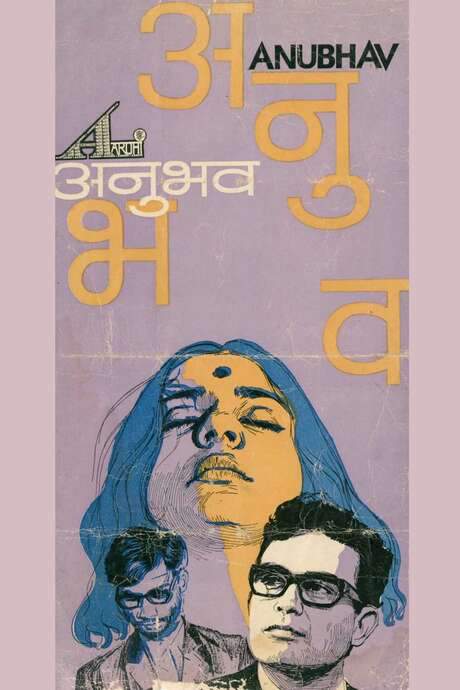
Anubhav (1971) movie poster

Timeline

Anubhav (1971) Timeline Explained – Every Event in Order

Release, runtime and language
1971 · 139 mins · Hindi
Loading streaming availability…
Directed by
Basu Bhattacharya
Starring
Tanuja Samarth, A.K. Hangal, Sanjeev Kumar, Dinesh Thakur, O. P. Kohli, Subir Sen

Newspaper editor Amar (Kumar) becomes increasingly distant from his wife Meeta (Tanuja) after hiring a new assistant, Shashi (Thakur), who is actually Meeta’s former lover. As Meeta’s affection shifts, Amar struggles to accept the loss of her love and the growing tension threatens both his marriage and his career.

On this page (6)
  1. 1 Where to watch
  2. 2 Events in order (12)
  3. 3 Timeline questions answered
  4. 4 Movie threads
  5. 5 Movies like Anubhav
  6. 6 Every angle
Loading streaming availability…

12 events in order · contains spoilers

Anubhav Timeline: Events in Chronological Order

Every key event of Anubhav (1971) in order, scene by scene, with when and where it takes place. Use it to untangle flashbacks, time jumps and parallel storylines, to refresh your memory before the sequel or to find the exact scene you are thinking of.

  1. Long-married couple with no children

    Amar Sen and Meeta Sen have been married for several years, yet they have not had children due to Amar's hectic work schedule. The lack of time for intimacy creates distance between them. Their relationship is strained by professional commitments.

    When
    Years into their marriage
    Where
    Home
  2. Meeta takes charge of the household

    Meeta decides to take matters into her own hands, removing the servants except Hari and running the entire household herself. This deliberate shift changes the dynamics at home and brings the couple closer. She asserts control over domestic life to create space for intimacy.

    When
    Soon after her decision to run the house herself
    Where
    Home
  3. Reignited closeness leads to intimacy

    Meeta's takeover of the household rekindles emotional closeness between them. As they reconnect, their intimacy returns, signaling a renewed bond. The home becomes their space to rebuild their relationship.

    When
    Shortly after Meeta's decision
    Where
    Home
  4. Shashi Bhushan returns

    Meeta's old flame Shashi Bhushan re-enters her life and unexpectedly joins the same organization as Amar. His reappearance stirs old emotions and vulnerability within their marriage. The dynamic shifts as past relationships threaten the present harmony.

    When
    Later
    Where
    Office
  5. Shashi joins the same organization as Amar

    Shashi's return and his placement in the same company threaten the stability of Amar and Meeta's marriage. The past relationship starts casting a shadow over their present happiness. Amar becomes wary of Shashi's influence.

    When
    Some time later
    Where
    Office
  6. Amar plans to return to work; catches sight of Shashi with Meeta

    One day at home, Amar and Shashi discuss work, and Amar reveals he'll join the office from tomorrow after recovering from flu. After Shashi leaves, Amar sees him talking with Meeta, which deepens his suspicion. The incident foreshadows the strain over loyalty and trust.

    When
    The same day
    Where
    Home
  7. Confrontation over Shashi's presence

    The next day, Amar asks Meeta to call for Shashi in an intimidating and arrogant tone. After Shashi leaves, Amar directly confronts Meeta about their past. The confrontation exposes the fragility of their marriage.

    When
    Next day
    Where
    Home
  8. Meeta explains their past relationship

    Meeta explains their past relationship to Amar, clarifying the nature of her feelings and trying to reassure him. She offers her side of the story, acknowledging the fear they both face. The exchange deepens the tension but maintains a conversational tone.

    When
    After the confrontation
    Where
    Home
  9. Shashi resigns; Amar asks for resignation

    Amar requests Shashi resign from the organization, signaling a desire to preserve his marriage. Shashi has already prepared a resignation letter, recognizing that he is part of the upheaval. The formal resignation becomes a pivotal moment for all involved.

    When
    Following the confrontation
    Where
    Office
  10. The past vs. present philosophy

    Amar articulates a key idea: the past comes between us only when we aren't able to live the present completely. He suggests that embracing the present can heal the rift in their relationship. The sentiment shifts the emotional balance toward reconciliation.

    When
    After the confrontation
    Where
    Home
  11. Meeta's guarded humor; mutual understanding

    After returning home, Amar tries to say something, but Meeta sidesteps with playful circumlocution, indicating that she has understood that he has understood. The couple reads each other clearly and lets the tension dissolve. The exchange marks a turning point toward reconciliation.

    When
    Same day
    Where
    Home
  12. Ending embrace

    The film closes with Amar and Meeta embracing, choosing to live in the present together despite the past. Their renewed closeness resolves the immediate threat to their marriage and leaves their relationship hopeful.

    When
    Ending
    Where
    Home

Last updated: February 24, 2026 at 13:52

Was this helpful?

Timeline questions answered

Anubhav Timeline Explained: Your Questions Answered

When does it happen, and why in that order? The questions people ask about the chronology of Anubhav (1971): time jumps, flashbacks, cause and effect between scenes and the correct order of events, each answered with spoilers.

Q1

Why did Meeta fire the household servants?

Meeta fired most of the household servants, keeping only Hari, because she wanted to take charge of running the home herself. With fewer staff, she and Amar were forced to spend more time together in their private space, creating an environment conducive to rebuilding their emotional and physical connection.

Foreshadowing: Earlier, the couple's lack of intimacy was attributed to Amar's busy schedule leaving no room for children or closeness.

  • meeta
  • servants
  • household
  • intimacy
  • marriage
Q2

Why does Amar become suspicious of Shashi?

Amar becomes suspicious when he sees Shashi talking with Meeta at home after their work discussion. Since Shashi has joined the same organization where Amar works, and Amar already knows Shashi as Meeta's former flame, the sight of them conversing privately triggers his jealousy and concern about their past relationship.

Foreshadowing: The timeline notes that Shashi's return as Meeta's old flame 'stirs old emotions and vulnerability' within the marriage.

  • amar
  • shashi
  • suspicion
  • jealousy
  • meeta
Q3

Why did Shashi already have his resignation letter ready?

Shashi had already written his resignation letter because he recognized that his mere presence in the organization was causing upheaval in Amar and Meeta's marriage. He was aware that his past relationship with Meeta made him a catalyst for the domestic crisis, even without any intentional wrongdoing.

Foreshadowing: The timeline notes Shashi was aware he was 'a catalyst for the domestic upheaval' before the confrontation even occurred.

  • shashi
  • resignation
  • letter
  • awareness
Q4

What does Amar mean when he says the past comes between us only when we aren't able to live the present completely?

Amar's philosophical statement means that lingering feelings about the past, whether regret, jealousy, or unresolved emotions, only damage a relationship when people fail to fully invest themselves in the present moment. By embracing their current life together, Amar suggests he and Meeta can overcome the shadow of her past relationship with Shashi.

Foreshadowing: This quote directly follows the confrontation about Meeta's past and represents the turning point toward reconciliation.

  • past
  • present
  • philosophy
  • reconciliation
  • amar
Q5

What was the nature of Meeta and Shashi's past relationship?

Shashi Bhushan was Meeta's former lover before she married Amar. When Shashi re-enters her life and joins the same organization, old emotions resurface, threatening the stability of her marriage. Meeta eventually explains this past to Amar during their confrontation.

Foreshadowing: The timeline explicitly identifies Shashi as 'Meeta's old flame' whose reappearance 'stirs old emotions.'

  • shashi
  • meeta
  • past relationship
  • lover
  • history
Q6

Why does Meeta respond with humor and evasion when Amar tries to talk at the end?

When Amar returns home wanting to discuss their situation, Meeta uses playful circumlocution and light evasion because she has already understood what he wants to say, she perceives that he has understood as well. Her response shows emotional intelligence; rather than dwelling on the painful confrontation, she gracefully acknowledges their mutual understanding and moves toward reconciliation without needing explicit words.

Foreshadowing: The exchange builds on Amar's earlier statement about living in the present rather than the past.

  • meeta
  • humor
  • understanding
  • reconciliation
  • ending
Q7

Why do Amar and Meeta have no children?

Amar and Meeta have no children because Amar's demanding work schedule as a newspaper editor leaves him with little time for intimacy. This absence of physical closeness is what initially creates distance in their marriage, prompting Meeta to take charge of the household to create more couple time.

Foreshadowing: The opening timeline establishes that 'the lack of time for intimacy creates distance between them' due to professional commitments.

  • children
  • intimacy
  • work schedule
  • amar
  • meeta
Q8

What does the ending embrace signify in the film?

The closing embrace represents Amar and Meeta's decision to move forward together despite the past. Rather than letting Shashi's reappearance destroy their marriage, they choose to confront and accept what happened, committing to living in the present together. The ending is hopeful, suggesting their relationship has been strengthened through this crisis.

Foreshadowing: This follows the philosophical moment where Amar declares the past should not come between them when living fully in the present.

  • ending
  • embrace
  • resolution
  • reconciliation
  • marriage

Movie threads

More Movies Like Anubhav, by Mood & Story

Curated lists built around what makes Anubhav tick: the same mood, the same kind of story or the same emotional payoff. Each list explains why these movies belong together.

Movies about marital strife and reconciliation like Anubhav

Stories where strained marriages face an internal crisis but find a hopeful path forward. If you enjoyed the emotional journey of 'Anubhav,' explore more dramas about couples confronting marital strife and finding their way back to each other. These films share a focus on domestic tension, emotional affairs, and the quiet hope of reconciliation.

  • domestic drama
  • marital tension
  • emotional affair
  • introspective
  • reconciliation
  • strained relationship
  • Tone: tense, melancholic, reflective
  • Pacing: steady, methodical
Why these movies?

The story pattern: The narrative pattern follows a stable relationship being tested by an internal or external stressor, leading to a period of tension, suspicion, and emotional distance. The conflict is primarily psychological and relational, building steadily towards a climax that forces introspection, ultimately allowing for a cautious and hopeful resolution.

Why they belong together: These films are grouped together because they share a central focus on saving a marriage from collapse. They prioritize emotional realism over melodrama, feature a steady pacing that allows for character reflection, and culminate in a reconciliatory ending that feels earned.


Tense domestic dramas with a quiet crisis like Anubhav

Character-driven stories where tension simmers beneath the surface of a seemingly normal life. For viewers who liked the tense, atmospheric feel of 'Anubhav,' this collection highlights character-driven dramas where emotional tension slowly escalates within a domestic setting. These films explore how quiet crises in relationships can be just as gripping as dramatic events.

  • tense
  • domestic
  • introspective
  • psychological drama
  • strained
  • melancholic
  • Tone: tense, introspective, strained
  • Pacing: steady, slow burn
Why these movies?

The story pattern: The narrative often begins with an established but fragile status quo. The introduction of a disruptive element—a person, a memory, or a secret—creates a slow-burning tension that methodically escalates. The plot is driven by internal conflict and subtle emotional shifts rather than external action, leading to a climax that is more about emotional realization than physical confrontation.

Why they belong together: These movies are connected by their shared atmosphere of subdued tension and focus on the psychological unraveling of characters within their own homes. They prioritize mood and emotional realism, often featuring a steady pace and medium intensity that keeps the viewer engaged in the characters' internal struggles.

If you liked this

Movies Like Anubhav

Similar movies to Anubhav: the same genre, themes or kind of story. Each one comes with its own plot summary, timeline and ending explained.

Browse all movie summaries

Every angle

Anubhav (1971) Explained: Plot, Timeline & Characters

Everything about Anubhav in one place: what happens in the plot summary, the timeline in chronological order, the characters and meaning and a spoiler-free summary. What's After the Movie adds the cast, box office and post-credit scenes.

Coming soon on iOS and Android

The Plot Explained Movie Summary App

Plot summaries, endings explained and timelines on your phone. Catch up on any movie in minutes, save your favorites and never miss a twist again.

Be the first to know when we launch. Your email stays private, always.

Learn more about the app