Plot Explained Spoilers guaranteed!
Plot Explained

Browse by genre

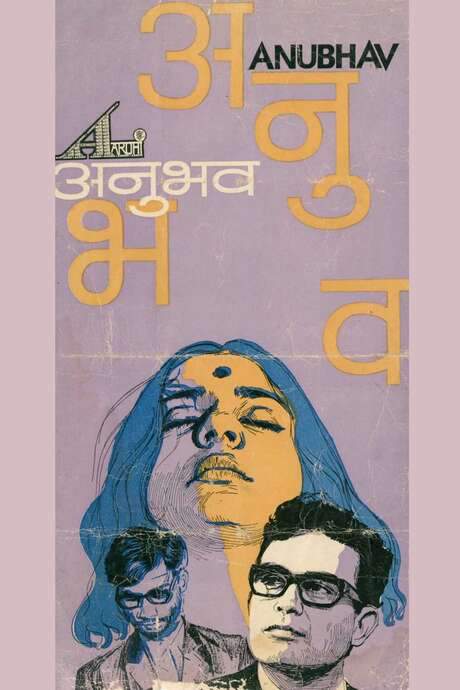
Anubhav (1971) movie poster

Characters & Themes

Anubhav (1971) Characters, Setting & Themes Explained

Release, runtime and language
1971 · 139 mins · Hindi
Loading streaming availability…
Directed by
Basu Bhattacharya
Starring
Tanuja Samarth, A.K. Hangal, Sanjeev Kumar, Dinesh Thakur, O. P. Kohli, Subir Sen

Newspaper editor Amar (Kumar) becomes increasingly distant from his wife Meeta (Tanuja) after hiring a new assistant, Shashi (Thakur), who is actually Meeta’s former lover. As Meeta’s affection shifts, Amar struggles to accept the loss of her love and the growing tension threatens both his marriage and his career.

On this page (8)
  1. 1 Where to watch
  2. 2 Characters explained (4)
  3. 3 Where & when it takes place
  4. 4 Themes & meaning (3)
  5. 5 Character & meaning questions
  6. 6 Movie threads
  7. 7 Movies like Anubhav
  8. 8 Every angle
Loading streaming availability…

4 main characters · contains spoilers

Anubhav Characters Explained: Who Is Who

The main characters of Anubhav (1971), heroes and villains: what drives them, how they change over the course of the story and what each of them reveals about the film's bigger ideas.

  • Meeta Sen (Tanuja)

    played by Tanuja Samarth

    Meeta is a married woman who initiates a bold shift in their domestic life by running the household herself after removing most of the servants. Her initiative to rekindle intimacy with Amar leads to a more equal, communicative dynamic between them. She navigates the resurfacing of her past with tact and wit, steering the relationship toward reconciliation.

    • 💪 Empowerment
    • 🏠 Domestic leadership
    • 💬 Communication
  • Amar Sen (Sanjeev Kumar)

    Amar is a devoted, working husband whose illness and stress expose vulnerability and a fear of losing his wife. He confronts Meeta about her past with Shashi, and his insistence on dealing with the intruding past becomes a key turning point. He seeks to preserve their marriage by addressing tensions directly and choosing to live in the present with Meeta.

    • 💼 Professional life
    • 🧭 Trust
    • 🔥 Jealousy
  • Shashi Bhushan (Dinesh Thakur)

    Shashi is Meeta's former lover who re-enters their lives and is employed in the same organization as Amar, reigniting old emotions. His presence destabilizes the marriage, highlighting how unresolved history can influence current decisions. He chooses to resign when he realizes his involvement is harming the couple, effectively stepping back to allow them a chance at harmony.

    • 🔥 Temptation
    • 💬 Old flame
    • 🚶 Exit
  • Hari (A. K. Hangal)

    played by A.K. Hangal

    Hari is the loyal household servant who remains in the home as others are dismissed, offering a steady, unobtrusive presence amid upheaval. He witnesses the evolving power dynamics and the strains of secrecy within the marriage. Hari's quiet reliability contrasts with the couple's volatile emotions, underscoring the routine of daily life outside their conflicts.

    • 🤝 Loyalty
    • 🧰 Reliability

Last updated: February 19, 2026 at 09:18

Was this helpful?

Setting

Where and When Does Anubhav Take Place?

The setting of Anubhav (1971): the year and time period, the places and locations, and how they shape the characters, the mood and the tension of the story.

Time period

Location

Altamount Road, Mumbai, India

The action unfolds primarily inside Meeta's flat on Altamount Road in Mumbai, turning a single urban residence into the stage for intimate and relational drama. The apartment environment functions as a pressure cooker where marriage, loyalty, and desire are negotiated. This compact urban setting reflects a middle-class Indian milieu where home life and personal choices drive the plot.

  • 🏙️ Urban setting
  • 🏡 Domestic life

Last updated: February 19, 2026 at 09:18

Was this helpful?

3 major themes

Anubhav Meaning: Themes & Message Explained

What is Anubhav (1971) really about? The emotional, social and philosophical themes the film keeps returning to, its symbolism and the message beneath the surface.

  • Marriage and Intimacy

    The film centers on how a long-married couple rekindles closeness after Meeta takes charge of the household. Their evolving intimacy is shown as a negotiation of needs, independence, and mutual understanding. The narrative suggests that love can be sustained through proactive effort, communication, and willingness to adapt within a relationship.

  • Past vs Present

    Meeta's old relationship with Shashi reappears and tests the couple's current bond. Amar’s line about the past intruding when the present isn't fully lived highlights the tension between memory and reality. The story explores how dwelling on the past can threaten otherwise solid present commitments, and how reconciliation hinges on living in the moment together.

  • Power and Domestic Dynamics

    Meeta takes control of the house, reshaping the power balance in her marriage by managing the home herself after dismissing many servants. This shift reveals how authority, trust, and gender roles influence the relationship. The eventual reconciliation underscores a shared responsibility and mutual respect as the path to stability.

Last updated: February 19, 2026 at 09:18

Was this helpful?

Character & theme questions

Anubhav Characters & Meaning: Your Questions Answered

The questions people ask about Anubhav (1971): who the characters really are, their relationships, what the symbols mean, where it takes place and what the movie is really about. Each answer contains spoilers.

Q1

Where is the movie set?

The film takes place primarily in a flat on Altamount Road in Mumbai, India. This urban domestic setting serves as the stage for the entire story, with the apartment functioning as a pressure cooker where marriage, loyalty, and desire are negotiated.

  • mumbai
  • altamount road
  • setting
  • india
  • apartment
Q2

What is the main theme about marriage in the movie?

The film centers on how a long-married couple rekindles closeness after Meeta takes charge of the household. Their evolving intimacy is portrayed as a negotiation of needs, independence, and mutual understanding, suggesting that love can be sustained through proactive effort, communication, and willingness to adapt.

  • marriage
  • love
  • intimacy
  • relationship
  • communication
Q3

How does the film explore the past versus present?

Meeta's old relationship with Shashi reappears and tests the couple's current bond. Amar's line about the past intruding when the present isn't fully lived highlights the tension between memory and reality, exploring how dwelling on the past can threaten otherwise solid present commitments.

  • past
  • present
  • memory
  • history
  • relationship threats
Q4

What role does domestic power play in the story?

Meeta takes control of the house after dismissing servants, reshaping the power balance in her marriage. This shift reveals how authority, trust, and gender roles influence the relationship. The eventual reconciliation underscores shared responsibility and mutual respect as the path to stability.

  • power
  • domestic
  • gender roles
  • household
  • marriage dynamics
Q5

Who is Meeta and what is her role in the story?

Meeta is a married woman who initiates a bold shift in their domestic life by running the household herself after removing most servants. Her initiative to rekindle intimacy with Amar leads to a more equal, communicative dynamic between them, and she navigates the resurfacing of her past with tact and wit.

  • meeta
  • character
  • role
  • household
  • reconciliation
Q6

Who is Amar and what does he want?

Amar is a newspaper editor and devoted husband whose illness and stress expose vulnerability and a fear of losing his wife. He confronts Meeta about her past with Shashi, and his insistence on dealing with the intruding past becomes a key turning point as he seeks to preserve their marriage.

  • amar
  • newspaper editor
  • husband
  • character motivation
Q7

Who is Shashi and why is he important?

Shashi is Meeta's former lover who re-enters their lives and is employed in the same organization as Amar, reigniting old emotions. His presence destabilizes the marriage, highlighting how unresolved history can influence current decisions. He ultimately chooses to resign when he realizes his involvement is harming the couple.

  • shashi
  • former lover
  • character
  • employment
  • conflict
Q8

When does the story take place?

The film was released in 1971 and depicts a middle-class Indian milieu in Mumbai. While no specific era is stated, the setting reflects the social customs and domestic arrangements typical of urban India during that period.

  • time period
  • 1970s
  • mumbai
  • era
  • india
Q9

What is the tone and mood of the film?

The film's tone is predominantly tense due to the constant underlying threat that Shashi's presence poses to the marriage, creating an atmosphere of suspicion and emotional strain. The journey is one of quiet crisis and reflection, leading to a hopeful and reconciliatory ending.

  • tone
  • mood
  • emotional
  • intense
  • resolution
Q10

Who is Hari and what function does he serve?

Hari is the loyal household servant who remains in the home as others are dismissed, offering a steady, unobtrusive presence amid upheaval. He witnesses the evolving power dynamics and the strains of secrecy within the marriage, his quiet reliability contrasting with the couple's volatile emotions.

  • hari
  • servant
  • character
  • witness
  • household

Movie threads

More Movies Like Anubhav, by Mood & Story

Curated lists built around what makes Anubhav tick: the same mood, the same kind of story or the same emotional payoff. Each list explains why these movies belong together.

Movies about marital strife and reconciliation like Anubhav

Stories where strained marriages face an internal crisis but find a hopeful path forward. If you enjoyed the emotional journey of 'Anubhav,' explore more dramas about couples confronting marital strife and finding their way back to each other. These films share a focus on domestic tension, emotional affairs, and the quiet hope of reconciliation.

  • domestic drama
  • marital tension
  • emotional affair
  • introspective
  • reconciliation
  • strained relationship
  • Tone: tense, melancholic, reflective
  • Pacing: steady, methodical
Why these movies?

The story pattern: The narrative pattern follows a stable relationship being tested by an internal or external stressor, leading to a period of tension, suspicion, and emotional distance. The conflict is primarily psychological and relational, building steadily towards a climax that forces introspection, ultimately allowing for a cautious and hopeful resolution.

Why they belong together: These films are grouped together because they share a central focus on saving a marriage from collapse. They prioritize emotional realism over melodrama, feature a steady pacing that allows for character reflection, and culminate in a reconciliatory ending that feels earned.


Tense domestic dramas with a quiet crisis like Anubhav

Character-driven stories where tension simmers beneath the surface of a seemingly normal life. For viewers who liked the tense, atmospheric feel of 'Anubhav,' this collection highlights character-driven dramas where emotional tension slowly escalates within a domestic setting. These films explore how quiet crises in relationships can be just as gripping as dramatic events.

  • tense
  • domestic
  • introspective
  • psychological drama
  • strained
  • melancholic
  • Tone: tense, introspective, strained
  • Pacing: steady, slow burn
Why these movies?

The story pattern: The narrative often begins with an established but fragile status quo. The introduction of a disruptive element—a person, a memory, or a secret—creates a slow-burning tension that methodically escalates. The plot is driven by internal conflict and subtle emotional shifts rather than external action, leading to a climax that is more about emotional realization than physical confrontation.

Why they belong together: These movies are connected by their shared atmosphere of subdued tension and focus on the psychological unraveling of characters within their own homes. They prioritize mood and emotional realism, often featuring a steady pace and medium intensity that keeps the viewer engaged in the characters' internal struggles.

If you liked this

Movies Like Anubhav

Similar movies to Anubhav: the same genre, themes or kind of story. Each one comes with its own plot summary, timeline and ending explained.

Browse all movie summaries

Every angle

Anubhav (1971) Explained: Plot, Timeline & Characters

Everything about Anubhav in one place: what happens in the plot summary, the timeline in chronological order, the characters and meaning and a spoiler-free summary. What's After the Movie adds the cast, box office and post-credit scenes.

Coming soon on iOS and Android

The Plot Explained Movie Summary App

Plot summaries, endings explained and timelines on your phone. Catch up on any movie in minutes, save your favorites and never miss a twist again.

Be the first to know when we launch. Your email stays private, always.

Learn more about the app