Plot Explained Spoilers guaranteed!
Plot Explained

Browse by genre

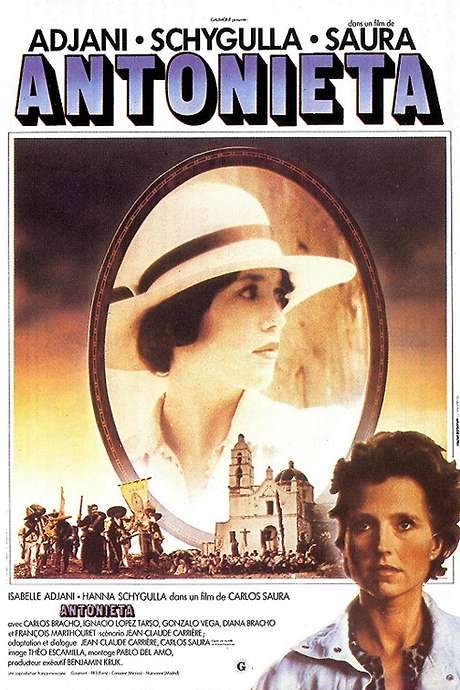
Antonieta (1982) movie poster

Timeline

Antonieta (1982) Timeline Explained – Every Event in Order

Release, runtime and language
1982 · 108 mins · Spanish
Directed by
Carlos Saura
Starring
Diego Luna, Hanna Schygulla, Isabelle Adjani, Ignacio López Tarso, José Lavat, Gonzalo Vega

Anna, a psychologist, is conducting a study on renowned women who have died by suicide. She becomes especially focused on Antonieta Rivas Mercado, who ended her life in 1931 in the Notre‑Dam cathedral in Paris, exploring the motives behind her tragic act.

On this page (5)
  1. 1 Events in order (12)
  2. 2 Timeline questions answered
  3. 3 Movie threads
  4. 4 Movies like Antonieta
  5. 5 Every angle

12 events in order · contains spoilers

Antonieta Timeline: Events in Chronological Order

Every key event of Antonieta (1982) in order, scene by scene, with when and where it takes place. Use it to untangle flashbacks, time jumps and parallel storylines, to refresh your memory before the sequel or to find the exact scene you are thinking of.

  1. Anna begins her research on Antonieta

    Anna, a modern-day Parisian psychologist, investigates female suicide cases from the 20th century and becomes fascinated by Antonieta Rivas Mercado's story. She outlines her goal to uncover patterns and motives by tracing Antonieta's life and correspondence. This sets up the unfolding investigation that threads present and past.

    When
    Present day
    Where
    Paris
  2. Anna travels to Mexico for firsthand accounts

    Anna travels to Mexico to interview people who knew Antonieta and to gather firsthand clues about her life. She begins with Juana and other informants who frame Antonieta within the era's social and political upheavals. The journey marks the shift from theory to memory in the investigation.

    When
    Present day
    Where
    Mexico
  3. Juana places Antonieta in a stormy era

    Juana, a Mexican librarian, frames Antonieta's life within the stormy political landscape of the 1910s–1920s. She explains how the turmoil shaped Antonieta's choices and passions. Her perspective anchors the biographical exploration.

    When
    1910s–1920s
    Where
    Mexico City
  4. Antonieta's childhood and public image

    Antonieta is the daughter of a famous architect, and as a child she posed for the golden angel atop the Column of Independence in Mexico City. This early public exposure foreshadows her later involvement with influential cultural figures. The image of ascent and visibility recurs throughout her life.

    When
    early 20th century
    Where
    Mexico City
  5. Vargas recounts his first meeting with Antonieta

    Vargas, a poet, recounts for Ana how he first met Antonieta and how they became friends. The narration moves between present and past, reflecting the film's structure of memory and storytelling. These recollections link her intimate life with broader historical currents.

    When
    Present day (with flashbacks)
    Where
    Paris
  6. Antonieta marries and loves Manuel Lozano

    As a young woman, Antonieta marries but soon leaves her husband and falls madly in love with painter Manuel Rodríguez Lozano. Manuel is married and homosexual, so the love remains unrequited, developing into a long, intense, but platonic bond. Antonieta channels this passion into her writing and advocacy.

    When
    early 20th century
    Where
    Mexico
  7. Letters to the painter

    During the years of unrequited love, Antonieta writes Manuel many letters that reveal her intellect, longing, and creative energy. These letters are later published in a book, ensuring her voice endures beyond their relationship. The correspondence underscores her inner life and literary talent.

    When
    early 20th century
    Where
    Mexico
  8. Leon adds depth to Antonieta's story

    Leon, a Mexican historian, provides further illustration of Antonieta's life, emphasizing her enduring devotion to the painter. He situates her within the cultural and political currents of the era and enriches the biographical portrait.

    When
    early 20th century
    Where
    Mexico City
  9. Antonieta meets Vasconcelos

    Antonieta meets José Vasconcelos, a Mexican intellectual running for President on a platform of mass education, and becomes his lover and closest adviser. Her influence helps shape his political vision and strategies.

    When
    late 1920s–early 1930s
    Where
    Mexico
  10. Exile to Paris and fading idealism

    After Vasconcelos is politically defeated, Antonieta accompanies him into exile in Paris, and the couple's political idealism fades into disillusionment. They navigate a world of exile, writing, and shifting loyalties.

    When
    1930s
    Where
    Paris, France
  11. A defining moment of separation

    In Paris, she asks Vasconcelos whether he still needs her, and his reply—'no one needs anyone, only God'—marks a turning point in their relationship and in her sense of purpose. The moment crystallizes a shift from mutual reliance to personal sovereignty or solitude.

    When
    1930s
    Where
    Paris
  12. Antonieta's final act in Notre Dame

    In Notre Dame's pews, Antonieta levels a pistol to her heart and dies, the film's culmination that resonates as a dramatic and tragic testament to her life and the era she inhabited. The act is both a personal catastrophe and a symbol within Anna's investigation.

    When
    1930s
    Where
    Notre Dame Cathedral, Paris

Last updated: October 09, 2025 at 14:50

Was this helpful?

Timeline questions answered

Antonieta Timeline Explained: Your Questions Answered

When does it happen, and why in that order? The questions people ask about the chronology of Antonieta (1982): time jumps, flashbacks, cause and effect between scenes and the correct order of events, each answered with spoilers.

Q1

Why did Antonieta commit suicide in Notre Dame Cathedral?

Antonieta took her own life in Notre Dame Cathedral as the final act of despair after years of unfulfilled love and political disillusionment. She had followed José Vasconcelos into exile in Paris, but their relationship had deteriorated. When she asked Vasconcelos if he still needed him, he replied that no one truly needs anyone except perhaps God. This moment of emotional abandonment, combined with her lifelong struggles with unrequited love for the painter Manuel Rodríguez Lozano and the collapse of her political idealism, led her to the tragic final act in the cathedral.

Foreshadowing: The earlier image of Antonieta as a child posing for the golden angel atop the Column of Independence foreshadows her later life as a public figure who sought visibility and meaning, ultimately finding neither.

  • antoniet suicide
  • notre dame
  • causes of suicide
  • emotional despair
Q2

What was Antonieta's relationship with Manuel Rodríguez Lozano like?

Antonieta fell deeply in love with painter Manuel Rodríguez Lozano, but the relationship remained platonic throughout. Manuel was already married and many believed him to be homosexual, so her love was unrequited. Despite this, their connection lasted for several years, during which Antonieta wrote him many passionate letters that were later published in a book. She channeled her intense emotional longing into her writing and intellectual work.

  • manuel rodriguez lozano
  • unrequited love
  • platonic relationship
  • letters
Q3

Why did Antonieta become involved with José Vasconcelos?

Antonieta became involved with José Vasconcelos, a prominent Mexican intellectual who was running for President on a platform of mass education, because she was drawn to his political vision and idealism. She became both his lover and one of his closest advisers, using her intellectual abilities to help shape his political strategies. Their relationship combined her personal longing with her desire to contribute to meaningful political change.

Foreshadowing: The narrative establishes Antonieta's pattern of seeking connection with influential, intellectually ambitious men who could give her life purpose and direction.

  • jose vasconcelos
  • lover
  • adviser
  • mexican politics
  • presidential candidate
Q4

What did Vasconcelos mean when he said no one needs anyone in Paris?

When Antonieta asked Vasconcelos in Paris whether he still needed her, he replied that no one truly needs anyone except perhaps God. This response marked a definitive turning point in their relationship, signaling that their earlier political idealism and personal connection had faded. The reply conveyed a sense of emotional abandonment and philosophical isolation that left Antonieta feeling superfluous to his life and purpose.

  • vasconcelos paris
  • no one needs anyone
  • relationship breakdown
  • exile
Q5

What is the significance of Antonieta posing for the golden angel as a child?

Antonieta was the daughter of a famous architect, and as a child she posed for the golden angel atop the Column of Independence in Mexico City. This detail establishes her early exposure to public attention and suggests a pattern of visibility and aspiration that would define her adult life. The image of ascent and public gaze recurs throughout her narrative, foreshadowing her later involvement with influential cultural and political figures.

  • childhood
  • golden angel
  • column of independence
  • architect daughter
Q6

Why is Anna researching women who committed suicide?

Anna, a modern-day Parisian psychologist, is conducting an academic study on women who died by suicide in the 20th century. She becomes specifically fascinated by Antonieta Rivas Mercado and travels to Mexico to investigate the patterns and motives behind her tragic act. Anna's investigation serves as the narrative framework that connects the present to Antonieta's past, allowing the film to explore the psychological and historical factors that led to her suicide.

  • anna psychologist
  • research
  • suicide study
  • investigator
Q7

What happened to Antonieta after Vasconcelos was defeated politically?

After José Vasconcelos was defeated in his presidential campaign, Antonieta accompanied him into exile in Paris. Their political idealism, which had defined their relationship in Mexico, faded into disillusionment as they navigated life as exiles in a foreign city. It was during this period of exile that their relationship deteriorated, culminating in the devastating conversation where Vasconcelos told her no one needs anyone.

  • vasconcelos defeat
  • political exile
  • paris
  • disillusionment
Q8

Why did Antonieta leave her husband?

Antonieta married young but eventually left her husband to pursue a life of greater intellectual and emotional freedom. This decision reflected her restless nature and her search for deeper meaning and connection. After leaving her husband, she became involved in Mexico's cultural and political circles, eventually meeting the painter Manuel Rodríguez Lozano, with whom she fell deeply in love.

  • marriage
  • divorce
  • husband
  • independence
Q9

How did Mexico's turbulent political era influence Antonieta's life?

Antonieta came of age during the stormy decades of the 1910s and 1920s in Mexico, a period marked by revolution, social upheaval, and cultural transformation. This turbulent historical context shaped her choices, political engagements, and relationships with influential figures like Vasconcelos. The era's instability and the clash between traditional values and modernist ideals created the environment in which Antonieta sought meaning through writing, activism, and her relationships with artists and intellectuals.

  • mexican revolution
  • 1910s
  • 1920s
  • political turmoil
  • historical context
Q10

What makes Antonieta's life story tragic?

Antonieta's life represents a tragedy of unfulfilled longing and lost purpose. She never achieved the love she desperately wanted from the painter Manuel Rodríguez Lozano, her political aspirations with Vasconcelos ended in defeat and exile, and she ultimately felt dispensable to the man she had supported. Her suicide in Notre Dame Cathedral was the culmination of a life marked by emotional deprivation, failed idealism, and a desperate search for meaning that she could not find in love or politics.

  • tragedy
  • unfulfilled love
  • failed idealism
  • despair
  • loneliness

Movie threads

More Movies Like Antonieta, by Mood & Story

Curated lists built around what makes Antonieta tick: the same mood, the same kind of story or the same emotional payoff. Each list explains why these movies belong together.

Tragic Historical Biographies like Antonieta

Intimate portraits of real-life figures whose passionate ideals end in despair. If you were moved by Antonieta's exploration of a tragic artist's life, discover other movies like it. These films focus on true stories of passionate historical figures whose lives ended in sorrow, blending intellectual depth with heavy emotional weight for a melancholic and absorbing experience.

  • historical
  • tragic
  • passionate
  • somber
  • reflective
  • biographical
  • Tone: melancholic, tragic, passionate
  • Pacing: slow, reflective
Why these movies?

The story pattern: Stories in this thread typically follow a biographical arc, tracing the subject's rise, their passionate involvement in art or politics, and the gradual accumulation of setbacks—unrequited love, exile, ideological disillusionment—that leads to a tragic conclusion, often suicide or an early death. The narrative is often structured to build a sense of inevitable doom.

Why they belong together: Movies are grouped here for their shared focus on real, historically significant individuals whose lives were defined by intense passion and ended in tragedy. They share a melancholic tone, a reflective pacing that allows for deep character study, and a profound emotional weight stemming from the collision of grand ideals with a cruel reality.

Movies that Unravel a Tragic Past like Antonieta

A present-day inquiry slowly uncovers the layers of a historical personal tragedy. For viewers who enjoyed the investigative structure of Antonieta, this section highlights similar movies. Discover films where a modern-day inquiry into a historical death or tragedy reveals a deeply personal story of love, art, and despair, creating a compelling blend of mystery and profound sadness.

  • investigative
  • non-linear
  • tragic
  • reflective
  • unraveling
  • historical mystery
  • Tone: reflective, somber, investigative
  • Pacing: slow, deliberate, non-linear
Why these movies?

The story pattern: The narrative pattern involves a parallel structure between two timelines. The present-day investigation provides a framework of intellectual curiosity and emotional distance, while flashbacks to the past deliver the core emotional drama. The two timelines converge to answer the central 'why,' revealing motivations that are deeply human and tragically flawed.

Why they belong together: These movies are connected by their unique narrative structure and emotional mix. They combine the procedural, intellectual engagement of a mystery with the heavy emotional payoff of a historical tragedy. The contrast between the calm investigator and the turbulent subject creates a specific, reflective tension that defines the viewing experience.

If you liked this

Movies Like Antonieta

Similar movies to Antonieta: the same genre, themes or kind of story. Each one comes with its own plot summary, timeline and ending explained.

Browse all movie summaries

Every angle

Antonieta (1982) Explained: Plot, Timeline & Characters

Everything about Antonieta in one place: what happens in the plot summary, the timeline in chronological order, the characters and meaning and a spoiler-free summary. What's After the Movie adds the cast, box office and post-credit scenes.

Coming soon on iOS and Android

The Plot Explained Movie Summary App

Plot summaries, endings explained and timelines on your phone. Catch up on any movie in minutes, save your favorites and never miss a twist again.

Be the first to know when we launch. Your email stays private, always.

Learn more about the app