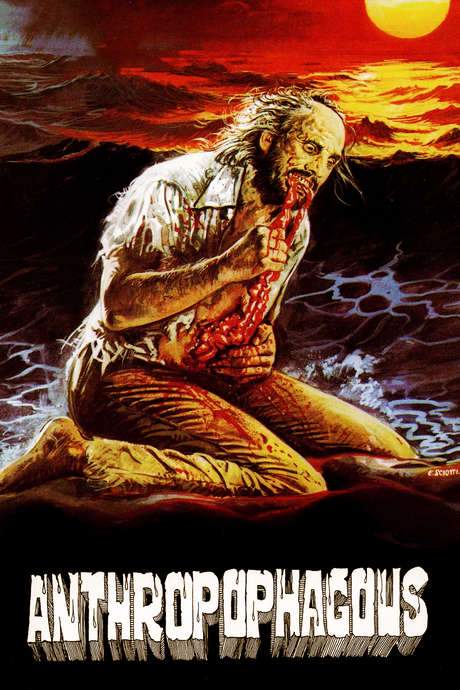
The remote Greek island at the heart of Anthropophagous is a place where time seems to have paused, its crumbling stone buildings and wind‑blown cliffs framing a landscape that feels both breathtaking and faintly unsettling. The isolation is palpable: the sea stretches endlessly, the sky hangs heavy, and the only sign of civilization is a small, deserted town that whispers of lives abruptly abandoned. The film’s tone balances stark natural beauty with a slow‑building dread, inviting the audience to feel the same uneasy quiet that settles over the island at dusk.
A handful of travelers set out to explore this forgotten corner of the world, each drawn by their own reasons. Julie joins the group seeking a detour to visit friends she barely knows, while Carol—a pragmatic soul haunted by a foreboding tarot reading—questions the wisdom of the journey. Maggie, visibly pregnant, clings to a fragile sense of normalcy, and Daniel carries an easy‑going charm that masks deeper insecurities. Alongside them are Andy and Arnold, whose pragmatic banter provides comic relief, and Henriette, a quiet presence whose blindness adds an eerie, almost otherworldly perspective to the unfolding events. Their interactions are a study in contrast: superstition versus skepticism, curiosity against caution, and a shared desire to uncover what lies hidden behind the island’s silent façade.
As the group wanders through the empty streets, the abandoned settlement reveals itself piece by piece—dust‑covered windows, a lone figure in black scribbling desperate messages, and the odd relic hinting at a forgotten past. An old mansion perched on a hill promises answers, its looming architecture suggesting secrets locked away for generations. Within its walls, a concealed chamber and a weathered diary beckon, offering fragments of a history that could illuminate the strange, predatory force that now stalks the island’s perimeters.
The dynamics among the travelers intensify as they grapple with the unknown, their bonds tested by the island’s relentless atmosphere. Rational explanations clash with whispered legends, and the thin line between fear and fascination grows ever more fragile. Anthropophagous thrives on this tension, drawing the viewer into a world where every creak, every shadow, and every uneasy discovery fuels a compelling sense of mystery, leaving the audience eager to uncover what horrors the island has kept hidden for so long.