Year: 1962
Runtime: 150 mins
Language: Hindi
Director: Mohan Kumar
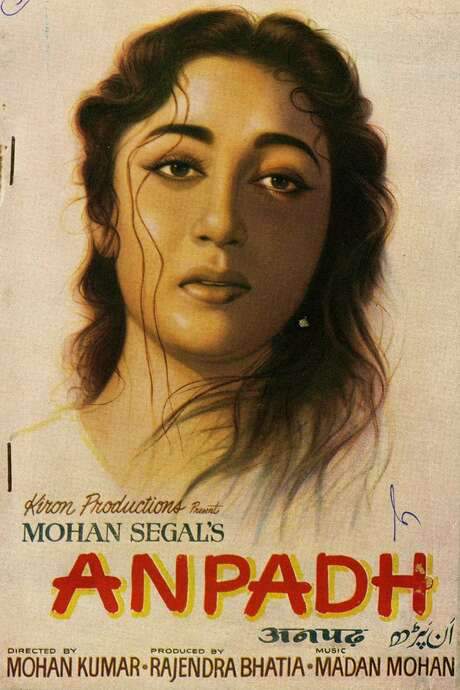
A wealthy, pampered and illiterate woman faces many challenges after her marriage.
Warning: spoilers below!
Haven’t seen Anpadh yet? This summary contains major spoilers. Bookmark the page, watch the movie, and come back for the full breakdown. If you're ready, scroll on and relive the story!
Read the complete plot breakdown of Anpadh (1962), including all key story events, major twists, and the ending explained in detail. Discover what really happened—and what it all means.
Shambu is a wealthy man who lives with his younger sister, Lajjo. He believes that accumulating riches matters far more than education, a philosophy that leaves Lajjo illiterate and out of touch with many daily tasks she isn’t trained to perform. Lajjo is naive and struggles with household chores, a gap that becomes a fault line when she is married off to Deepak, a young man from a similarly affluent background. Deepak is educated, and his bibliophilic nature contrasts sharply with Lajjo’s lack of schooling; this mismatch quickly strains their union.
Lajjo’s secret struggles come to light when she confesses her illiteracy to Deepak’s family, hoping for understanding. Instead, the revelation paints her in a poorer light and Deepak, though moved by her vulnerability, is forced to confront the gap between his expectations and her reality. The marriage falters as Deepak’s disappointment grows, and Lajjo faces mistreatment from her husband, his parents, and Kishore, her schoolgoing brother-in-law, who embodies the stubborn resistance to change that her lack of education has fostered.
A turning point arrives when Deepak catches Lajjo drafting a letter to Shambu with the help of a servant and learns that she lied about her in-laws’ kindness. He is deeply touched by her innocence and pledges to teach her to read and write. With this seed of hope planted, the couple discovers another blessing—Lajjo becomes pregnant, which brings a glimmer of happiness into their strained life.
Yet tragedy soon follows. A confrontation between Shambu and Deepak’s father, Thakur Mahendranath, erupts, during which Lajjo publicly defends Deepak. Enraged, Shambu storms off. Deepak, determined to reconcile, sets out to bring his father back, but fate intervenes when his car crashes into a tree and he dies. Lajjo is left alone and adrift. Mahendranath and his wife blame her for Deepak’s death and expel her from the family home, leaving her destitute.
With nowhere to turn, Lajjo returns to her own home, only to find it locked. A friend named Basanti sees her misery and brings her into Basanti’s household, where Lajjo gives birth to a daughter, Kiran. Basanti’s sympathy fuels Lajjo’s resilience, and she learns sewing, cooking, and other essential skills. Over time, she secures a job, earns a living, and saves enough to educate her daughter. Lajjo also makes Basanti’s home a base for her growing family.
Years pass, and the world of Lajjo’s daughter, Kiran, expands. Kiran is studious, intelligent, and as she nears graduation, Mahendranath appears as a guest and is impressed by her talent, not realizing she is his granddaughter. Meanwhile Kishore, now grown and reckless, abducts Kiran. Lajjo races after the car as a desperate command of love and duty; in the chaos, an aging and impoverished Shambu reappears, recognizes Lajjo, and intervenes.
With Shambu’s help, Lajjo rescues Kiran and shoots Kishore in self-defence. Shambu takes the blame for the act, and in court, Lajjo recognizes him for the man who inspired and failed her in equal measure. Overwhelmed by guilt, she confesses the act, and the court sentences Shambu to five years in prison. The siblings share an emotional farewell, while Mahendranath apologizes to Lajjo for his earlier mistreatment. Shambu admits his own errors—primarily his failure to educate Lajjo—and promises to return. He also urges Lajjo to sell their old mine and invest in a new venture: a school for girls.
The story closes on a hopeful note as Lajjo follows that counsel, founding a school for girls with the help of Kiran, who is now happily married to her own love. The film ends with the vision of education and opportunity taking root, transforming a family’s past struggles into a legacy of learning and empowerment for future generations.
Last Updated: October 09, 2025 at 11:13
Discover curated groups of movies connected by mood, themes, and story style. Browse collections built around emotion, atmosphere, and narrative focus to easily find films that match what you feel like watching right now.
Hopeful stories where protagonists overcome profound personal tragedy and societal hardship.If you liked the journey from tragedy to empowerment in Anpadh, you'll find more movies like it here. These films feature characters facing immense hardship—be it grief, societal prejudice, or personal loss—who ultimately find a path toward hope, redemption, and a brighter future, creating a deeply moving and uplifting experience.
Stories in this thread typically follow a linear, character-driven path from a state of suffering or disadvantage to a state of empowerment and purpose. A significant tragic event or ongoing oppression serves as the catalyst, forcing the protagonist to grow, overcome societal barriers, and often build something positive from their pain.
These films are grouped together because they share a specific emotional arc: they balance heavy, often melancholic subject matter with an unwavering, hopeful narrative drive. The viewing experience is emotionally resonant and cathartic, leaving the audience feeling moved but ultimately uplifted.
Epic personal journeys of women challenging societal norms and finding their voice.Discover more movies like Anpadh that focus on a woman's powerful journey toward independence and self-worth. These similar stories often involve themes of education, breaking free from dysfunctional relationships, and confronting socioeconomic disparity, all while maintaining a dramatic and hopeful tone.
The narrative pattern follows a female protagonist who is initially confined by her circumstances—be it through lack of education, a difficult marriage, or rigid social expectations. Through a series of challenges, she undergoes significant personal growth, gains independence, and ultimately redefines her place in the world, often inspiring change around her.
These movies are united by their central focus on a female character's transformative arc toward empowerment. They share a dramatic mood, a steady pacing that allows for deep character development, and a thematic commitment to exploring issues like education, family conflict, and personal liberation.
Don't stop at just watching — explore Anpadh in full detail. From the complete plot summary and scene-by-scene timeline to character breakdowns, thematic analysis, and a deep dive into the ending — every page helps you truly understand what Anpadh is all about. Plus, discover what's next after the movie.
Track the full timeline of Anpadh with every major event arranged chronologically. Perfect for decoding non-linear storytelling, flashbacks, or parallel narratives with a clear scene-by-scene breakdown.
Discover the characters, locations, and core themes that shape Anpadh. Get insights into symbolic elements, setting significance, and deeper narrative meaning — ideal for thematic analysis and movie breakdowns.
Get a quick, spoiler-free overview of Anpadh that covers the main plot points and key details without revealing any major twists or spoilers. Perfect for those who want to know what to expect before diving in.
Visit What's After the Movie to explore more about Anpadh: box office results, cast and crew info, production details, post-credit scenes, and external links — all in one place for movie fans and researchers.