Plot Explained Spoilers guaranteed!
Plot Explained

Browse by genre

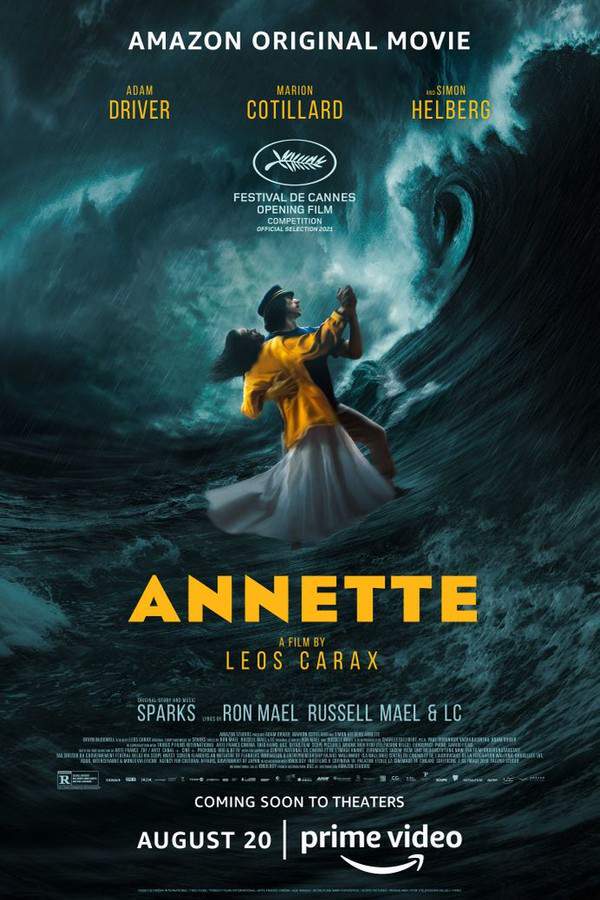
Annette (2021) movie poster

Plot Summary

Annette (2021) Plot Summary Explained

Release, runtime and language
2021 · 141 min · English
Echo score 78
JustWatch #34,851 1
Directed by
Leos Carax
Starring
Marion Cotillard, Adam Driver, Rebecca Dyson-Smith, Nastya Golubeva Carax, Devyn McDowell, Kiko Mizuhara
Budget
$16.6M

In Los Angeles, a celebrated comedian and a famous opera singer embark on a passionate and complex relationship. Their lives are forever changed with the arrival of their daughter, Annette, whose unusual connection to her parents leads them on a transformative journey filled with both joy and unsettling events. As their glamorous world unravels, they must confront difficult truths about themselves and their relationship.

On this page (6)
  1. 1 Where to watch
  2. 2 What happens: full plot
  3. 3 Plot questions answered
  4. 4 Movie threads
  5. 5 Movies like Annette
  6. 6 Every angle

Where to watch

Where to Watch Annette (2021)

Where can you watch Annette? Stream, rent or buy it in the US, including on Amazon Prime Video, Amazon MX Player and Amazon Prime Video Free: current JustWatch availability with up-to-date prices.

Streaming availability powered by JustWatch

Full plot summary · contains spoilers

What Happens in Annette: Full Plot Summary

The whole story of Annette (2021) explained, from the opening scene to the final frame: every key event, every twist and what it all adds up to. Read it as a quick recap before the sequel, to check a scene you missed, or to finally understand what really happened.

The film opens with a warm greeting from its director, Leos Carax, and the writers, Sparks, as they invite the audience on a journey through the vibrant streets of Los Angeles. The story centers around Henry McHenry, portrayed by Adam Driver, a stand-up comedian renowned for his outrageous and controversial style. In front of an enthusiastic crowd, Henry shares insights about his recent engagement to Ann Defrasnoux, played by Marion Cotillard, a celebrated opera singer. He reflects on the transformative effect she's had on him, though he's unsure of how.

When reporters swarm after a performance, Henry humorously dances to deflect the attention. As their love develops, both sing passionately about their swift romance, revealing they are now married and living in her secluded mansion in the woods. At the opera house, the Conductor, which is Simon Helberg, works as Ann's piano accompanist, expressing his aspirations to conduct orchestras while secretly harboring feelings for her. However, Ann, while deeply in love with Henry, confesses her fears of him, fueling tension in their relationship.

The couple soon welcomes their daughter, Annette, who is presented to the audience as a wooden marionette but adored by the characters as a typical baby girl. Amidst this, Henry's nerves about fatherhood gradually seep through. During a car ride, Ann dreams anxiously about six women making disturbing accusations against Henry and a harrowing motorcycle crash.

As the story unfolds, Henry embarks on a Las Vegas tour where he shocks his audience by announcing that he "killed" Ann, using dark humor about tickling. This unstable revelation leads to his abrupt fall from grace as his career begins to crumble while Ann's star continues to rise, despite her growing unease about their relationship.

In a desperate attempt to reconnect, the couple takes a fateful yacht trip that spirals out of control during a violent storm. Amidst the chaos, Henry's drunken behavior exacerbates their conflict, ultimately leading to Ann’s tragic demise as she is seemingly pushed overboard. Left alone with Annette, Henry rows to safety, only to be haunted by Ann’s ghost, who promises to forever linger through their daughter’s voice.

When law enforcement investigates Ann's disappearance, they conclude it was an unfortunate accident. Henry, still processing his loss, becomes enchanted by Annette's singing talent, which brings him unexpected solace. As Henry invites the Conductor to discuss exploiting Annette's gifts through a global tour, tensions rise when the Conductor reveals feelings for Ann and secrets about their past.

The world quickly becomes enthralled by Annette's extraordinary talent, while Henry indulges in newfound fame, leaving child-rearing largely to the Conductor. However, jealousy and anger consume Henry when he discovers the Conductor’s influence over Annette, culminating in a tragic confrontation where Henry drowns him, oblivious to Annette witnessing the horror.

Attempting to shield her from show business, Henry schedules one final performance at the Hyper Bowl Halftime Show. When Annette freezes on stage, she finally speaks the haunting line, "Daddy kills people." This revelation plunges Henry into a downward spiral, leading to his arrest for the connected murders that haunt him.

As he faces trial, Henry refuses to testify but grapples with visions of Ann, who sings alongside him about hypothetical changes to their past. Following his conviction, we see Henry each day, now alone, overshadowed by his crimes and the ghost of Ann who has remained relentlessly by his side.

In a poignant prison visit, Annette, now perceived as a real little girl by Henry, struggles to forgive him, making it clear he has lost everything he had once loved. As she is escorted away, Henry turns to the audience, pleading for them to abandon their gaze upon him. The lifeless marionette of Annette rests forgotten on the floor, symbolizing the tragic fallout of their destructive love.
Last updated: November 04, 2024 at 01:44

Was this helpful?

Plot questions answered

Annette Plot Explained: Your Questions Answered

The questions people ask most about Annette (2021): what happens in the confusing scenes, why the characters do what they do, the twists, hidden details and what the ending means. Each answer contains spoilers.

Q1

Why does Henry kill Ann on the yacht?

Henry's violent outburst stems from months of mounting jealousy, insecurity, and resentment toward Ann's growing fame. During the storm, his drunkenness and rage reach a breaking point. While the film leaves the exact moment ambiguous, Ann is pushed or thrown overboard during their violent struggle, resulting in her death. This act represents the culmination of Henry's inability to accept his own inadequacy compared to his wife.

Foreshadowing: Ann's earlier nightmare about six women accusing Henry foreshadows his capacity for violence against women.

  • henry kills ann
  • yacht murder
  • ann death
  • henry jealousy
Q2

Why does Annette say 'Daddy kills people'?

Annette witnessed Henry drown the Conductor in a fit of jealous rage. When she freezes on stage during the Hyper Bowl performance, she finally speaks this haunting line, revealing what she saw. The moment signifies that despite Henry's attempts to control her narrative and protect her from the truth, his violent past has corrupted her innocence and she can no longer stay silent.

Foreshadowing: Henry's earlier violent act against Ann foreshadows his capacity to kill again, this time in front of Annette.

  • annette speaks
  • daddy kills people
  • hyper bowl
  • annette witnesses murder
Q3

Why does Henry kill the Conductor?

Henry's jealousy and paranoia spiral after learning the Conductor had romantic feelings for Ann and possibly intimate knowledge of their relationship. When the Conductor reveals secrets about his past with Ann and his growing influence over Annette, Henry sees him as a rival and threat. In a violent confrontation, Henry drowns the Conductor, believing he is losing control over both his late wife's memory and his daughter.

Foreshadowing: The Conductor's secret feelings for Ann, established early in the film, plant the seeds of this future conflict.

  • conductor death
  • henry kills conductor
  • jealousy
  • annette caretaker
Q4

Why does Henry announce he killed Ann in Las Vegas?

Henry's 'I killed Ann' joke during his Las Vegas tour is a self-destructive act driven by insecurity and dark humor. As Ann's career skyrockets while his own popularity wanes, Henry makes this shocking statement to get attention and cope with his feelings of inadequacy. The joke backfires catastrophically, marking the beginning of his professional downfall while paradoxically boosting Ann's fame.

Foreshadowing: This dark joke reveals Henry's unstable mental state and foreshadows the actual violence to come.

  • las vegas show
  • killed ann joke
  • henry career downfall
  • comedy show
Q5

Why is Annette a wooden marionette?

Annette being a wooden marionette serves as a central allegorical device. It reflects her nature as a child shaped entirely by her parents' desires and the entertainment industry. She has no agency, she sings when prompted, performs when scheduled, and exists largely as an extension of her parents' ambitions. This visual choice emphasizes themes of exploitation and the objectification of children in show business.

Foreshadowing: The marionette appears from birth, establishing early that Annette is more prop than person in her parents' eyes.

  • annette marionette
  • puppet
  • allegory
  • child exploitation
  • wooden doll
Q6

Why does Ann's ghost haunt Henry?

Ann's ghost appears to Henry as a manifestation of his guilt and psychological deterioration. She haunts him throughout his remaining life, singing alongside him and reminding him of his crimes. The supernatural element reflects how Henry can never escape what he did, his guilt literally follows him, preventing any possibility of redemption or peace.

Foreshadowing: Ann's earlier fear of Henry and her disturbing dreams about his violence plant the psychological seeds for this haunting.

  • ann ghost
  • haunting
  • guilt
  • henry madness
  • supernatural
Q7

Why can't Henry be forgiven at the end?

Henry's inability to be forgiven stems from the irreversible nature of his actions, he murdered two people, including his own daughter's caretaker and the woman he claimed to love. More fundamentally, Annette represents the corruption of innocence: by exposing her to violence and exploiting her talent, Henry destroyed the one pure thing in his life. Her refusal to forgive him is the final, devastating consequence of his choices.

Foreshadowing: Henry's earlier exploitation of Annette and his lies about protecting her directly lead to this final rejection.

  • forgiveness
  • annette rejects henry
  • prison visit
  • tragic ending
Q8

Why was Ann's death ruled an accident?

Law enforcement concluded Ann's death was an accident because there were no witnesses to the actual event on the yacht during the storm. Henry's conflicting stories and the chaotic circumstances made it impossible to prove foul play. The investigation lacked physical evidence or testimony to contradict Henry's account of what happened, allowing him to avoid immediate consequences for Ann's murder.

Foreshadowing: The storm and Henry's drunken state provide the perfect cover for his crime to be mischaracterized.

  • ann death investigation
  • accident
  • yacht
  • police inquiry
Q9

What secrets about the past does the Conductor reveal?

The Conductor reveals that he had romantic feelings for Ann and was in love with her before she met Henry. He also implies he may have been closer to Ann than Henry knew, possibly having intimate knowledge of their relationship. This revelation ignites Henry's jealousy, making him paranoid about being cuckolded even after Ann's death and fueling his violent reaction against the Conductor.

Foreshadowing: The Conductor's early devotion to Ann as her accompanist establishes his unresolved feelings.

  • conductor secrets
  • ann past
  • love triangle
  • feelings for ann
Q10

Why does Henry exploit Annette's singing talent?

After Ann's death, Henry discovers Annette's extraordinary singing ability and sees it as an opportunity for both financial gain and renewed fame. Rather than processing his grief or caring for his daughter, Henry commercializes her talent through a global tour. This exploitation reflects his fundamental inability to be a father, he treats Annette as another source of entertainment revenue rather than a child needing love and protection.

Foreshadowing: Henry's anxiety about fatherhood from the beginning shows he was never equipped to parent responsibly.

  • annette tour
  • fame
  • exploitation
  • henry fatherhood
  • career
Q11

Why does Henry ask the audience to abandon their gaze at the end?

Henry's final plea to the audience to stop watching him is a meta-filmic moment that exposes his lifelong addiction to attention. Throughout the film, he sought validation through performance, even committing murders for spectacle. Now in prison, he realizes his gaze, the audience's attention, was both his greatest desire and his destruction. The plea is ultimately hollow because he cannot stop performing, even as he denounces performance.

Foreshadowing: Henry's entire career as a stand-up comedian establishes his dependence on audience attention as his defining trait.

  • final scene
  • meta
  • audience
  • gaze
  • plea
  • ending interpretation
Q12

Why does Henry refuse to testify at his trial?

Henry refuses to testify because doing so would require him to confront his crimes publicly and verbally acknowledge his guilt. His silence reflects both his psychological inability to face what he's done and his continued reliance on performance over honesty. By refusing to speak, Henry maintains his final defense mechanism, controlling the narrative through absence rather than confession.

Foreshadowing: Henry's pattern of using humor and performance to avoid emotional truth runs throughout the entire film.

  • trial
  • refuse testify
  • henry court
  • conviction
Q13

What does Ann's dream about six women mean?

Ann's nightmare about six women accusing Henry foreshadows both his pattern of problematic behavior and the future victims of his violence. The dream reflects Ann's unconscious recognition that Henry is dangerous and potentially violent toward women. It also suggests Henry may have a history of mistreating women that predates Ann, though the film leaves this ambiguous.

Foreshadowing: This dream directly foreshadows Ann's own death at Henry's hands.

  • ann dream
  • accusations
  • future violence
  • foreshadowing
  • premonition

Movie threads

More Movies Like Annette, by Mood & Story

Curated lists built around what makes Annette tick: the same mood, the same kind of story or the same emotional payoff. Each list explains why these movies belong together.

Tragic artist stories like Annette

Stories of creative genius unraveled by toxic love and personal demons. This section features movies like Annette that explore the dark side of fame and creativity. If you were captivated by the story of a celebrated performer's downfall, you'll find similar films about artistic genius corrupted by passion, ego, and tragic circumstances.

  • tragic
  • melancholic
  • introspective
  • operatic
  • haunting
  • oppressive
  • Tone: dark, tragic, melancholic
  • Pacing: variable, character-driven
Why these movies?

The story pattern: Narratives in this thread typically begin with a character at the peak of their creative powers, only to be undone by a destructive relationship or their own inner turmoil. The story charts a steep decline from adoration to ruin, often involving elements of guilt, exploitation, and a bleak reckoning with their choices.

Why they belong together: Movies are grouped here because they share a core focus on the corrosive link between extraordinary artistry and profound personal tragedy. They create a specific, heavy mood where artistic expression is intertwined with emotional devastation.

Dark symbolic fantasies like Annette

Surreal and stylized stories where reality blurs with allegory and dread. If you liked the surreal, operatic style of Annette, this list features similar movies that blend dark fantasy with heavy drama. These films use symbolic elements and a dreamlike atmosphere to explore complex psychological themes, creating a unique and unforgettable viewing experience.

  • fever dream
  • darkly whimsical
  • surreal
  • allegorical
  • haunting
  • unsettling
  • Tone: dark, whimsical, unsettling
  • Pacing: variable, deliberate
Why these movies?

The story pattern: Stories in this thread often unfold in a world that operates on symbolic or metaphorical rules. The plot is driven less by realism and more by internal logic that serves a larger thematic purpose, leading characters through a transformative, and often harrowing, journey that feels like a waking dream.

Why they belong together: These films are grouped together based on their shared, distinct aesthetic: a blend of dark themes with a whimsical, surreal, or fantastical presentation. The experience is defined by this jarring contrast between a playful surface and a deeply unsettling core.

If you liked this

Movies Like Annette

Similar movies to Annette: the same genre, themes or kind of story. Each one comes with its own plot summary, timeline and ending explained.

Browse all movie summaries

Every angle

Annette (2021) Explained: Plot, Timeline & Characters

Everything about Annette in one place: what happens in the plot summary, the timeline in chronological order, the characters and meaning and a spoiler-free summary. What's After the Movie adds the cast, box office and post-credit scenes.

Coming soon on iOS and Android

The Plot Explained Movie Summary App

Plot summaries, endings explained and timelines on your phone. Catch up on any movie in minutes, save your favorites and never miss a twist again.

Be the first to know when we launch. Your email stays private, always.

Learn more about the app