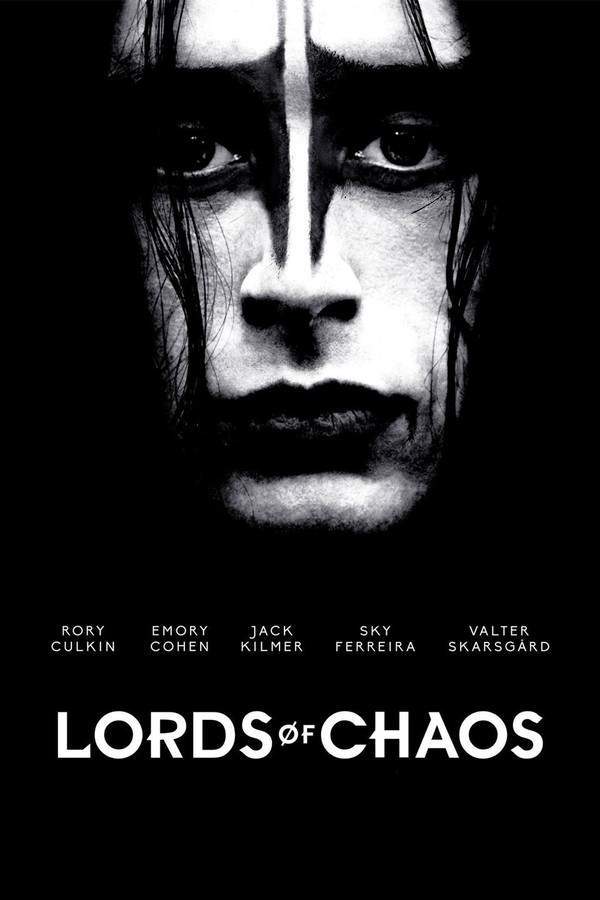
During the 1980s in Oslo, Norway, a young and rebellious teenager named Euronymous becomes deeply involved in the burgeoning "true Norwegian black metal" scene. As the frontman of the band Mayhem, he actively seeks notoriety through increasingly provocative and dangerous stunts. These actions blur the lines between creative expression and destructive anarchy, leading to escalating chaos and unforeseen consequences within the band and the wider music community.
Find where to stream, rent, or buy Lords of Chaos (2019) in the US with current JustWatch availability, up-to-date pricing, and platform listings for subscription, rental, and digital purchase options.
Warning: spoilers below!
Haven’t seen Lords of Chaos yet? This summary contains major spoilers. Bookmark the page, watch the movie, and come back for the full breakdown. If you're ready, scroll on and relive the story!
Read the complete plot breakdown of Lords of Chaos (2019), including all key story events, major twists, and the ending explained in detail. Discover what really happened, and what it all means.
In 1987, a young guitarist, Euronymous, establishes the groundbreaking black metal band Mayhem in Norway, teaming up with bassist Necrobutcher and drummer Manheim. However, after Manheim departs, they bring in new drummer Hellhammer. The band soon recruits a Swedish vocalist named Dead, whose erratic and self-destructive behavior creates a notorious image; during performances, he cuts himself, showers blood on the audience, and hurls pig heads at those he terms "posers."
At a particular performance captured by their friend Metalion, the band meets a fan, Kristian, whom Euronymous initially dismisses. Tragedy strikes when Dead, in a fit of despair, takes his own life by slitting his wrists and throat, followed by a gunshot to his head using Euronymous' shotgun. Rather than alert the authorities, Euronymous imprudently poses and photographs Dead’s body, even making morbid necklaces from pieces of his skull to distribute among the band members. This callous display results in Necrobutcher walking away from the band in disgust.
Euronymous then launches his own black metal label and opens a record store named Helvete ("Hell"), which evolves into a gathering place for fans and musicians, including Fenriz from Darkthrone, Faust from Emperor, and Kristian, who has now adopted the name Varg Vikernes. They collectively earn the title of the "Black Circle." Tensions rise when Varg, in rebellion against Euronymous, sets fire to a local church. In a retaliatory act, Euronymous, joined by Varg and Faust, also burns down a church, solidifying their infamous reputation.
Euronymous enlists Varg as Mayhem's bassist alongside guitarist Blackthorn and Hungarian vocalist Attila Csihar to create their first album, De Mysteriis Dom Sathanas. A power struggle brews between Euronymous and Varg, eventually leading to a series of church arsons and the shocking murder of a gay man by Faust, prompting the police to investigate connections to the black metal scene. As Helvete shuts its doors, Varg—now the prime suspect in the crimes—makes a boastful admission of guilt in an interview, although he is initially released due to insufficient evidence.
With growing tension, Varg informs Euronymous of his intention to leave the band to start his own record label. In retaliation, Euronymous reveals that the skull necklaces were indeed fake and declares that his violent persona is merely an act, sparking Varg's outrage. While cleaning up the store, Euronymous vents his frustrations about Varg, even expressing thoughts of murder. Once he calms down, he sends Varg a contract for their music rights.
Upon learning of Euronymous' death threats, Varg travels to Oslo under the pretense of signing the contract. Once allowed inside, the situation escalates, and Varg brutally stabs Euronymous after a brief exchange. The attack continues in the stairwell, where Varg cruelly continues stabbing Euronymous, ignoring his pleas for mercy. Following the news of Euronymous' murder, Varg is arrested and eventually convicted not only of the murder but also for participating in the church burnings, receiving a maximum sentence of 21 years.
In a poignant voice-over, Euronymous reflects on his life, urging the audience not to grieve for him, emphasizing the successes and achievements he has accomplished.
Last updated: November 15, 2024 at 15:34
Explore frequently asked questions about Lords of Chaos (2019) with spoiler-rich answers covering the full plot summary, major story beats, character motivations, hidden details, and ending meaning. This movie summary FAQ helps explain confusing scenes, plot twists, and narrative decisions in clear, searchable detail.
Euronymous deliberately chose not to alert authorities because he saw Dead's suicide as an opportunity to enhance Mayhem's notoriety. He posed the body, took photographs, and even made necklaces from pieces of Dead's skull to distribute among band members, viewing the tragic event as a marketing tool for their extreme image. This callous decision shocked even his bandmates and contributed to Necrobutcher leaving the group in disgust.
Euronymous created morbid necklaces from pieces of Dead's skull after the vocalist's suicide, distributing them among Mayhem members. These necklaces became symbols of the band's commitment to their extreme image and their willingness to blur the boundaries between art and reality. Varg Vikernes later wore one of these necklaces, which later became evidence in the murder investigation.
Varg set fire to a local church as an act of rebellion against Euronymous and what he perceived as the commercialization of black metal. This wasn't simply vandalism, it was meant as a symbolic attack on Christianity, aligning with the anti-religious ideology of the black metal movement. The arsons quickly escalated, with Euronymous and Faust joining in, leading to multiple church burnings across Norway.
The conflict stemmed from multiple factors: Euronymous publicly revealed that the skull necklaces were fake and that his violent persona was an act, humiliating Varg who had worn them sincerely. Additionally, Euronymous had threatened to kill Varg after learning he planned to leave Mayhem to start his own record label. These betrayals, combined with underlying power struggles over the band's direction, ultimately led to Varg's decision to murder Euronymous.
Varg murdered Euronymous after being invited to Helvete under the pretense of signing a contract for music rights. The real reason was multifaceted: Varg was furious about Euronymous revealing that the skull necklaces were fake and that his tough persona was an act. He also felt betrayed by Euronymous's control over the band and had expressed genuine thoughts of killing him. The meeting was a setup, and Varg brutally stabbed Euronymous multiple times, ignoring his pleas for mercy.
Earlier in the film, Euronymous explicitly tells Varg he will kill him, foreshadowing the deadly confrontation.
The Black Circle was a group of influential Norwegian black metal musicians who gathered at Euronymous's Helvete record store. Key members included Euronymous, Varg Vikernes, Fenriz from Darkthrone, and Faust from Emperor. The group became notorious for their extreme views and actions, including church arsons and the eventual murder of Euronymous. They represented the inner core of the Norwegian black metal movement's most radical elements.
Necrobutcher quit the band because he was disgusted by Euronymous's response to Dead's suicide. Rather than notifying the police, Euronymous photographed the body and made morbid souvenirs from the skull. This行为 demonstrated a level of callousness and exploitation that Necrobutcher found unforgivable, causing him to walk away from the band.
De Mysteriis Dom Sathanas was Mayhem's debut studio album, recorded with Varg on bass, Blackthorn on guitar, and Hungarian vocalist Attila Csihar. Released in 1993 after Euronymous's death, it became one of the most influential albums in black metal history. The album was created during a period of intense internal conflict between Euronymous and Varg, and its production was fraught with the band's deteriorating relationships.
Helvete (meaning "Hell" in Norwegian) was Euronymous's black metal record store in Oslo, which also served as the headquarters for his record label. The store became a gathering hub for musicians and fans of the Norwegian black metal scene, including future key figures like Varg Vikernes. It was where the Black Circle formed and where many of the scene's most extreme ideas and actions were conceived, making it central to the movement's identity.
Dead, the Swedish vocalist for Mayhem, was known for his erratic and self-destructive behavior, which included extreme on-stage performances involving self-harm. His suicide was described as occurring "in a fit of despair," stemming from his deep personal turmoil and the nihilistic worldview that permeated the black metal scene. He used Euronymous's own shotgun to kill himself, a detail that would later factor into the band's mythology and the eventual murder of Euronymous.
Faust, the drummer for Emperor and member of the Black Circle, murdered a gay man in what appeared to be a random attack. The killing was connected to the wider wave of violence surrounding the black metal scene and drew police attention to the music community. Faust was eventually arrested and convicted for this murder, which occurred as part of the escalating violence that included the church arsons.
In the closing narration, Euronymous reflects on his life and tells the audience not to grieve for him. He emphasizes the achievements he accomplished and urges viewers to remember his contributions to the black metal movement rather than focusing on his death. This voice-over was recorded before his actual murder and serves as a poignant, self-aware reflection on the legacy he hoped to leave behind.
Discover curated groups of movies connected by mood, themes, and story style. Browse collections built around emotion, atmosphere, and narrative focus to easily find films that match what you feel like watching right now.
Stories of fringe communities escalating into violence and self-destruction.If you liked the grim portrayal of the Norwegian black metal scene in Lords of Chaos, explore these movies about musical subcultures and fringe groups spiraling into crime and chaos. These films capture the dark side of rebellion and the real-life consequences of extreme lifestyles.
Movies in this thread typically follow a group or individual within a tight-knit, non-mainstream community. The narrative charts an escalation from provocative behavior to genuine criminality, driven by internal power struggles, toxic friendships, and a nihilistic worldview. The journey is one of inevitable decline, often ending in tragedy.
These films are grouped by their shared focus on a specific subcultural world as the catalyst for a dark, true-crime-esque narrative. They share a high-intensity, disturbing tone that examines how the search for identity within a group can lead to moral collapse and violence.
Tragedies fueled by the dangerous pursuit of artistic purity and infamy.For viewers who appreciated the bleak character study in Lords of Chaos, this collection features movies about artists whose lives are consumed by their work. These films explore similar themes of fame, infamy, and the psychological unraveling that can accompany extreme artistic ambition.
The narrative pattern follows a protagonist whose artistic vision is inextricably linked with a descent into personal chaos. The story is a character-driven tragedy, showing how the pursuit of an extreme aesthetic or ideology corrupts their relationships and morality, culminating in a bleak and destructive outcome.
These movies are united by a central theme: the corrosive nature of artistic obsession. They share a heavy emotional weight, a dark tone, and a focus on a character's psychological unraveling, making the viewing experience intense, bleak, and morally complex.
Don't stop at just watching - explore Lords of Chaos in full detail. From the complete plot summary and scene-by-scene timeline to character breakdowns, thematic analysis, and a deep dive into the ending - every page helps you truly understand what Lords of Chaos is all about. Plus, discover what's next after the movie.
Track the full timeline of Lords of Chaos with every major event arranged chronologically. Perfect for decoding non-linear storytelling, flashbacks, or parallel narratives with a clear scene-by-scene breakdown.
Discover the characters, locations, and core themes that shape Lords of Chaos. Get insights into symbolic elements, setting significance, and deeper narrative meaning - ideal for thematic analysis and movie breakdowns.