

Plot Explained Spoilers guaranteed!
Plot Explained

Browse by genre

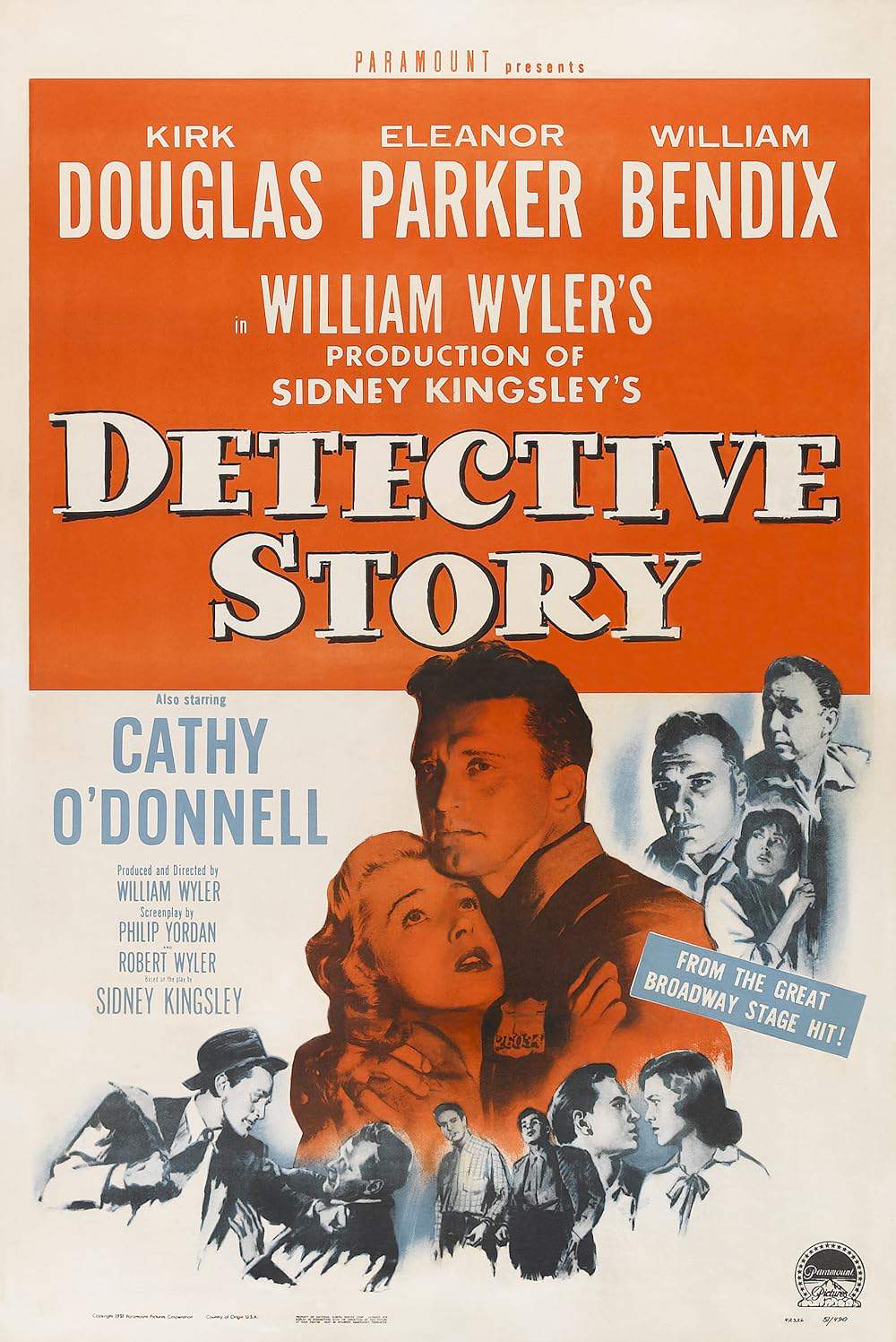
An Inspector Calls (1954) movie poster

Timeline

An Inspector Calls (1954) Timeline Explained – Every Event in Order

Release, runtime and language
1954 · 80 mins · English
Directed by
Guy Hamilton
Starring
Jenny Jones, Norman Bird, John Welsh, Bryan Forbes, George Cole, George Woodbridge

During a genteel dinner for an upper‑class family, a police inspector arrives with the shocking news that a young woman known to all the guests has died under suspicious circumstances. He suggests each household member may bear responsibility, forcing the family to confront their secrets while questioning the inspector’s true identity and purpose.

On this page (6)
  1. 1 Where to watch
  2. 2 Events in order (13)
  3. 3 Timeline questions answered
  4. 4 Movie threads
  5. 5 Movies like An Inspector Calls
  6. 6 Every angle

Where to watch

Where to Watch An Inspector Calls (1954)

Where can you watch An Inspector Calls? Stream, rent or buy it in the US, including on Kanopy: current JustWatch availability with up-to-date prices.

Streaming availability powered by JustWatch

13 events in order · contains spoilers

An Inspector Calls Timeline: Events in Chronological Order

Every key event of An Inspector Calls (1954) in order, scene by scene, with when and where it takes place. Use it to untangle flashbacks, time jumps and parallel storylines, to refresh your memory before the sequel or to find the exact scene you are thinking of.

  1. Dinner party at the Birling residence

    In 1912, the Birling family sit at a dining table at the end of a dinner party with Gerald Croft, who is engaged to Sheila. The mother chastises Eric for drinking too much, and the father discusses the likelihood of war and a possible knighthood with Gerald over port and cigars.

    When
    1912
    Where
    Birling dining room
  2. Inspector Poole arrives to investigate Eva Smith

    They are interrupted by a man calling himself Inspector Poole, who is investigating the suicide of Eva Smith, a working-class girl linked to each family member. Eva Smith has poisoned herself, and she left a diary that hints at the connections between the Birling family and her fate.

    When
    1912
    Where
    Birling house
  3. Eva Smith's 1910 factory strike

    A flashback shows Eva working in the Birling factory and leading a group of women to demand a pay raise from 22/6 to 25/-. Birling refuses and tells them to find another job, setting in motion Eva's fall from stability.

    When
    1910
    Where
    Birling factory
  4. Eva's unemployment and Milward's job

    Back in the Birling house, the father cannot see how Eva's plight connects to him. The inspector explains that after being sacked from Birling's, Eva has a period of unemployment, then goes to work at Milward's, where she is dismissed after two months following a customer's complaint; it becomes clear that this later dismissal implicates Sheila.

    When
    Post-1910
    Where
    Birling factory / Milward's
  5. Sheila's hat shop confrontation

    In a flashback, Sheila is choosing a hat with her mother when Eva is accused of being rude for smiling while she struggles to fit the hat, and Eva is dismissed. Sheila admits she was jealous of Eva's looks.

    When
    1910
    Where
    Hat shop
  6. Eva changes her name to Daisy Renton

    The inspector explains that Eva changes her name to Daisy Renton, which shocks Gerald as the truth about his relationship with her begins to emerge.

    When
    1910-1911
  7. Gerald's affair with Daisy Renton begins

    Gerald confesses to Sheila that he had an affair with Daisy beginning in March 1911. He says he met Daisy at the Palace Variety Show, found her homeless, and lets her use his townhouse and gives her money to survive, keeping the relationship private.

    When
    March 1911
    Where
    Palace Variety Show; Gerald's townhouse
  8. Daisy realises Gerald may end the affair

    On one of his visits, Daisy realises that Gerald is building up to breaking off their affair, and, to make things easier for him, tells him they should separate as she realises that he only ever felt sorry for her, although she is in love with him. She leaves the flat the next day.

    When
    1911
    Where
    Gerald's townhouse
  9. Mrs Birling refuses Eva charity

    Mrs Birling, as chairwoman of a charity committee, refuses Eva charity on the grounds that Eva is pregnant and claims her husband left her. She accuses Eva of using the Birling name and brushes aside Sheila's attempts to stop her condemnation.

    When
    Before 1912
    Where
    Charity committee
  10. Eric's affair and Eva's pregnancy

    Eric meets Eva on a tram and they have an affair, and Eva becomes pregnant. He steals money to support her, but she refuses it when she realises it is stolen. Eva goes to Mrs Birling but is turned down, adding to the tragedy.

    When
    1911-1912
    Where
    Tram; Birling home
  11. Partial blame and ambiguous evidence

    The family members begin to feel partially responsible for Eva's death, yet they struggle with how to prove it or confront it all. They hope to avoid scandal and dismiss the idea that one individual bears sole responsibility.

    When
    1912
    Where
    Birling house
  12. Gerald checks the infirmary; it may be a scam

    Gerald phones the infirmary to check if the girl Eva is really dead, and is told no-one has died. The situation feels like a strange scam, and the family contemplates returning to their old lives while Sheila and Eric remain changed by the experience.

    When
    1912
    Where
    Birling house
  13. The twist ends with a real death on the way

    Back in the study, Mr Birling discovers the Inspector has disappeared and there is no exit from the room. Then a phone rings: a girl has just died at the infirmary and an inspector is on his way, suggesting the investigation may resume.

    When
    1912
    Where
    Birling study

Last updated: October 05, 2025 at 12:04

Was this helpful?

Timeline questions answered

An Inspector Calls Timeline Explained: Your Questions Answered

When does it happen, and why in that order? The questions people ask about the chronology of An Inspector Calls (1954): time jumps, flashbacks, cause and effect between scenes and the correct order of events, each answered with spoilers.

Q1

Why does Inspector Poole investigate the Birling family?

Inspector Poole arrives at the Birling residence to investigate the suicide of Eva Smith, a working-class girl whose death he reveals is linked to each member of the family. Through his questioning, he uncovers that every family member, Mr. Birling, Sheila, Gerald, Mrs. Birling, and Eric, has contributed in some way to Eva's downfall, whether through direct actions like firing her or indirect ones like denying her charity.

  • inspector poole
  • eva smith
  • birling family
  • investigation
  • suicide
Q2

Was the inspector real or fake?

The film leaves this ambiguous. Gerald calls the infirmary and is told no girl has died, suggesting the inspector may have been a hoax. However, the film ends with a phone call announcing a real girl has just died at the infirmary and a real inspector is on his way, creating uncertainty about whether the entire encounter was staged or supernatural.

  • inspector
  • real
  • fake
  • twist
  • ending
  • hoax
Q3

Why did Mr. Birling fire Eva Smith from his factory?

In 1910, Eva Smith was one of a group of factory workers who marched to demand a wage increase from 22/6 to 25/- per week. Mr. Birling refused the demand outright and told the workers to find better jobs if they were unhappy. Eva was subsequently fired from Birling's factory, beginning her downward spiral into unemployment and poverty.

  • mr birling
  • eva smith
  • factory
  • fired
  • wage strike
Q4

Why did Sheila get Eva fired from the hat shop?

In 1910, Sheila was choosing a hat with her mother at Milward's when Eva struggled to fit a hat on a customer. Eva was accused of being rude for smiling during this struggle, and Sheila pressed the point that Eva should be dismissed. Sheila later admitted she was jealous of Eva's looks, leading to Eva's termination from the shop.

  • sheila
  • eva smith
  • hat shop
  • milward
  • fired
  • jealousy
Q5

What was Gerald's relationship with Daisy Renton?

Gerald met a woman named Daisy Renton at the Palace Variety Show in March 1911 and began an affair with her. When Daisy became homeless, Gerald let her stay at his townhouse and gave her money to survive, though he never publicly acknowledged the relationship. Daisy was actually Eva Smith, who had changed her name. Gerald ended the affair, and Daisy left willingly, though she was in love with him.

  • gerald
  • daisy renton
  • eva smith
  • affair
  • palace variety show
Q6

Why did Mrs. Birling refuse charity to Eva?

As chairwoman of a women's charity committee, Mrs. Birling denied Eva assistance when Eva sought help while pregnant. Mrs. Birling insisted Eva's claims were suspect and blamed the girl for her predicament, refusing to help on the grounds that Eva claimed her husband had left her. This cold refusal contributed to Eva's desperation and eventual suicide.

  • mrs birling
  • charity
  • eva smith
  • pregnant
  • refused
Q7

Why did Eric steal money for Eva?

Eric Birling met Eva on a tram and they began a brief affair that resulted in Eva becoming pregnant. To help support her, Eric stole money from his father's business. However, Eva refused the stolen money when she realized its origin, choosing not to accept ill-gotten funds despite her desperate situation.

  • eric
  • eva smith
  • stolen money
  • pregnancy
  • tram
Q8

Why did Eva refuse Eric's stolen money?

Even though Eva was pregnant and in desperate need of financial support, she refused Eric's stolen money when she realized it had been taken from his father's business. This act shows Eva's moral integrity despite her circumstances, she would not accept money that was unlawfully obtained, even at great personal cost.

  • eva smith
  • stolen money
  • refused
  • pregnancy
  • integrity
Q9

What caused Eva Smith's suicide?

Eva Smith's suicide was the result of a cascade of hardships caused by the Birling family and their circle. She was fired from Birling's factory, then from Milward's hat shop, denied charity by Mrs. Birling while pregnant, and left homeless after Gerald ended their affair. Each refusal and dismissal stripped away her means of survival, leading her to poison herself.

  • eva smith
  • suicide
  • poverty
  • desperation
  • hardship
Q10

What does the ending of An Inspector Calls mean?

The ending suggests a cycle of accountability may continue beyond the Birling household. After the inspector mysteriously vanishes and Gerald discovers no girl actually died at the infirmary, the family believes they've been hoaxed, until a phone call announces a real girl has just died and a real inspector is on his way. This implies the moral reckoning the inspector represented may be inevitable and recurring, not easily escaped.

  • ending
  • twist
  • real inspector
  • cycle
  • accountability
  • consequence
Q11

Why don't Mr. and Mrs. Birling feel guilty like their children?

Mr. and Mrs. Birling remain defensive throughout the inspector's questioning, insisting they did nothing wrong and attempting to restore their social status. Unlike Sheila and Eric, who feel genuine remorse upon realizing their actions contributed to Eva's death, Mr. and Mrs. Birling retreat into denial and try to return to their privileged lives, representing the older generation's refusal to accept responsibility for their choices.

  • mr birling
  • mrs birling
  • guilt
  • sheila
  • eric
  • responsibility
  • denial
Q12

What is the social message of An Inspector Calls?

The film argues that wealthy, privileged individuals cannot escape responsibility for the suffering of those less fortunate, even when harm seems indirect or minor. Each family member's small, careless decision, firing a worker, getting someone dismissed from a shop, having an affair, denying charity, contributed to Eva Smith's downward spiral and death, illustrating how collective inaction and selfishness create tragedy.

  • social responsibility
  • class
  • privilege
  • morality
  • message
  • theme

Movie threads

More Movies Like An Inspector Calls, by Mood & Story

Curated lists built around what makes An Inspector Calls tick: the same mood, the same kind of story or the same emotional payoff. Each list explains why these movies belong together.

Single-setting moral interrogation dramas like An Inspector Calls

Intense dramas where characters are cornered in one location and forced to confess. Movies like An Inspector Calls that feature a tense, single-location investigation. If you enjoyed the feeling of a family being cornered and forced to confront their secrets, you'll appreciate these claustrophobic dramas and thrillers with a similar high-stakes, morally charged vibe.

  • claustrophobic
  • suspenseful
  • unsettling
  • moral dread
  • anxious
  • investigative
  • Tone: tense, unsettling, dark
  • Pacing: steady, methodical
Why these movies?

The story pattern: The narrative typically unfolds in real-time or over a very short period within a confined space. An external force—an investigator, a threat, or a revelation—systematically dismantles the facades of the characters, leading to a series of shocking confessions and a re-examination of collective guilt.

Why they belong together: They are grouped by their shared structure of confinement and psychological unraveling. The experience is defined by a high-tension, steady-paced atmosphere where the primary conflict is internal and moral, rather than physical, creating a deeply unsettling and immersive viewing experience.

Movies about collective guilt and social reckoning like An Inspector Calls

Stories where a group's hidden actions lead to a tragic, collective downfall. If you liked the theme of social responsibility in An Inspector Calls, explore these similar movies about collective guilt. These dramas and thrillers examine how groups, families, or societies are forced to confront their role in a tragedy, often with a bleak or ambiguous ending.

  • moral dread
  • melancholic
  • unsettling
  • social critique
  • tragic
  • anxious
  • Tone: melancholic, morally bleak, tense
  • Pacing: steady, deliberate
Why these movies?

The story pattern: The plot revolves around a central, often off-screen, victim or event that exposes the interconnected sins of a seemingly cohesive group. The story methodically peels back layers of denial and privilege, challenging characters—and the audience—to consider the weight of indirect culpability and the fragility of social structures.

Why they belong together: They share a heavy emotional weight and focus on themes of accountability, class, and the consequences of turning a blind eye to suffering. The viewing experience is defined by a melancholic and morally unsettling mood, leaving a lasting impression about societal flaws.

If you liked this

Movies Like An Inspector Calls

Similar movies to An Inspector Calls: the same genre, themes or kind of story. Each one comes with its own plot summary, timeline and ending explained.

Browse all movie summaries

Every angle

An Inspector Calls (1954) Explained: Plot, Timeline & Characters

Everything about An Inspector Calls in one place: what happens in the plot summary, the timeline in chronological order, the characters and meaning and a spoiler-free summary. What's After the Movie adds the cast, box office and post-credit scenes.

Coming soon on iOS and Android

The Plot Explained Movie Summary App

Plot summaries, endings explained and timelines on your phone. Catch up on any movie in minutes, save your favorites and never miss a twist again.

Be the first to know when we launch. Your email stays private, always.

Learn more about the app