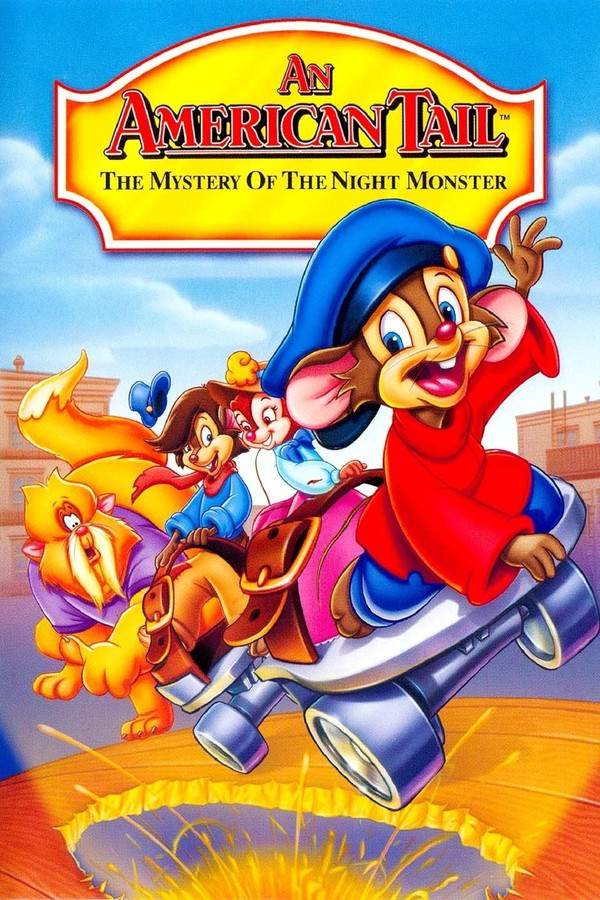
After the events of the third film, but before the second, Fievel Mousekewitz, his sister Tanya Mousekewitz, and their friend Tony Toponi shift their lives toward a daily beat in the city by taking jobs at the local newspaper. The Mousekewitz family, including Papa Mousekewitz and Mama Mousekewitz, watch with a mix of pride and worry as the youngsters try to turn their curiosity into responsible reporting. The newsroom becomes a stage for ambition, fear, and the promise of a bigger story, even as the bustling streets of New York hide quieter, more dangerous currents beneath the surface.
At the office, Nellie Brie Nellie Brie emerges as a fearless voice who yearns to rise from secretary duties to a real reporter’s microphone. She works under Reed Daley Reed Daley, the editor who knows how to spin a tale for the front page. When strange reports circulate about mice vanishing overnight through holes appearing all over the city, Nellie sees a chance to break a major story—and she isn’t shy about chasing it. The newsroom buzzes with speculation, as Nellie’s instincts push her beyond the safe, soft assignments she’s used to, toward a mystery that could redefine public fear in a city that never sleeps.
Nellie’s investigation leads the team into a crowded tapestry of odd sightings and whispered rumors. In the mix, a small, suspiciously stylish French poodle named Madame Mousey Madame Mousey appears at every crime scene, claiming to be a fortune teller who can read the future of those on the case. The group is wary of her overt mysticism, yet her presence keeps the tension afloat as fear spreads. The clue trail also drags them into the park, where a makeshift gathering called the “dog council” convenes to debate what the city should fear and how to respond.
The mystery deepens when the team discovers a network of holes leading into the sewers, where a group of cats known as the Outlaw Cats congregates. The missing mice are found imprisoned in wood cages, waiting to be sold off or worse. The night monster itself comes into focus as a mechanical device—its ghastly flashing images and a circular saw aimed at frightening the city and sabotaging the newspaper’s efforts to print the truth. A furious chase erupts, spanning the human and mouse worlds, as the newsroom fights to publish the revelations that could topple the lie the monster feeds on.
Amid the chase, Reed and Nellie begin to see each other in a new light, and their professional partnership inches toward something more personal. The dog council, arriving at a pivotal moment, helps turn the tide by corralling the criminals and taking Madame Mousey away from the fray. The truth finally begins to outpace fear, and the city seems ready to breathe again—until the final reveal comes at the beach, where Tony explains that Madame Mousey’s punishment will be a return to her owner, Mrs. Abernathy, a consequence harsher than any prison.
As the sun-drenched finale settles in, Mama Mousekewitz’s gentle wisdom lingers over the family. Fievel Fievel Mousekewitz finds himself sleepily reassured, and the scene quietly folds into a hug-filled night. The beach becomes a quiet, intimate tableau where Tiger naps at the edge of the towel as Papa smiles and asks, “You were saying?” The Mousekewitz clan—Tony, Tiger, and the rest—share a warm group embrace, and Mama’s fading breath of care wraps the moment in a soft, hopeful refrain: Sweet dreams, my little Fievel. Sweet dreams.