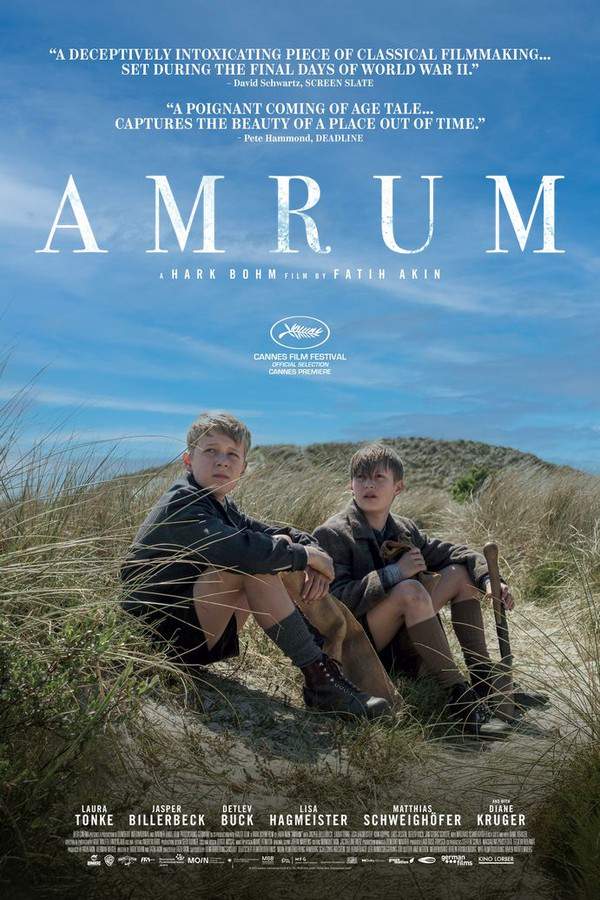
Set in the spring of 1945 on the German North Sea island of Amrum, 12‑year‑old Nanning spends his days tending the farm and his evenings fishing. Though the hardships of the time linger, the windswept isle feels almost idyllic. When farmer Tessa (Diane Kruger) tells him the war will soon end, the innocent boy—unaware of the larger political stakes—is buoyed by the promise of peace.
Find where to stream, rent, or buy Amrum (2026) in the US with current JustWatch availability, up-to-date pricing, and platform listings for subscription, rental, and digital purchase options.
Warning: spoilers below!
Haven’t seen Amrum yet? This summary contains major spoilers. Bookmark the page, watch the movie, and come back for the full breakdown. If you're ready, scroll on and relive the story!
Explore the full timeline and setting of Amrum (2026). Follow every major event in chronological order and see how the environment shapes the story, characters, and dramatic tension.
Last updated: April 17, 2026 at 17:17
Meet the key characters of Amrum (2026), with detailed profiles, motivations, and roles in the plot. Understand their emotional journeys and what they reveal about the film’s deeper themes.
Last updated: April 17, 2026 at 17:17
Explore the central themes of Amrum (2026), from psychological, social, and emotional dimensions to philosophical messages. Understand what the film is really saying beneath the surface.
Last updated: April 17, 2026 at 17:17
Browse frequently asked questions about Amrum (2026) focused on characters, relationships, themes, symbols, setting, and story context. This movie info FAQ gives spoiler-aware explanations for character arcs, world details, and thematic interpretation so readers can better understand what the film is really about.
Amrum is set on a small North Sea island off the German coast. The village setting is defined by winds, salt spray, and scarce resources during the final weeks of World War II. The island community speaks Frisian and relies on close-knit routines of fishing and barter to survive.
Earlier scenes establish the island's isolation through Nanning's daily routines of farming and fishing.
The story unfolds in the spring of 1945, during the final weeks of World War II. At this point, Nazi Germany is collapsing, and daily life is shaped by rationing and fear. The narrative references the death of Adolf Hitler and the broader sense that the war is drawing to a close, even as hardship intensifies.
The mention of impending peace early in the film signals the temporal context.
Amrum explores three interconnected themes: War Survival, which focuses on wartime deprivation and learning to improvise through barter and resource management; Legacy Guilt, examining how a family's Nazi past casts a long shadow over a new generation; and Coming of Age, depicting how island life pushes Nanning toward grown-up responsibility and defining his own identity beyond his parents' past.
Nanning's dreams of his uncle Theo introduce the theme of inherited history early on.
Nanning Bohm is a twelve-year-old boy who is the eldest child in a family struggling to survive on war-torn Amrum. He is portrayed as resourceful and resilient, shouldering family duties while trying to feed and protect his mother and siblings. He is haunted by his parents' Nazi past and grapples with the idea that he is not personally guilty but is still implicated by his lineage.
Nanning's curiosity about the island and its people establishes his central role from the opening scenes.
Hille Hagener is Nanning's mother, a staunch Nazi who falls into deep depression as the war ends and Hitler dies. Her fragility and withdrawal intensify the family's struggle to survive and care for a hungry household. She represents the adult consequences of political allegiance and how the war's end brings personal collapse for those who fully invested in the Nazi cause.
The film establishes her political stance early, which becomes poignant as the war concludes.
The island community of Amrum speaks Frisian, a language distinct from German. This cultural element shapes daily life and traditions on the island. Opa Arjan, a grandfatherly figure, embodies local tradition and the day-to-day rhythms of Frisian island life, offering quiet guidance and linking the community to its language and customs.
Nanning's learning of Frisian customs demonstrates his integration into island life.
Legacy guilt refers to how Nanning grapples with the burden of his family's Nazi past. Though he is not personally guilty, he feels implicated by his lineage. Dreams of his uncle Theo, who was forced to stay in America because of the Nazis, confront him with questions about complicity in history. The story explores how children inherit not just genetic traits but also the moral weight of their ancestors' choices.
The whaling knife given by uncle Theo at birth serves as a tangible symbol of this inherited connection.
Tante Ena is Nanning's aunt who fled bombed Hamburg and became a practical, protective presence in the family. She helps keep the household together under extreme scarcity and supports the children as they cope with the war's final days. She represents the resilience of those who survived the bombing campaigns and found refuge in rural areas.
Her arrival from Hamburg establishes her role as someone who experienced the war's destruction firsthand.
The isolated island setting creates a bittersweet atmosphere where the hardships of war feel both magnified and somehow suspended. The windswept isle feels almost idyllic despite the hardships, creating a contrast between peaceful natural surroundings and the grim realities of wartime scarcity. This slow, atmospheric pacing emphasizes the island's isolation and shapes Nanning's internal journey toward understanding his family's past.
The opening scenes establish the stark beauty of the island through Nanning's daily fishing routines.
Onkel Theo is Nanning's uncle who was forced to stay in America because of the Nazis. He gave Nanning a whaling knife at birth and appears in the boy's dreams to challenge him with the legacy of their family's past and complicity in history. Theo represents the absent family member whose departure was forced by political circumstances and whose memory continues to influence the next generation.
The whaling knife appears as a significant object early in the film, foreshadowing Theo's dream appearances.
Discover curated groups of movies connected by mood, themes, and story style. Browse collections built around emotion, atmosphere, and narrative focus to easily find films that match what you feel like watching right now.
Young protagonists confronting the harsh truths of conflict and adult complicity.Discover movies like Amrum that explore World War II and other conflicts through the perspective of children. These similar coming-of-age stories capture the loss of innocence and emotional weight of wartime survival with melancholic tone and heavy themes.
These narratives follow young protagonists who initially experience war as a distant reality, only to gradually confront its brutal truths. The journey typically involves uncovering family secrets, witnessing adult failures, and ultimately losing their childhood innocence while gaining painful awareness of the world's complexities.
These films share a focus on childhood perspective during wartime, melancholic tone, heavy emotional weight, and themes of innocence lost. They use slow pacing to emphasize the psychological impact of war rather than action sequences.
Quiet, contemplative films where atmosphere carries profound emotional depth.Find movies similar to Amrum with slow pacing, atmospheric settings, and heavy emotional weight. These melancholic dramas feature contemplative storytelling and bittersweet endings that linger long after viewing.
These films prioritize mood and atmosphere over plot, using slow pacing to immerse viewers in the characters' internal worlds. The narratives often unfold in isolated settings that mirror the characters' emotional states, with tension building through subtle interactions and unspoken truths rather than overt conflict.
They share a distinctive combination of slow pacing, melancholic tone, heavy emotional weight, and atmospheric storytelling. The films create a similar viewing experience through contemplative rhythm and profound emotional resonance.
Don't stop at just watching - explore Amrum in full detail. From the complete plot summary and scene-by-scene timeline to character breakdowns, thematic analysis, and a deep dive into the ending - every page helps you truly understand what Amrum is all about. Plus, discover what's next after the movie.
Read a complete plot summary of Amrum, including all key story points, character arcs, and turning points. This in-depth recap is ideal for understanding the narrative structure or reviewing what happened in the movie.
Track the full timeline of Amrum with every major event arranged chronologically. Perfect for decoding non-linear storytelling, flashbacks, or parallel narratives with a clear scene-by-scene breakdown.