Plot Explained Spoilers guaranteed!
Plot Explained

Browse by genre

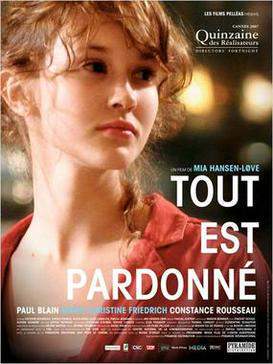
All Is Forgiven (2007) movie poster

Characters & Themes

All Is Forgiven (2007) Characters, Setting & Themes Explained

Release, runtime and language
2007 · 105 mins · French
Directed by
Mia Hansen-Løve
Starring
Olivia Ross, Paul Blain, Alice Langlois, Carole Franck, Constance Rousseau, Pascal Bongard

A father and daughter are reunited some 11 years after the father’s drug addiction tore the family apart.

On this page (7)
  1. 1 Characters explained (6)
  2. 2 Where & when it takes place
  3. 3 Themes & meaning (3)
  4. 4 Character & meaning questions
  5. 5 Movie threads
  6. 6 Movies like All Is Forgiven
  7. 7 Every angle

6 main characters · contains spoilers

All Is Forgiven Characters Explained: Who Is Who

The main characters of All Is Forgiven (2007), heroes and villains: what drives them, how they change over the course of the story and what each of them reveals about the film's bigger ideas.

  • Victor (Paul Blain)

    Victor is a restless, underemployed writer whose descent into alcohol and drugs fractures his marriage and estranges him from his daughter. He seeks rehab after a pivotal relationship with Gisèle, but his past continues to haunt his family. He remains capable of tenderness, yet his flaws drive the tragedy and eventual absence from Pamela’s life.

    • 🎭 Antihero
    • 🧪 Addict
    • 💔 Complex
  • Annette (Marie-Christine Friedrich)

    Victor's wife, who moves to Paris seeking to cure the marital crisis by distance. Her decision to leave reflects both love and necessity, and she questions the possibility of forgiveness as she protects her daughter. Her absence shapes Pamela’s longing and the mother's determination to shield her child.

    • 🌍 Exile
    • 💔 Protective
    • 🕊️ Mother-daughter bond
  • Gisèle (Olivia Ross)

    A fellow addict who becomes Victor’s lover, her overdose catalyzes his decision to seek treatment. She embodies the self-destructive pull of addiction and the collateral damage it inflicts on others. Her presence accelerates Victor’s reckoning with his life choices.

    • 💊 Addict
    • 💥 Catalyst
    • 💫 Tragic figure
  • Pamela (Teenager) (Constance Rousseau)

    Victor and Annette’s daughter, who receives a message from her paternal aunt years later and begins to test the possibility of knowing her father. Her adolescence is framed by absence and curiosity, shaping her sense of self and family.

    • 👩‍👧 Daughter
    • 🕯️ Memory
    • 🗺️ Search for father
  • Pamela (Child) (Victoire Rousseau)

    The younger version of Pamela, whose early life is marked by separation and distance from her father. The child’s perspective foregrounds the impact of broken family dynamics on trust and development.

    • 👧 Family
    • 🧭 Gap
    • 💔 Distance
  • Martine (Carole Franck)

    Pamela’s paternal aunt who reaches out across the years, initiating contact and providing a route for Pamela to learn about her father. She acts as a bridge between generations and between silence and storytelling.

    • 👩‍👧 Aunt
    • 🕊️ Messenger
    • 🗝️ Bridge

Last updated: February 20, 2026 at 00:16

Was this helpful?

Setting

Where and When Does All Is Forgiven Take Place?

The setting of All Is Forgiven (2007): the year and time period, the places and locations, and how they shape the characters, the mood and the tension of the story.

Time period

The story unfolds over more than a decade, tracing Victor's downward spiral, his rehabilitation, and Pamela's coming of age as she learns the truth about her father. It moves from the initial separation to an 11-year gap before a fragile reunion, then to Victor's sudden death. The timeline emphasizes long-term consequences of addiction and estrangement on a family.

Location

Austria, Paris, Caracas

The narrative moves across three core settings: Austria, where Victor and Annette first live with their daughter Pamela; Paris, where Annette relocates hoping to salvage the marriage; and Caracas, where Pamela is sent as her mother seeks distance and healing. The film contrasts a provincial domestic life with urban European centers, highlighting the distance that grows between parents and child. The settings ground the family drama in real places that reflect cultural shifts and emotional landscapes.

  • 🇦🇹 Austria
  • 🇫🇷 Paris
  • 🇻🇪 Caracas

Last updated: February 20, 2026 at 00:16

Was this helpful?

3 major themes

All Is Forgiven Meaning: Themes & Message Explained

What is All Is Forgiven (2007) really about? The emotional, social and philosophical themes the film keeps returning to, its symbolism and the message beneath the surface.

  • Addiction

    Addiction drives the core conflict, shaping Victor's behavior and tearing the family apart. The escape of drug use is depicted through cycles of hope and relapse, culminating in rehab as a turning point rather than a cure. The theme examines how dependency reshapes trust, power dynamics, and personal identity.

  • Family Bonds

    The film probes the fragility of family ties when infidelity and separation strain loyalty. It traces attempts at reconciliation, even when past hurts linger, and shows how love persists despite absence. The path toward forgiveness remains uncertain, reflecting the complexities of real relationships.

  • Memory and Letters

    A thread of memory runs through the narrative, with Victor's final poems acting as a bridge to Pamela. The German poem about loss and rebirth becomes a vessel for understanding and translating emotion across generations. Pamela's later translation of the poems cements memory as a tool for connection and identity.

Last updated: February 20, 2026 at 00:16

Was this helpful?

Character & theme questions

All Is Forgiven Characters & Meaning: Your Questions Answered

The questions people ask about All Is Forgiven (2007): who the characters really are, their relationships, what the symbols mean, where it takes place and what the movie is really about. Each answer contains spoilers.

Q1

Where is the movie set?

The story unfolds across three main locations: Austria, where Victor and Annette first live with their daughter; Paris, where Annette moves hoping to save the marriage; and Caracas, where Pamela is sent as her mother seeks distance and healing. These settings reflect the cultural and emotional shifts that occur as the family grows apart.

  • austria
  • paris
  • caracas
  • setting
  • locations
  • family drama
Q2

When does the story take place?

The narrative spans more than a decade, beginning with the family's initial separation due to Victor's addiction, moving through an 11-year gap before father and daughter reunite, and concluding with Victor's sudden death. The long timeline emphasizes the lasting impact of addiction and estrangement on a family.

  • timeline
  • decade
  • 11 years
  • period
  • era
Q3

What are the main themes?

The film centers on three interconnected themes: addiction and its devastating effect on family trust; the fragility and resilience of family bonds tested by infidelity and separation; and the role of memory and letters, particularly Victor's poems, as a bridge across generations and a tool for connection after loss.

  • addiction
  • family bonds
  • memory
  • themes
  • forgiveness
  • reconciliation
Q4

How does addiction drive the story?

Victor's descent into alcohol and drugs fractures his marriage and estranges him from his daughter Pamela. The film depicts cycles of hope and relapse, with rehab serving as a turning point rather than a cure. His addiction reshapes trust, power dynamics, and personal identity throughout the family.

  • addiction
  • drugs
  • alcohol
  • rehab
  • victor
  • family breakdown
Q5

Who is Victor and what is his role?

Victor is a restless, underemployed writer whose struggle with addiction destroys his marriage and alienates him from his daughter. Though capable of tenderness, his flaws drive the family's tragedy and eventual absence from Pamela's life. A pivotal relationship with his lover Gisèle ultimately leads him to seek treatment.

  • victor
  • writer
  • father
  • addiction
  • protagonist
Q6

Who is Annette and what happens to her?

Annette is Victor's wife who moves to Paris seeking to salvage their failing marriage. Her decision reflects both love and necessity, and she wrestles with whether forgiveness is possible while protecting her daughter from Victor's destructive behavior. Her absence profoundly shapes Pamela's longing.

  • annette
  • mother
  • paris
  • wife
  • protection
Q7

Who is Pamela and what defines her character?

Pamela is Victor and Annette's daughter, whose adolescence is marked by her father's absence and her mother's protective distance. Years later, prompted by contact from her paternal aunt Martine, she begins exploring the possibility of reconnecting with her father. Her journey is defined by absence, curiosity, and her evolving sense of family identity.

  • pamela
  • daughter
  • teenager
  • coming of age
  • identity
Q8

What is the significance of Victor's poems?

Victor's final poems act as a bridge between him and Pamela. Written in German about loss and rebirth, they become a vessel for understanding and translating emotion across generations. Pamela's later translation of these poems cements memory as a tool for connection and personal identity.

  • poems
  • letters
  • memory
  • translation
  • german
  • connection
Q9

How does the movie end and what does it mean?

The ending is bittersweet: Victor dies just as his daughter begins to know him. However, his final letter and poems offer a sense of closure, embodying the theme of loss and rebirth. The film suggests that understanding and connection can come too late, but still provide meaning.

  • ending
  • death
  • closure
  • bittersweet
  • poems
  • reconciliation
Q10

What is the emotional tone of the film?

The film carries a melancholic tone, with a slow and deliberate pacing that emphasizes emotional consequence rather than action. Despite the heavy subject matter of drug abuse, family breakdown, and death, there are moments of fragile hope. The overall feeling is one of quiet sadness with moments of reconciliation.

  • tone
  • mood
  • melancholy
  • emotional
  • slow pacing
  • family drama

Movie threads

More Movies Like All Is Forgiven, by Mood & Story

Curated lists built around what makes All Is Forgiven tick: the same mood, the same kind of story or the same emotional payoff. Each list explains why these movies belong together.

Movies about fragile family reconciliation like All Is Forgiven

Stories of broken families finding imperfect closure and quiet forgiveness. If you were moved by the bittersweet reunion in All Is Forgiven, explore these other films about families mending old wounds. This collection features deeply emotional dramas that focus on forgiveness, acceptance, and the complex legacy of separation.

  • bittersweet
  • reflective
  • family drama
  • emotional
  • melancholic
  • poignant
  • Tone: melancholic, bittersweet
  • Pacing: slow, deliberate
Why these movies?

The story pattern: These narratives often begin with a long-standing separation caused by addiction, conflict, or tragedy. The story follows a tentative and often difficult reunion, where characters grapple with past hurts and the impossibility of a perfect fix. The journey is typically internal, focusing on emotional reckoning, and culminates in a resolution that acknowledges the pain of the past while offering a fragile, bittersweet form of peace or understanding.

Why they belong together: Movies in this thread share a melancholic tone and heavy emotional weight, driven by themes of family dysfunction, forgiveness, and loss. They are united by a slow, deliberate pacing that allows for deep character reflection and a poignant, bittersweet ending feel that resonates long after the credits roll.

Meditative movies about grief and loss like All Is Forgiven

Slow-burn character studies exploring the quiet, lingering aftermath of personal loss. For viewers who appreciated the somber, reflective mood of All Is Forgiven, this collection highlights films that explore grief with a similar quiet intensity. These are character-driven stories where emotion is shown rather than told, focusing on the slow, painful, and ultimately healing process of confronting loss.

  • grieving
  • lonely
  • somber
  • reflective
  • melancholic
  • emotionally raw
  • Tone: somber, reflective, melancholic
  • Pacing: slow, meditative
Why these movies?

The story pattern: The plot is secondary to the emotional landscape. The story follows a protagonist navigating the world after a significant loss. There is no rush to 'get over it'; instead, the film lingers on small moments, memories, and the struggle to find meaning. The conflict is internal, and the resolution is often ambiguous or bittersweet, reflecting that grief is a journey without a clear endpoint.

Why they belong together: These films are grouped by their shared melancholic and somber mood, heavy emotional weight, and slow, deliberate pacing. They prioritize emotional authenticity over plot twists, creating a reflective and deeply resonant viewing experience for those drawn to stories about the human condition.

If you liked this

Movies Like All Is Forgiven

Similar movies to All Is Forgiven: the same genre, themes or kind of story. Each one comes with its own plot summary, timeline and ending explained.

Browse all movie summaries

Every angle

All Is Forgiven (2007) Explained: Plot, Timeline & Characters

Everything about All Is Forgiven in one place: what happens in the plot summary, the timeline in chronological order, the characters and meaning and a spoiler-free summary. What's After the Movie adds the cast, box office and post-credit scenes.

Coming soon on iOS and Android

The Plot Explained Movie Summary App

Plot summaries, endings explained and timelines on your phone. Catch up on any movie in minutes, save your favorites and never miss a twist again.

Be the first to know when we launch. Your email stays private, always.

Learn more about the app