Plot Explained Spoilers guaranteed!
Plot Explained

Browse by genre

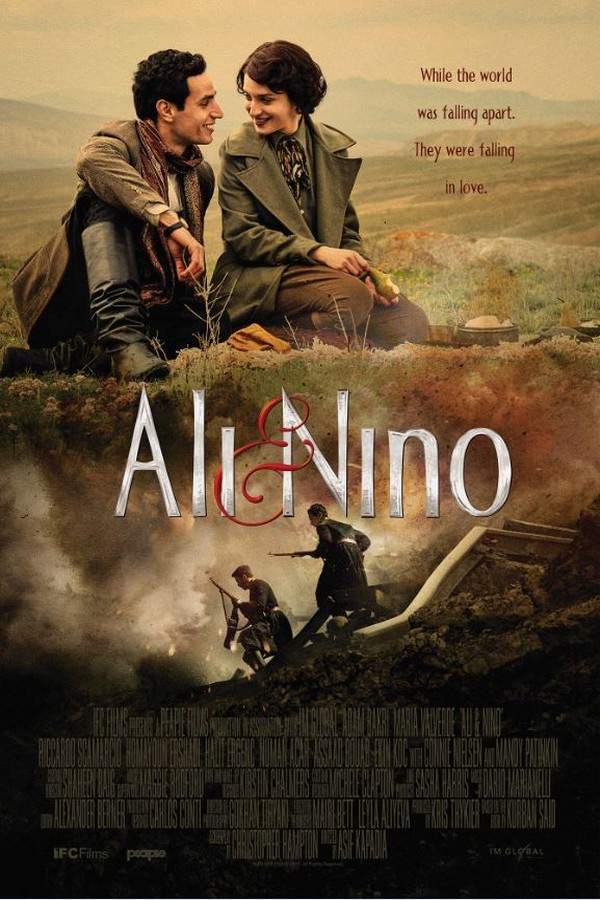
Ali and Nino (2016) movie poster

Plot Summary

Ali and Nino (2016) Plot Summary Explained

Release, runtime and language
2016 · 100 min · English
JustWatch #26,033 6
Directed by
Asif Kapadia

In 1918 Azerbaijan, Ali and Nino, from different religious backgrounds, defy social norms and marry. Their intense love faces challenges as Nino seeks independence within a conservative society, and the outbreak of World War I further complicates their relationship. They must confront cultural expectations and personal desires as their bond is tested amidst political upheaval and societal change.

On this page (6)
  1. 1 Where to watch
  2. 2 What happens: full plot
  3. 3 Plot questions answered
  4. 4 Movie threads
  5. 5 Movies like Ali and Nino
  6. 6 Every angle

Where to watch

Where to Watch Ali and Nino (2016)

Where can you watch Ali and Nino? Stream, rent or buy it in the US, including on AMC+, Philo and Sundance Now: current JustWatch availability with up-to-date prices.

Streaming availability powered by JustWatch

Full plot summary · contains spoilers

What Happens in Ali and Nino: Full Plot Summary

The whole story of Ali and Nino (2016) explained, from the opening scene to the final frame: every key event, every twist and what it all adds up to. Read it as a quick recap before the sequel, to check a scene you missed, or to finally understand what really happened.

Set in the twilight years of the Russian Empire, the story centers on a forbidden romance between Ali—a Muslim from Azerbaijan who calls the oil-rich city of Baku home, living within the stately walls of the Shirvanshir Palace—and Nino, a Georgian Orthodox Christian from the affluent Kipiani family who also resides in Baku. Their world is one of cultural contrasts and family expectations, where love begins to bloom even as war looms on the horizon and the old order trembles under the weight of history. As World War I erupts in Europe, the couple’s hopes are tested by the pressure of relatives and social norms, while the bustling, teeming city of Baku frames their secret meetings and shared dreams.

A fragile accord forms as Malik, an Armenian friend who supports uniting the two families, proposes a path to approval for the union. Yet beneath this cooperative surface, Malik harbors a dangerous, unspoken fixation on Nino. His feelings complicate the delicate balance of loyalty and friendship, turning a hopeful arrangement into a volatile powder keg. The couple’s attempt to navigate the will of aristocratic parents collides with Malik’s possessive jealousy, and a fateful night out at the opera becomes the stage for a dramatic and lethal turn.

The story takes a brutal turn when Malik abducts Nino in a misguided bid to force his own marriage to her. The act shatters the fragile harmony around Ali and Nino, prompting a fierce confrontation in which Ali faces Malik and defeats him with a dagger. The clash leaves Ali wounded and forcing him into a perilous exile, as he escapes to Dagestan to recover and hide from the wrath of Malik’s powerful Nachararyan family. The violence of this moment also intersects with the broader upheaval of the era, as the Russian Revolution begins to reshape geography, power, and identity across the region.

Back in Baku, a different thread of worry tightens its grip. Tamar fears she might never see her daughter married off to a suitable match, and she contemplates sending Nino to Moscow for safety and status. Yet others have their own plans for the young lovers. In the mountains, the steadfast Mustafa remains a guardian of their fate, reuniting Ali and Nino after a period of separation. Their night of closeness leads to a simple, intimate vow: with Nino’s virginity now in the past, the couple chooses a union without the ceremony of a priest, a decision Mustafa affirms with a quiet, personal blessing. The wedding is framed not by grand pageantry but by a shared belief in their right to happiness, a choice that signals a life lived on their own terms rather than by convention.

With their bond secured, the two couples embrace a life steeped in a quiet, almost pastoral happiness. Their world begins to resemble a dream of simple contentment, even as the tides of history push at the edges of their peace. The newly independent Azerbaijan Democratic Republic emerges, and Ali returns to Baku to take on a significant role as Deputy Foreign Minister, working to lay down a future for a newborn nation. He and Nino start to build a family in a land where newfound freedom promises stability and hope. They witness their country forging friendly ties with its neighbors, even as the shadow of Bolshevik ambitions darkens the horizon.

Fate, however, remains unkindly precise. News comes of tens of thousands of Russian troops amassing on the border, and fear grips the fledgling government. Relations fray as the state flees by train to escape the encroaching danger. In a final act of devotion to his homeland, Ali makes a sacrificial choice: he leaps from the moving train and detonates a bridge to delay the pursuing forces, ensuring Nino and their daughter can reach safety in Paris. The sacrifice costs Ali his life, and he dies defending the country he helped to shape.

The story closes in a reflective epilogue that traces the consequences of those sacrifices and triumphs. It states that Ali Khan Shirvanshir died at the young age of 24, and that Fatali Khan, the Prime Minister, was assassinated six weeks later. It notes that it would be 71 years before Azerbaijan reclaimed its independence, in 1991, and that Nino and her daughter escaped to Paris, never returning to Baku. The arc of love, loyalty, and national identity thus threads through the decades, offering a poignant meditation on personal sacrifice and the enduring search for freedom.
Last updated: October 09, 2025 at 16:20

Was this helpful?

Plot questions answered

Ali and Nino Plot Explained: Your Questions Answered

The questions people ask most about Ali and Nino (2016): what happens in the confusing scenes, why the characters do what they do, the twists, hidden details and what the ending means. Each answer contains spoilers.

Q1

Why does Malik kidnap Nino in the movie?

Malik, who is Ali's Armenian friend and also in love with Nino, kidnaps her because he harbors a possessive fixation on her. Despite appearing supportive of Ali and Nino's relationship by proposing a way to unite their families, Malik's hidden feelings led him to abduct Nino in a misguided attempt to force her to marry him instead.

Foreshadowing: Earlier, Malik's proposal to help unite the families hints at his true, more selfish motivations beneath the surface of friendship.

  • malik
  • nino
  • kidnapping
  • love triangle
  • betrayal
Q2

How does Ali end up in Dagestan after confronting Malik?

After Ali defeats Malik in a violent confrontation and kills him with a dagger, Ali is badly wounded himself. To escape retaliation from Malik's powerful Nachararyan family, Ali is forced to flee to Dagestan to recover from his injuries and hide until the danger passes.

Foreshadowing: The violent confrontation at the opera marks a turning point from romance to danger, making exile inevitable.

  • ali
  • dagestan
  • exile
  • injury
  • nachararyan family
Q3

Why do Ali and Nino marry without a priest?

After being reunited in the mountains by Mustafa, Ali and Nino spend a night together, and Nino loses her virginity. Because of this and their desire to be together without waiting for family approval or religious ceremony, they choose to marry with Mustafa's personal blessing rather than through a traditional priest.

Foreshadowing: Mustafa's role as a loyal guardian throughout the story culminates in his willingness to officiate their union outside conventional boundaries.

  • marriage
  • priest
  • mustafa
  • mountains
  • union
Q4

What happens to Ali at the end of the film?

As the Bolshevik forces pursue the Azerbaijani government fleeing by train, Ali makes the ultimate sacrifice. He jumps from the moving train and detonates a bridge to destroy it, slowing the enemy's advance. He is shot and killed in the act, ensuring Nino and their daughter can reach safety in Paris.

Foreshadowing: Ali has transitioned from fighting for personal love to fighting for his nation, making his patriotic sacrifice the logical culmination of his character arc.

  • ali death
  • bridge
  • sacrifice
  • bolsheviks
  • train
Q5

Why does Nino flee to Paris in the movie?

When Russian Bolshevik troops (around 30,000) mass at the border threatening the fledgling Azerbaijan Democratic Republic, the government flees by train. Nino and their daughter board the train heading toward Paris to escape the advancing communist forces, while Ali stays behind to defend his country.

Foreshadowing: The film establishes early on that the political upheaval surrounding World War I and the Russian Revolution will test the couple's relationship.

  • paris
  • escape
  • bolsheviks
  • daughter
  • exile
Q6

How does Azerbaijan gain independence in the story?

Following the Russian Revolution in 1917, the Russian Empire collapses, creating a power vacuum in the Caucasus region. This allows the Azerbaijan Democratic Republic to declare independence in 1918, becoming the first Muslim democratic republic in the world.

Foreshadowing: The political chaos following the Russian Revolution directly enables the birth of the new nation.

  • azerbaijan democratic republic
  • independence
  • russian revolution
  • 1918
Q7

Why is Ali appointed Deputy Foreign Minister?

After returning from Dagestan following the turmoil, Ali becomes involved in the newly independent Azerbaijan Democratic Republic. His education, family background, and leadership qualities lead to his appointment as Deputy Foreign Minister, where he works to establish treaties with neighboring countries.

Foreshadowing: Ali's transition from personal romance to national responsibility represents the film's shift from intimate story to political epic.

  • deputy foreign minister
  • baku
  • government
  • nation building
Q8

What happens to the Azerbaijan Democratic Republic in the film?

The Azerbaijan Democratic Republic survives for less than two years. In 1920, Bolshevik forces invade, and the republic falls. The epilogue notes that it would take 71 years, until 1991, before Azerbaijan regains its independence following the collapse of the Soviet Union.

Foreshadowing: The mounting Bolshevik threat throughout the final acts foreshadows the republic's inevitable fall.

  • democratic republic
  • bolshevik invasion
  • 1920
  • soviet union
  • 1991
Q9

What happens to Malik in Ali and Nino?

Malik is killed by Ali during a confrontation that erupts after his abduction of Nino. In the struggle, Ali uses a dagger to kill Malik, ending the immediate threat but also setting in motion the chain of events that forces Ali into exile.

Foreshadowing: Malik's possessive jealousy has been building beneath the surface of his friendship with Ali, making violent conflict inevitable.

  • malik death
  • dagger
  • confrontation
  • killed
Q10

Why does Tamar consider sending Nino to Moscow?

Tamar, Nino's mother, worries that her daughter may never find a suitable husband given the complications of their relationship with Ali. She contemplates sending Nino to Moscow both for safety amid the political chaos and for the opportunity to make a more conventional aristocratic match.

Foreshadowing: Tamar's scheming reflects the persistent pressure of family expectations and social norms that threatens the couple throughout the film.

  • tamar
  • moscow
  • marriage
  • family expectations
Q11

What happens to Ali and Nino's daughter in the movie?

Ali's daughter escapes to Paris with Nino as the Bolshevik forces advance. The epilogue confirms that neither Nino nor her daughter ever return to Baku, living in Paris after Ali's sacrifice.

Foreshadowing: The train scene shows Nino and their daughter boarding for safety while Ali remains behind to fight.

  • daughter
  • paris
  • escape
  • family

Movie threads

More Movies Like Ali and Nino, by Mood & Story

Curated lists built around what makes Ali and Nino tick: the same mood, the same kind of story or the same emotional payoff. Each list explains why these movies belong together.

Epic Historical Romances like Ali and Nino

Sweeping romances where love battles fate during wars and revolutions. Find movies like Ali and Nino that feature sweeping, forbidden love stories set against major historical conflicts. These films combine intense romance with the drama of war and societal change, resulting in emotionally heavy and often tragic narratives.

  • tragic
  • romantic
  • epic
  • melancholic
  • tense
  • oppressive
  • Tone: bittersweet, tragic
  • Pacing: steady, epic
Why these movies?

The story pattern: These narratives follow lovers from different worlds whose relationship is forbidden by societal or cultural norms. Their personal struggle for happiness unfolds concurrently with a large-scale historical conflict, such as a war or revolution, which becomes an active antagonist to their love, testing their bond to its limit.

Why they belong together: Movies are grouped here for their shared core of a high-stakes romance set within a significant historical period. They share a high emotional weight, a tense and oppressive mood, and a focus on the devastating impact of external forces on personal relationships.

Movies about Cultural Conflict and Sacrifice like Ali and Nino

Intense relationships tested by family, tradition, and cultural divides. If you liked Ali and Nino's theme of love battling cultural expectations, explore these movies. They feature passionate relationships threatened by family, tradition, and societal norms, often requiring heavy sacrifices from the characters.

  • tense
  • romantic
  • melancholic
  • oppressive
  • tragic
  • hopeful
  • Tone: bittersweet, tense
  • Pacing: steady, character-driven
Why these movies?

The story pattern: The plot follows two individuals from starkly different backgrounds who fall deeply in love. Their union is challenged not just by external forces like family disapproval, but by the internal conflict of navigating their separate identities. The story often revolves around the sacrifices required to be together, questioning whether love can truly conquer deep-seated cultural divides.

Why they belong together: These films are united by their exploration of love as an act of rebellion against societal constraints. They share a heavy emotional weight, a tense and melancholic mood, and a narrative structure that prioritizes the emotional toll of cultural conflict on a relationship.

If you liked this

Movies Like Ali and Nino

Similar movies to Ali and Nino: the same genre, themes or kind of story. Each one comes with its own plot summary, timeline and ending explained.

Browse all movie summaries

Every angle

Ali and Nino (2016) Explained: Plot, Timeline & Characters

Everything about Ali and Nino in one place: what happens in the plot summary, the timeline in chronological order, the characters and meaning and a spoiler-free summary. What's After the Movie adds the cast, box office and post-credit scenes.

Coming soon on iOS and Android

The Plot Explained Movie Summary App

Plot summaries, endings explained and timelines on your phone. Catch up on any movie in minutes, save your favorites and never miss a twist again.

Be the first to know when we launch. Your email stays private, always.

Learn more about the app