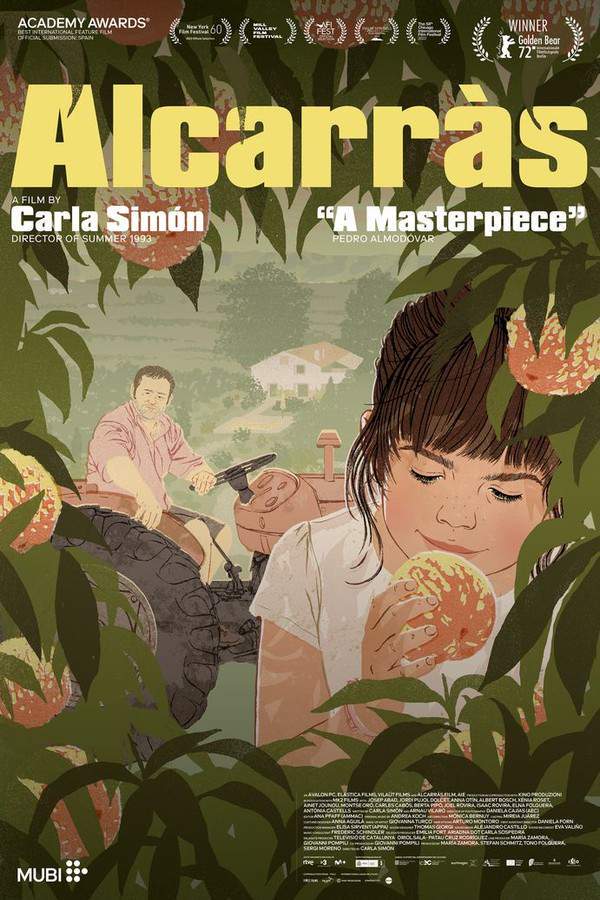
Set in the rural village of Alcarràs in Catalonia, Spain, the Solé family has tended peach orchards on the same land for generations. In the height of summer, during the harvest, the film follows their daily life as they gather fruit and tend to the farm. The land they’ve farmed for decades, once given to them as a verbal promise by the Pinyol family during the Spanish Civil War, is now being reclaimed. The new landowner, Mr. Pinyol, plans to uproot the orchard and install solar panels, leaving the Solés with no legal recourse and facing the end of their way of life.
At the center of the family is Quimet, Jordi Pujol Dolcet the stubborn and hot-tempered patriarch, who refuses to accept the situation. He believes the land is theirs by right and is determined to harvest the fruit and resist eviction. His stance sets the tone for a summer that will test loyalties and long-held convictions, casting a shadow over the family’s routine rhythms of pruning, picking, and packing the peaches.
His wife Dolors, Anna Otin, tries to keep the family together and sane in the face of upheaval. She moves between the fields and the house with a quiet resolve, hoping to hold on to a sense of normalcy even as the land’s future hangs in the balance. Their teenage children, Roger, Albert Bosch, and Mariona, Xènia Roset, inhabit two different responses to growing uncertainty. Roger is restless and outwardly questions traditional paths, imagining new, modern ways to earn a living, including ventures like cannabis cultivation. Mariona, meanwhile, turns inward and outward through dance and performance, practicing for the village’s traditional pageant as a way to cope with the changes swirling around them.
The younger generation—Iris, Ainet Jounou, along with cousins Pau, Isaac Rovira, and Pere, Joel Rovira—moves through the orchard with a lighter touch, largely unaware of the adult conflicts that threaten their family’s way of life. They play among the trees, stage mock trials of a “stolen tractor,” and build forts in the fields, capturing a sense of carefree innocence that stands in stark contrast to the mounting pressure surrounding the land. Their afternoons are filled with sun-drenched ramblings, and their laughter and curiosity knit a fragile thread that keeps the family connected even as distant threats loom.
As summer deepens, the tension among the adults grows more palpable. Quimet’s relationship with his brother and uncle becomes strained as they navigate divergent ideas about how to respond to the eviction and the future of the orchard. Negotiations with Mr. Pinyol falter, and the orchard’s machinery finally arrives, signaling a relentless march toward dismantling the trees that have sustained generations of the Solé family. The sound of chainsaws and metal vying for space in the landscape becomes a stark reminder that time, memory, and livelihood are all on the line.
In the quiet moments, the family gathers for what may be their last lunch under the shade of the trees, a scene that feels almost ceremonial in the face of loss. The children dance one final time in the orchard, a poignant blend of joy and farewell, even as the bulldozers draw nearer and the day’s light begins to wane. The film paints a patient, intimate portrait of a community at the edge of change, where love for the land and loyalty to kin contend with the pressures of progress and the imperatives of survival. Through its measured pace and humane observation, the story invites reflection on the costs of upheaval and the enduring bonds that keep a family rooted when the ground beneath them shifts.












-p3Su0ASt-khmxw.jpg)