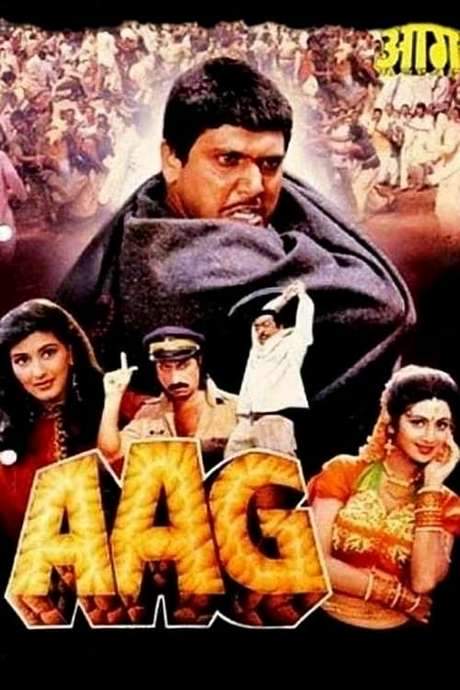
Year: 2004
Runtime: 144 mins
Language: Marathi
Director: Kedar Shinde
Shriranga Deshmukh, weary of the women around him, returns home only to discover he has acquired a supernatural ability to hear any woman's thoughts. Suddenly privy to their inner dialogues, he navigates a series of comedic misunderstandings and revelations, echoing the premise of “What Women Want.”
Find where to stream, rent, or buy Aga Bai Arechya (2004) in the US with current JustWatch availability, up-to-date pricing, and platform listings for subscription, rental, and digital purchase options.
Warning: spoilers below!
Haven’t seen Aga Bai Arechya yet? This summary contains major spoilers. Bookmark the page, watch the movie, and come back for the full breakdown. If you're ready, scroll on and relive the story!
Trace every key event in Aga Bai Arechya (2004) with our detailed, chronological timeline. Perfect for unpacking nonlinear stories, spotting hidden connections, and understanding how each scene builds toward the film’s climax. Whether you're revisiting or decoding for the first time, this timeline gives you the full picture.
Last updated: October 09, 2025 at 15:08
Find frequently asked questions about the Aga Bai Arechya (2004) timeline, including chronological order, nonlinear jumps, cause-and-effect links, and scene sequence clarifications. This timeline FAQ helps explain when key events happen, how moments connect, and why the story unfolds in that specific order.
During the annual Jatra festival in his village, Ranga jokingly wishes aloud, "If only I could understand what women want!" This wish, spoken in mischief during the fair's chants and rituals, becomes the catalyst that triggers his supernatural ability. On the train back to Mumbai, he suddenly begins hearing the innermost thoughts of every woman around him, creating a chaotic torrent of unspoken truths that clash with what they verbalize.
The wish is voiced during the Jatra, the same festival he returns to at the film's conclusion.
Ranga initially blurts out what he hears from women's minds directly in the middle of conversations on streets and buses, leaving people around him feeling exposed and uneasy. At work, his sudden verbatim reactions to colleagues' private thoughts spark suspicion and fear. His family begins treating him as unstable because he seems to know things he shouldn't, creating panic about his mental state.
The onset occurs immediately upon his return from the village, with no warning or preparation.
Dr. Suhas Phadke, the psychiatrist he visits for help, reframes his experience entirely. She tells him that hearing thoughts is not madness but possibly a gift he isn't used to. Her crucial advice is to not react impulsively to what he hears; instead, she tells him to use this power to understand, connect, and heal. This guidance transforms his approach from fear to curiosity and constructive use.
The therapy session marks the turning point from chaos to purposeful application.
Through his mother's thoughts, Ranga discovers the hidden family history: his father, once a mill leader, froze during a strike negotiation and was humiliated into silence, stepping away from leadership and from speech. Using this understanding, Ranga approaches his father with compassion rather than judgment, gradually mending the broken bond between them and helping his father find forgiveness.
The father's silence has been present since the beginning of the film, hinted at through his withdrawn behavior.
Using his ability to hear her thoughts, Ranga discovers that the woman he once saw as merely formidable is someone with a difficult past. His boss is divorced and once dreamed of being a homemaker but was forced to shoulder professional responsibilities after a partner's financial missteps. With this insight, Ranga treats her with growing respect and warmth, transforming their professional dynamic from adversarial to collaborative.
Ranga initially views her as domineering, setting up the later revelation of her vulnerability.
While visiting a government office, Ranga overhears the inner thoughts of a woman planning a bombing. He quickly moves to intervene, preventing the catastrophe and saving countless lives. At the subsequent press conference, he delivers a heartfelt monologue about the complexity and resilience of women's minds, expressing gratitude for the empathy the experience sparked in him.
This ability to hear dangerous thoughts comes as a result of his refined skills in using the power for understanding.
One year later, Ranga returns to the same Jatra where his journey began, and he discovers his supernatural gift has vanished. However, rather than feeling Loss, he experiences peace. His wife initially feels disappointment at the loss of this power, but she comes to understand that the real lesson remains: true connection doesn't come from supernatural ability, but from listening, respecting, and standing with others in their humanity.
The cycle completes at the same location where the ability was first gained, symbolizing natural completion.
Using his new empathy, Ranga begins perceiving Suman not merely as a wife or task to manage, but as a woman carrying her own hidden burdens. He becomes a more supportive partner, standing by her during family tensions. He arranges a long-awaited visit for her to see her mother, fulfilling a yearning she'd had since their marriage. Rather than insisting on "being the man of the house," he embraces partnership and equality.
The early scenes show Suman as a nagging presence, which transforms into mutual understanding.
Ranga's insights ripple outward in heartwarming ways. He becomes supportive of Suman during family tensions, comforts his mother with new consideration, and forms genuine bonds with his grandmother, seeing them as individuals with their own burdens and stories. He also reconnects with a former colleague who had been sidelined, restoring her dignity and place in the workplace. The household dynamics shift toward equality and mutual respect.
The transformation begins after his therapy session and applies directly to all female family members.
Ranga's father had long carried the weight of a failed moment from years past. Through his mother's thoughts, Ranga learns the family secret: his father, once a mill leader during a labor movement, froze in a crucial strike negotiation and was publicly humiliated. This shattered his pride and caused him to step away from leadership and essentially from speech itself, creating years of estrangement from his family.
The father's withdrawal is established early, with the cause remaining hidden until Ranga develops his ability.
After preventing the bombing and saving lives, Ranga encounters the would-be terrorist again. Hearing her emotional backstory through her thoughts, he tries to guide her toward redemption rather than hatred. This encounter underscores the film's central message about empathy having the power to transform violence into hope, showing that understanding someone's pain can lead to healing rather than punishment.
This redemption arc follows directly from the bombing prevention and demonstrates the ultimate application of his gift.
Discover curated groups of movies connected by mood, themes, and story style. Browse collections built around emotion, atmosphere, and narrative focus to easily find films that match what you feel like watching right now.
Stories where an extraordinary ability leads to deeper empathy and self-discovery.If you liked Aga Bai Arechya, you'll enjoy these films where characters gain a special ability that helps them understand others better. These stories explore personal growth through supernatural means, focusing on empathy, communication, and heartfelt connections in a comedic and uplifting way.
The narrative pattern begins with the protagonist acquiring an unexpected power, often causing initial chaos or comedy. This leads to a journey of discovery as they learn to interpret and use their ability, culminating in a positive transformation where the power becomes a tool for building empathy and resolving personal conflicts, rather than just a source of gags.
These films are grouped together because they share a core premise: a supernatural device used for character-driven, relational growth. They balance comedy with heartfelt emotion, maintain a hopeful tone, and conclude with a protagonist who has gained significant emotional intelligence, making the experience both entertaining and uplifting.
Lighthearted stories that use humor to explore the dynamics between men and women.Find more films like Aga Bai Arechya that use comedy to explore what women want. These lighthearted stories focus on family dynamics, workplace relationships, and personal transformation with an empathetic and hopeful vibe, perfect for viewers looking for uplifting comedies about relationships.
The stories typically follow a protagonist, often a man, who is initially frustrated or confused by the women in his life. A plot device—supernatural or situational—gives him unprecedented insight into their world, leading to a series of comedic yet revealing episodes. The journey culminates in a newfound appreciation and empathy, strengthening his key relationships.
These movies share a specific comedic vibe: using a high-concept premise to explore relatable themes of communication and empathy within families and relationships. They have a steady pacing, medium emotional weight, and consistently balance laughs with genuine heart, resulting in an experience that is both funny and feel-good.
Don't stop at just watching - explore Aga Bai Arechya in full detail. From the complete plot summary and scene-by-scene timeline to character breakdowns, thematic analysis, and a deep dive into the ending - every page helps you truly understand what Aga Bai Arechya is all about. Plus, discover what's next after the movie.
Read a complete plot summary of Aga Bai Arechya, including all key story points, character arcs, and turning points. This in-depth recap is ideal for understanding the narrative structure or reviewing what happened in the movie.
Discover the characters, locations, and core themes that shape Aga Bai Arechya. Get insights into symbolic elements, setting significance, and deeper narrative meaning - ideal for thematic analysis and movie breakdowns.
Discover movies like Aga Bai Arechya that share similar genres, themes, and storytelling elements. Whether you’re drawn to the atmosphere, character arcs, or plot structure, these curated recommendations will help you explore more films you’ll love.
Aga Bai Arechya (2004) Plot Summary & Movie Recap
Aga Bai Arechya (2004) Scene-by-Scene Movie Timeline
Aga Bai Arechya (2004) Spoiler-Free Summary & Key Flow
Movies Like Aga Bai Arechya – Similar Titles You’ll Enjoy
What Women Want (2000) Plot Summary & Ending Explained
What Men Want (2019) Full Movie Breakdown
Bhaiaji Superhitt (2018) Detailed Story Recap
Tirumala Tirupati Venkatesa (2000) Story Summary & Characters
Manmadhudu (2002) Movie Recap & Themes
Aggar (2007) Movie Recap & Themes
Manchi Rojulochaie (2021) Movie Recap & Themes
Aag (1994) Complete Plot Breakdown
Agni Sakshi (1996) Detailed Story Recap
Veruthe Oru Bharya (2008) Movie Recap & Themes
Sanjog (1972) Ending Explained & Film Insights
Fakt Mahilao Maate (2022) Full Movie Breakdown
Abbaigaru (1993) Movie Recap & Themes
Anuraag (1972) Full Summary & Key Details
Chalti Ka Naam Gaadi (1958) Ending Explained & Film Insights