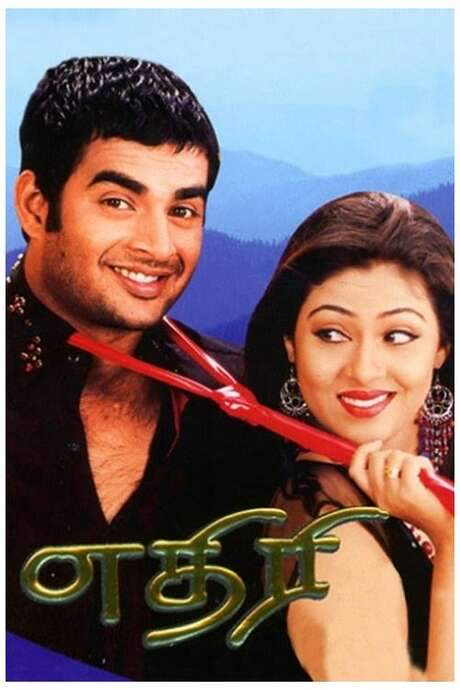
R. Madhavan plays Subramani, known as “Bottle” Mani, who grows up under the care of his lovingOlder sister and brother‑in‑law after their parents’ passing. The couple treats Mani like family, and they even have a daughter who is like a sister to him. When Mani’s brother‑in‑law tries to arrange a marriage between Mani and their daughter, Mani learns that she loves someone else—someone who is jobless just like him. To spare her distress, Mani cancels the wedding plan, but this decision enrages his brother‑in‑law, who then kicks Mani out of the house. What starts as a misguided attempt to protect a loved one spirals into a larger test of loyalty, pride, and sacrifice for the people who matter most to Mani.
In parallel—that is, in the bustling neighborhood of Triplicane—Natarajan Iyer is introduced as a naive Brahmin Tamilian house owner who cherishes a quiet, orderly life. He longs to find the right tenant for the upper portion of his house, yet his traditional fears—especially the possibility of his daughter Gayathri falling for a tenant—drive him to screen every newcomer with caution. He ends up renting to five bachelor students who pretend to be model tenants. Natarajan’s ideal of a peaceful home clashes with the reality of these young men, who hide their mischief behind a veneer of politeness. The situation quickly grows complicated as the group’s pranks and reckless behavior threaten to upend his carefully structured life and endanger his daughter’s safety and future.
To complicate matters further, Mani’s world collides with Natarajan’s when Auto Sampath, a wily auto driver and Mani’s loyal friend, enters the picture. Vivek plays Auto Sampath, and he becomes the catalyst for a bold, if dubious, plan. Auto Sampath suggests recruiting a rowdy to clear the tenants out—an idea he believes will resolve the housing dilemma without the paperwork and trouble of lawyers. He knows Mani’s cunning, but he also senses a way to earn quick money and settle old debts. The scheme hinges on deceiving Natarajan into believing Mani is a feared gangster, “Bottle” Mani, a name that has already earned real fear in the city.
Auto Sampath eventually introduces Mani to Natarajan as a supposed gangster, and the ruse takes hold. In a twist of fate, there is, in fact, a real rowdy named “Bottle” Mani, which makes the disguise more believable and, for a time, more dangerous. The neighborhood’s fear becomes contagious, and even the tenants, who had once pretended to be good students, grow wary. Yet Mani and Auto Sampath begin to win over Gayathri, Kaniha playing the soft, principled daughter of the house owner. The two men’ s efforts gradually help neutralize the initial hostility, and Mani’s growing kindness earns him genuine friendship from Gayathri, who sees a different side of him—one that risks his own comfort for others.
Meanwhile, Priya, played by Sadha, enters as a key figure in a romance rooted in danger and political intrigue. Priya is the daughter of a wealthy, ambitious politician, who pressures her to marry the corrupt police officer Raghavan. The man, Rahman as Raghavan, is a dangerous suitor with a history of cruelty, and he has the power to ruin Priya’s life if she refuses. Priya’s story unfolds in a sequence of tense moments—missed chances, a planned wedding, and a frantic attempt at escape—that intersect with Mani’s world in unexpected ways. The film keeps Priya’s perspective central as her memory of recent events is revealed to be more complicated than it first appeared.
Priya’s backstory is revealed through a flashback that sheds light on the harm she could have faced if she obeyed her father’s wishes. It becomes clear that her attraction to Mani grows as she witnesses his selfless acts—efforts to protect others, stand against coercive power, and resist a forced union that would deprive her of autonomy. The tension between duty, desire, and danger intensifies as Priya’s past and present collide with Mani’s improvised mission to keep the peace in his makeshift family of tenants and friends.
The plot thickens as Raghavan intensifies his pursuit of Priya, aggressively pursuing her in the name of law and order while abusing his authority. Dhanapathi, an inspector who becomes entangled in this web, is a sympathetic ally to Mani and Auto Sampath. Thennavan portrays Inspector Dhanapathi, who ultimately pays a heavy price when Raghavan’s corrupt machinations aim to condemn Mani for a crime he did not commit. When Dhanapathi is killed by Raghavan, Mani’s world tilts toward a quest for justice, and the chase becomes personal.
As Raghavan escalates, he and his colleagues lay a trap by arresting Mani on a false charge, while torturing others to bolster the frame. Mani escapes with the help of Auto Sampath, the tenants, and a supportive police officer who believes in the truth of Mani’s character. The confrontation leads to a brutal clash in which Raghavan and his men are outmaneuvered, but not without heavy costs. Mani’s brother‑in‑law, Natarajan, the tenants, and Auto Sampath are imprisoned, creating a web of consequences that threaten every close bond Mani has built.
The climactic showdown pits Mani against Raghavan in a direct confrontation. Priya’s father enters the scene with a desperate attempt to subdue Mani, but Mani counters with courage and a swift stroke of justice, aided by the discovery of Raghavan’s vulnerability. In the ensuing struggle, Raghavan is fatally shot, and Mani uses the chaos to secure the truth and ensure Priya’s safety. Priya herself becomes a witness to the pivotal events, and the public learns of the corruption that had threatened her future and Mani’s freedom. The truth is finally laid bare, clearing Mani’s name and exposing Raghavan’s crimes.
In the aftermath, Priya and Mani are reunited, while Auto Sampath and the rest of the tenants—along with Natarajan and Gayathri—part ways, returning to their own lives with renewed resolve. The quarry of hardship has left them stronger, and the old house in Triplicane becomes a symbol of shared resilience rather than a battleground of fear. As the credits roll, a light, humorous note punctuates the end: the new batch of tenants, who only pretend to be good boys, face the same temptations. One of them, K. S. Ravikumar as the Tenant, delivers the film’s signature punchline that has echoed through the story: “Just kidding, just kidding.”
> Just kidding, just kidding.