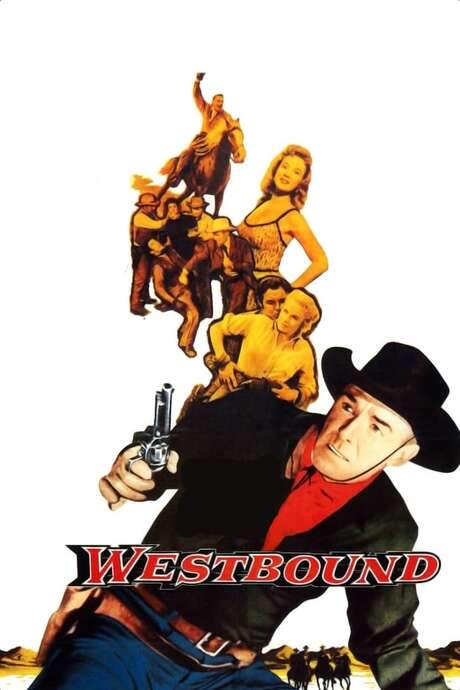
Colonel Claude Brackenbury Melvyn Douglas runs a remarkably peaceful stalemate with his Confederate counterpart, a quirky arms-length routine that keeps the war from intruding on their private mornings. Every dawn, the two sides fire a few artillery rounds in each other’s general direction at the exact same moment, and then they retire to their respective corners of the line to wait out the conflict like bored chess players waiting for a game to end. The rhythm is odd, almost ceremonial, and it suits Brackenbury’s stubborn, old-school sense of duty—one that prefers order and tradition over dramatic heroics.
Captain Jared Heath Glenn Ford shatters that calm with a reckless impulse to chase down the enemy, a move that triggers a predictable, if unnecessary, retaliatory spark from the Confederates. The incident reverberates through the ranks and stirs up trouble among the Union officers, culminating in a formal censure that sees Brackenbury and Heath stripped of their commands. The two men are reduced to a punitive assignment, placed under the direction of the blunt, no-nonsense General Willoughby Jim Backus. Brackenbury and Heath are shipped west to join a loose cadre of misfits General Willoughby can corral, a cohort chosen more for stability than for battlefield brilliance.
The new posting shifts from the dull grind of orders to the more delicate calculus of espionage and trust. The rebels grow wary; they suspect something is afoot, and so they send a striking spy, Martha Lou Williams Stella Stevens, to discover the unit’s true mission. Martha Lou travels with, and is flanked by, Easy Jenny Joan Blondell, a knowing madam whose streetwise chatter and street-smarts become clues in a larger game. Heath catches on to Martha Lou’s disguise, recognizing the ruse for what it is, yet there’s a personal complication in the air: Heath, drawn to Martha Lou, resolves to marry her someday. He does his best to shield her from danger, even as he navigates the murky moral terrain of wartime loyalties and personal desire.
The unit is soon tasked with escorting a precious gold shipment, a mission that quickly spirals into chaos. On the march, the soldiers fall into a trap set by Thin Elk [Michael Pate], a crafty Indian chief allied with the Confederate agent Hugo Zattig [James Griffith]. Thin Elk’s men masquerade as Union soldiers, hijacking the prize while the real troops are left stunned and scattered. In a crucial moment, Thin Elk recognizes Brackenbury as a West Point graduate and, in a surprising act of mercy or perhaps respect, releases the captives—but without horses or weapons to rely on.
Heath assumes leadership under pressure, rallying the survivors with a blend of grit and improvisation. The group fights to recover what was stolen, a difficult task given the precarious position of their forces and the absence of mounts. Yet Heath’s resourcefulness shines: he and the remaining men manage to reclaim horses from the mounted Indians, regain the gold, and, in a bold turn of events, rescue Martha Lou from the tangled web she found herself in. The action crescendos as the team corners Zattig’s gang, capturing the conspirators and restoring a measure of order to a mission that began as a straightforward escort and ended as a test of nerve, loyalty, and cunning.
Throughout the voyage, the tension between duty and desire threads through each decision Brackenbury and Heath make. The dynamic duo navigates a landscape littered with suspicion, shifting loyalties, and the ever-present risk that a single misstep could unravel everything they’ve fought to preserve. The narrative keeps faith with its wartime setting, while letting the collection of outcasts and misfits discover how much they can accomplish when they’re forced to rely on one another. In the end, the pledge to see the mission through—and the stubborn resilience of two officers who learned to improvise under pressure—offers a tempered, hopeful note about honor, friendship, and the price of keeping faith in a world turned upside down.